Nordics Macro Daily(Beta Mode)
Nordic Stocks Rise as Krona Strengthens
Market Snapshot
| Asset | Level | Change |
|---|---|---|
| OMX Stockholm 30 | 3,055.52 | +0.63% |
| Oslo Bors | 2,039.95 | +1.10% |
| OMX Copenhagen 25 | 1,761.20 | -0.38% |
| OMX Helsinki 25 | 6,333.62 | +0.97% |
| USD/SEK | 9.41 | -0.43% |
| USD/NOK | 9.27 | -0.49% |
| EUR/SEK | 10.95 | -0.24% |
| EUR/NOK | 10.79 | -0.28% |
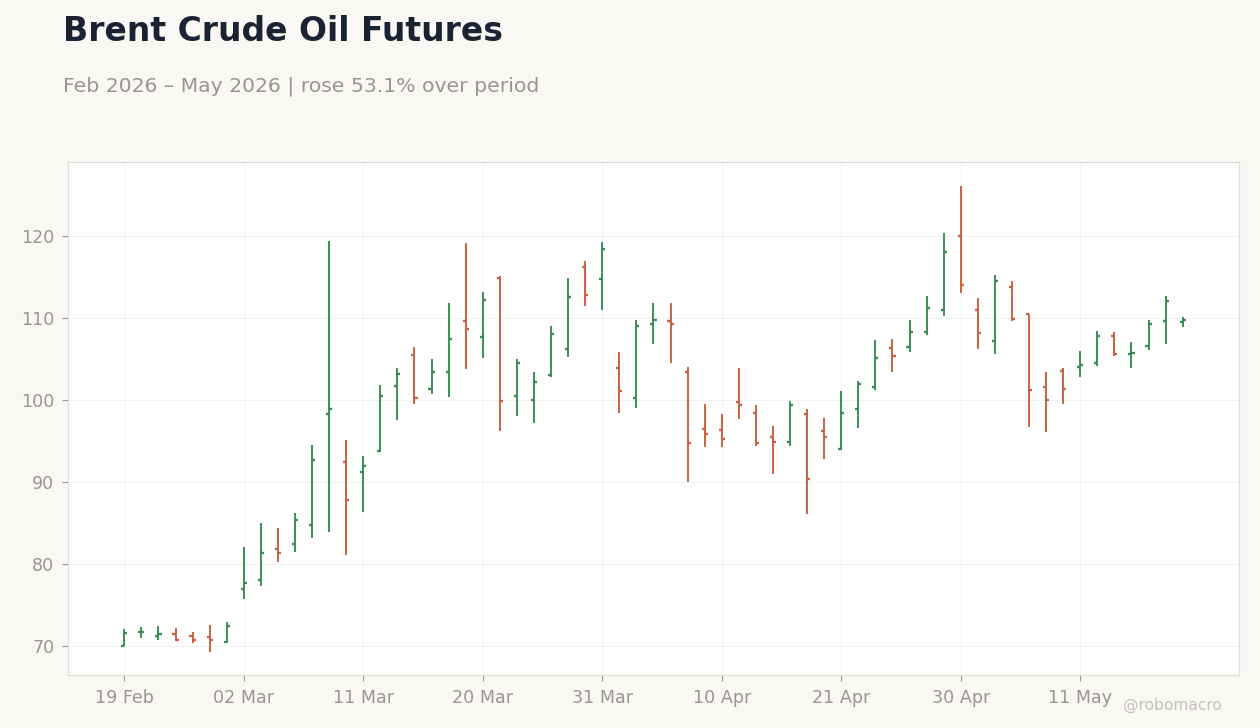
| Brent Crude | 109.80 | -2.05% |
| Gold | 4,546.80 | -0.13% |
| Bitcoin | 76,833.93 | -0.77% |
| Sweden 10Y Govt Yield | 2.78% | +0.75% |
| Norway 10Y Govt Yield | 4.29% | +0.64% |
Prior Economic Events
| Data | Prior | Cons | Actual |
|---|---|---|---|
| No events available | |||
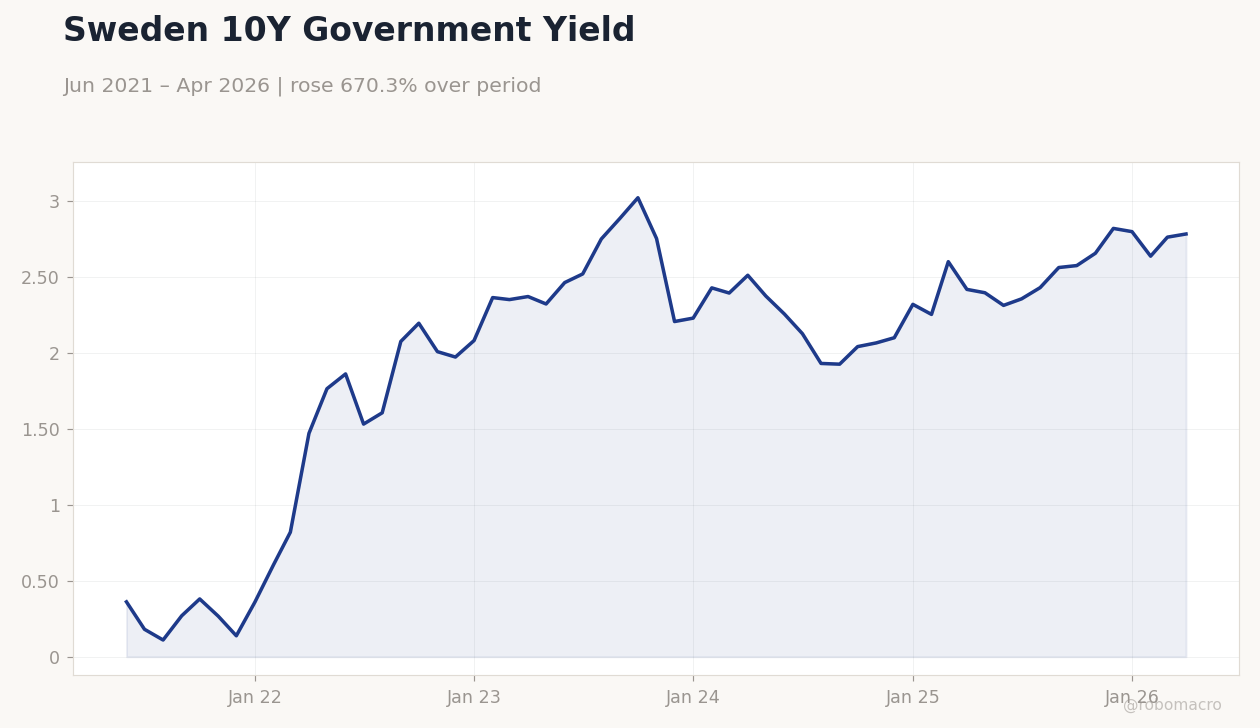 Sweden 10Y Government Yield | Type: macro_line | Percent: 2.785 (2026-04-01) | Range: 0.1101–3.024 | Trend(6pt): 0.3615,1.607,3.024,2.102,2.639,2.785
Today's Economic Events
| Data | Prior | Cons | Time |
|---|---|---|---|
| No events available | |||
- Swedish and Norwegian equity indices posted solid gains while the krona appreciated against both the dollar and euro.
- Brent crude declined 2.05% to $109.80, tempering near-term fiscal upside for Norway despite elevated price levels.
- Riksbank and Norges Bank policy paths remain divergent, with Sweden’s hotter inflation print supporting a hold and Norway’s oil revenue supporting the krone.
Yesterday's Recap
Nordic equity markets closed higher on May 18. The OMX Stockholm 30 rose 0.63% to 3,055.52 while Oslo Bors gained 1.10% to 2,039.95, supported by energy and export names. OMX Helsinki 25 advanced 0.97% to 6,333.62, whereas OMX Copenhagen 25 slipped 0.38% to 1,761.20.
The Swedish krona strengthened, with USD/SEK falling 0.43% to 9.41 and EUR/SEK declining 0.24% to 10.95. USD/NOK dropped 0.49% to 9.27. Ten-year government yields rose, with Sweden’s 10-year yield climbing 0.75% to 2.78% and Norway’s 10-year yield increasing 0.64% to 4.29%.
Inter Ikea announced 850 job cuts including 300 positions in Sweden, while Sweden and India agreed to double bilateral trade and investment over five years. Norway and India signed a green strategic partnership focused on energy transition.
The Day Ahead
Markets enter a data-light session on May 19 with no major Nordic releases scheduled. Attention will remain on krona and krone moves amid ongoing global risk sentiment. Follow-through from the Sweden-India and Norway-India agreements may support export-oriented sectors.
Fixed-income desks will monitor any further yield widening after yesterday’s moves in Swedish and Norwegian bonds. Equity traders will watch for continuation of energy and industrial outperformance in Oslo and Stockholm.
Other Economic Notes
Sweden’s export sector continues to benefit from renewed trade ties with India. Norway’s structural non-oil budget benefits from sustained Brent prices above $100 despite the daily decline. Denmark’s economy remains anchored to euro-area developments through the ERM II peg, limiting independent policy flexibility.
Finland’s manufacturing and services sectors track eurozone momentum closely, with no independent monetary levers available.
Global Macro News
Global oil prices eased after recent gains, with Brent settling at $109.80. Surging oil costs continue to pressure import-dependent economies such as India, where the rupee hit fresh lows. Australia’s central bank signaled closer monitoring of energy prices.
<i>↓ p.2</i>