Nordics Macro Daily(Beta Mode)
Swedish Inflation Miss Eases Riksbank Pressure
Market Snapshot
| Asset | Level | Change |
|---|---|---|
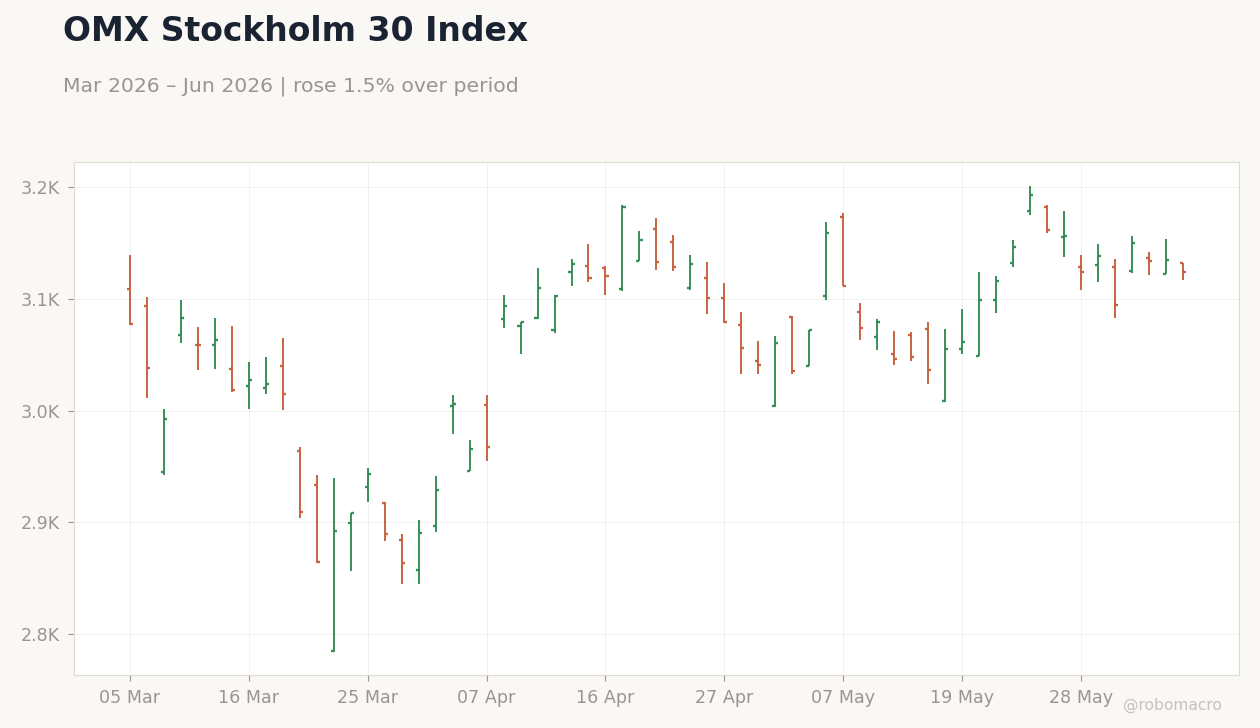
| OMX Stockholm 30 | 3,129.52 | -0.18% |
| Oslo Bors | 2,001.76 | -0.46% |
| OMX Copenhagen 25 | 1,734.74 | -1.01% |
| OMX Helsinki 25 | 6,534.63 | -1.03% |
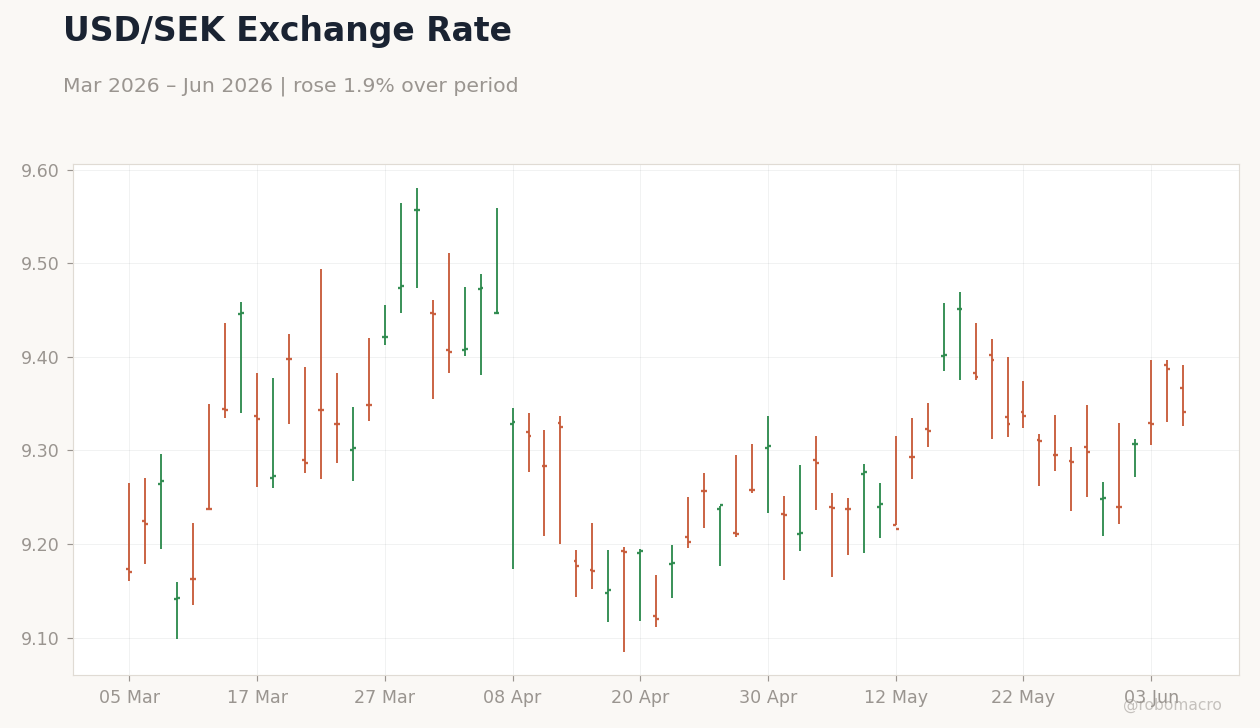
| USD/SEK | 9.34 | -0.45% |
| USD/NOK | 9.33 | +0.22% |
| EUR/SEK | 10.87 | -0.26% |
| EUR/NOK | 10.85 | +0.35% |
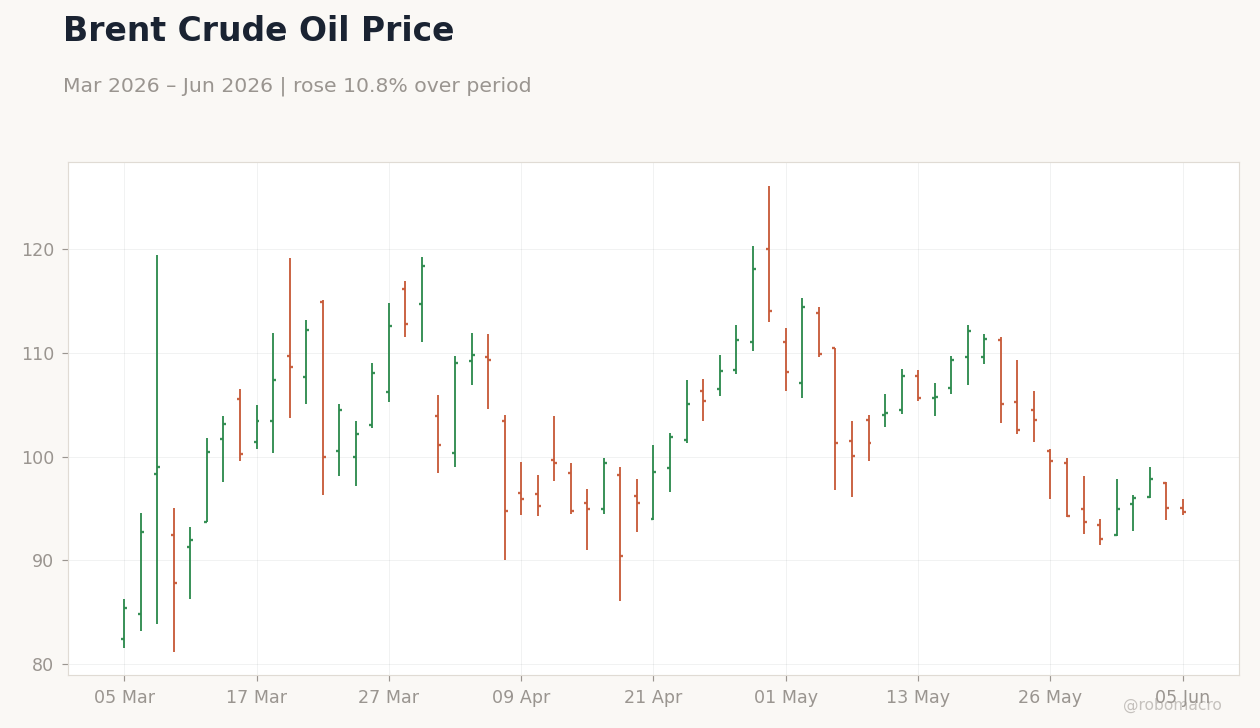
| Brent Crude | 94.47 | -0.59% |
| Gold | 4,491.70 | +0.36% |
| Bitcoin | 62,819.35 | -1.54% |
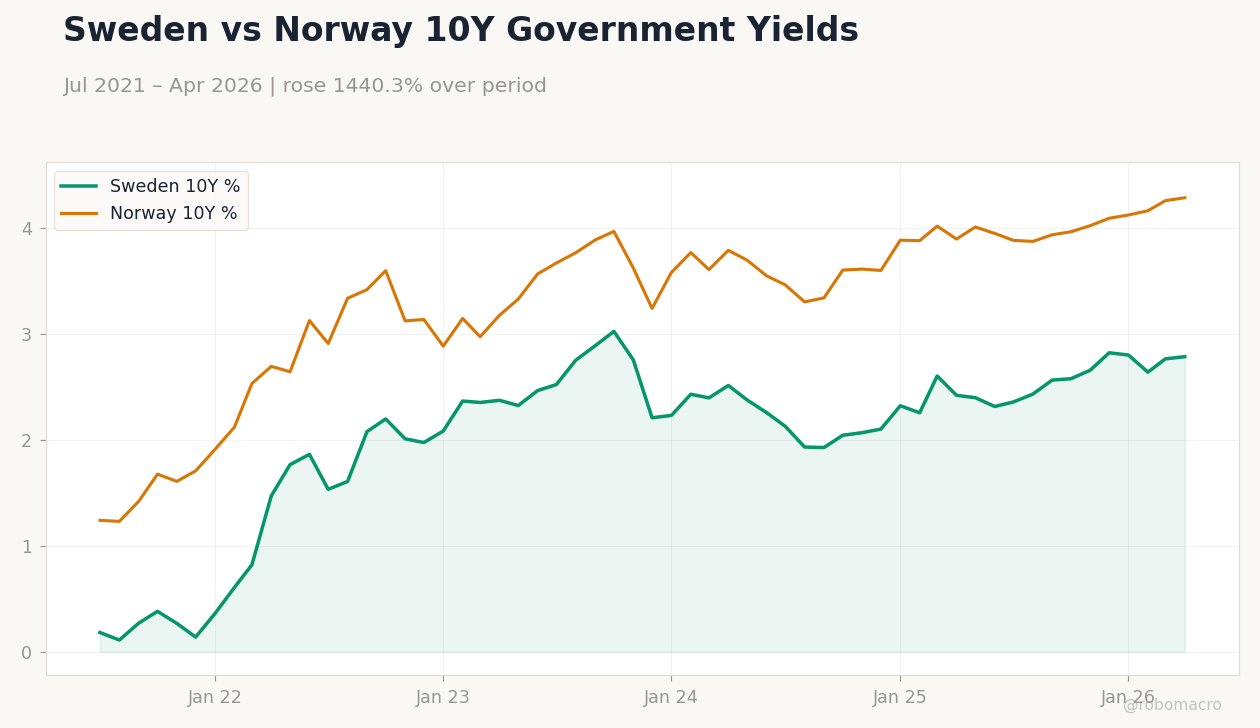
| Sweden 10Y Govt Yield | 2.78% | +0.75% |
| Norway 10Y Govt Yield | 4.29% | +0.64% |
Prior Economic Events
| Data | Prior | Cons | Actual |
|---|---|---|---|
| No events available | |||
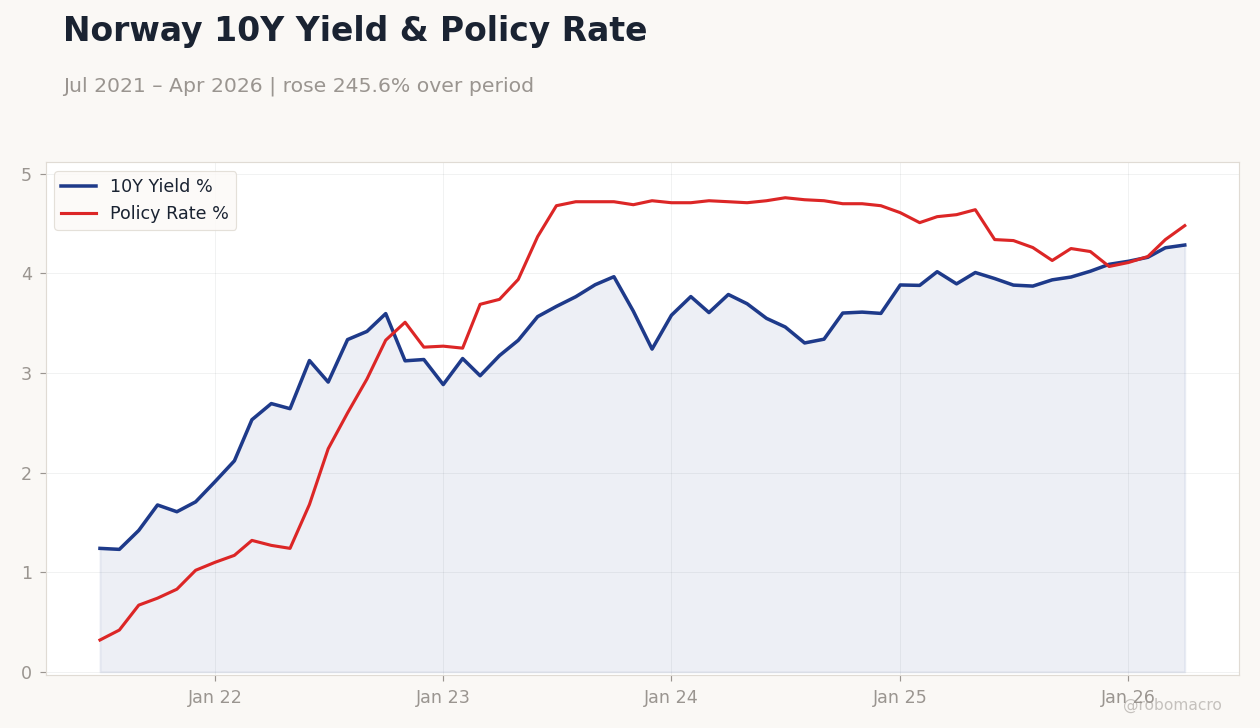 Norway 10Y Yield & Policy Rate | Type: macro_line | 10Y Yield %: 4.285 (2026-04-01) | Range: 1.23–4.285 | Trend(6pt): 1.24,3.418,3.622,3.884,4.258,4.285 | Policy Rate %: 4.48 (2026-04-01) | Range: 0.32–4.76 | Trend(6pt): 0.32,2.94,4.69,4.61,4.34,4.48
Today's Economic Events
| Data | Prior | Cons | Time |
|---|---|---|---|
| No events available | |||
- Sweden's May core inflation rose slower than Riksbank forecasts, reducing hike urgency.
- Nordic equities fell, with Copenhagen and Helsinki indices dropping over 1%.
- Norges Bank maintains independent stance as Brent holds near $94 despite modest pullback.
Yesterday's Recap
Sweden's May core inflation increased at a slower pace than the Riksbank anticipated, giving the central bank room to hold off on any immediate rate adjustments. OMX Stockholm 30 slipped 0.18% to 3,129.52 while Oslo Bors declined 0.46% to 2,001.76. OMX Copenhagen 25 fell 1.01% to 1,734.74 and OMX Helsinki 25 dropped 1.03% to 6,534.63 amid broader equity weakness.
The Swedish 10-year yield rose 0.75% to 2.78% and Norway's 10-year yield climbed 0.64% to 4.29%. USD/SEK fell 0.45% to 9.34 while USD/NOK rose 0.22% to 9.33, reflecting mixed krona and krone moves. Brent crude eased 0.59% to 94.47 with limited immediate fiscal impact on Norway.
No major data releases occurred in Denmark or Finland.
The Day Ahead
Limited scheduled Nordic releases leave markets focused on central bank commentary and global data spillovers. Any Riksbank speeches could clarify the reaction function after the milder inflation outcome. Norges Bank officials may address krone dynamics and oil revenue effects on the fiscal outlook.
Eurozone indicators may shape expectations for Finland and Denmark through the ECB channel. Investors will also track Brent price stability for its direct bearing on Norwegian fiscal projections.
Other Economic Notes
Sweden's export-oriented manufacturing sector continues to navigate subdued global demand while benefiting from contained domestic price pressures. Norway's elevated Brent levels near 94.47 support stronger government pension fund inflows and underpin the krone. Danish manufacturing exports remain sensitive to euro-area growth signals given the ERM II peg.
Finnish activity aligns closely with eurozone cycles, where unemployment stands at 6.70%.
Global Macro News
US inflation pressures intensify as the incoming Fed leadership confronts an economy squeezed by rising prices. Hotter eurozone inflation data failed to lift the euro against the pound, keeping external demand conditions mixed for Nordic exporters. Irish economic weakness risks dragging the eurozone into contraction and indirectly weighing on Finnish and Danish trade.
<i>↓ p.2</i>