Nordics Macro Daily(Beta Mode)
Nordic Stocks Split as Brent Slumps 7%
Market Snapshot
| Asset | Level | Change |
|---|---|---|
| OMX Stockholm 30 | 3,257.85 | +0.34% |
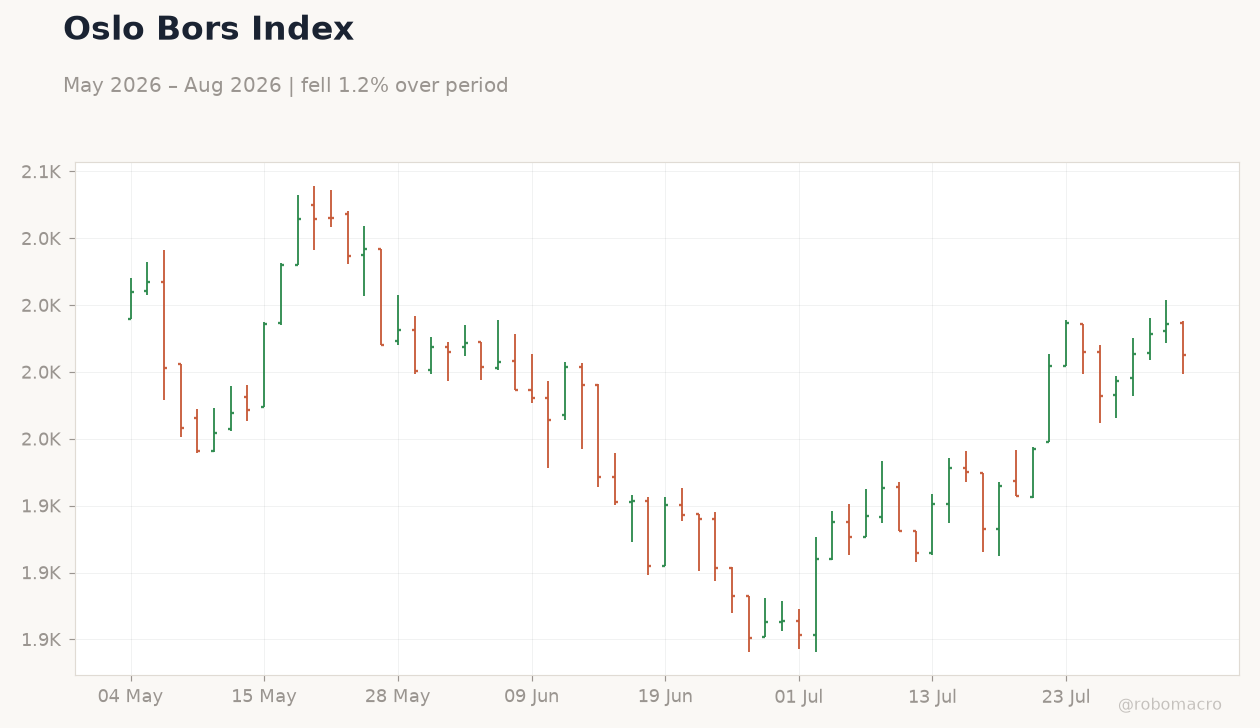
| Oslo Bors | 2,006.73 | -0.56% |
| OMX Copenhagen 25 | 1,833.84 | -0.40% |
| OMX Helsinki 25 | 6,200.32 | -0.32% |
| USD/SEK | 9.54 | -1.07% |
| USD/NOK | 9.53 | -0.03% |
| EUR/SEK | 10.99 | -0.02% |
| EUR/NOK | 10.98 | -0.00% |
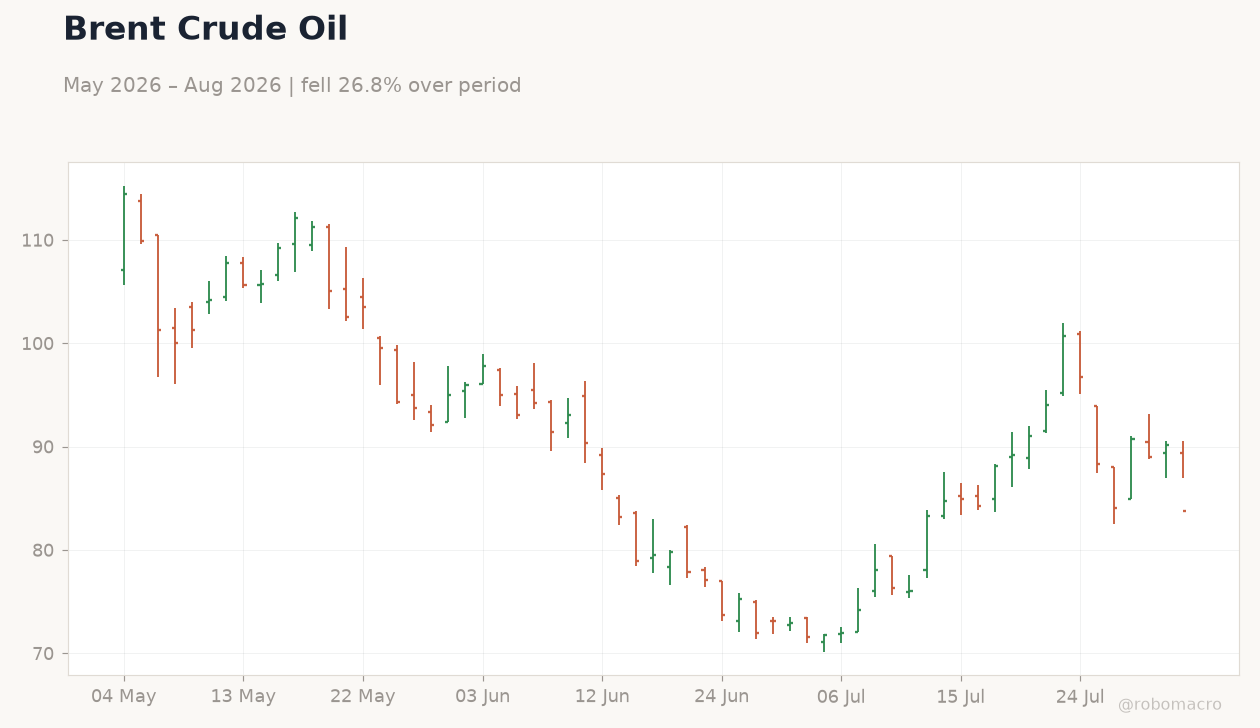
| Brent Crude | 83.67 | -7.16% |
| Gold | 4,114.60 | +1.62% |
| Bitcoin | 62,551.98 | -0.34% |
| Sweden 10Y Govt Yield | 2.78% | +1.31% |
| Norway 10Y Govt Yield | 4.20% | -2.94% |
Prior Economic Events
| Data | Prior | Cons | Actual |
|---|---|---|---|
| No events available | |||
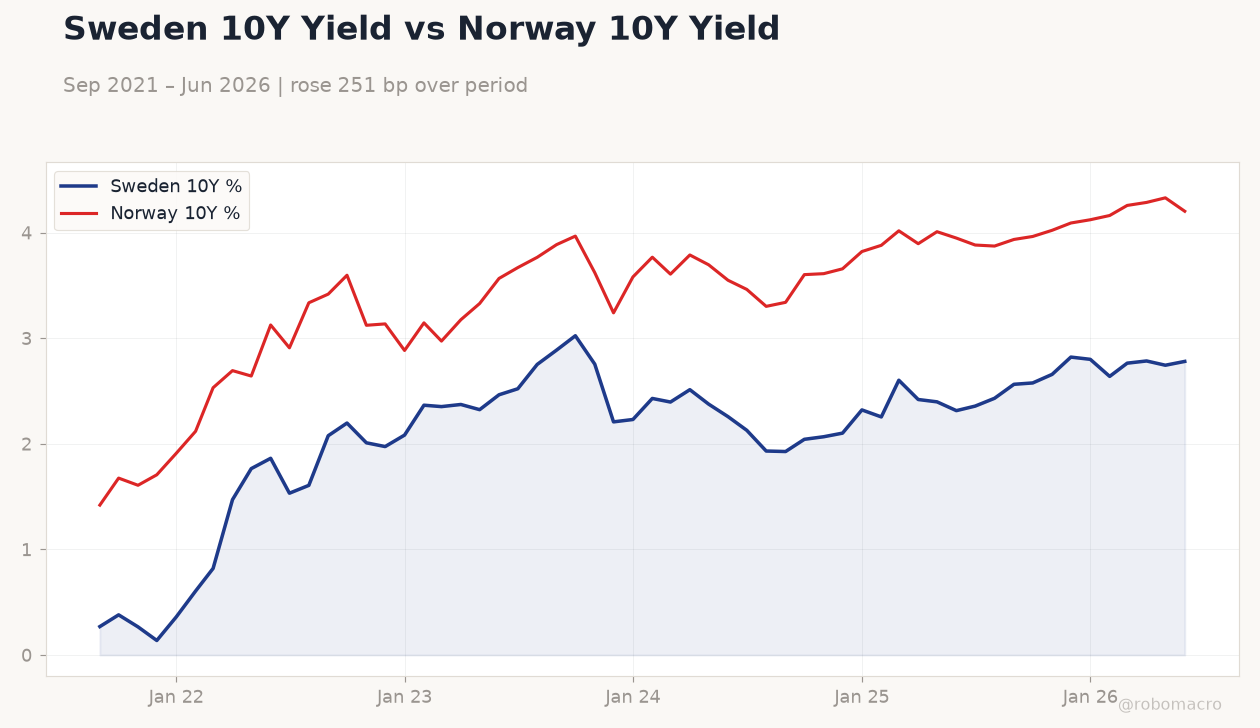 Sweden 10Y Yield vs Norway 10Y Yield | Type: macro_line | Sweden 10Y %: 2.781 (2026-06-01) | Range: 0.138–3.024 | Trend(6pt): 0.2696,2.01,2.231,2.602,2.745,2.781 | Norway 10Y %: 4.203 (2026-06-01) | Range: 1.42–4.33 | Trend(6pt): 1.42,3.123,3.58,4.017,4.33,4.203
Today's Economic Events
| Data | Prior | Cons | Time |
|---|---|---|---|
| No events available | |||
- OMX Stockholm 30 rises 0.34% while Oslo Bors falls 0.56% on Brent crude drop of 7.16% to 83.67
- USD/SEK falls 1.07% to 9.54; Sweden 10Y yield rises 1.31% to 2.78% as Norway 10Y falls 2.94% to 4.20%
- No Nordic data releases or events recorded yesterday or today
Yesterday's Recap
Nordic equity markets closed mixed on August 2 with limited domestic drivers. OMX Stockholm 30 advanced 0.34% to 3,257.85, supported by export-oriented names, while Oslo Bors declined 0.56% to 2,006.73 amid the sharp Brent crude sell-off. OMX Copenhagen 25 eased 0.40% to 1,833.84 and OMX Helsinki 25 fell 0.32% to 6,200.32.
USD/SEK dropped 1.07% to 9.54 while USD/NOK held near flat at 9.53. Sweden 10Y government yield rose 1.31% to 2.78% and Norway 10Y yield declined 2.94% to 4.20%. EUR/SEK and EUR/NOK showed negligible moves.
With zero economic releases across Sweden, Norway, Denmark and Finland, price action reflected external commodity and global yield shifts rather than local data surprises. Sweden’s June CPI YoY at 0.68% and Norway’s at 2.70% remain the latest
The Day Ahead
The Nordic calendar stays empty through August 4 with no scheduled releases or central bank events. Markets will therefore track external signals including any follow-through in Brent crude and US data prints. Norway’s oil revenue sensitivity remains elevated after the 7.16% Brent decline, which directly affects NOK valuation and fiscal inflows.
Sweden’s export sector may respond to any euro-area or US growth revisions. Danish and Finnish markets will move largely in line with ECB and broader eurozone developments given the EUR/DKK peg and Finland’s euro membership. Traders will watch USD/SEK and USD/NOK for any reversal of yesterday’s moves.
Other Economic Notes
The absence of domestic data leaves Nordic assets exposed to global commodity volatility and external growth signals. Sweden and Denmark, as manufacturing exporters, remain sensitive to euro-area demand and any escalation in trade tensions. Norway’s fiscal position faces direct pressure from lower oil prices, with each sustained decline trimming expected transfers to the Government Pension Fund Global.
Finland’s eurozone membership transmits ECB policy directly into domestic rates and lending conditions. Housing market weakness in Sweden continues to weigh on domestic demand without fresh indicators to alter the outlook.