Nordics Macro Daily(Beta Mode)
Nordic Equities Diverge as Brent Drops Sharply
Market Snapshot
| Asset | Level | Change |
|---|---|---|
| OMX Stockholm 30 | 3,326.28 | +1.58% |
| Oslo Bors | 2,019.01 | -0.20% |
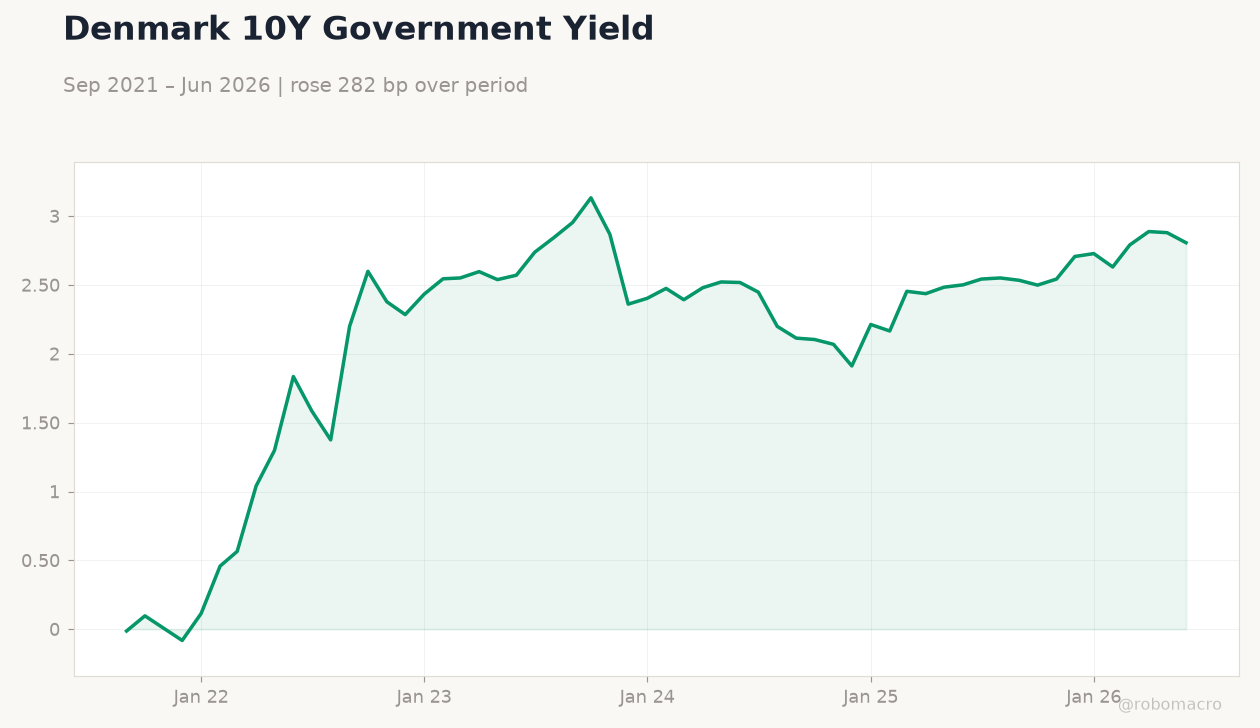
| OMX Copenhagen 25 | 1,835.37 | +0.13% |
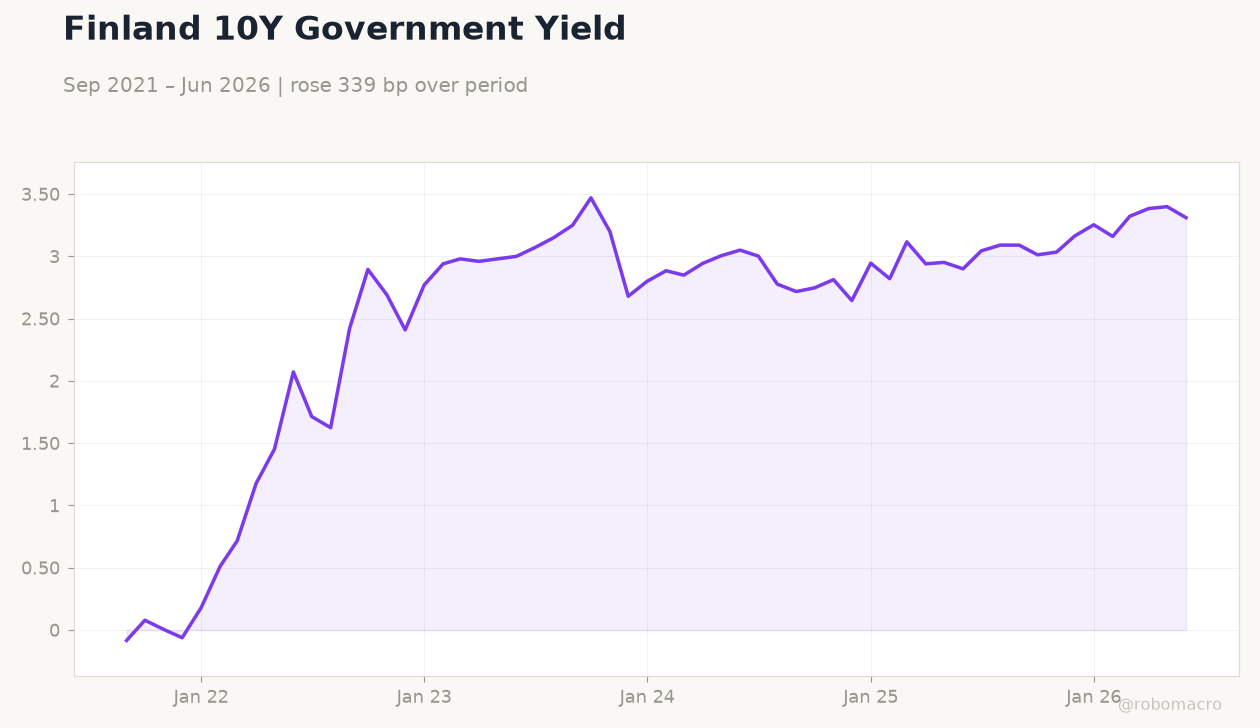
| OMX Helsinki 25 | 6,259.82 | +0.78% |
| USD/SEK | 9.53 | +0.33% |
| USD/NOK | 9.55 | +0.66% |
| EUR/SEK | 10.98 | +0.13% |
| EUR/NOK | 11.00 | +0.48% |
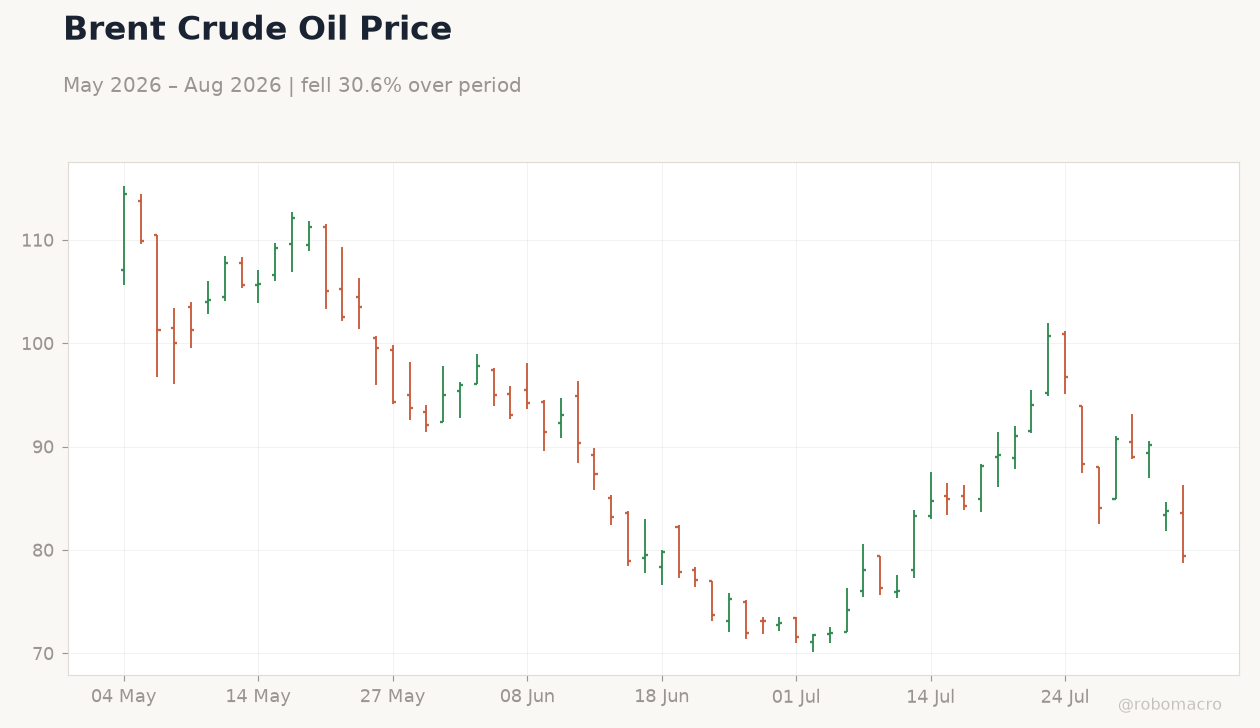
| Brent Crude | 79.37 | -5.25% |
| Gold | 4,142.70 | +2.70% |
| Bitcoin | 64,031.34 | +0.90% |
| Sweden 10Y Govt Yield | 2.78% | +1.31% |
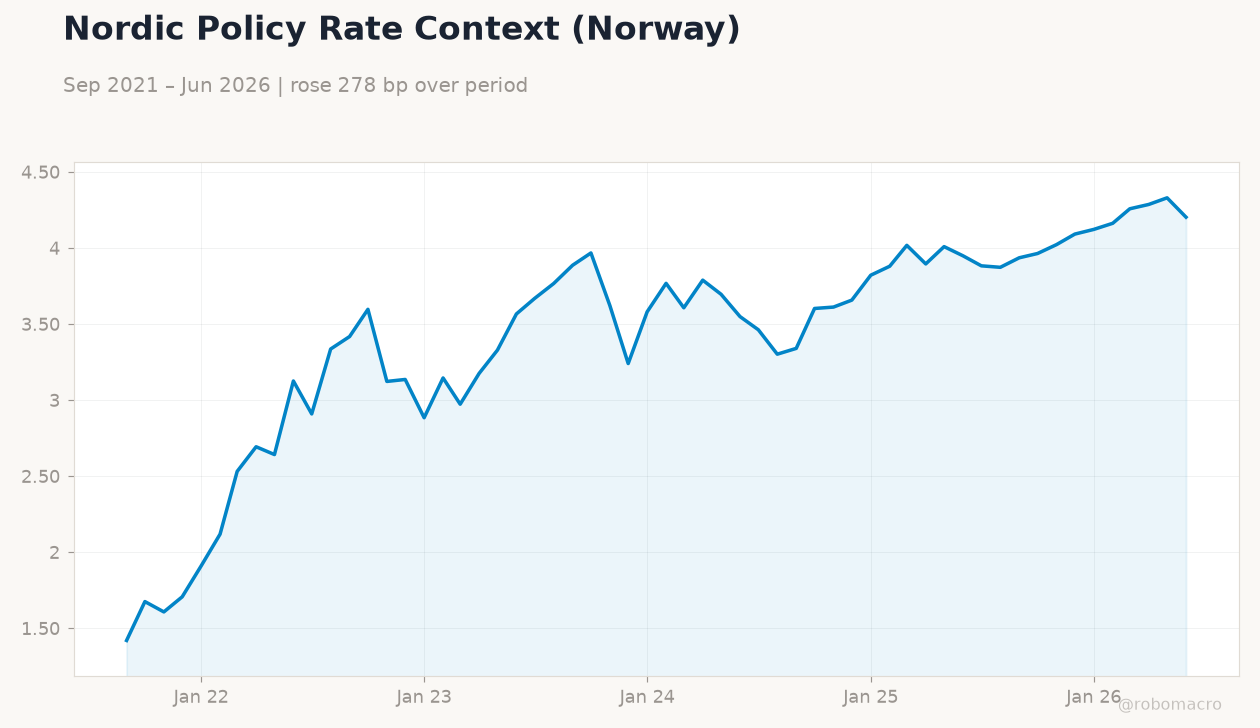
| Norway 10Y Govt Yield | 4.20% | -2.94% |
Prior Economic Events
| Data | Prior | Cons | Actual |
|---|---|---|---|
| No events available | |||
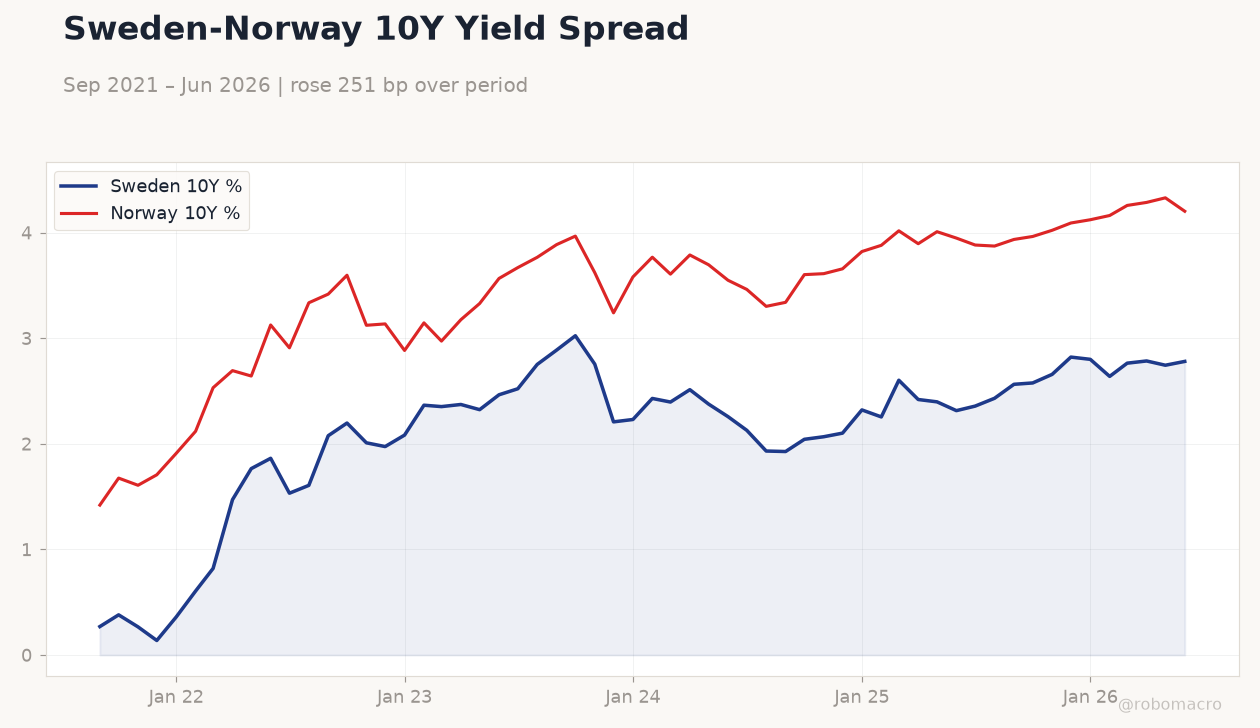 Sweden-Norway 10Y Yield Spread | Type: macro_line | Sweden 10Y %: 2.781 (2026-06-01) | Range: 0.138–3.024 | Trend(6pt): 0.2696,2.01,2.231,2.602,2.745,2.781 | Norway 10Y %: 4.203 (2026-06-01) | Range: 1.42–4.33 | Trend(6pt): 1.42,3.123,3.58,4.017,4.33,4.203
Today's Economic Events
| Data | Prior | Cons | Time |
|---|---|---|---|
| No events available | |||
- OMX Stockholm 30 rises 1.58% while Oslo Bors falls 0.20% on Brent weakness.
- USD/NOK climbs 0.66% and USD/SEK gains 0.33% as currencies weaken.
- Sweden 10Y yield increases 1.31% to 2.78%; Norway 10Y yield falls 2.94% to 4.20%.
Yesterday's Recap
Equity markets across the Nordic region showed divergent performance with no scheduled data releases in Sweden, Norway, Denmark or Finland. The OMX Stockholm 30 advanced 1.58% to close at 3,326.28, reflecting strength in export-oriented shares amid stable global demand signals. Oslo Bors declined 0.20% to 2,019.01 as Brent crude fell 5.25% to 79.37, directly weighing on Norway’s oil-exposed equities and fiscal outlook.
The Swedish krona softened with USD/SEK rising 0.33% to 9.53 and EUR/SEK up 0.13% to 10.98. The Norwegian krone depreciated more noticeably, with USD/NOK increasing 0.66% to 9.55 and EUR/NOK rising 0.48% to 11.00. OMX Copenhagen 25 edged up 0.13% to 1,835.37 while OMX Helsinki 25 gained 0.78% to 6,259.82.
Government bond yields moved in opposite directions, with the Sweden 10Y yield climbing 1.31% to 2.78% and the Norway 10Y yield declining 2.94% to 4.20%. Gold rose 2.70% to 4,142.70 while Bitcoin gained 0.90% to 64,031.34.
The Day Ahead
The Nordic data calendar remains empty today, leaving markets to focus on external drivers and central-bank commentary. Sweden and Norway will monitor any follow-through from yesterday’s commodity moves and currency shifts. Denmark’s currency board will track EUR/DKK stability within the ERM II band amid broader euro-area developments.
Finland, operating under ECB policy, faces no independent releases but will respond to eurozone sentiment indicators. Equity and fixed-income desks expect limited local volatility unless global risk sentiment shifts materially. Oil price action will remain the dominant variable for Norwegian assets given the country’s export profile.
Central-bank speeches from the Federal Reserve, Bundesbank, Bank of England and Bank of Canada will set the tone for global yield correlations affecting Nordic fixed-income markets.
Other Economic Notes
Sweden’s export manufacturing base continues to benefit from steady external demand despite the absence of fresh trade figures. Norway’s fiscal position receives support from oil revenue when Brent remains above budget assumptions, though yesterday’s sharp price drop introduces near-term caution. Denmark’s shipping and pharmaceutical sectors provide a buffer to domestic activity given the country’s open economy.
<i>↓ p.2</i>