South Africa Macro Daily(Beta Mode)
Confidence Up, Rand Slips
Market Snapshot
| Asset | Level | Change |
|---|---|---|
| JSE Top 40 | 111,980.10 | -0.93% |
| USD/ZAR | 16.60 | +1.74% |
| EUR/ZAR | 19.28 | +1.49% |
| Platinum | 2,161.20 | +0.30% |
| Gold | 5,143.00 | +0.45% |
| Brent Crude | 84.42 | +3.71% |
| Naspers | 86,948.00 | +2.97% |
| Bitcoin | 70,594.95 | -2.91% |
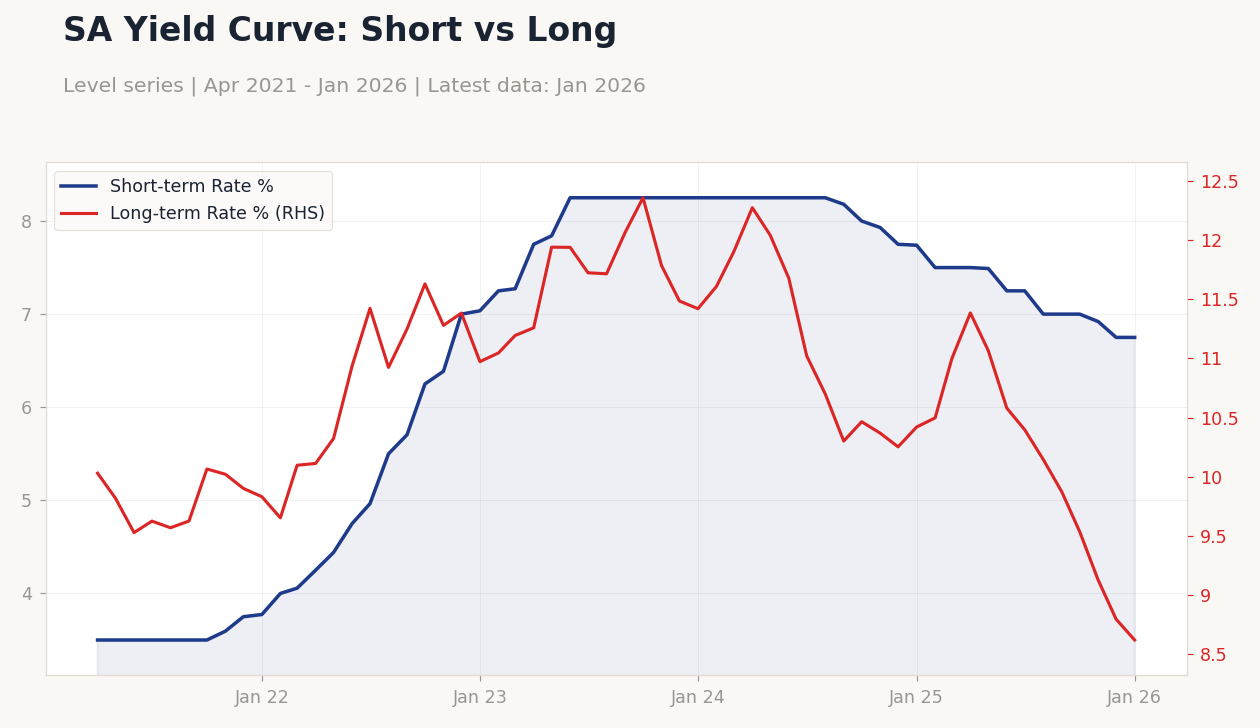
| South Africa Short-term Rate | 6.75% | +0.00% |
| South Africa Long-term Rate | 8.62% | -2.00% |
Prior Economic Events
| Data | Prior | Cons | Actual |
|---|---|---|---|
| Business Confidence Index | 44 | - | 47 |
Today's Economic Events
| Data | Prior | Cons | Time |
|---|---|---|---|
| No events available | |||
- Business Confidence Index rose to 47 from 44, indicating modest business optimism despite challenges.
- JSE Top 40 dropped 0.93% to 111,980.10, with USD/ZAR up 1.74% to 16.60 amid rand weakness.
- Commodities gained modestly, gold up 0.45% to 5,143.00, while long-term rates fell 2.00% to 8.62%.
Yesterday's Recap
South Africa's Business Confidence Index increased to 47 from 44, reflecting a slight improvement in business sentiment amid persistent energy issues and global uncertainties. The JSE Top 40 index fell 0.93% to 111,980.10, driven by declines in financial and industrial sectors due to rand volatility. USD/ZAR rose 1.74% to 16.60, as the rand depreciated on emerging market capital outflows and higher global yields.
EUR/ZAR climbed 1.49% to 19.28, mirroring currency pressures. Platinum prices rose 0.30% to 2,161.20, bolstered by South African supply concerns, while gold advanced 0.45% to 5,143.00 on safe-haven buying. Brent crude surged 3.71% to 84.42, potentially aiding export revenues but risking inflation through elevated fuel costs.
Naspers stock gained 2.97% to 86,948.00, supported by tech sector strength. Bitcoin declined 2.91% to 70,594.95, indicating broader risk aversion. The short-term rate held steady at 6.75%, while the long-term rate decreased 2.00% to 8.62%, suggesting bond market demand amid stable SARB expectations.
Markets displayed cautious optimism on the confidence data, though load shedding continued to impact mining and overall output.
The Day Ahead
No significant South African economic releases are planned for today, providing space for markets to process yesterday's confidence index and international news. Focus may turn to potential SARB statements or energy updates, given ongoing load shedding issues. Rand movements could see volatility from commodity fluctuations in platinum and gold.
Government efforts on infrastructure, such as rail recovery, may influence sentiment. Tomorrow also features no key events, likely resulting in lower trading activity. Investors should monitor global macro developments for effects on emerging markets and South African assets.
Other Economic Notes
Energy reforms emphasizing natural gas for industrialization highlight South Africa's transition strategy, addressing load shedding that constrains growth. Rail improvement initiatives target economic revival by fixing infrastructure disruptions in critical areas. (cont...)


