South Africa Macro Daily(Beta Mode)
Rand Weakens Ahead of SARB Decision
Market Snapshot
| Asset | Level | Change |
|---|---|---|
| JSE Top 40 | 104,957.03 | -1.39% |
| USD/ZAR | 16.98 | +0.42% |
| EUR/ZAR | 19.65 | +0.10% |
| Platinum | 1,838.30 | -4.51% |
| Gold | 4,375.50 | -3.83% |
| Brent Crude | 108.01 | +5.66% |
| Naspers | 90,847.00 | +4.91% |
| Bitcoin | 68,764.88 | -3.57% |
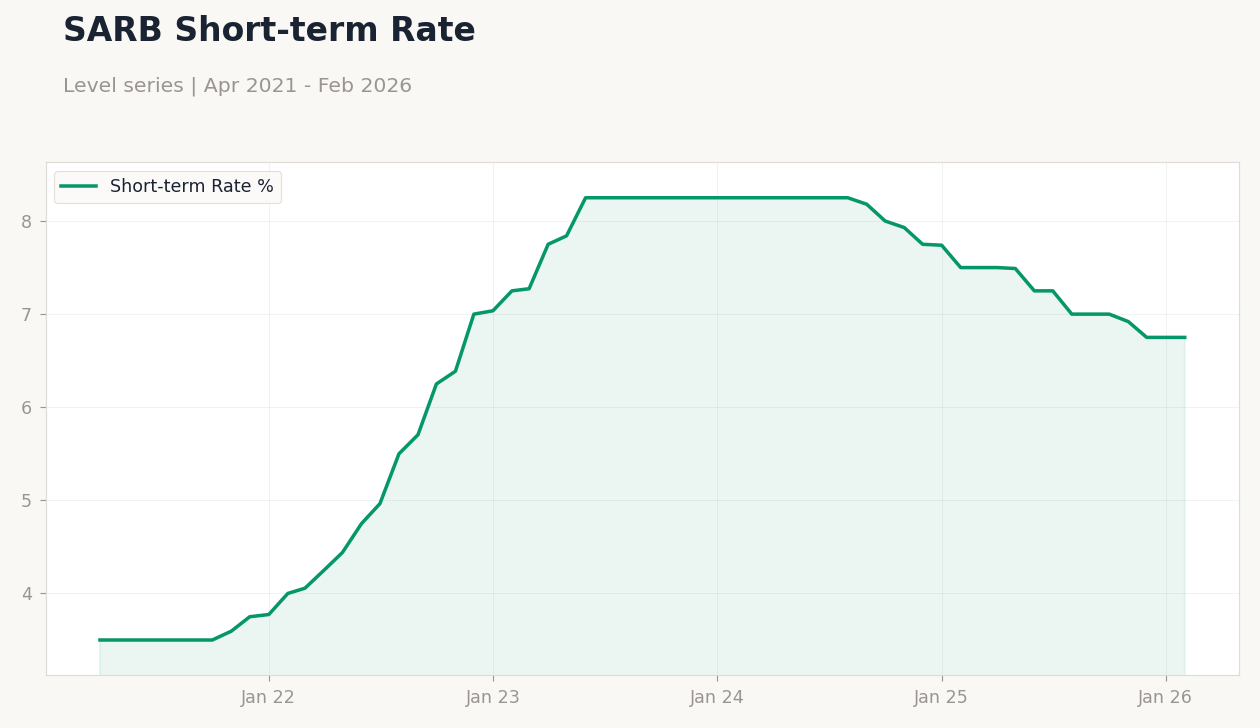
| South Africa Short-term Rate | 6.75% | +0.00% |
| South Africa Long-term Rate | 8.26% | -4.16% |
Prior Economic Events
| Data | Prior | Cons | Actual |
|---|---|---|---|
| No events available | |||
 South Africa Long-term Yield | Type: macro_line | Long-term Rate %: 8.26 (2026-02-01) | Range: 8.26–12.36 | Trend(6pt): 10.03,10.94,11.72,10.46,8.794,8.26
Today's Economic Events
| Data | Prior | Cons | Time |
|---|---|---|---|
| No events available | |||
- Rand depreciates amid oil surge and inflation risks ahead of expected SARB rate hold.
- JSE Top 40 falls on commodity price drops; Naspers gains, bonds rally with lower yields.
- Police corruption charges and anti-immigrant protests signal ongoing domestic challenges.
Yesterday's Recap
South African markets closed lower as the JSE Top 40 index fell 1.39% to 104,957.03, pressured by sharp declines in commodity prices. Platinum prices dropped 4.51% to 1,838.30, while gold slid 3.83% to 4,375.50, reflecting global risk aversion and weaker demand outlooks. The USD/ZAR pair rose 0.42% to 16.98, signaling rand depreciation amid inflation concerns, with EUR/ZAR edging up 0.10% to 19.65.
Brent crude surged 5.66% to 108.01, exacerbating imported inflation pressures for the energy-dependent economy. Naspers shares bucked the trend, climbing 4.91% to 90,847.00, buoyed by tech sector resilience. Bitcoin fell 3.57% to 68,764.88, aligning with broader crypto volatility.
South Africa's long-term rate declined 4.16% to 8.26%, indicating bond market gains, while the short-term rate held steady at 6.75%.
The Day Ahead
Markets await potential SARB announcements, with news indicating a rate decision could be imminent amid rand weakness and oil-driven inflation risks. No official data releases are scheduled for today, but traders will monitor any unscheduled SARB communications on monetary policy. Tomorrow brings no confirmed events, though ongoing global commodity fluctuations could influence rand and JSE dynamics.
Focus remains on inflation targeting, with any forward guidance likely to address persistent currency depreciation. Broader economic sentiment may hinge on developments in mining and energy sectors.
Other Economic Notes
Corruption charges against 12 senior police officers underscore governance challenges, potentially eroding investor confidence in South Africa's institutional stability. Anti-immigrant protests in Durban demand stricter border controls, targeting Nigerians and others, which could heighten social tensions and impact labor markets in key sectors like construction. A 57% talent gap in sub-Saharan Africa's construction industry threatens to slow infrastructure projects, including those in South Africa, amid a regional boom.
Senator Ned Nwoko welcomed APC members to the South-South zonal congress in Asaba, highlighting regional political activities that may indirectly affect cross-border economic ties.