South Africa Macro Daily(Beta Mode)
Rand Weakens as Commodities Rally
Market Snapshot
| Asset | Level | Change |
|---|---|---|
| JSE Top 40 | 103,938.50 | -0.97% |
| USD/ZAR | 17.12 | +0.24% |
| EUR/ZAR | 19.70 | -0.02% |
| Platinum | 1,870.60 | +1.76% |
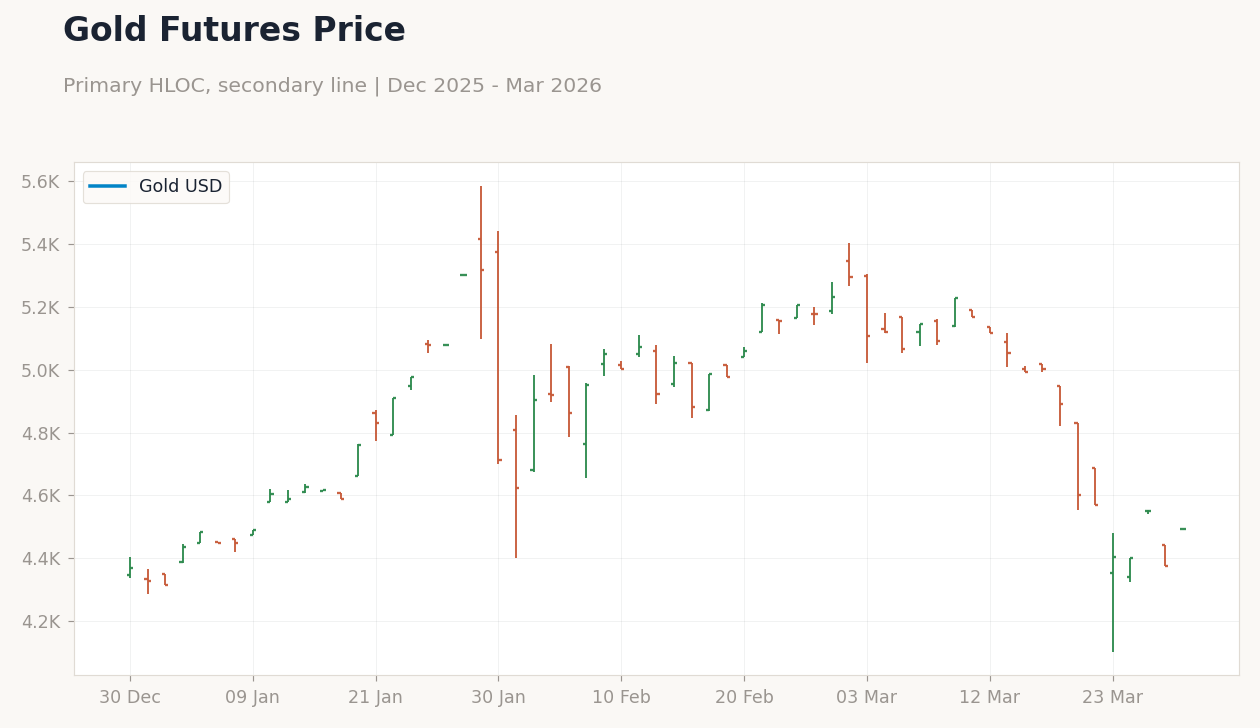
| Gold | 4,492.00 | +2.66% |
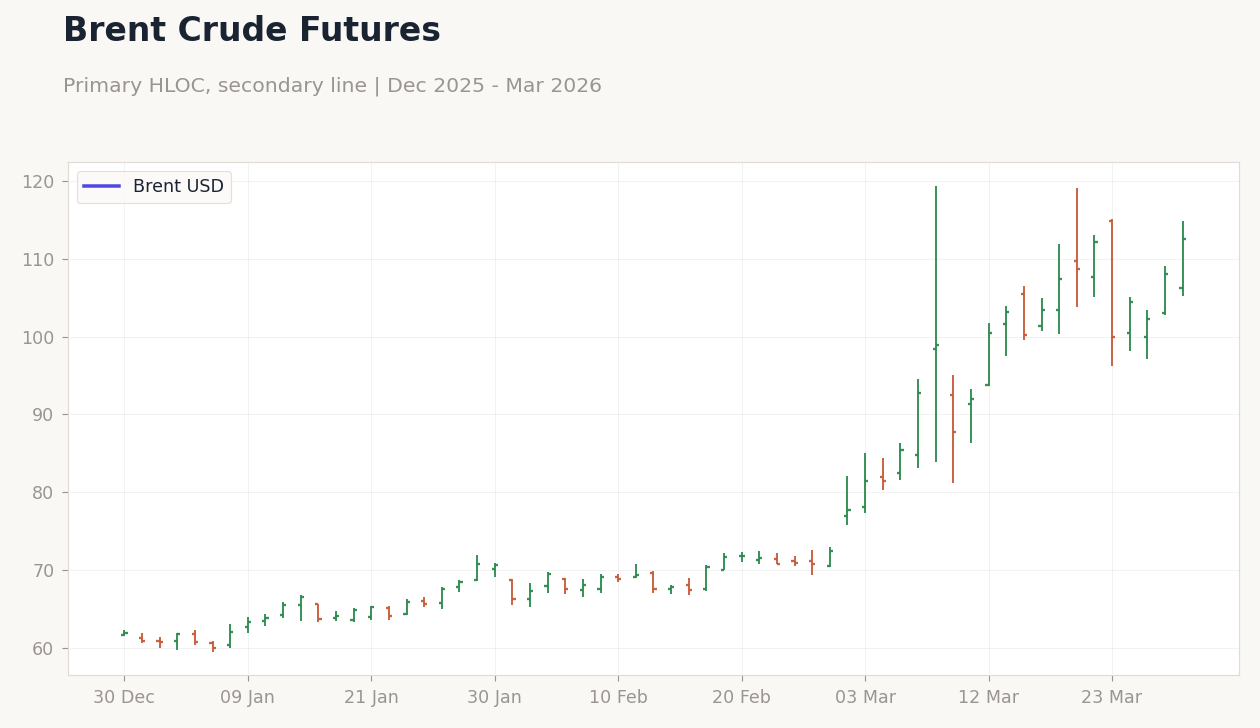
| Brent Crude | 112.57 | +4.22% |
| Naspers | 85,832.00 | -2.72% |
| Bitcoin | 67,092.54 | +1.17% |
| South Africa Short-term Rate | 6.75% | +0.00% |
| South Africa Long-term Rate | 8.26% | -4.16% |
Prior Economic Events
| Data | Prior | Cons | Actual |
|---|---|---|---|
| No events available | |||
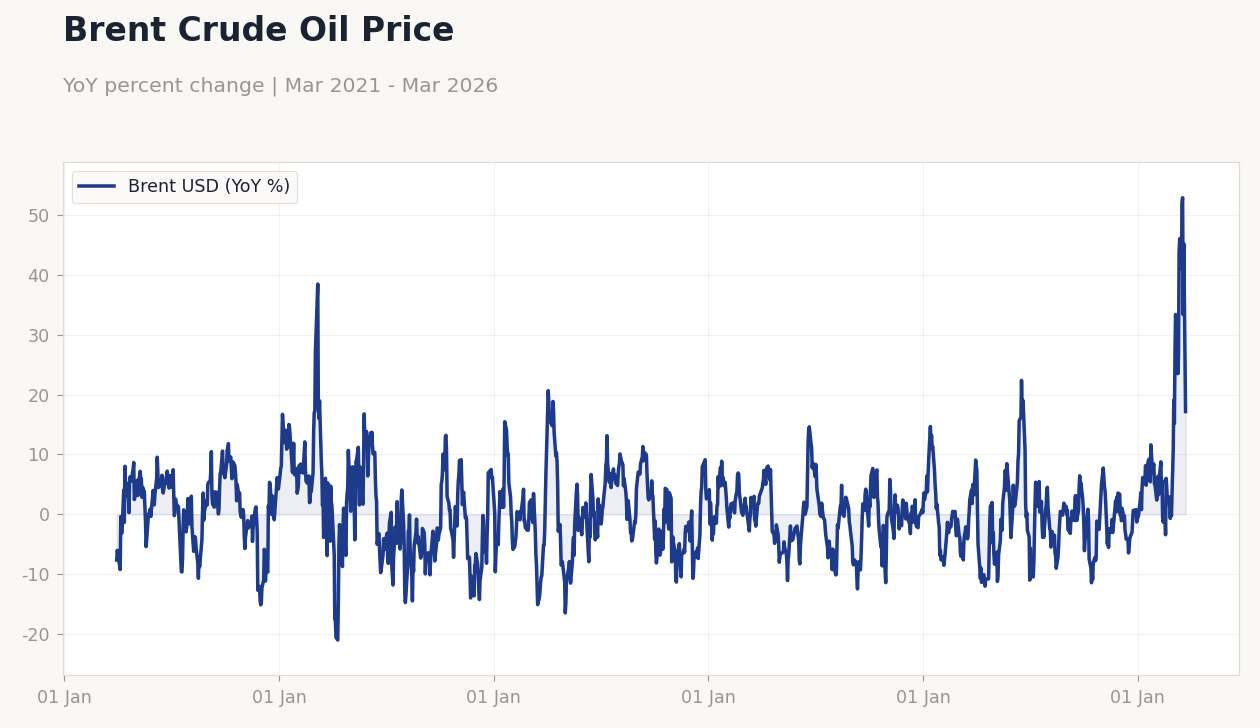 Brent Crude Oil Price | Type: macro_line | Brent USD: 17.16 (2026-03-23) | Range: -21.02–52.89 | Trend(6pt): -7.648,-5.948,5.578,-1.995,45.19,17.16
Today's Economic Events
| Data | Prior | Cons | Time |
|---|---|---|---|
| Tuesday (2026-03-31) | |||
| Trade Balance | 9,310m | - | 08:00 |
- USD/ZAR climbed 0.24% to 17.12 on dollar strength, weighing on South African imports and inflation.
- Gold and platinum surged 2.66% to 4,492.00 and 1.76% to 1,870.60, supporting mining amid JSE Top 40's 0.97% drop to 103,938.50.
- Brent crude rose 4.22% to 112.57, heightening energy costs for South Africa amid global supply tensions.
Yesterday's Recap
South African markets ended mixed on March 29, with the JSE Top 40 index declining 0.97% to 103,938.50, led by losses in tech stocks like Naspers, which fell 2.72% to 85,832.00. The rand weakened against the dollar, as USD/ZAR rose 0.24% to 17.12, while EUR/ZAR dipped 0.02% to 19.70, mirroring pressures on emerging market currencies. Commodities offered relief, with platinum up 1.76% to 1,870.60 and gold advancing 2.66% to 4,492.00, driven by safe-haven buying amid uncertainties.
Brent crude increased 4.22% to 112.57, raising concerns over fuel import costs and potential inflation impacts. Bitcoin rose 1.17% to 67,092.54, tracking modest gains in risk assets. Bond yields varied, with the long-term rate dropping 4.16% to 8.26%, indicating some safety-seeking, while the short-term rate remained at 6.75%.
No significant economic data was released, with markets influenced by global news.
The Day Ahead
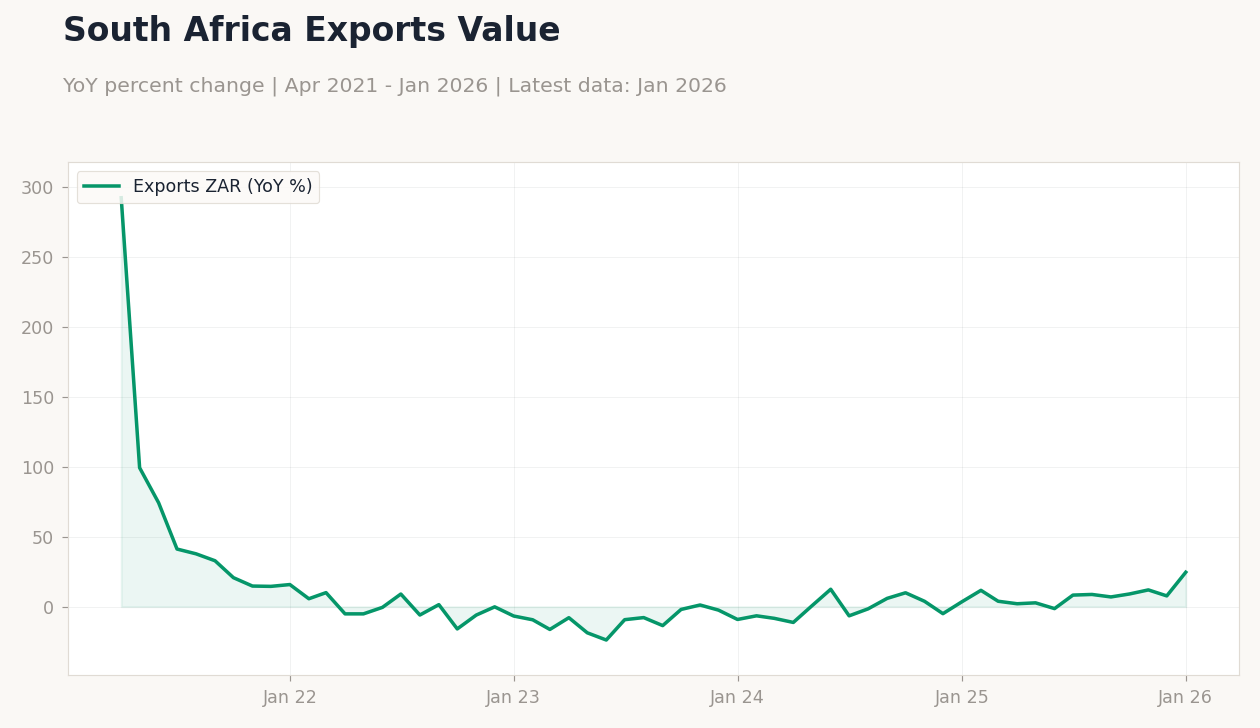
Attention turns to South Africa's trade balance release on March 31 at 08:00, rated medium impact; previous was ZAR 9.31 billion, with no consensus available, which could drive rand movements if the surplus shifts. This data may reflect export trends in mining and manufacturing, bolstered by recent commodity gains. No other local events are set for today, shifting focus to international developments.
Updates on water shortages or northeastern floods could emerge, potentially disrupting logistics and tourism.
Other Economic Notes
South Africa's water crisis persists, with residents reporting exploitation by criminal gangs in water-scarce areas, complicating supply chains and raising business costs. Floods have closed Kruger National Park, impacting tourism revenue during recovery efforts. These issues highlight infrastructure vulnerabilities, potentially straining economic growth.
Broader news includes racial tensions from Graaff-Reinet's name change, dividing residents over colonial legacies, and cultural highlights like Dumile Feni's art exhibition addressing apartheid themes. Lebo M's lawsuit over Lion King chant misrepresentation adds to entertainment sector disputes.