South Africa Macro Daily(Beta Mode)
Trade Surplus Jumps, Rand Strengthens
Market Snapshot
| Asset | Level | Change |
|---|---|---|
| JSE Top 40 | 106,291.90 | +1.57% |
| USD/ZAR | 16.88 | -1.79% |
| EUR/ZAR | 19.51 | -0.97% |
| Platinum | 1,950.00 | +3.42% |
| Gold | 4,647.60 | +2.69% |
| Brent Crude | 118.35 | +4.94% |
| Naspers | 85,315.00 | -0.60% |
| Bitcoin | 68,088.36 | +2.09% |
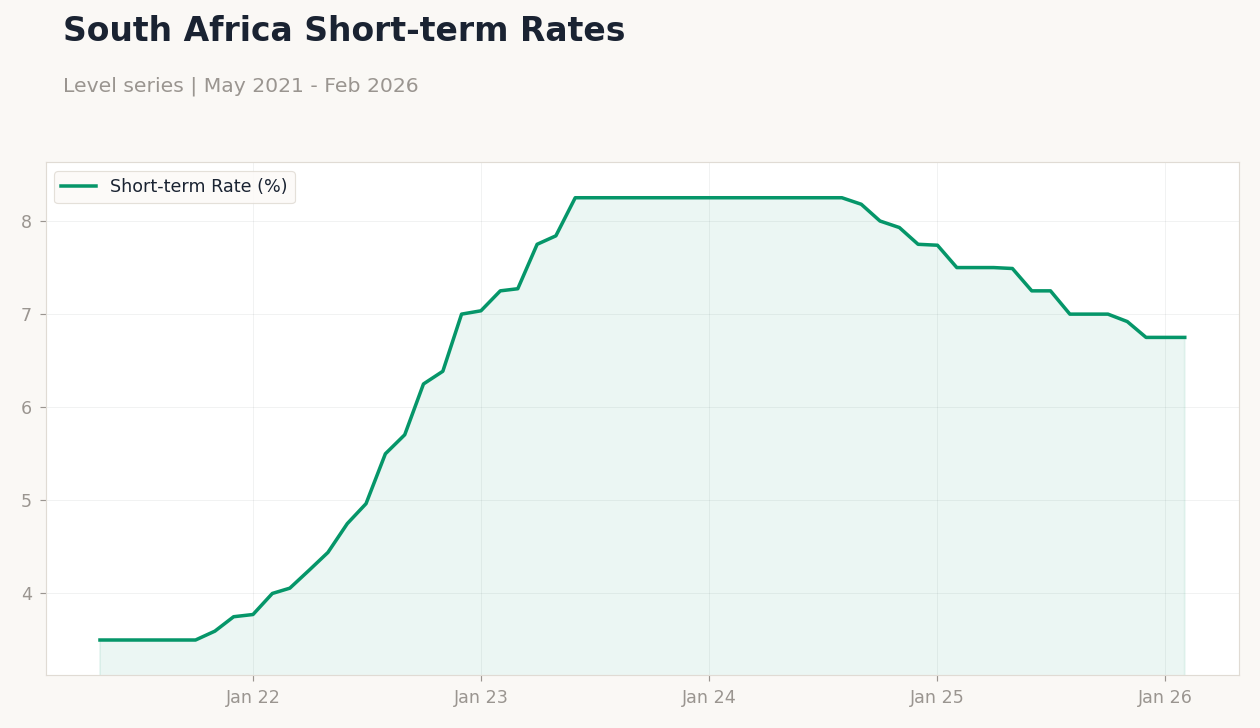
| South Africa Short-term Rate | 6.75% | +0.00% |
| South Africa Long-term Rate | 8.26% | -4.16% |
Prior Economic Events
| Data | Prior | Cons | Actual |
|---|---|---|---|
| Trade Balance | 9,310m | - | 36,920m |
 South Africa Trade Exports | Type: macro_line | Exports (ZAR): 24.67 (2026-01-01) | Range: -23.83–99.42 | Trend(5pt): 99.42,9.068,-13.52,3.869,24.67
Today's Economic Events
| Data | Prior | Cons | Time |
|---|---|---|---|
| No events available | |||
- South Africa's trade balance surged to ZAR 36.92 billion in March, far exceeding the previous ZAR 9.31 billion, boosting rand sentiment.
- JSE Top 40 rose 1.57% to 106,291.90 amid commodity gains, with platinum up 3.42% and gold climbing 2.69%.
- USD/ZAR fell 1.79% to 16.88, reflecting improved trade data and global risk appetite despite domestic challenges.
Yesterday's Recap
South Africa's trade balance for March printed at ZAR 36.92 billion, significantly outperforming the prior ZAR 9.31 billion and signaling robust export performance amid rising commodity prices. The JSE Top 40 index advanced 1.57% to close at 106,291.90, driven by strength in mining stocks as platinum prices jumped 3.42% to $1,950.00 and gold rose 2.69% to $4,647.60. The rand appreciated sharply, with USD/ZAR declining 1.79% to 16.88 and EUR/ZAR dropping 0.97% to 19.51, supported by the positive trade data and Brent crude's 4.94% gain to $118.35.
Naspers shares edged down 0.60% to ZAR 85,315.00, bucking the broader equity rally. South Africa's long-term rate fell 4.16% to 8.26%, indicating market bets on easing inflation pressures, while the short-term rate held steady at 6.75%. Bitcoin gained 2.09% to $68,088.36, aligning with global crypto momentum.
The Day Ahead
No major South African economic data releases are scheduled for today, leaving markets to digest yesterday's trade surplus and monitor global commodity trends. Attention may shift to updates on domestic issues like floods and water crises, which could influence sentiment in energy and infrastructure sectors. Globally, traders will watch oil price movements amid Middle East tensions, potentially affecting Brent-linked exports.
Without local events, rand dynamics could hinge on USD strength and emerging market flows. Broader focus remains on SARB's steady policy stance at 6.75%.
Other Economic Notes
Floods in north-eastern South Africa have forced the closure of Kruger National Park, disrupting tourism revenue and highlighting infrastructure vulnerabilities amid climate challenges. Criminal gangs are exploiting the ongoing water crisis in some areas, exacerbating social tensions and potentially impacting consumer spending in affected regions. Racial tensions from events like the Igbo leader installation and town name changes underscore persistent social divides, which could weigh on investor confidence in long-term stability.