South Africa Macro Daily(Beta Mode)
Rand Weakens Despite Trade Surge
Market Snapshot
| Asset | Level | Change |
|---|---|---|
| JSE Top 40 | 108,331.50 | -0.44% |
| USD/ZAR | 16.94 | +0.73% |
| EUR/ZAR | 19.54 | +0.23% |
| Platinum | 1,963.80 | -0.28% |
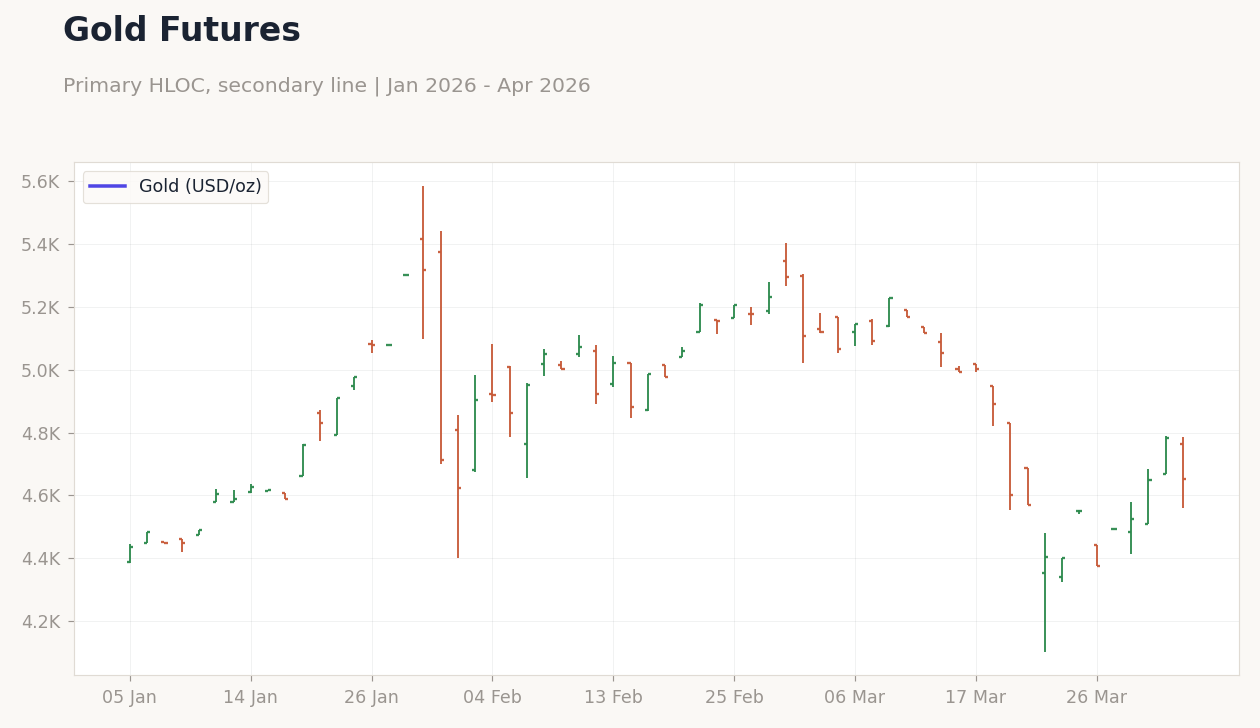
| Gold | 4,651.50 | -2.75% |
| Brent Crude | 109.03 | +7.78% |
| Naspers | 86,196.00 | +1.03% |
| Bitcoin | 66,574.92 | -2.21% |
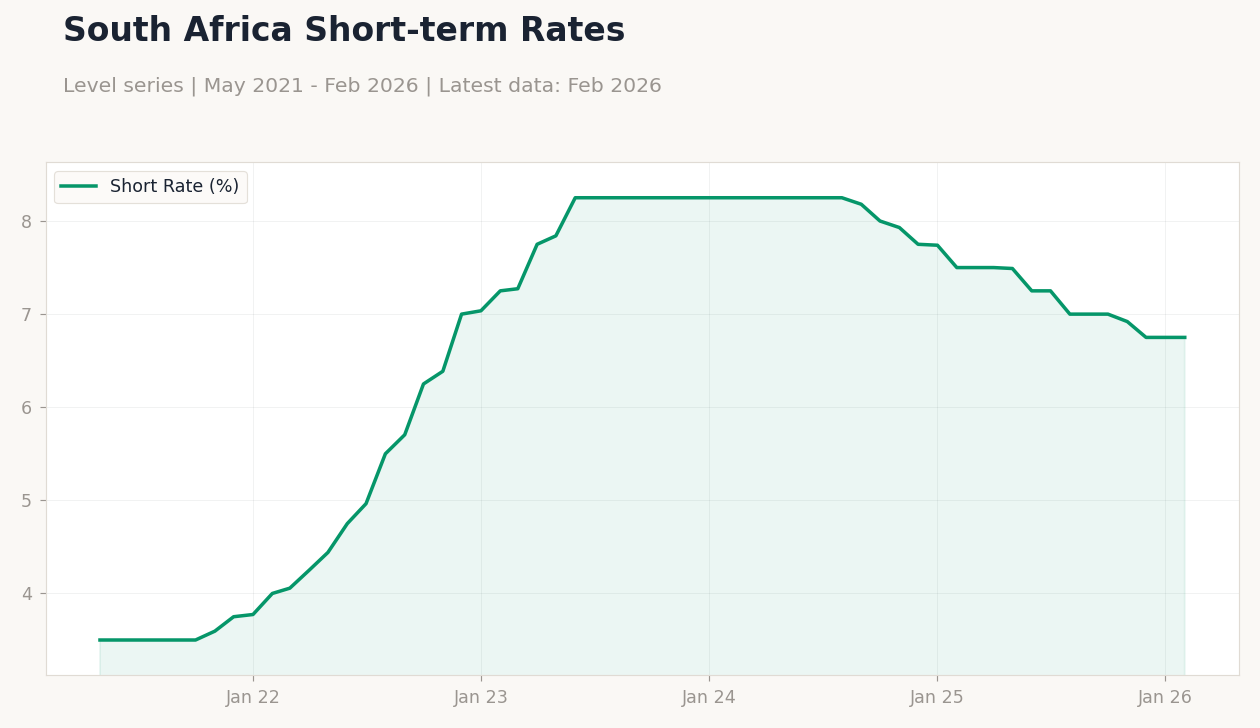
| South Africa Short-term Rate | 6.75% | +0.00% |
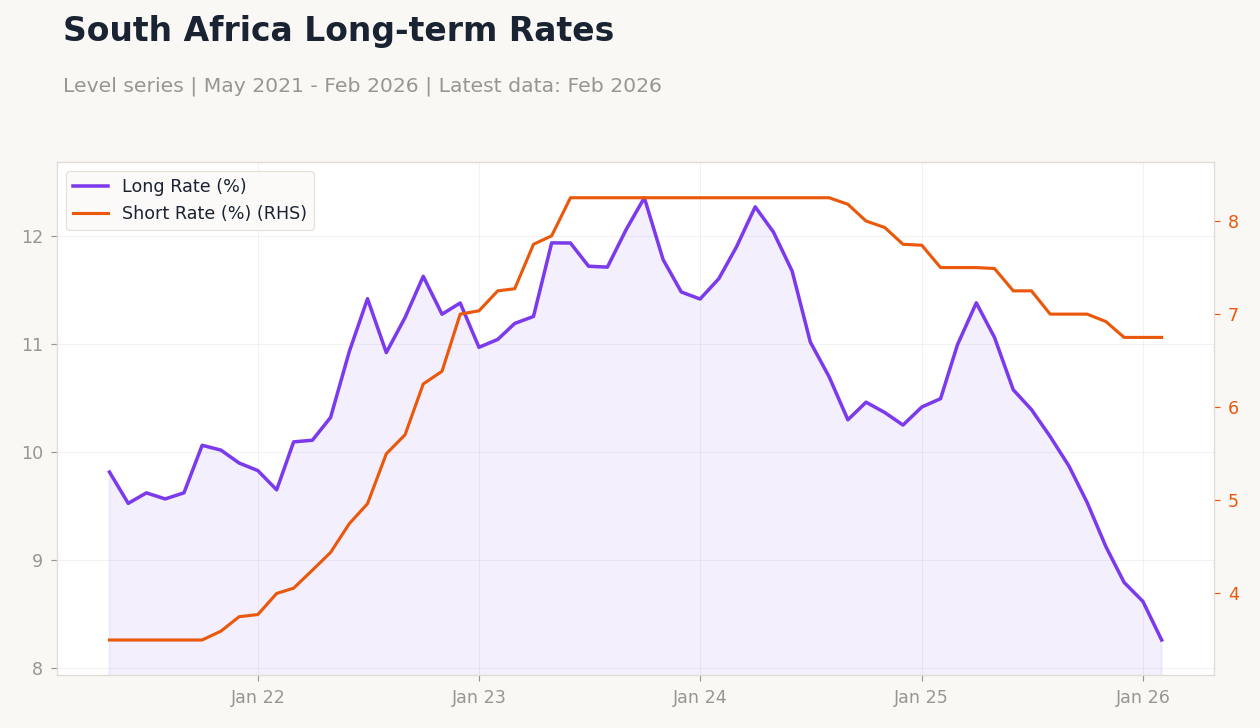
| South Africa Long-term Rate | 8.26% | -4.16% |
Prior Economic Events
| Data | Prior | Cons | Actual |
|---|---|---|---|
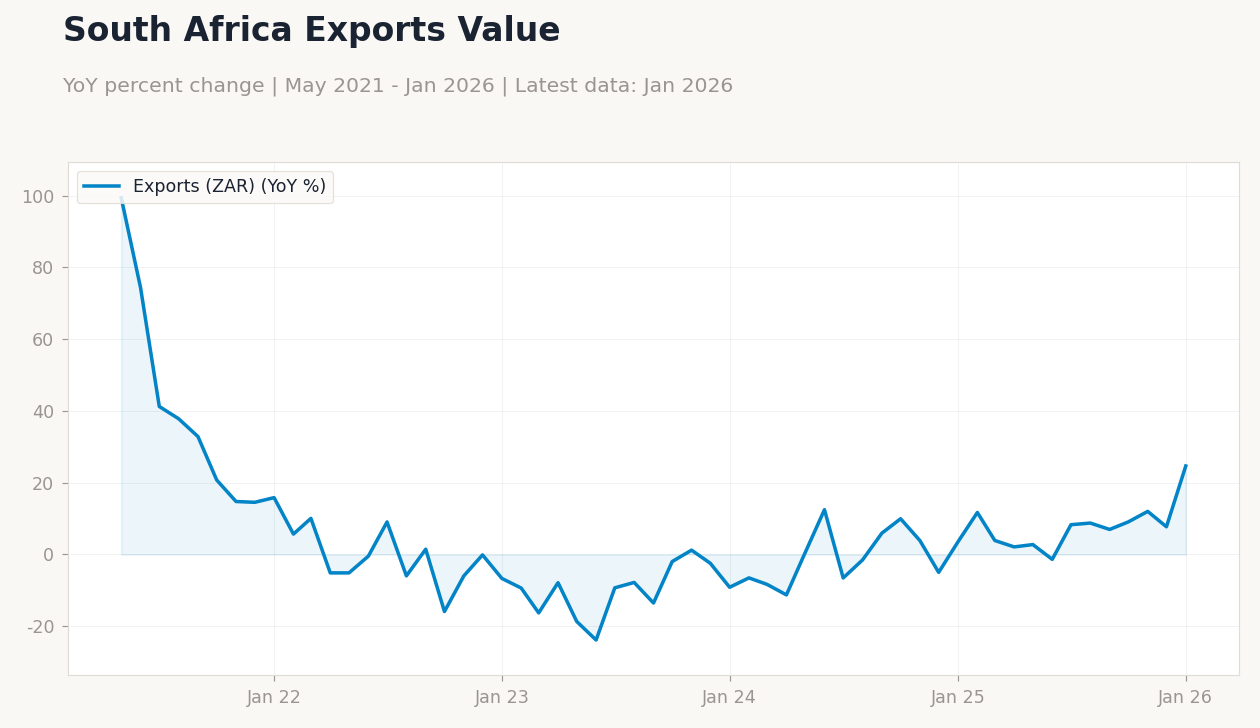
| Trade Balance | 8,500m | - | 36,920m |
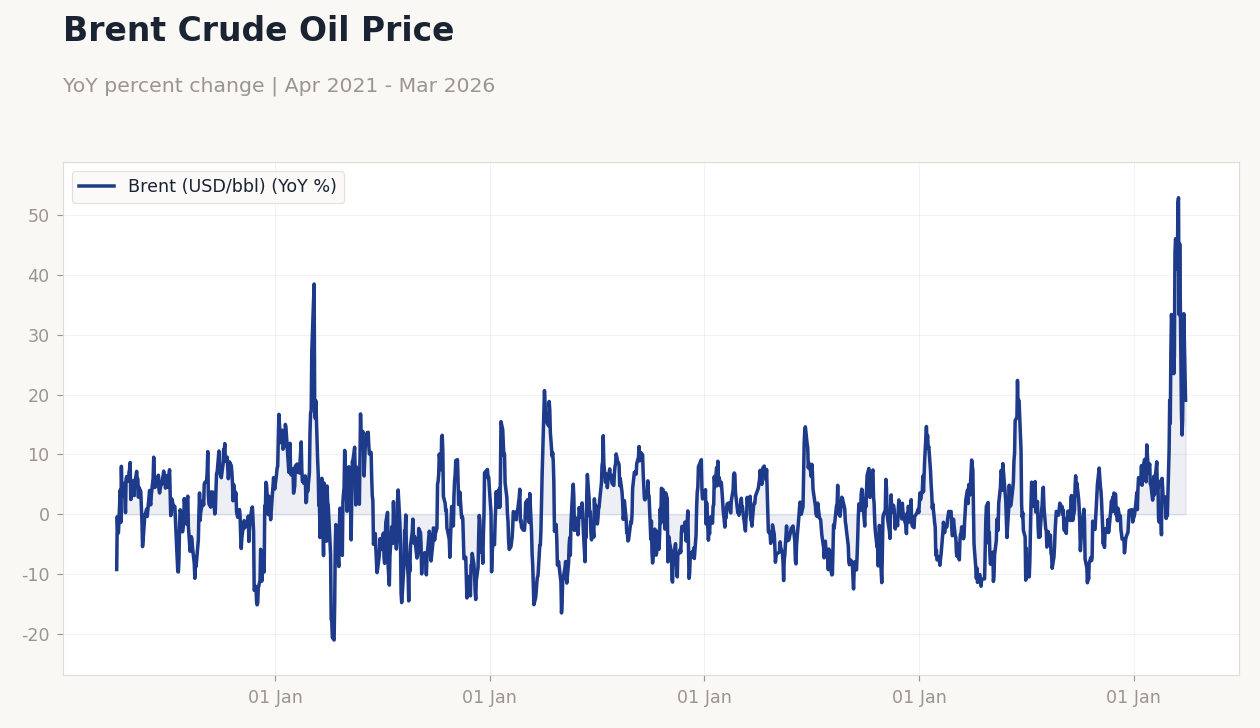 Brent Crude Oil Price | Type: macro_line | Brent (USD/bbl): 19.05 (2026-03-30) | Range: -21.02–52.89 | Trend(5pt): -9.243,-3.164,-1.141,0.2689,19.05
Today's Economic Events
| Data | Prior | Cons | Time |
|---|---|---|---|
| No events available | |||
- South Africa's trade balance unexpectedly surged to ZAR 36.92 billion, signaling export strength amid commodity volatility.
- Rand weakened against the dollar, with USD/ZAR up 0.73%, driven by global risk aversion and oil price gains.
- JSE Top 40 fell 0.44%, hit by declining gold prices, while long-term rates dropped 4.16%.
Yesterday's Recap
South Africa's trade balance surged to ZAR 36.92 billion, exceeding the previous ZAR 8.5 billion, fueled by strong exports in mining commodities like platinum despite global price swings. This medium-impact data underscored external sector resilience, potentially aiding GDP amid energy issues. Markets showed mixed responses, with the JSE Top 40 index dropping 0.44% to 108,331.50, reflecting commodity pressures as gold prices declined 2.75% to 4,651.50.
The rand depreciated, lifting USD/ZAR 0.73% to 16.94 and EUR/ZAR 0.23% to 19.54, amid Brent crude's 7.78% rise to 109.03. Platinum fell 0.28% to 1,963.80, while Naspers gained 1.03% to 86,196.00, offering some equity lift. South Africa's long-term rate decreased 4.16% to 8.26%, suggesting bets on cooling inflation, with the short-term rate unchanged at 6.75%.
These dynamics highlighted rand exposure to global shocks despite the trade boost.
The Day Ahead
No major South African economic data releases are set for today, giving markets time to process yesterday's trade figures and international news. Focus may turn to any updates on energy reliability, as load-shedding threats continue to affect industry. Tomorrow similarly has no key events, likely resulting in lower trading activity in JSE stocks and rand crosses.
Traders should watch commodity movements, particularly in platinum and gold, for insights into mining sector performance. Regional African developments, including fiscal discussions, could shape broader emerging market views.
Other Economic Notes
African economic discourse stresses wise spending beyond revenue growth, as noted by Nigeria's Taiwo Oyedele, advising nations like South Africa to manage deficits while depending on commodities. Morocco's Managem Group is investing $750 million to expand gold output, echoing South Africa's mining trends and possibly heightening competition and price swings. ITUC-Africa is advocating for better job safeguards and regulations at global talks, which may impact South Africa's labor dynamics in mining and beyond.
(cont...)