South Africa Macro Daily(Beta Mode)
Oil Slumps, Platinum Surges
Market Snapshot
| Asset | Level | Change |
|---|---|---|
| JSE Top 40 | 107,203.30 | -1.04% |
| USD/ZAR | 16.43 | -0.07% |
| EUR/ZAR | 19.16 | -0.30% |
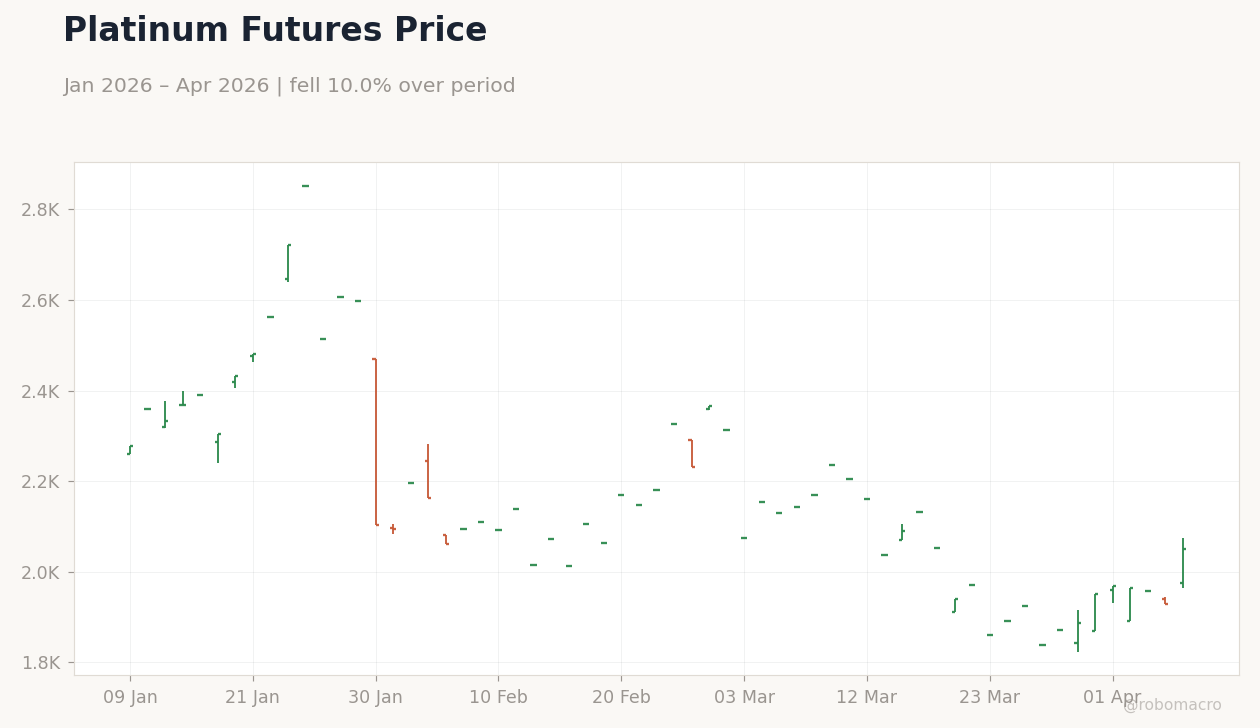
| Platinum | 2,050.60 | +6.30% |
| Gold | 4,749.50 | +1.98% |
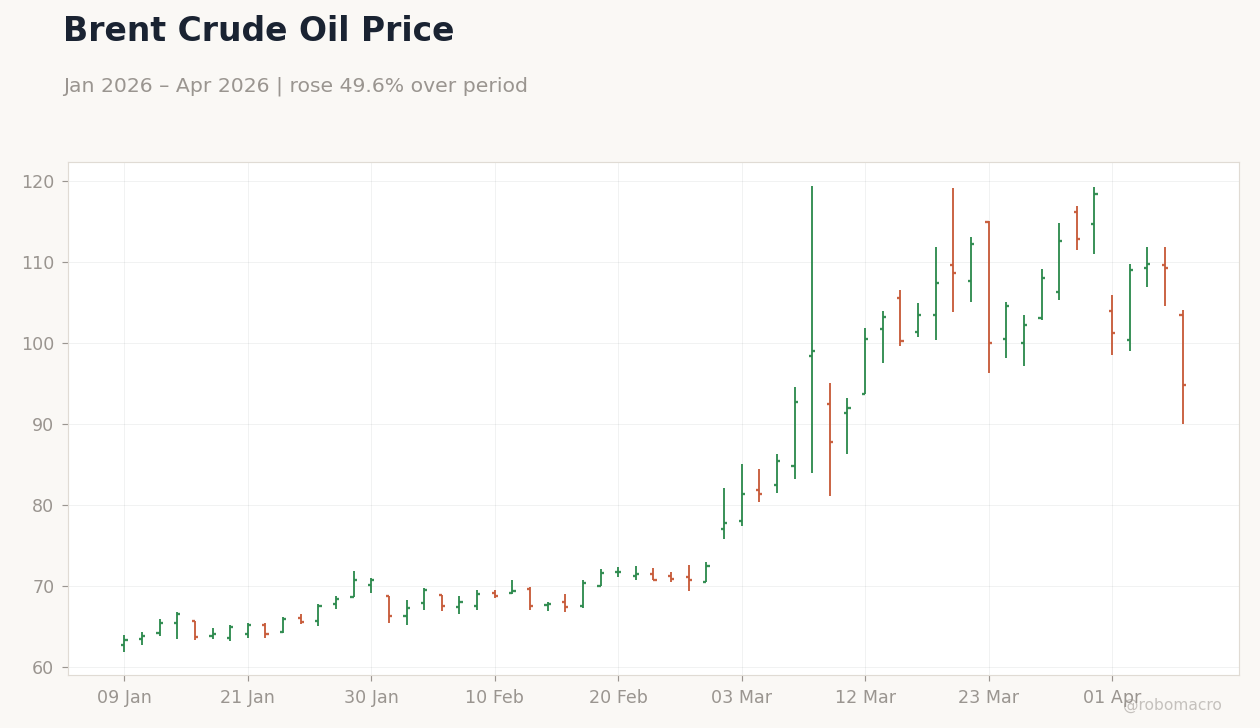
| Brent Crude | 94.75 | -13.29% |
| Naspers | 87,050.00 | +0.01% |
| Bitcoin | 70,979.91 | -1.34% |
| South Africa Short-term Rate | 6.75% | +0.00% |
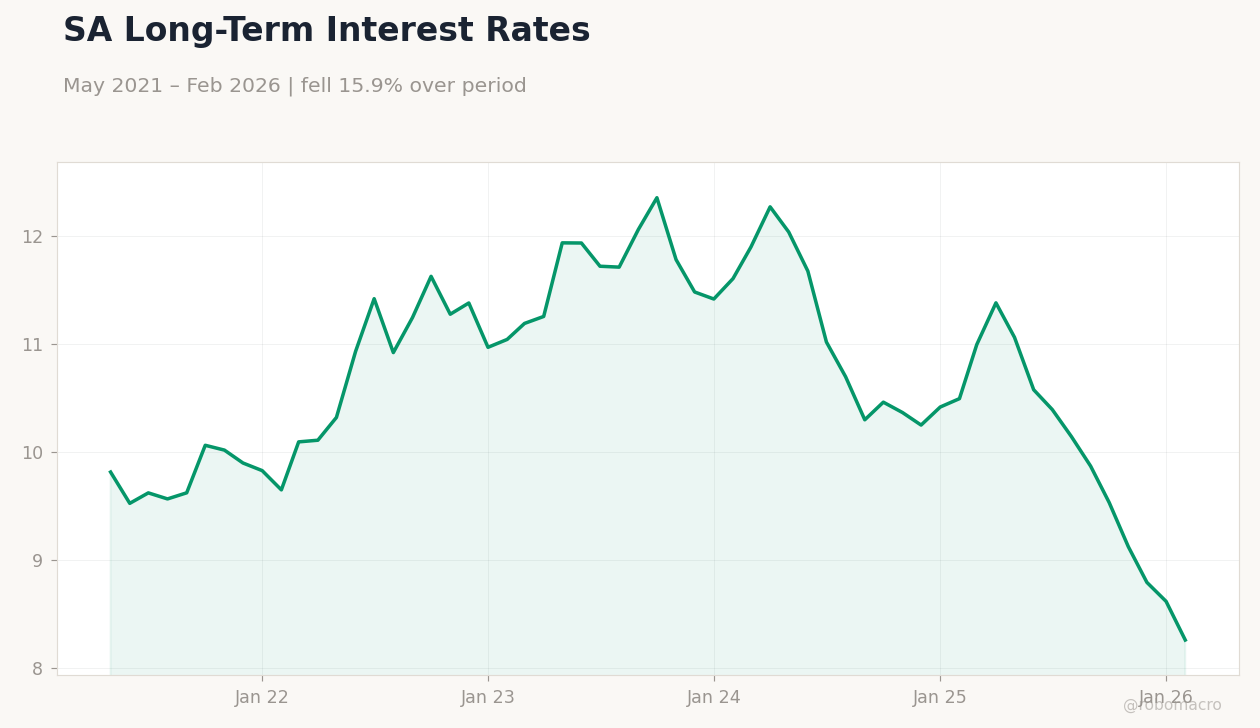
| South Africa Long-term Rate | 8.26% | -4.16% |
Prior Economic Events
| Data | Prior | Cons | Actual |
|---|---|---|---|
| No events available | |||
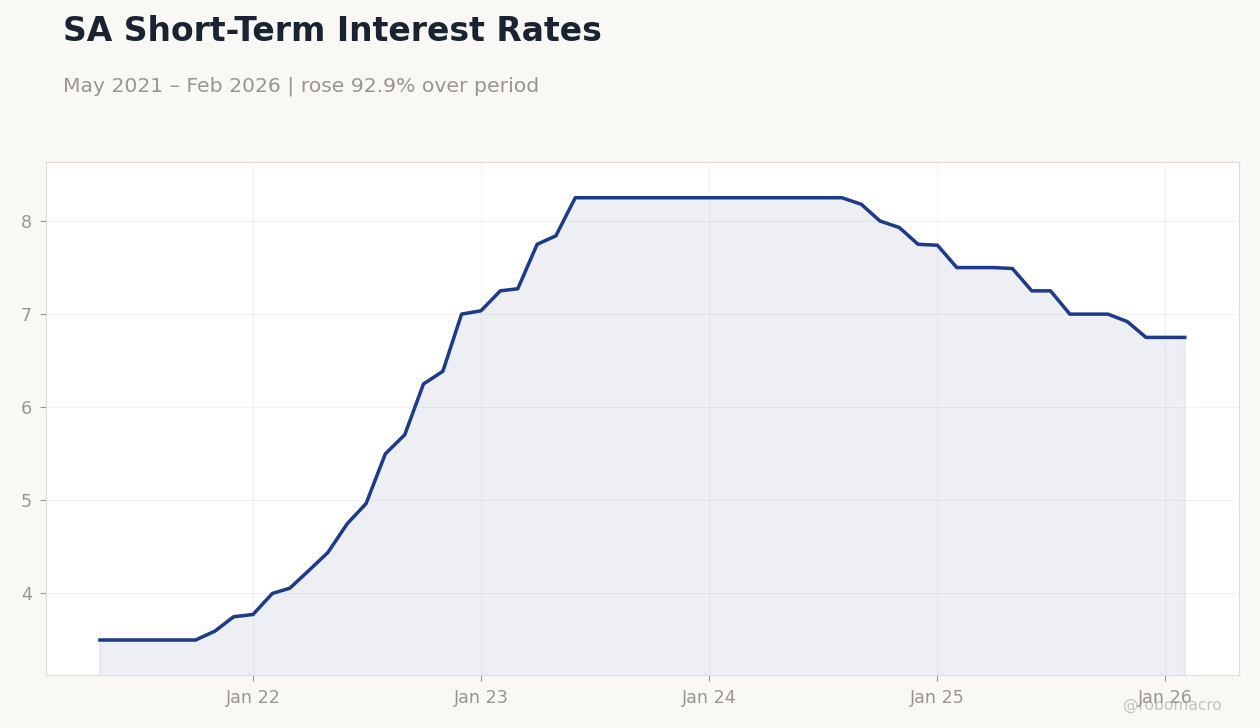 SA Short-Term Interest Rates | Type: macro_line | Short-Term Rate %: 6.75 (2026-02-01) | Range: 3.5–8.25 | Trend(5pt): 3.5,4.964,8.25,7.93,6.75
Today's Economic Events
| Data | Prior | Cons | Time |
|---|---|---|---|
| No events available | |||
- Brent crude plunged 13.29% on Iran ceasefire, easing SA fuel costs.
- Platinum jumped 6.30% amid supply constraints, lifting mining outlook.
- SARB notes economy's resilience despite Middle East volatility.
Yesterday's Recap
South African markets displayed mixed results, with the JSE Top 40 index falling 1.04% to 107,203.30 amid global risk aversion. The USD/ZAR pair dipped 0.07% to 16.43, and EUR/ZAR declined 0.30% to 19.16, reflecting rand firmness. Platinum prices soared 6.30% to 2,050.60, fueled by production limits and demand prospects, while gold climbed 1.98% to 4,749.50 as a safe haven.
Brent crude dropped sharply by 13.29% to 94.75, spurred by the Iran ceasefire news that reduces energy expenses for import-reliant South Africa. Naspers stock rose marginally by 0.01% to 87,050.00, contrasting with Bitcoin's 1.34% decline to 70,979.91 in a softer crypto market. The South Africa long-term rate fell 4.16% to 8.26%, indicating bond market easing, while the short-term rate remained unchanged at 6.75%.
No significant data releases took place, directing attention to geopolitical shifts.
The Day Ahead
South Africa's economic schedule is quiet, with no planned data releases or events. Markets will track rand movements and commodity trends, especially in platinum and gold, for mining sector effects. Falling global oil prices may prompt fuel price reviews, impacting consumer expenditure.
SARB updates could offer insights on inflation management in this stable setting. US-SA diplomatic advancements, including the new envoy's credentials, might encourage investment inflows. Vigilance is advised for any sudden news on energy stability or budget matters.
Other Economic Notes
The SARB has underscored South Africa's economic strength against financial market turbulence from the Middle East conflict, evidenced by steady rand and bond yields. Potential fuel price increases in May, alongside elevated interest rates, are straining consumers and may curb retail demand. Platinum's strong performance provides uplift for mining, though persistent infrastructure issues, such as power supply risks, weigh on operations.
Broader African developments, like Nigeria's bank recapitalization and Ghana's rate struggles, highlight shared continental challenges that could inform SA policy.