South Africa Macro Daily(Beta Mode)
Rand Firms on Weaker Dollar, Oil Stability
Market Snapshot
| Asset | Level | Change |
|---|---|---|
| JSE Top 40 | 111,944.60 | +1.13% |
| USD/ZAR | 16.35 | -0.19% |
| EUR/ZAR | 19.27 | -0.06% |
| Platinum | 2,128.30 | +2.10% |
| Gold | 4,847.10 | +0.46% |
| Brent Crude | 95.14 | +0.37% |
| Naspers | 89,350.00 | -0.54% |
| Bitcoin | 74,365.06 | -0.16% |
| South Africa Short-term Rate | 6.75% | +0.00% |
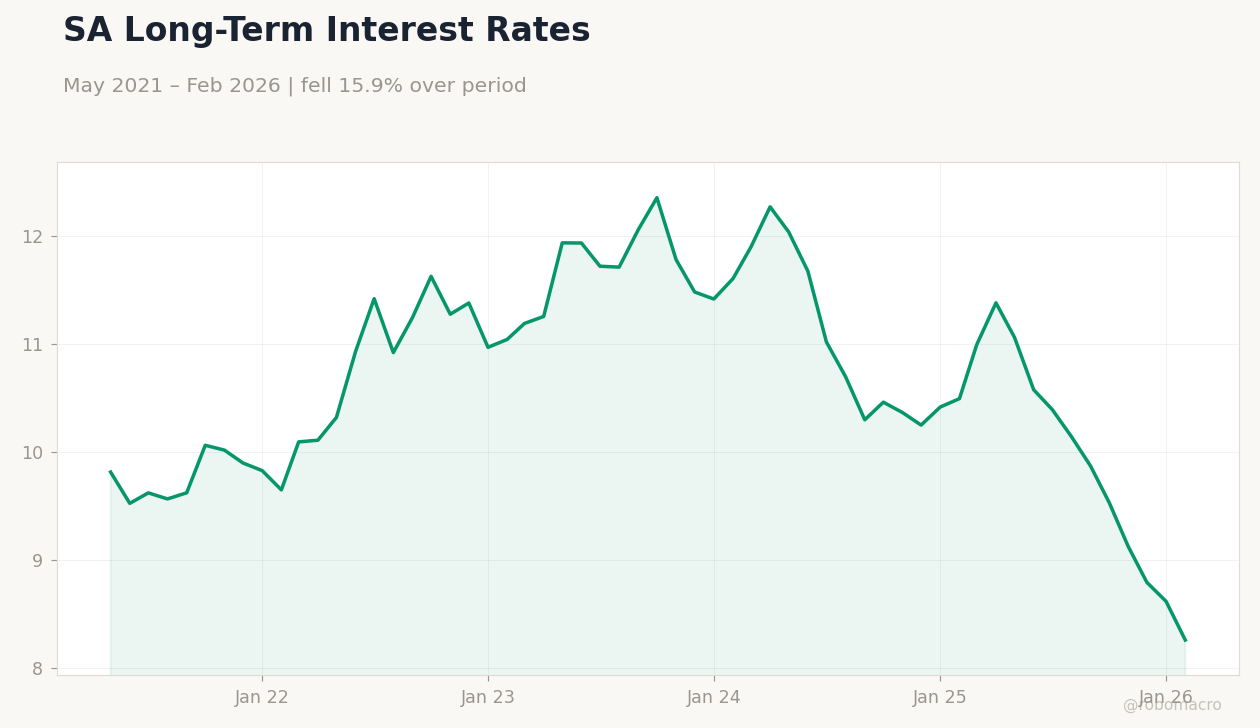
| South Africa Long-term Rate | 8.26% | -4.16% |
Prior Economic Events
| Data | Prior | Cons | Actual |
|---|---|---|---|
| No events available | |||
 SA Short-Term Interest Rates | Type: macro_line | Short Rate %: 6.75 (2026-02-01) | Range: 3.5–8.25 | Trend(5pt): 3.5,4.964,8.25,7.93,6.75
Today's Economic Events
| Data | Prior | Cons | Time |
|---|---|---|---|
| Wednesday (2026-04-22) | |||
| Inflation Rate Month-over-Month | 0.40 | - | 04:00 |
| Inflation Rate Year-over-Year | 3 | - | 04:00 |
- Rand firms to 16.35/USD on weaker dollar, oil stability aids EM currencies.
- JSE Top 40 up 1.13% on platinum surge, bonds rally with long rates down 4.16%.
- Global news highlights trade deals, energy investments, and IMF warnings for Africa.
Yesterday's Recap
South African markets displayed strength on April 14, with the JSE Top 40 index advancing 1.13% to 111,944.60, fueled by a 2.10% increase in platinum to 2,128.30 amid supply issues. The rand gained modestly, as USD/ZAR declined 0.19% to 16.35, bolstered by a softening dollar and Brent crude at 95.14 (+0.37%). EUR/ZAR slipped 0.06% to 19.27, aligning with emerging market gains.
Gold rose 0.46% to 4,847.10, while Bitcoin eased 0.16% to 74,365.06 in mixed risk sentiment. Naspers dropped 0.54% to 89,350.00, pressuring tech stocks. Long-term rates fell 4.16% to 8.26%, reflecting bets on SARB easing, with short-term rates unchanged at 6.75%.
No significant data was released, though fuel price hikes underscored consumer and business strains.
The Day Ahead
Markets await inflation releases on April 22 at 04:00, including month-over-month data (previous: 0.4%) and year-over-year figures (previous: 3%), which could shape SARB policy. No events are set for April 15 or 16, allowing focus on global developments. Traders monitor potential SARB remarks on fiscal challenges and energy issues.
Attention also on trade implications from the China-South Africa citrus pact.
Other Economic Notes
Fuel price increases are straining South African households and transport, as IOL notes emerging real costs from global oil fluctuations. The China-South Africa citrus agreement fosters agricultural ties, potentially enhancing exports and rural growth. Germany's €200mn climate loan aids grid upgrades and renewables, mitigating load-shedding and supporting energy stability.
Global Macro News
IMF highlights growing economic strains in Sub-Saharan Africa from global conflicts and commodity volatility, affecting South Africa's partners. A weakening dollar and declining oil prices offer relief for emerging markets, stabilizing the rand near R17, according to Startup Fortune. Fed's Bessent advises holding U.S.
rates steady amid geopolitical risks, which may postpone global easing and influence SARB moves. (cont...)