South Africa Macro Daily(Beta Mode)
Rand Pressured by Oil Rally
Market Snapshot
| Asset | Level | Change |
|---|---|---|
| JSE Top 40 | 110,842.70 | -0.61% |
| USD/ZAR | 16.42 | +0.42% |
| EUR/ZAR | 19.34 | +0.15% |
| Platinum | 2,094.10 | -0.89% |
| Gold | 4,785.40 | -0.30% |
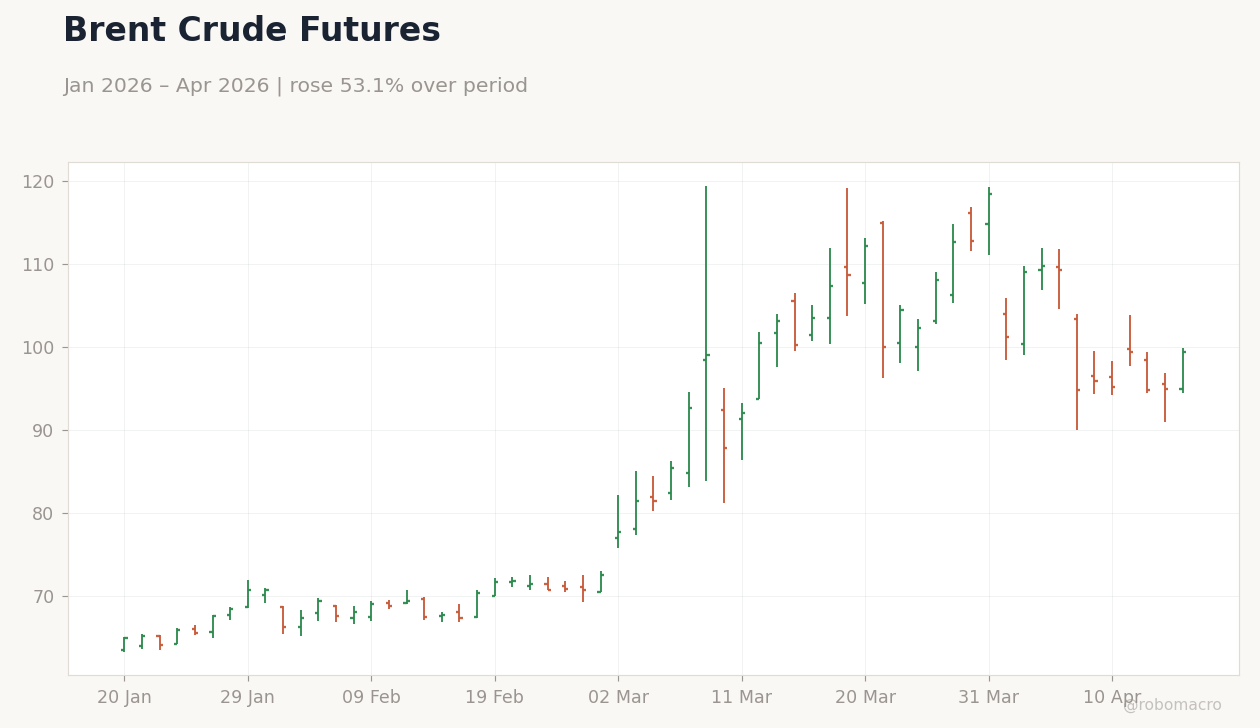
| Brent Crude | 99.39 | +4.70% |
| Naspers | 91,572.00 | +0.66% |
| Bitcoin | 74,651.19 | -0.21% |
| South Africa Short-term Rate | 6.75% | +0.00% |
| South Africa Long-term Rate | 9.05% | +9.60% |
Prior Economic Events
| Data | Prior | Cons | Actual |
|---|---|---|---|
| No events available | |||
 Brent Crude Price | Type: macro_line | Brent USD/bbl: 123.3 (2026-04-13) | Range: 59.93–138.2 | Trend(5pt): 66.54,112.3,90.99,82.39,123.3
Today's Economic Events
| Data | Prior | Cons | Time |
|---|---|---|---|
| Wednesday (2026-04-22) | |||
| Inflation Rate Month-over-Month | 0.40 | - | 04:00 |
| Inflation Rate Year-over-Year | 3 | - | 04:00 |
- USD/ZAR climbed 0.42% to 16.42 as Brent crude surged 4.70% to 99.39, fueling inflation concerns from Middle East tensions.
- JSE Top 40 dropped 0.61% to 110,842.70, hit by platinum's 0.89% decline to 2,094.10, with long-term rates up 9.60% to 9.05%.
- SARB stresses economic resilience amid global shocks, with March inflation forecast at around 3.8% y/y.
Yesterday's Recap
South African markets ended mixed amid volatility from rising oil prices and geopolitical tensions. The JSE Top 40 index fell 0.61% to 110,842.70, weighed down by mining sector weakness as platinum declined 0.89% to 2,094.10 and gold dipped 0.30% to 4,785.40. The rand softened against key currencies, with USD/ZAR rising 0.42% to 16.42 and EUR/ZAR increasing 0.15% to 19.34, driven by imported inflation risks from Brent crude's 4.70% jump to 99.39.
South Africa's long-term rate rose sharply by 9.60% to 9.05%, reflecting worries over fiscal strains and potential policy tightening, while the short-term rate remained unchanged at 6.75%. Naspers provided a bright spot, gaining 0.66% to 91,572.00, but Bitcoin edged down 0.21% to 74,651.19 amid risk aversion. No significant economic data was released yesterday, with focus on commodity movements and international news.
The Day Ahead
No major South African data releases are scheduled for today or tomorrow. Attention turns to upcoming inflation figures on April 22, with March CPI expected around 3.8% y/y based on analyst forecasts, amid pressures from oil, fertilizer, and rand weakness. This data will be key for assessing SARB's policy direction.
Globally, markets will monitor Fed commentary and energy developments, which could influence EM currencies like the rand and JSE performance. Ongoing Middle East conflicts may heighten volatility in commodities and bonds, with potential impacts on domestic sentiment.
Other Economic Notes
South Africa's economy is navigating challenges from Middle East conflicts, which are elevating oil and fertilizer prices and contributing to expected March inflation of about 3.8% y/y. Fiscal concerns linger, with warnings of wider deficits due to revenue gaps, limiting growth potential. On a positive note, bond markets show recovery, as evidenced by Van Eck's profitable investments in South African debt.
Export sectors, such as wineries, are poised to benefit from China's zero-tariff policy, offering some uplift amid broader slowdowns. The IMF anticipates African growth easing to 4.3% this year due to regional disruptions, underscoring commodity reliance.