South Africa Macro Daily(Beta Mode)
Inflation Ticks Up, Rand Slips
Market Snapshot
| Asset | Level | Change |
|---|---|---|
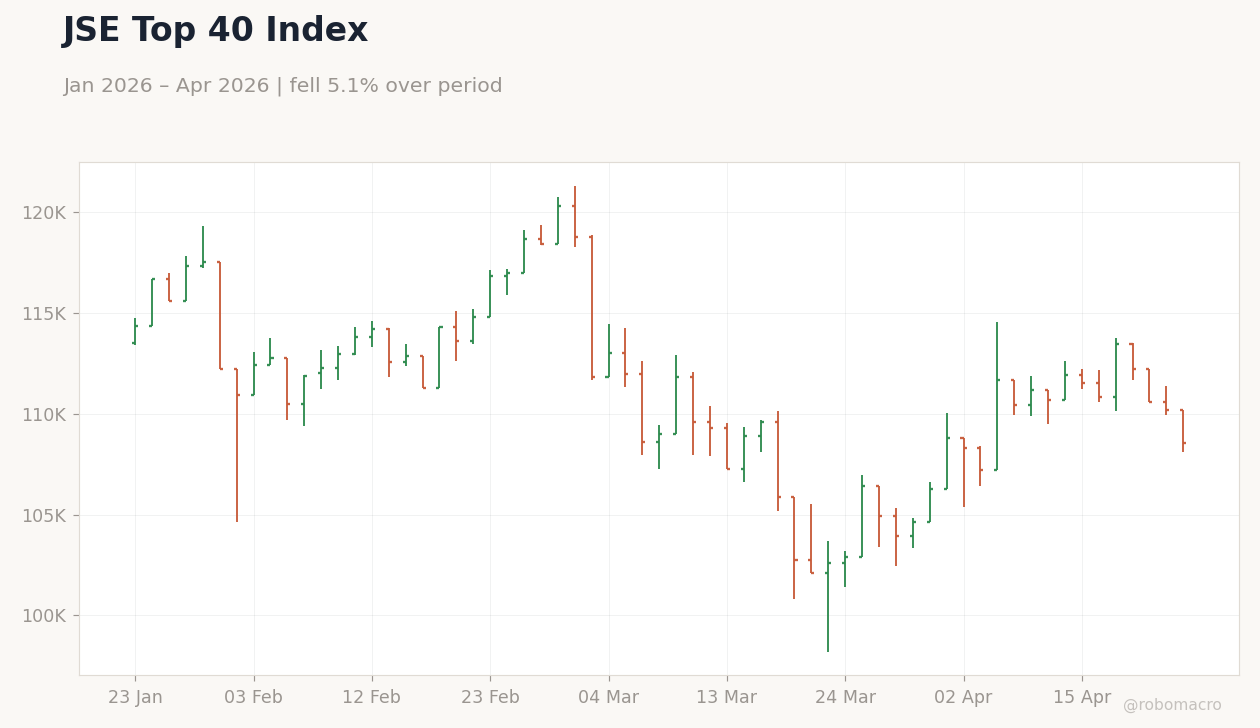
| JSE Top 40 | 108,579.30 | -1.47% |
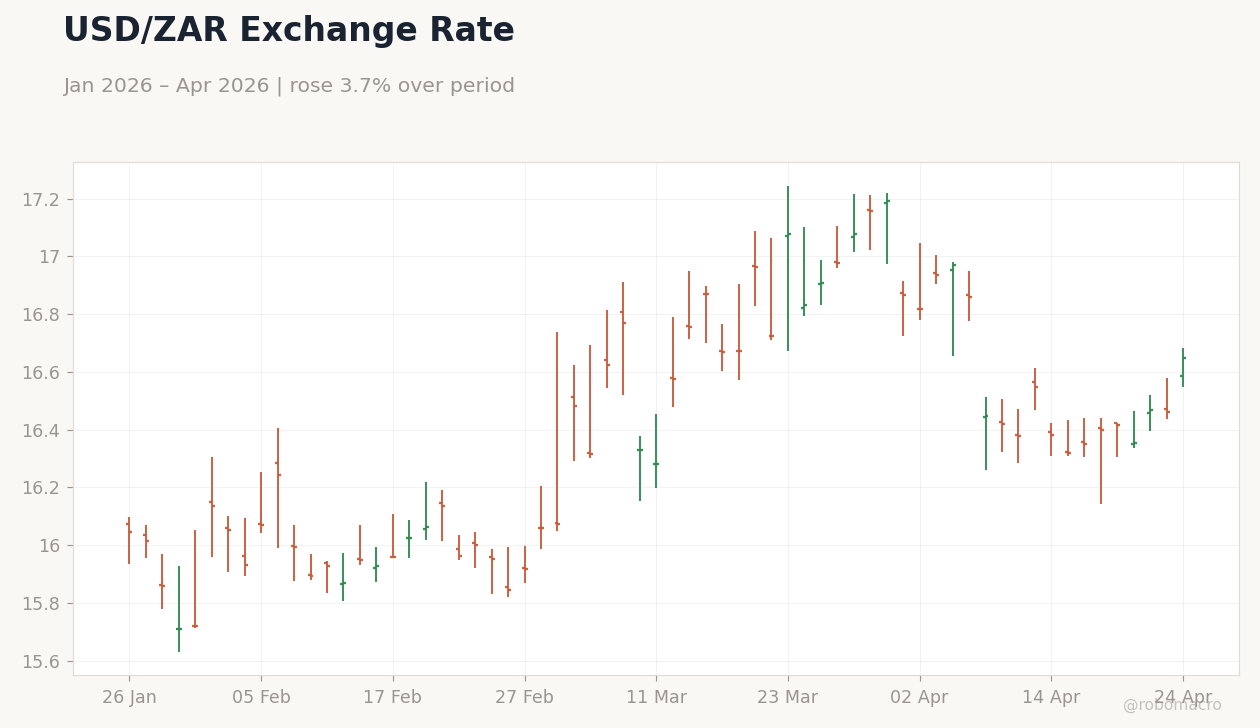
| USD/ZAR | 16.65 | +1.13% |
| EUR/ZAR | 19.43 | +0.79% |
| Platinum | 1,987.10 | -1.76% |
| Gold | 4,683.90 | -0.45% |
| Brent Crude | 106.16 | +1.04% |
| Naspers | 92,471.00 | -1.71% |
| Bitcoin | 77,661.90 | -0.69% |
| South Africa Short-term Rate | 6.75% | +0.00% |
| South Africa Long-term Rate | 9.05% | +9.60% |
Prior Economic Events
| Data | Prior | Cons | Actual |
|---|---|---|---|
| Inflation Rate Month-over-Month | 0.40 | - | 0.60 |
| Inflation Rate Year-over-Year | 3 | 3.10 | 3.10 |
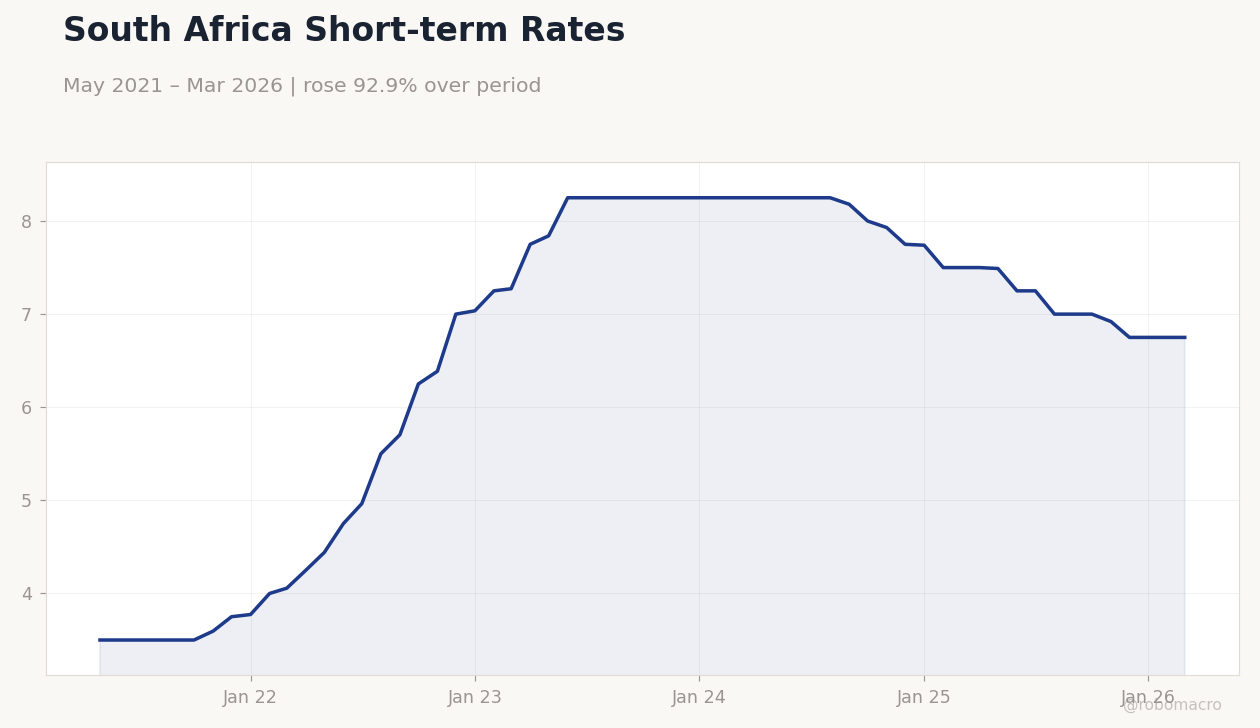 South Africa Short-term Rates | Type: macro_line | Short-term Rate %: 6.75 (2026-03-01) | Range: 3.5–8.25 | Trend(5pt): 3.5,4.964,8.25,7.93,6.75
Today's Economic Events
| Data | Prior | Cons | Time |
|---|---|---|---|
| No events available | |||
- South Africa's March inflation rose to 3.1% YoY, meeting consensus, amid higher education and housing costs, while MoM increased to 0.6%.
- JSE Top 40 fell 1.47% and USD/ZAR rose 1.13%, reflecting risk-off sentiment and commodity weakness.
- SARB repo rate steady at 6.75%, with warnings of potential hikes if global inflation risks escalate.
Yesterday's Recap
South Africa's inflation data for March showed the year-over-year rate climbing to 3.1% from 3%, aligning with consensus expectations, driven by rises in education and housing costs. The month-over-month inflation accelerated to 0.6% from 0.4%, indicating building price pressures but remaining within the SARB's 3-6% target band. Markets reacted negatively, with the JSE Top 40 index dropping 1.47% to 108,579.30, weighed down by mining stocks amid platinum's 1.76% decline to 1,987.10.
The rand weakened, as USD/ZAR rose 1.13% to 16.65 and EUR/ZAR increased 0.79% to 19.43, influenced by global risk aversion and higher US yields. Gold edged down 0.45% to 4,683.90, while Brent crude gained 1.04% to 106.16, offering some offset to energy-linked equities. Naspers shares fell 1.71% to 92,471.00, tracking broader tech weakness, and Bitcoin dipped 0.69% to 77,661.90.
South Africa's long-term rate surged 9.60% to 9.05%, signaling fiscal concerns, while the short-term rate held at 6.75%.
The Day Ahead
No major South African economic releases are scheduled for today, providing a brief respite for markets to digest yesterday's inflation figures. Attention may shift to global developments, such as US economic indicators, which could influence rand volatility through dollar strength. Tomorrow also lacks key local events, potentially keeping focus on commodity prices and energy sector news.
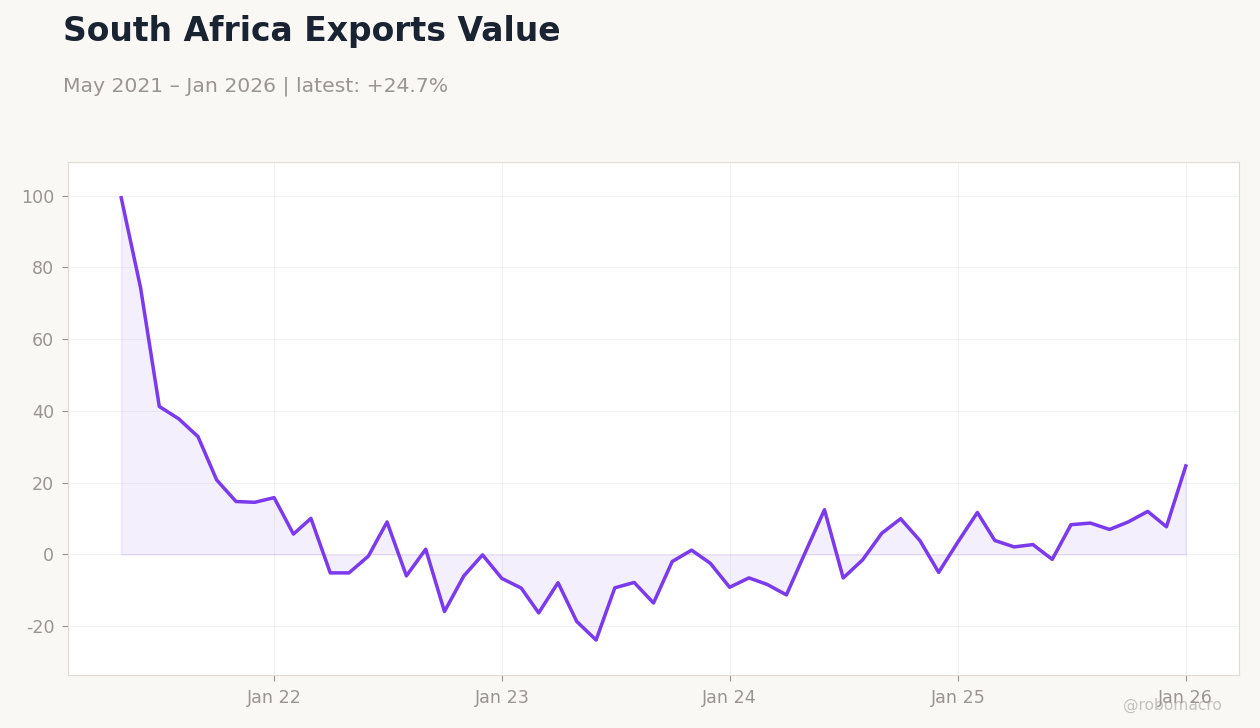
Investors should monitor any updates on Eskom's power supply challenges, as load shedding risks could impact mining output. Broader sentiment may hinge on international trade tensions affecting South Africa's export sectors.
Other Economic Notes
South Africa's 2026 budget has been welcomed for its austerity measures, though rand volatility persists amid worker discontent and fiscal overruns. Energy ties with Nigeria are deepening to enhance continental security and reduce trade barriers, potentially boosting sustainable growth in the mining and power sectors. A report warns that delaying coal phase-out could lead to 32,000 preventable deaths by 2050, highlighting tensions between environmental goals and energy reliability amid Eskom's challenges.
(cont...)