South Africa Macro Daily(Beta Mode)
Rand Weakens Ahead of SARB Decision
Market Snapshot
| Asset | Level | Change |
|---|---|---|
| JSE Top 40 | 107,382.25 | +0.14% |
| USD/ZAR | 16.37 | +0.05% |
| EUR/ZAR | 19.02 | -0.09% |
| Platinum | 1,913.00 | -0.45% |
| Gold | 4,545.10 | +1.02% |
| Brent Crude | 92.64 | -1.14% |
| Naspers | 84,784.00 | -0.93% |
| Bitcoin | 73,602.30 | +0.09% |
| South Africa Short-term Rate | 6.75% | +0.00% |
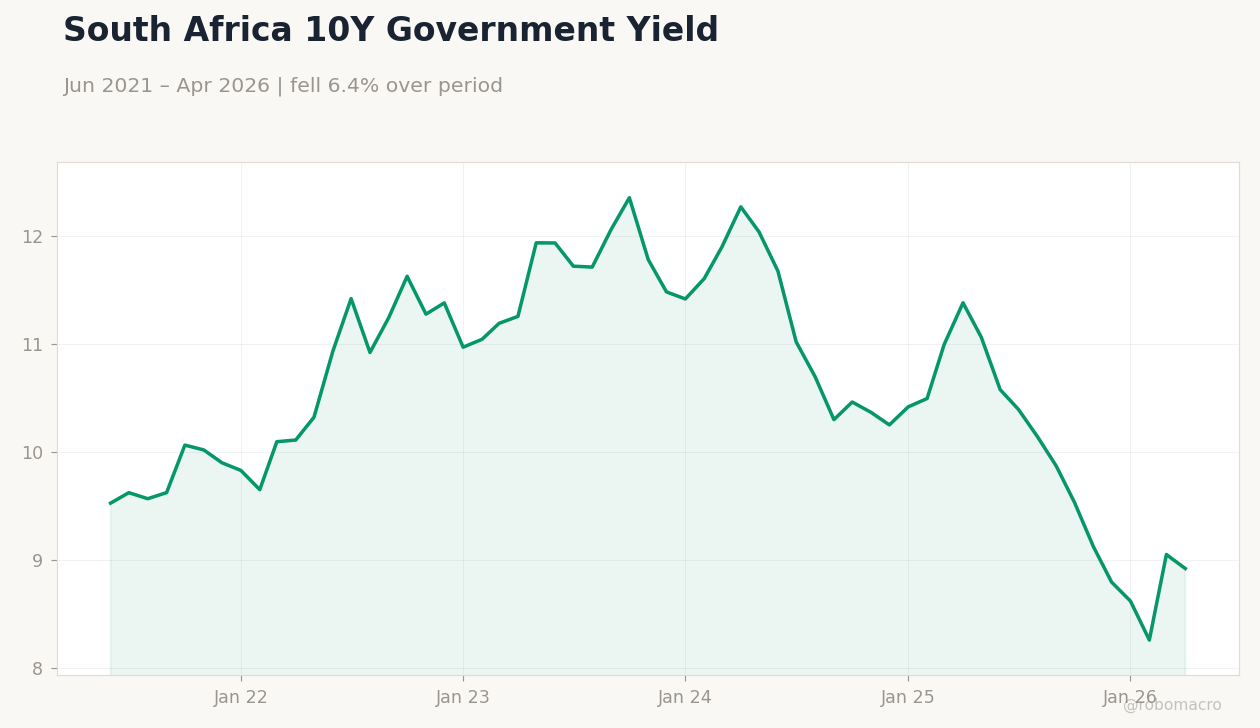
| South Africa Long-term Rate | 8.92% | -1.44% |
Prior Economic Events
| Data | Prior | Cons | Actual |
|---|---|---|---|
| No events available | |||
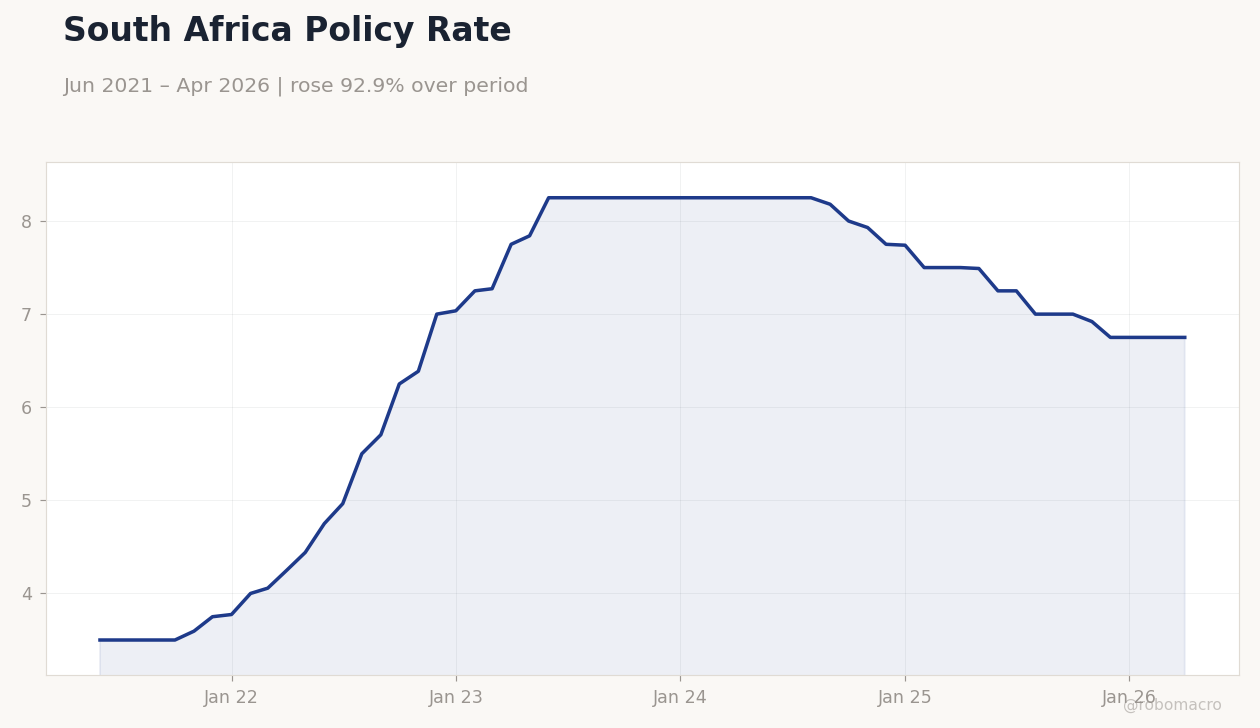 South Africa Policy Rate | Type: macro_line | Policy Rate %: 6.75 (2026-04-01) | Range: 3.5–8.25 | Trend(5pt): 3.5,5.5,8.25,7.75,6.75
Today's Economic Events
| Data | Prior | Cons | Time |
|---|---|---|---|
| Trade Balance | 31,870m | - | 04:00 |
- Trade balance data due today amid persistent fuel-driven inflation risks.
- USD/ZAR holds near 16.37 as markets price first repo hike since 2023.
- JSE Top 40 edges higher while long-term yields fall 14bp on safe-haven flows.
Yesterday's Recap
South African markets closed with limited movement after a quiet session lacking fresh data. The JSE Top 40 rose 0.14 percent to 107,382 while the long-term government bond yield dropped 14 basis points to 8.92 percent. USD/ZAR ticked up 0.05 percent to 16.37 as investors positioned ahead of the weekend.
Gold advanced 1.02 percent to $4,545 per ounce, supporting mining names, whereas platinum fell 0.45 percent. Brent crude slipped 1.14 percent to $92.64, easing some imported inflation pressure. Naspers declined 0.93 percent, weighing on the broader equity index.
No major economic releases occurred on 28 May, leaving sentiment driven by global commodity moves and domestic rate speculation.
The Day Ahead
Statistics South Africa will release the April trade balance at 04:00 ET, the only scheduled data point. A narrower surplus than March’s R31.87 billion would reinforce rand vulnerability. Markets will also monitor any SARB commentary ahead of the June MPC meeting.
Fuel price adjustments scheduled for early June remain a key inflation risk. Load-shedding reports from Eskom will influence sentiment toward mining output. Traders expect the rand to stay range-bound until the trade print.
Other Economic Notes
Fuel costs continue to push headline inflation above the SARB’s 4.5 percent target midpoint. Persistent load-shedding constrains industrial production and raises operating costs for platinum and gold miners. Portfolio flows into local bonds have improved recently, reflected in the sharp drop in long-term yields.
The current account surplus is narrowing, increasing sensitivity to commodity price swings. These factors keep the rand exposed to external shocks despite attractive real yields.
Global Macro News
Gold’s surge to $4,545 supports South Africa’s export receipts and fiscal revenue. Lower Brent prices reduce the immediate imported inflation impulse from oil. The dollar index remains firm, capping rand gains across EM currencies.
US Treasury yields have eased, aiding demand for SA government paper. <i>↓ p.2</i>