South Africa Macro Daily(Beta Mode)
Rand Firms on Commodity Gains Amid Policy Scrutiny
Market Snapshot
| Asset | Level | Change |
|---|---|---|
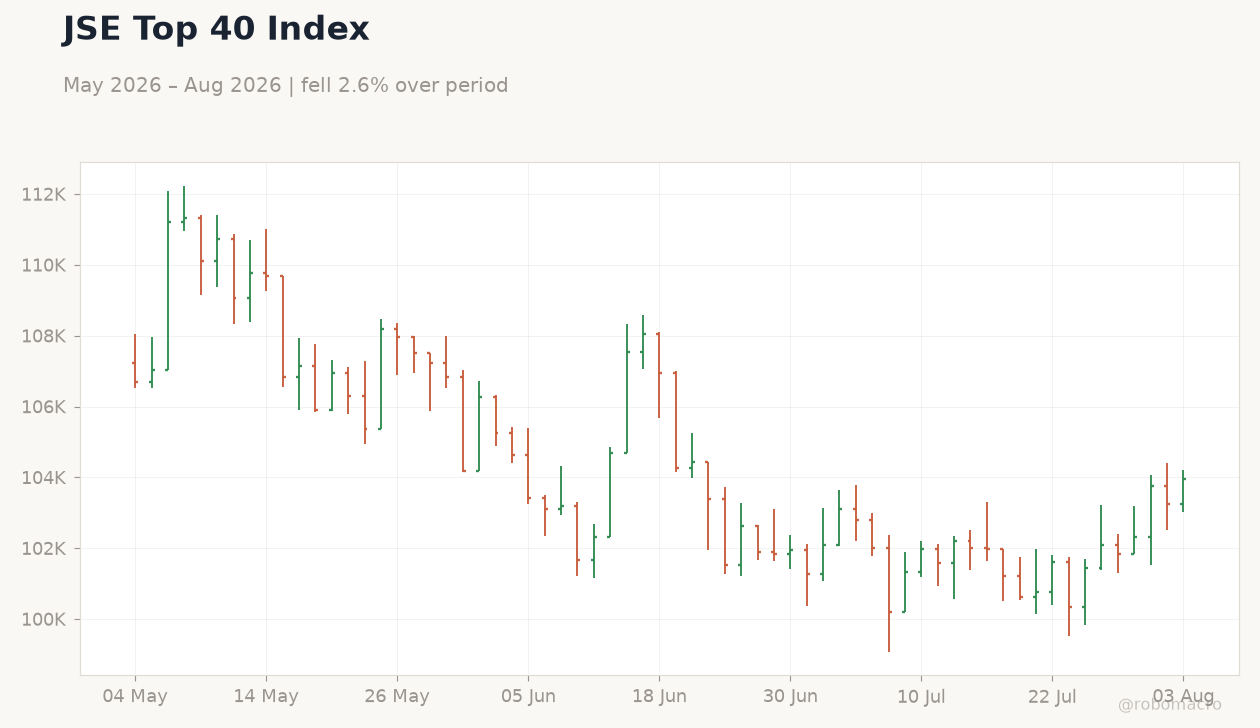
| JSE Top 40 | 103,923.01 | +0.64% |
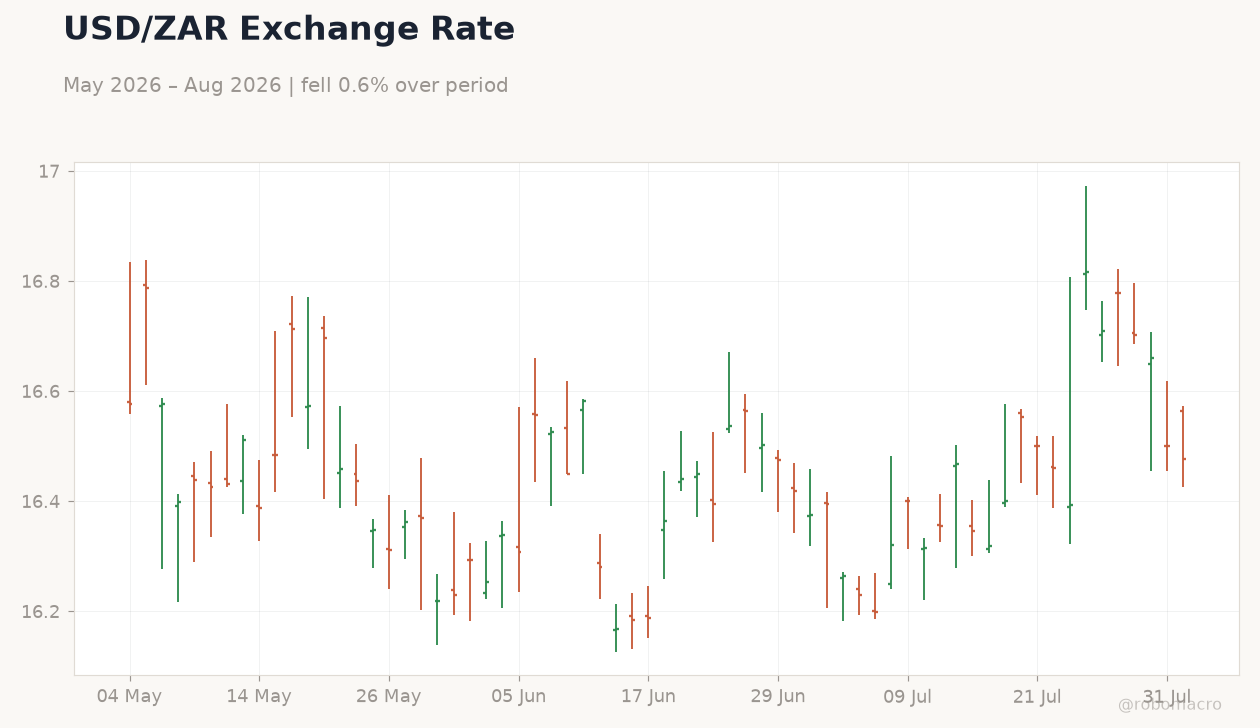
| USD/ZAR | 16.50 | -0.96% |
| EUR/ZAR | 18.99 | -0.11% |
| Platinum | 1,659.90 | +0.58% |
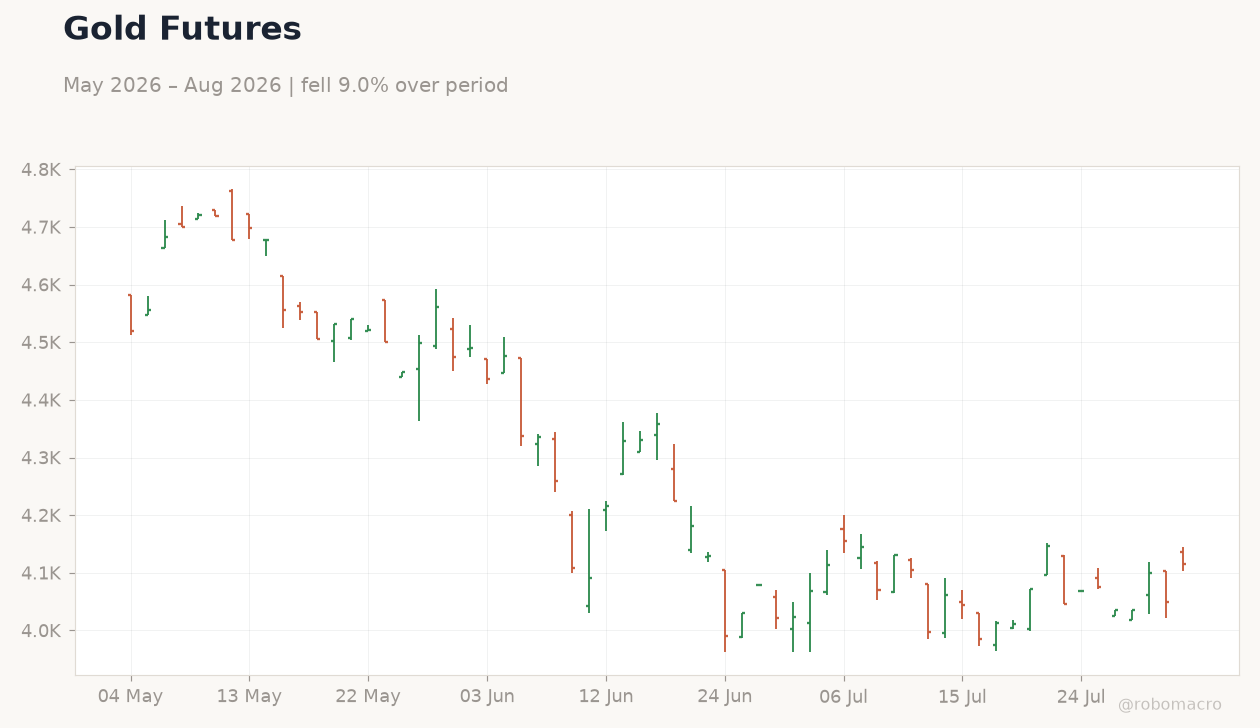
| Gold | 4,114.00 | +1.60% |
| Brent Crude | 90.12 | +1.22% |
| Naspers | 86,748.00 | +1.23% |
| Bitcoin | 62,548.96 | -0.34% |
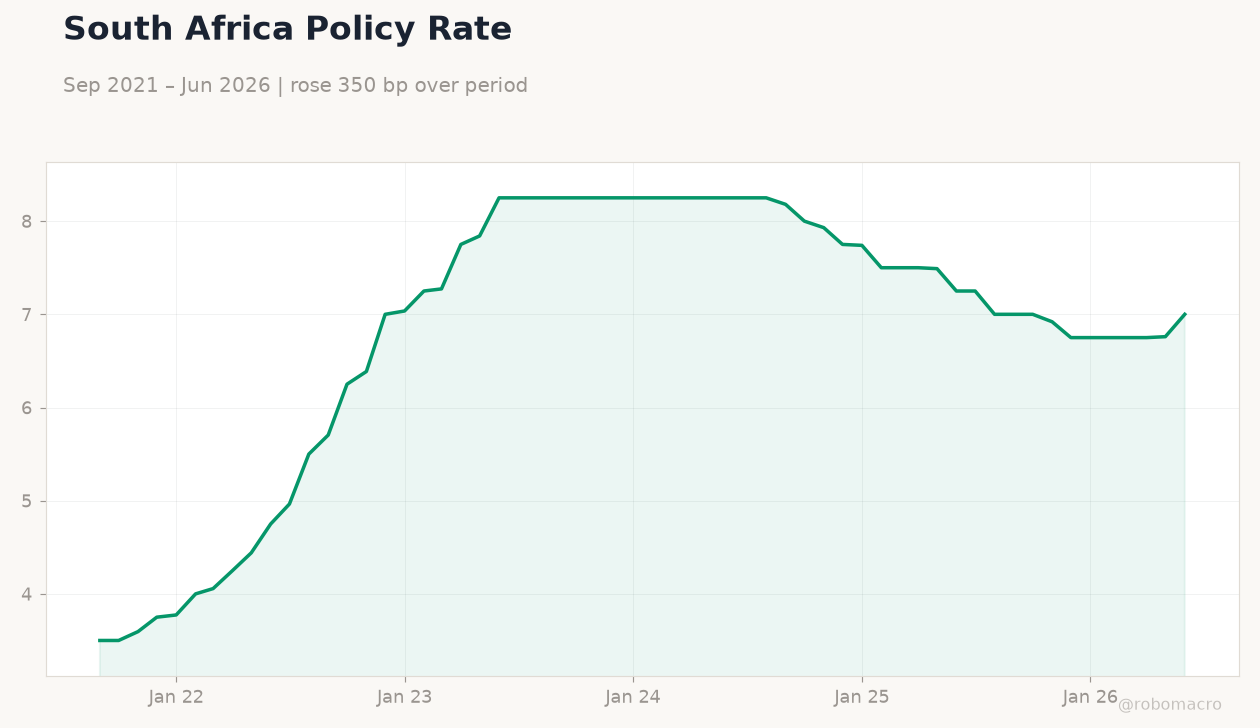
| South Africa Short-term Rate | 7.00% | +3.55% |
| South Africa Long-term Rate | 8.70% | -3.28% |
Prior Economic Events
| Data | Prior | Cons | Actual |
|---|---|---|---|
| No events available | |||
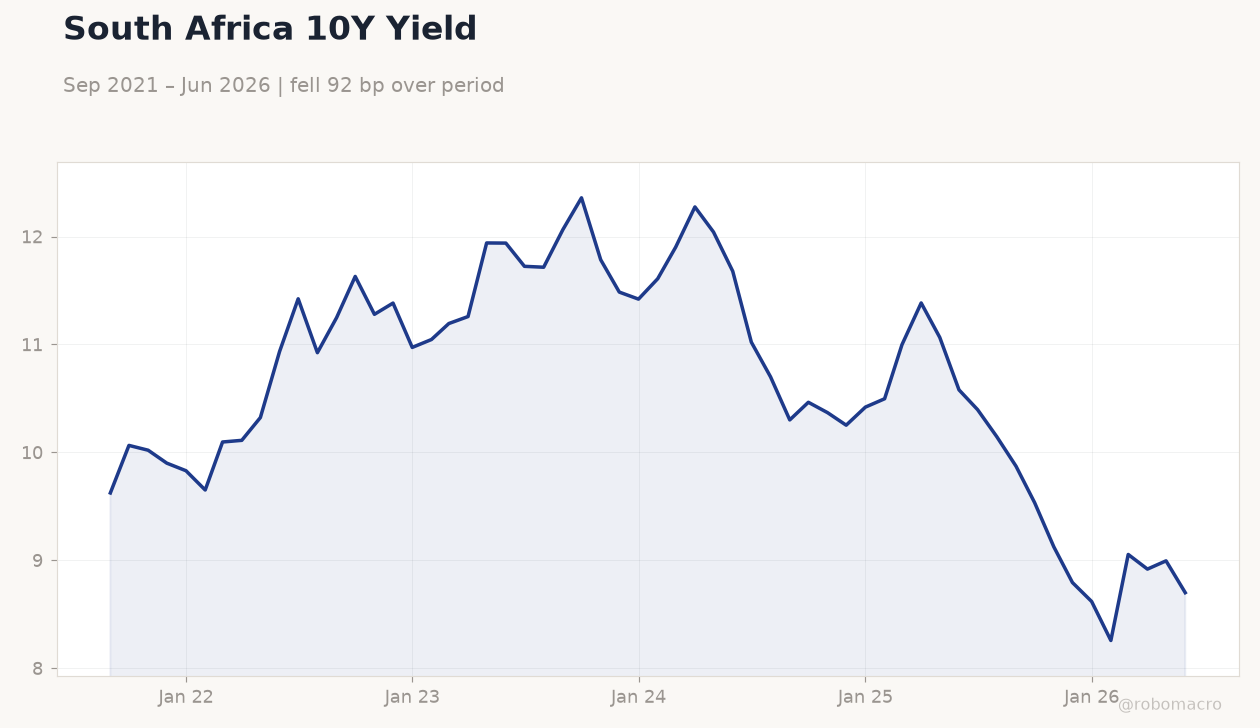 South Africa 10Y Yield | Type: macro_line | %: 8.7 (2026-06-01) | Range: 8.257–12.36 | Trend(6pt): 9.624,11.28,11.42,11,8.995,8.7
Today's Economic Events
| Data | Prior | Cons | Time |
|---|---|---|---|
| No events available | |||
- JSE Top 40 rises 0.64% to 103,923.01 on mining gains
- USD/ZAR drops 0.96% to 16.50 as rand strengthens
- Gold jumps 1.60% to 4,114.00 while platinum adds 0.58%
Yesterday's Recap
South African markets posted solid gains on August 2 despite an empty domestic data calendar. The JSE Top 40 advanced 0.64% to 103,923.01, led by resource names as gold and platinum prices climbed. The rand outperformed, with USD/ZAR falling 0.96% to 16.50 and EUR/ZAR easing 0.11% to 18.99.
Short-term rates rose 3.55% to 7.00% while the long-term rate fell 3.28% to 8.70%, steepening the curve. News flow highlighted ongoing queries over SARB policy stance and repeated warnings that the rand faces a bleak August. Reports of xenophobic incidents continued to surface in Nigerian media, though they produced limited immediate market reaction.
Mining output concerns and potential load-shedding risks remained in focus but did not derail the session’s positive tone. Broader investor attention stayed on commodity price moves and external yield signals that supported rand flows.
The Day Ahead
The local calendar stays empty on August 3, leaving markets to digest recent rand strength and commodity moves. Traders will monitor any follow-up comments from SARB Governor Kganyago on the 3% inflation goal. International data such as US ISM manufacturing could influence global yields and, by extension, rand flows.
Platinum and gold prices will dictate mining equity performance given their direct weight in the Top 40. Energy supply remains a latent risk, with any Eskom announcements likely to affect sentiment quickly. Overall, the session should stay data-light and driven by external factors and policy speculation.
Regional diplomatic tensions tied to xenophobic reports may add background noise without immediate trading impact.
Other Economic Notes
Broader themes center on the tension between SARB’s firm 3% inflation commitment and market doubts about the pace of any easing. Fiscal consolidation efforts face headwinds from elevated debt-service costs, limiting room for growth support. Persistent power constraints continue to weigh on mining and industrial output, reinforcing structural growth concerns.
Xenophobic violence risks diplomatic friction with key African partners and could indirectly pressure regional trade and investment flows. <i>↓ p.2</i>