South Africa Macro Daily(Beta Mode)
JSE Climbs as Rand Firms on Mining Rally
Market Snapshot
| Asset | Level | Change |
|---|---|---|
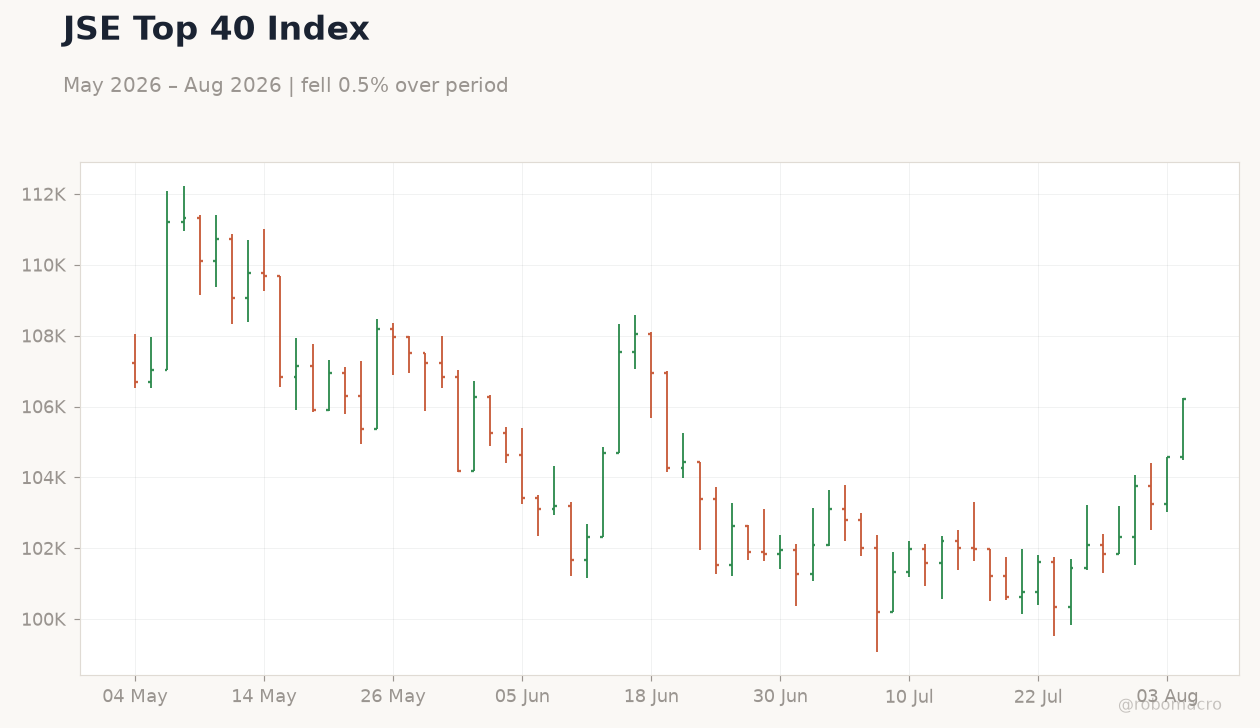
| JSE Top 40 | 106,201.46 | +1.56% |
| USD/ZAR | 16.37 | -0.54% |
| EUR/ZAR | 19.00 | -0.07% |
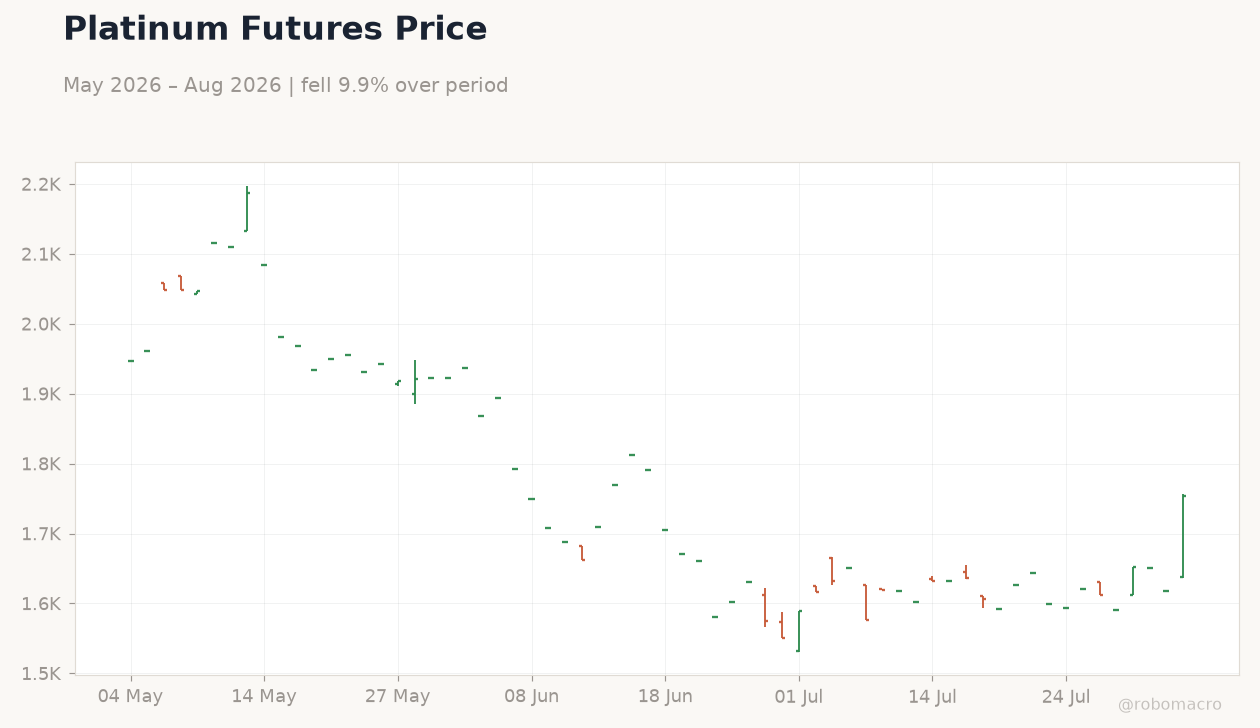
| Platinum | 1,754.40 | +8.43% |
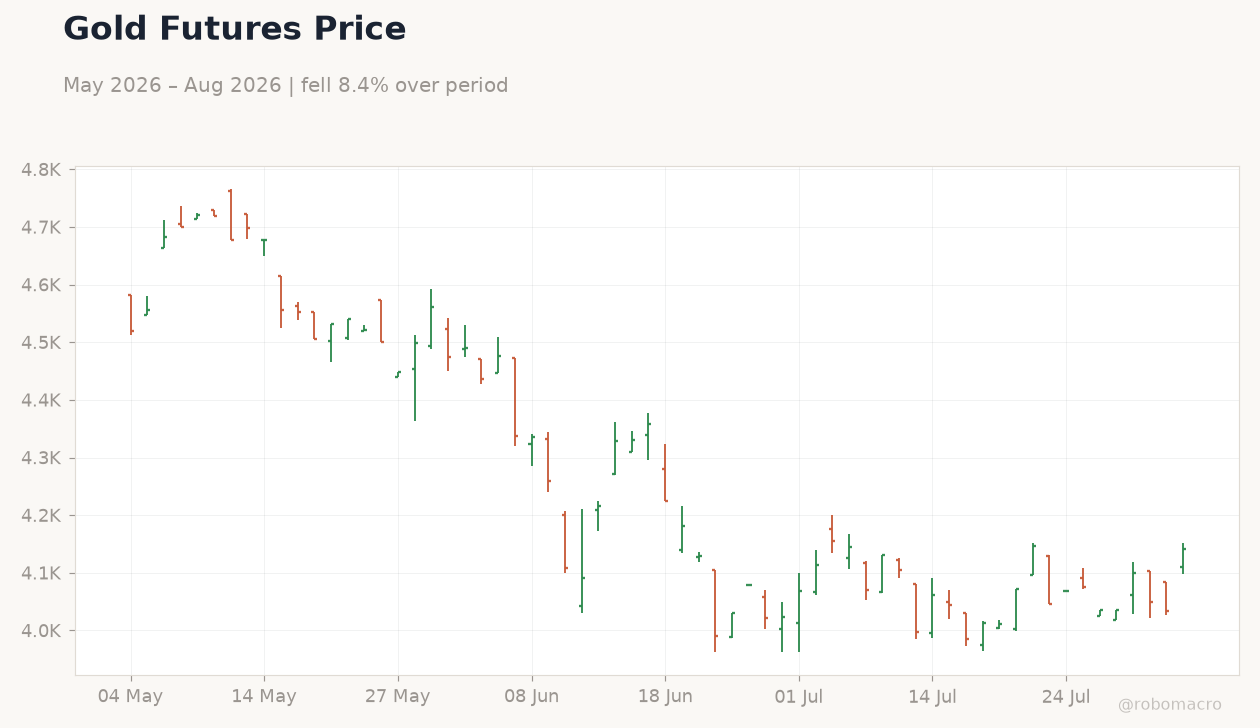
| Gold | 4,142.70 | +2.70% |
| Brent Crude | 79.49 | -5.11% |
| Naspers | 90,802.00 | +4.67% |
| Bitcoin | 63,988.33 | +0.83% |
| South Africa Short-term Rate | 7.00% | +3.55% |
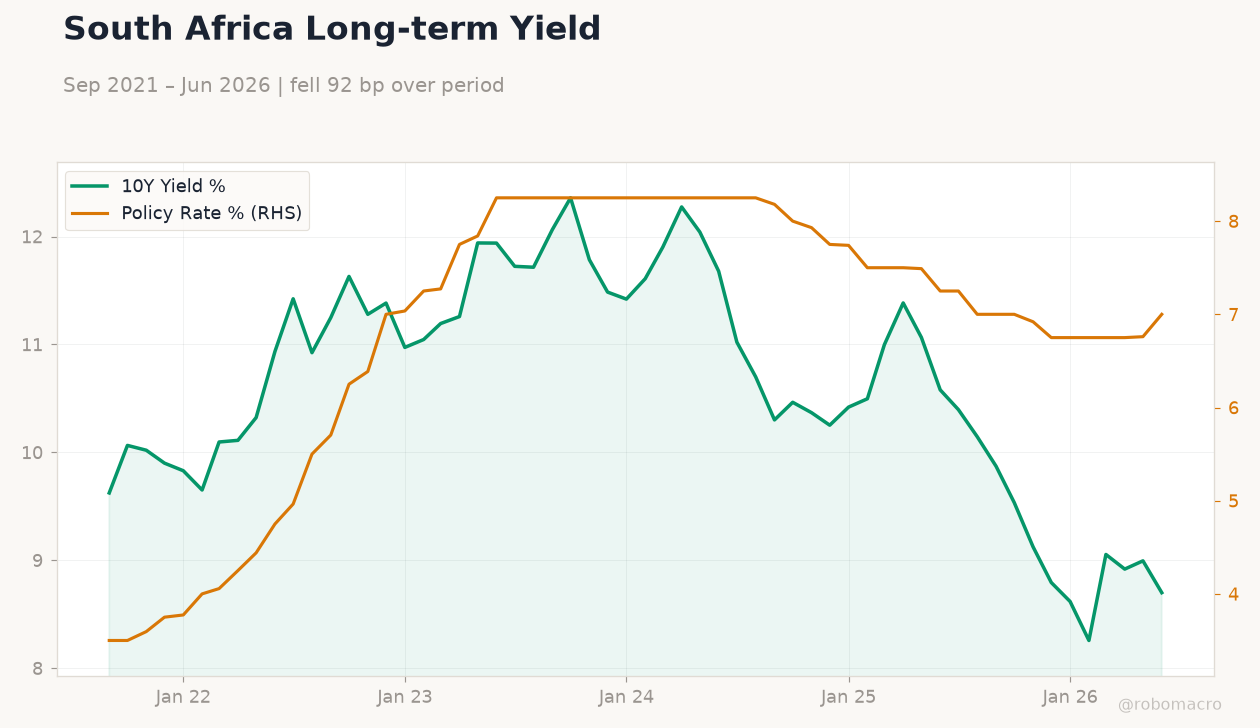
| South Africa Long-term Rate | 8.70% | -3.28% |
Prior Economic Events
| Data | Prior | Cons | Actual |
|---|---|---|---|
| No events available | |||
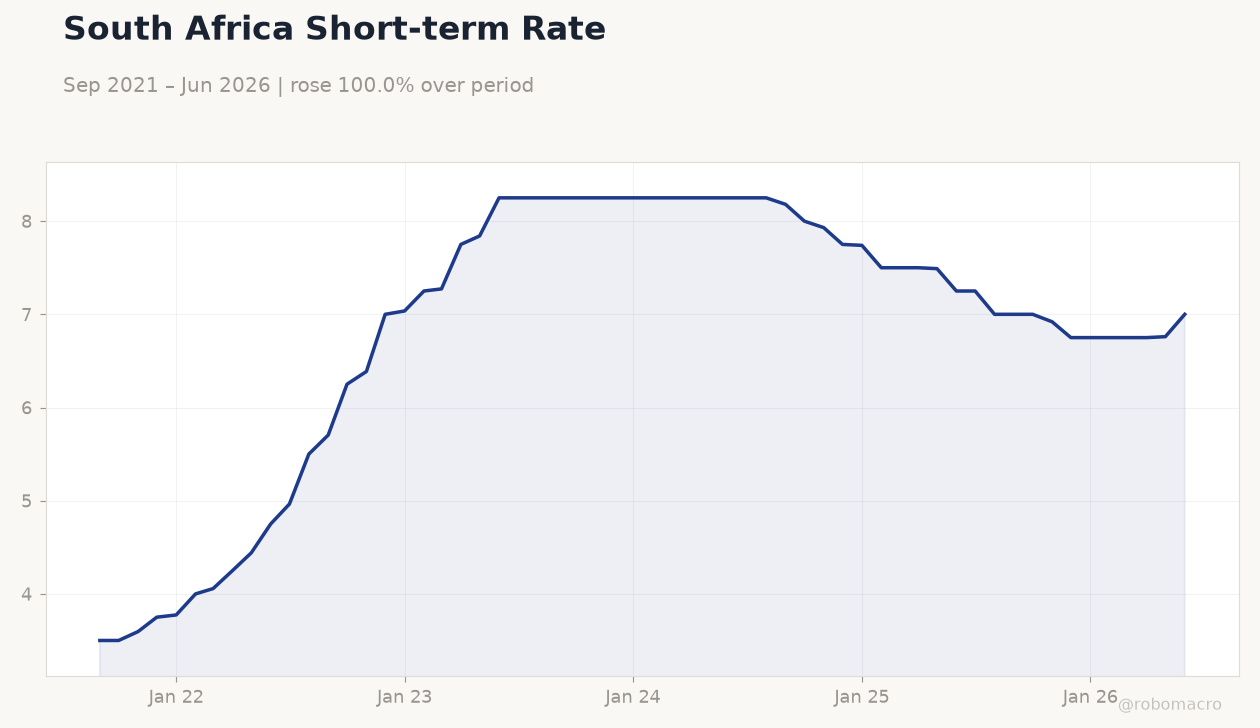 South Africa Short-term Rate | Type: macro_line | Policy Rate %: 7 (2026-06-01) | Range: 3.5–8.25 | Trend(6pt): 3.5,6.386,8.25,7.5,6.76,7
Today's Economic Events
| Data | Prior | Cons | Time |
|---|---|---|---|
| No events available | |||
- JSE Top 40 rises 1.56% to 106,201.46 driven by platinum and gold gains
- USD/ZAR drops 0.54% to 16.37 while short-term rate holds at 7.00%
- Platinum jumps 8.43% and gold advances 2.70% supporting rand and equities
Yesterday's Recap
South African equities posted solid gains as the JSE Top 40 climbed 1.56 percent to 106,201.46, led by mining names amid higher precious metals prices. The rand strengthened against the dollar with USD/ZAR falling 0.54 percent to 16.37, while EUR/ZAR eased 0.07 percent to 19.00. Platinum surged 8.43 percent to 1,754.40 and gold rose 2.70 percent to 4,142.70, lifting Naspers 4.67 percent to 90,802.00.
Brent crude declined 5.11 percent to 79.49, reducing imported inflation pressure. The South Africa short-term rate stood at 7.00 percent after a 3.55 percent move while the long-term rate fell 3.28 percent to 8.70 percent. These moves reflected improved sentiment toward South African mining assets and a firmer currency backdrop.
Bitcoin added 0.83 percent to 63,988.33, adding a modest risk-on tone that supported broader emerging-market flows into Johannesburg.
The Day Ahead
Markets enter a data-light session with no scheduled South African releases on the calendar. Attention will center on global commodity price action and any follow-through from the recent Fed speech on navigating economic shocks. Rand volatility may remain contained provided platinum and gold hold gains.
Investors will also monitor any updates on energy supply reliability given ongoing structural constraints. Broader risk sentiment and U.S. diplomatic developments with Iran could influence emerging-market flows into Johannesburg.
The absence of local prints leaves technical levels in USD/ZAR and the JSE as the main focus for positioning. Lower Brent prices ease imported inflation risks while stronger precious-metals prices bolster export earnings and terms of trade.
Other Economic Notes
South Africa’s inflation rate of 4.98 percent year-over-year remains inside the upper half of the target band, supporting the current 7.00 percent repo rate. Positive real rates continue to anchor expectations for currency stability and limit imported price pressures. Mining sector outperformance offers a near-term boost to export earnings and fiscal revenue, though structural constraints around energy supply continue to weigh on potential growth.
Equity inflows into resources counters have offset softer Brent prices and helped narrow the current-account gap. <i>↓ p.2</i>