Turkey Macro Daily(Beta Mode)
Confidence Up, BIST Falls
Market Snapshot
| Asset | Level | Change |
|---|---|---|
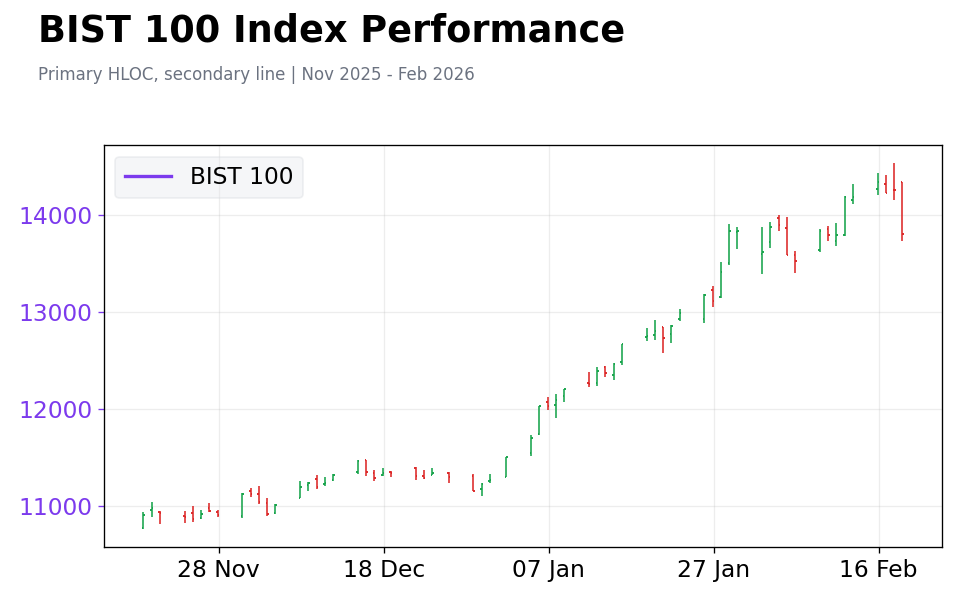
| BIST 100 | 13,804.21 | -3.20% |
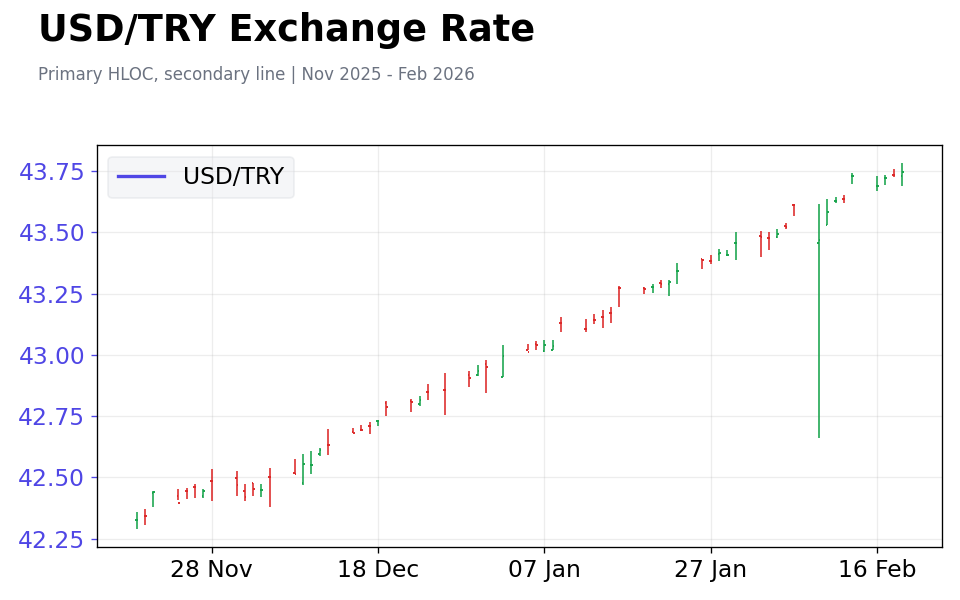
| USD/TRY | 43.73 | +0.03% |
| EUR/TRY | 51.84 | +0.04% |
| GBP/TRY | 58.87 | -0.78% |
| Gold (TRY) | 5,010.00 | +0.47% |
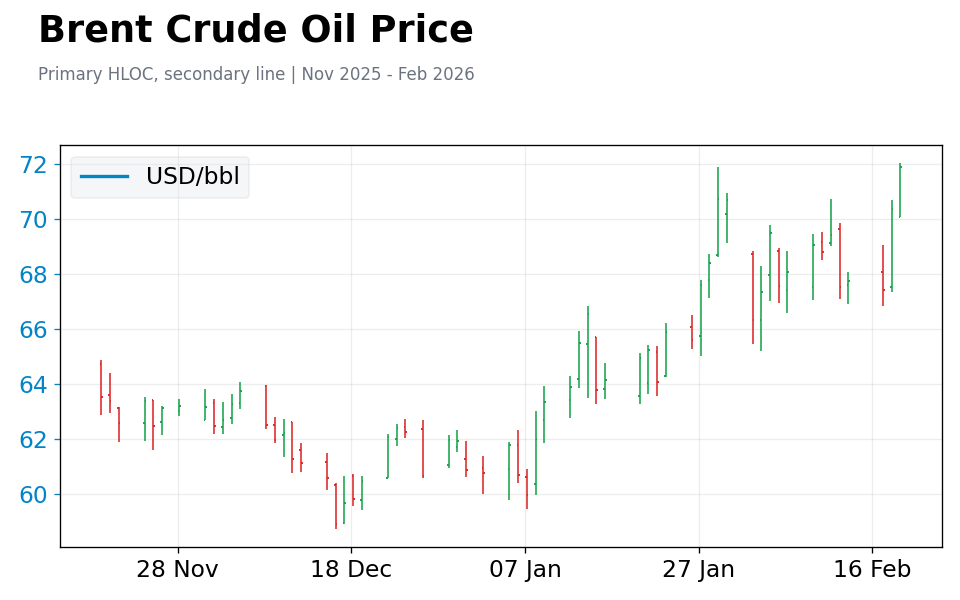
| Brent Crude | 71.84 | +2.12% |
| EUR/USD | 1.19 | +0.02% |
| Bitcoin | 66,889.13 | +0.70% |
| Turkey 2Y Govt Yield | - | - |
| Turkey 10Y Govt Yield | - | - |
Prior Economic Events
| Data | Prior | Cons | Actual |
|---|---|---|---|
| Consumer Confidence Index | 83.70 | - | 85.70 |
Today's Economic Events
| Data | Prior | Cons | Time |
|---|---|---|---|
| Friday (2026-02-20) | |||
| Business Confidence Index | 101.60 | - | 02:00 |
| Thursday (2026-02-26) | |||
| Balance of Trade Final | -9,300m | - | 02:00 |
- Turkish consumer confidence rose to 85.7 in February, signaling modest optimism amid economic pressures.
- BIST 100 index dropped 3.20% to 13,804.21, reflecting profit-taking and global risk aversion.
- Lira held steady with USD/TRY edging up 0.03% to 43.73, supported by stable forex reserves.
Yesterday's Recap
Turkish markets experienced volatility as the Consumer Confidence Index climbed to 85.7 from 83.7, indicating improved household sentiment despite persistent inflation. The BIST 100 index tumbled 3.20% to close at 13,804.21, driven by sell-offs in banking and industrial sectors amid foreign outflows and concerns over external balances. USD/TRY inched up 0.03% to 43.73, while EUR/TRY rose 0.04% to 51.84, reflecting mild dollar strength against emerging currencies.
GBP/TRY declined 0.78% to 58.87, benefiting from lira resilience tied to central bank interventions. Gold priced in TRY gained 0.47% to 5,010.00, acting as a hedge against currency fluctuations, while Brent Crude surged 2.12% to 71.84, boosting Turkey's energy import costs. Government bond yields data was unavailable, but implied rates suggested caution on fiscal deficits.
Overall, these moves underscored Turkey's vulnerability to global commodity shifts and domestic confidence gains.
The Day Ahead
Investors eye the Business Confidence Index release tomorrow at 02:00 ET, with previous reading at 101.6 signaling potential stability in manufacturing sentiment. No major Turkish data today, allowing focus on global cues like U.S. Treasury yields.
The upcoming Balance of Trade Final on February 26 could reveal export-import dynamics, with prior deficit at -9.3 billion influencing lira forecasts. Markets anticipate low volatility unless geopolitical tensions escalate in the Middle East. Attention also turns to any CBRT statements on reserve management.
Other Economic Notes
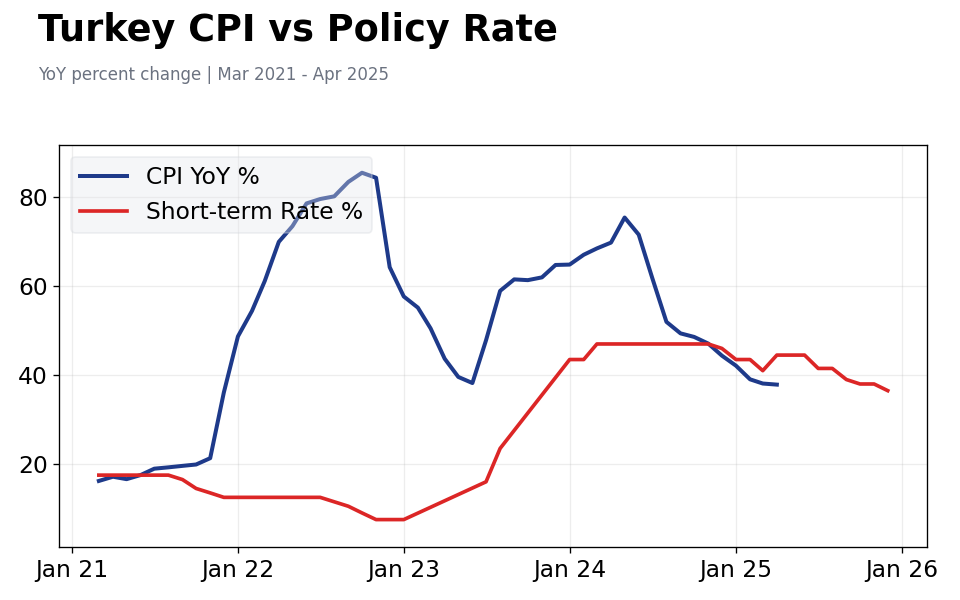
Turkey's external balances face headwinds from rising energy imports, exacerbated by Brent Crude's climb, potentially widening the current account deficit. Fiscal reforms aim to curb inflation, but sticky core prices challenge disinflation efforts. Broader themes include tourism recovery boosting services exports, though geopolitical risks in the Aegean Sea may deter investments.
Global Macro News
Global markets reacted to Middle East tensions, with Trump's $5 billion Gaza pledge potentially stabilizing regional energy supplies and indirectly aiding Turkey's oil imports. (cont...)