UK Macro Daily(Beta Mode)
BoE Holds Rate as Iran Risks Mount
Market Snapshot
| Asset | Level | Change |
|---|---|---|
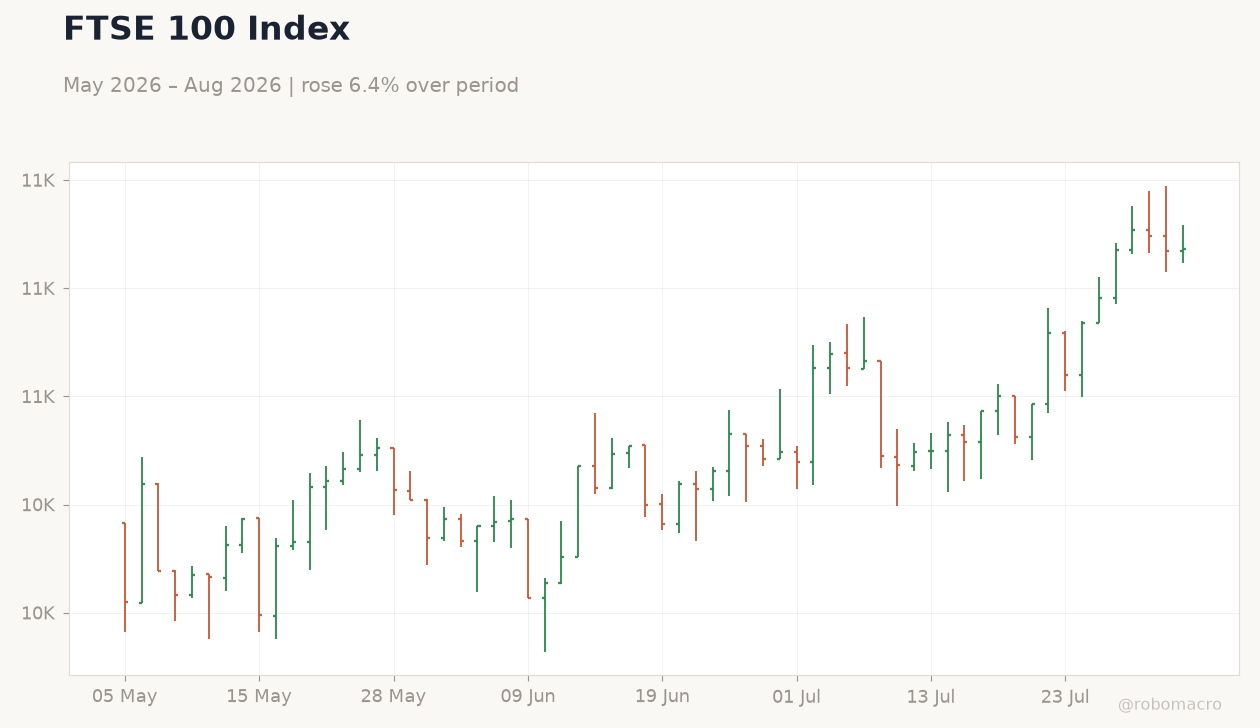
| FTSE 100 | 10,868.10 | -0.27% |
| FTSE 250 | 24,186.93 | +0.88% |
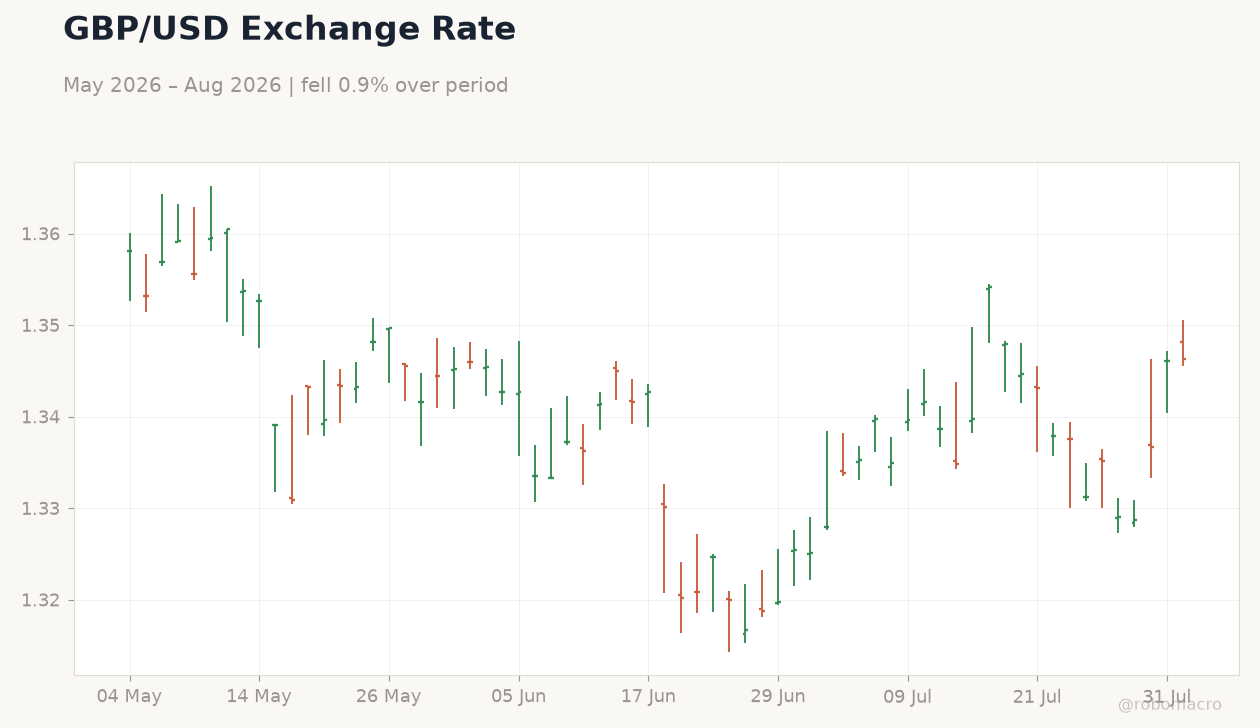
| GBP/USD | 1.35 | +0.03% |
| GBP/EUR | 1.17 | -0.03% |
| GBP/JPY | 211.05 | -2.11% |
| Brent Crude | 84.05 | -6.74% |
| Gold | 4,113.10 | +1.58% |
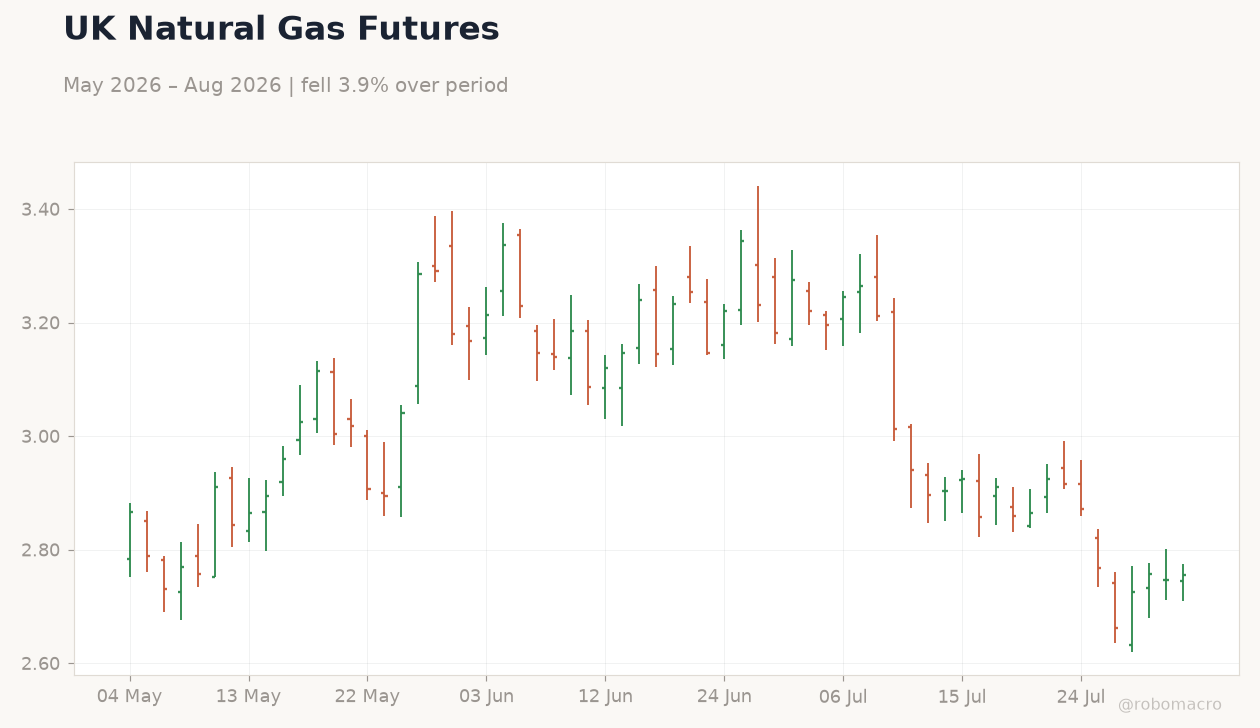
| UK Nat Gas | 2.76 | +0.29% |
| Bitcoin | 62,574.99 | -0.30% |
| UK 2Y Gilt | - | - |
| UK 10Y Gilt | 4.80% | -2.95% |
Prior Economic Events
| Data | Prior | Cons | Actual |
|---|---|---|---|
| No events available | |||
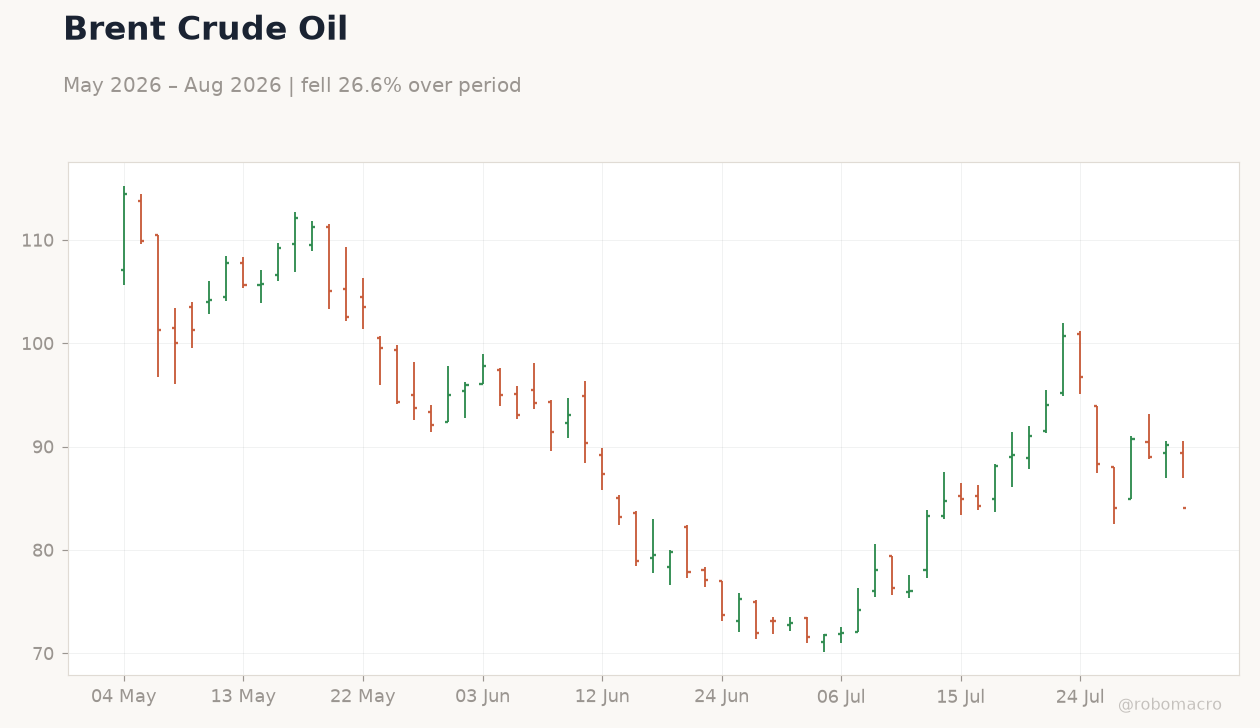 Brent Crude Oil | Type: market_hloc | Brent $/bbl: 84.04 (2026-08-03) | Range: 71.57–114.4 | Trend(6pt): 114.4,99.58,78.96,76.3,89.03,84.04
Today's Economic Events
| Data | Prior | Cons | Time |
|---|---|---|---|
| Thursday (2026-08-06) | |||
| S&P Global Construction PMI Index | - | 40.20 | 00:30 |
| Friday (2026-08-07) | |||
| Lloyds House Price Index Month-over-Month | 0.20 | 0.20 | 22:00 |
| Lloyds House Price Index Year-over-Year | 0.60 | - | 22:00 |
- BoE keeps Bank Rate at 3.73% with CPI at 2.60% YoY and unemployment at 4.90%
- FTSE 100 falls 0.27% to 10,868.10 while 10Y gilt yield drops to 4.80%
- Construction PMI and house price data due this week amid energy price swings
Yesterday's Recap
UK markets showed mixed moves on 2 August with no domestic data releases. The FTSE 100 declined 0.27% to close at 10,868.10 while the FTSE 250 gained 0.88%. Sterling posted modest gains against the dollar at 1.35 but slipped versus the euro and yen.
Brent crude fell sharply by 6.74% to 84.05 amid reports of tanker incidents near the Strait of Hormuz. The 10Y gilt yield eased to 4.80%, down 2.95% on the day. Gold rose 1.58% to 4,113.10 as investors sought safety.
Broader sentiment reflected caution over potential supply disruptions from Middle East tensions and their pass-through to UK inflation and growth. UK natural gas edged higher by 0.29% to 2.76, underscoring ongoing energy volatility that could feed into household bills and CPI prints later this year.
The Day Ahead
Attention turns to the S&P Global Construction PMI on 6 August, with consensus at 40.2, to gauge building sector momentum. Lloyds House Price Index data follow on 7 August, expected to show 0.2% month-over-month growth and stable year-over-year readings. Markets will monitor any updates on energy prices given recent volatility in Brent and UK natural gas.
Sterling crosses may react to global risk sentiment and US Treasury actions in currency markets. No major UK releases are scheduled for 3-5 August, leaving room for further commentary from MPC members. Traders will also track any spillover from tanker incidents off Oman that could affect import costs and inflation expectations.
Other Economic Notes
UK inflation remains anchored at 2.60% YoY as of June, supporting the case for steady policy. Unemployment at 4.90% signals a still-tight labour market that could sustain wage pressures. Private markets stress testing by the Bank of England has highlighted leverage risks that warrant ongoing vigilance.
Gilt yields have moderated recently, providing some relief to borrowing costs. Housing indicators will be watched closely for signs of cooling demand amid higher rates. The verified 10Y gilt yield of 5.01% as of late July shows the recent market move to 4.80% has eased pressure on mortgage and corporate borrowing.