UK Macro Weekly

February 27, 2026 robomacro.com Week of Feb 23 – Feb 27, 2026

UK Demand Shock: Retail and Consumer Sentiment Collapse

Market Scorecard (Weekly Change)

AssetFri CloseWeek Chg
FTSE 10010,846.70+2.07%
FTSE 25023,719.00+0.93%
GBP/USD1.3500.00%
GBP/EUR1.1400.00%
GBP/JPY209.98+0.59%
Brent Crude71.32-0.47%
Gold5,204.80+4.60%
UK Nat Gas2.84-5.33%
Bitcoin67,682.60n/a
UK 10Y Gilt4.45%unch

Prior Economic Events (Feb 23–27)

DayEventPriorConsActual
Tuesday, Feb 24
CBI Distributive Trades-17-16-43
Thursday, Feb 26
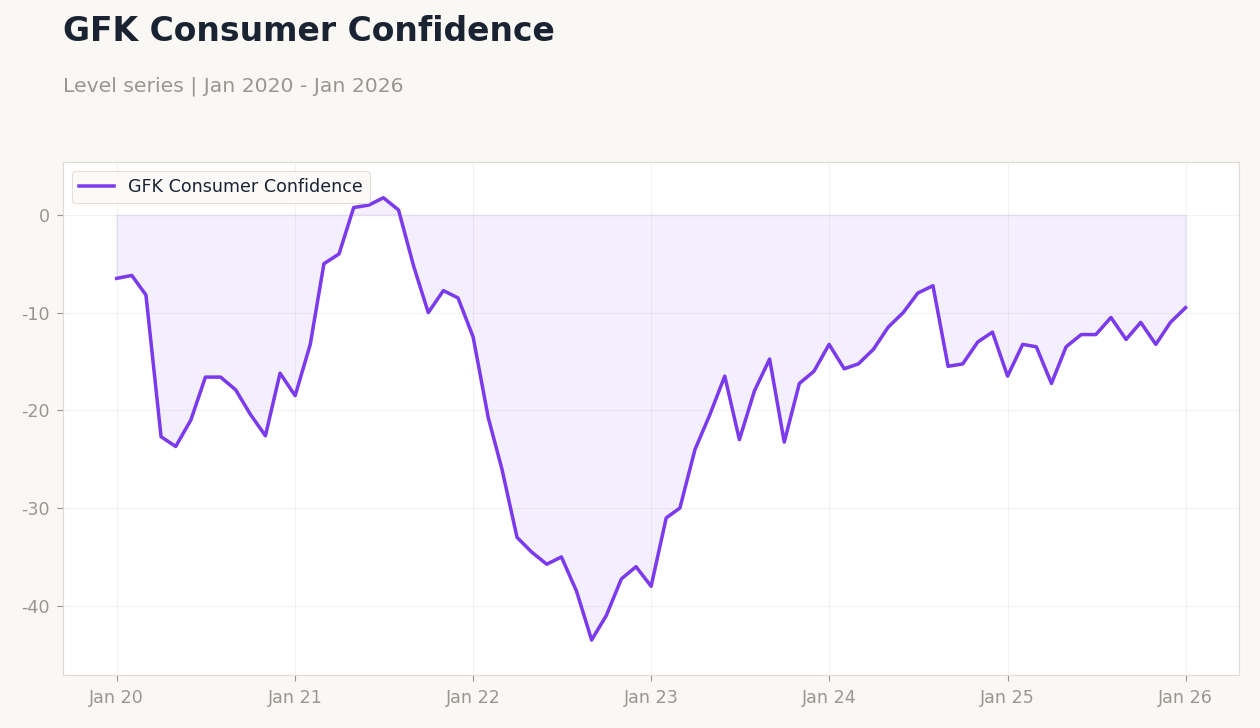
GFK Consumer Confidence-16-15-19

Surprises & Misses

CBI Distributive Trades: -27pt miss
Worst reading since pandemic era. Retail volumes collapsed amid inflation fatigue and cost-of-living pressures. The magnitude of the miss suggests a step-change in consumer behaviour, not merely a seasonal dip.

GFK Consumer Confidence: -4pt miss
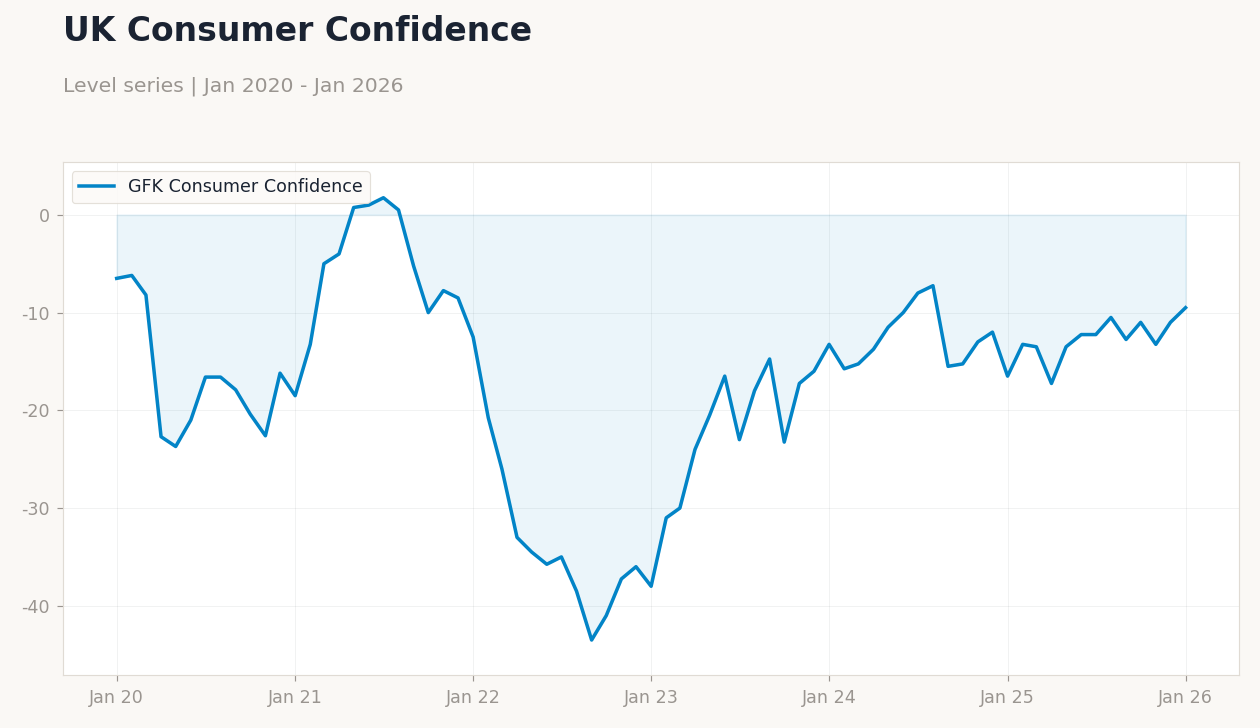
Fell to -19 vs -15 expected. All five sub-indices deteriorated. Major purchase intentions declined sharply, suggesting households are deferring spending.

Chart of the Week
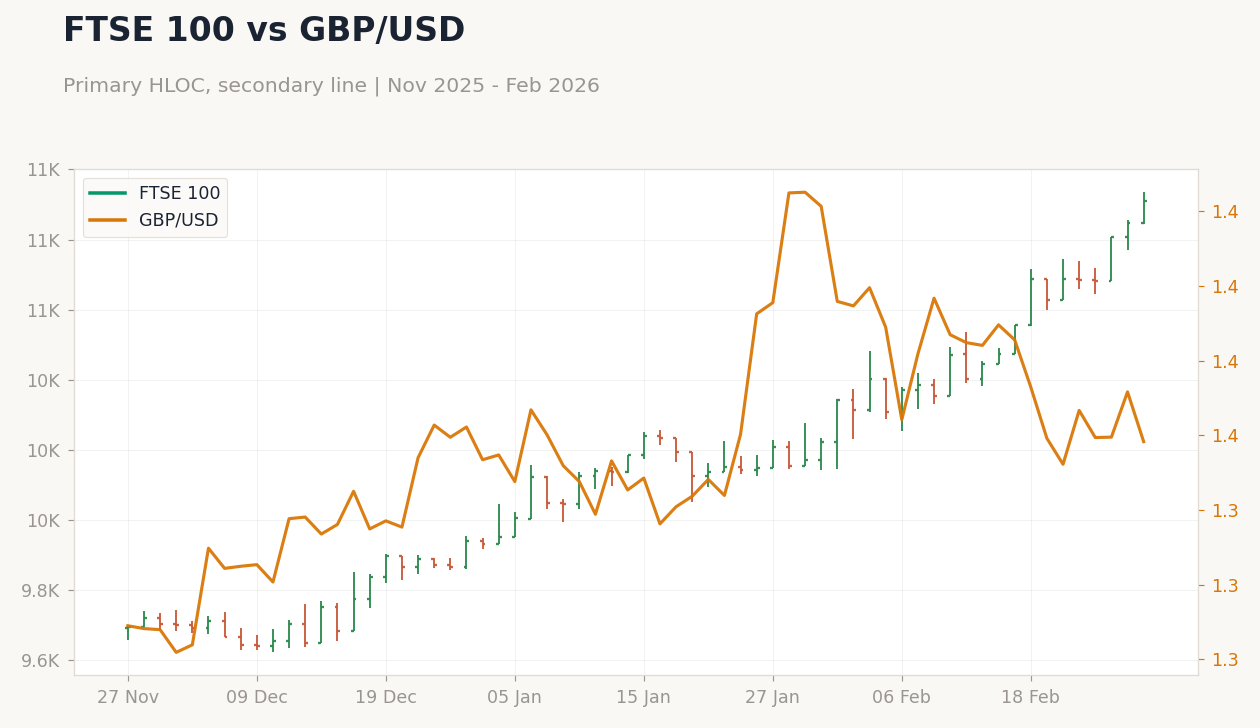
FTSE 100 vs GBP/USD
  • CBI Distributive Trades collapsed to -43 (vs -16 consensus), the worst reading since the pandemic, signalling acute retail distress from inflation and weak demand.
  • GFK Consumer Confidence fell to -19 (vs -15 expected), confirming broad-based sentiment deterioration across households.
  • FTSE 100 rallied 2.1% despite the domestic data miss, carried by US tech spillovers and defensive sector rotation — a stark sentiment-equity divergence.
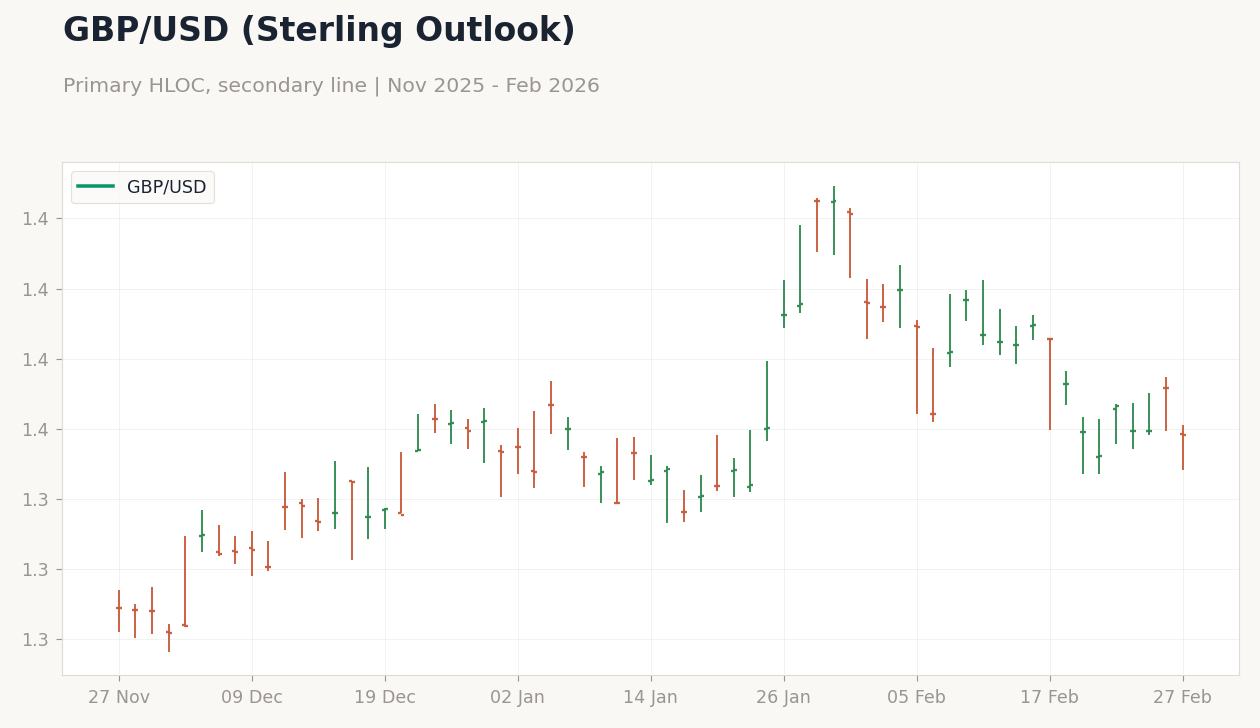
  • Sterling ended the week flat against USD but weakened 0.60% vs EUR and 0.84% vs JPY on Friday, as markets repriced BoE easing expectations.
  • Next week: Nationwide Housing Prices, Mortgage Approvals, and Construction PMI — the housing complex will test whether demand weakness is spreading beyond retail.

Week in Review

The week's narrative was dominated by a stark divergence: UK sentiment indicators crumbled while equities rallied on external tailwinds. The CBI Distributive Trades survey set the tone on Tuesday, plunging to -43 in February — a 27-point miss against consensus of -16 and the weakest reading since the pandemic lockdowns. Retailers cited elevated cost pressures, subdued footfall, and cautious consumer behaviour as the primary drivers. Thursday's GFK Consumer Confidence Index compounded the picture, falling to -19 against expectations of -15, with households flagging concerns over inflation persistence and job security.

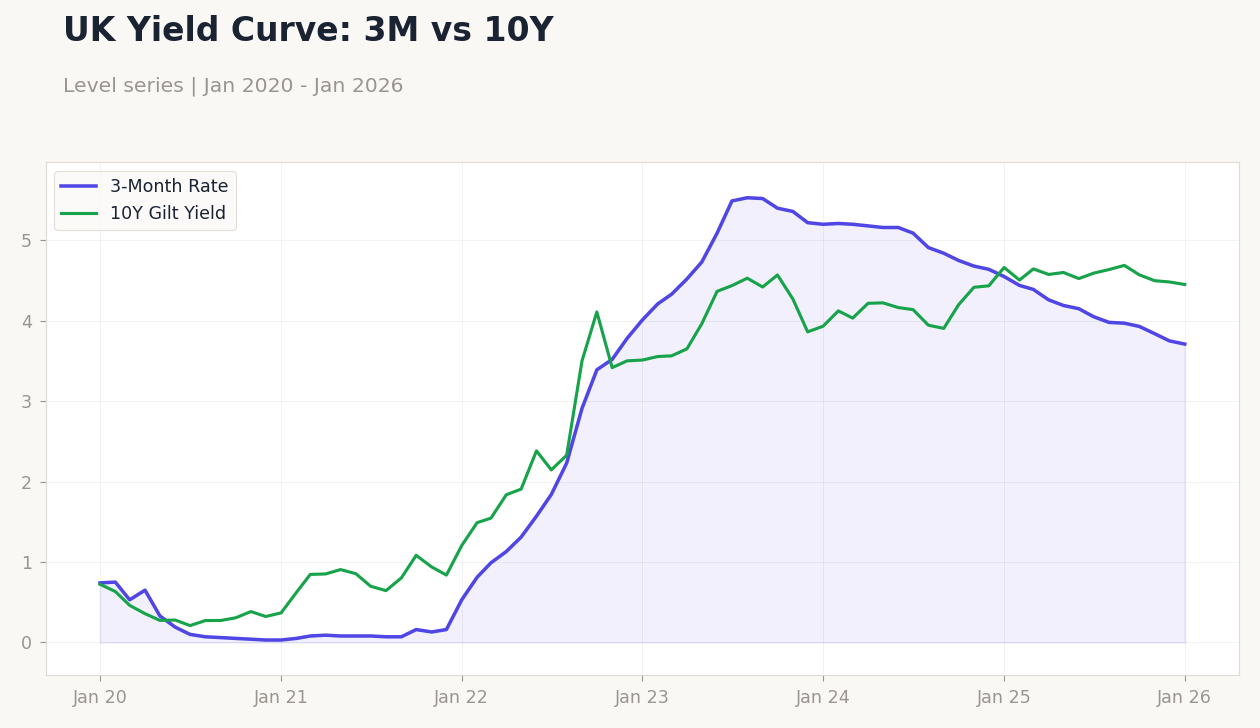
Yet the FTSE 100 appeared to operate in a parallel universe, gaining 2.1% across the week to close at 10,846.70. Thursday's 1.18% surge — the largest single-day gain of the week — was driven by global equity momentum from US tech earnings rather than any domestic catalyst. The FTSE 250, more exposed to the domestic economy, managed a more modest 0.93% gain. Sterling told a different story: after a brief mid-week recovery, GBP/USD ended flat at 1.35 while GBP/EUR slipped 0.60% on Friday alone, reflecting the dovish repricing of BoE expectations as the soft data accumulated. The 10Y Gilt yield held steady at 4.45%, with buyers and sellers reaching an uneasy equilibrium between safe-haven demand and the BoE's still-restrictive 3.75% rate.
Page 1

UK Macro Weekly

February 27, 2026 robomacro.com
GFK Consumer Confidence
UK CPI YoY vs Core CPI
UK CPI vs BoE Rate
BoE Rate vs 3M Interbank

Data Review

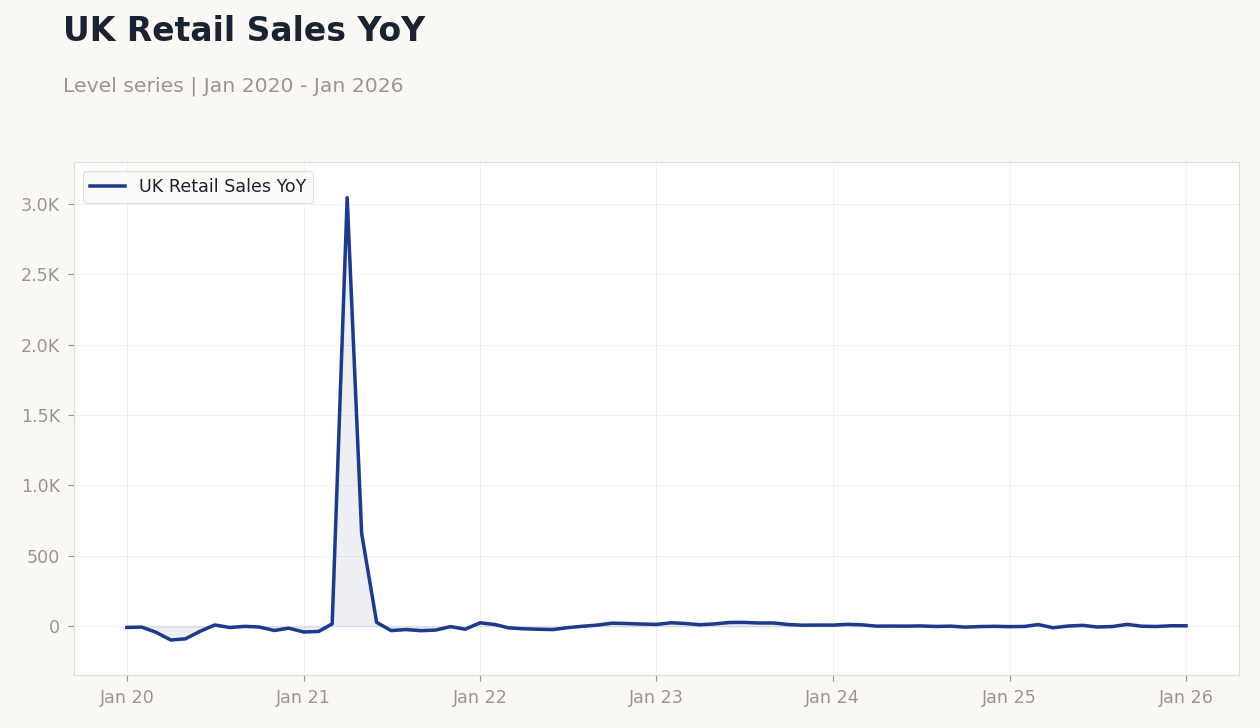
A light UK data calendar this week delivered outsized impact. The CBI Distributive Trades survey for February printed at -43, missing the -16 consensus by 27 points and crashing from January's -17 — the steepest single-month deterioration outside pandemic lockdowns. Retailers reported collapsing volumes across clothing, household goods, and discretionary categories, with inflation-squeezed consumers pulling back sharply. The reading is consistent with real retail sales tracking negative in Q1.

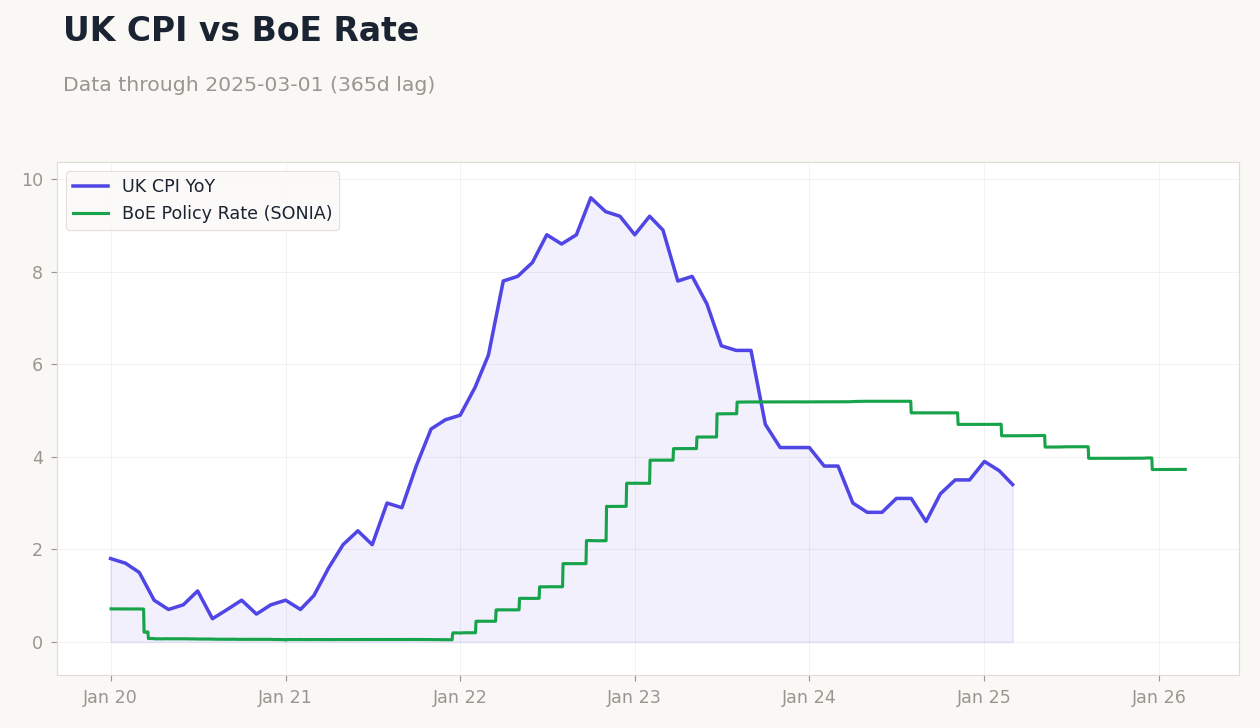
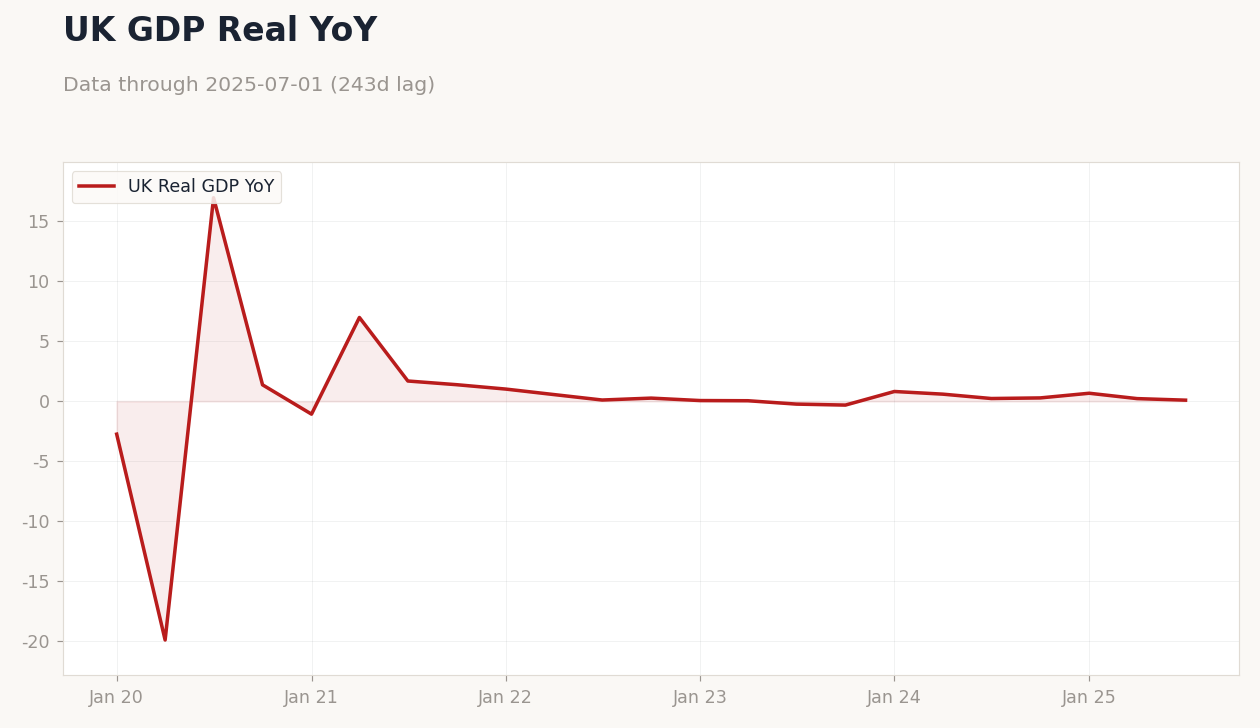
The GFK Consumer Confidence Index reinforced the demand picture, dropping to -19 against expectations of -15. All five sub-components weakened, with major purchase intentions showing the sharpest decline — households are deferring big-ticket spending in the face of sticky inflation and mortgage rate uncertainty. With UK headline CPI still at 3.2% (January) and well above the 2% target, the squeeze on real incomes is intensifying even as nominal wage growth holds up. The cumulative picture — collapsing retail sentiment, deteriorating consumer confidence, and GDP running below trend at 1.4% annualised — points to a domestic economy that is materially weaker than headline equity performance suggests. This creates a widening gap between what the growth data is telling us and what the BoE rate path currently prices.

Cross-Asset Moves

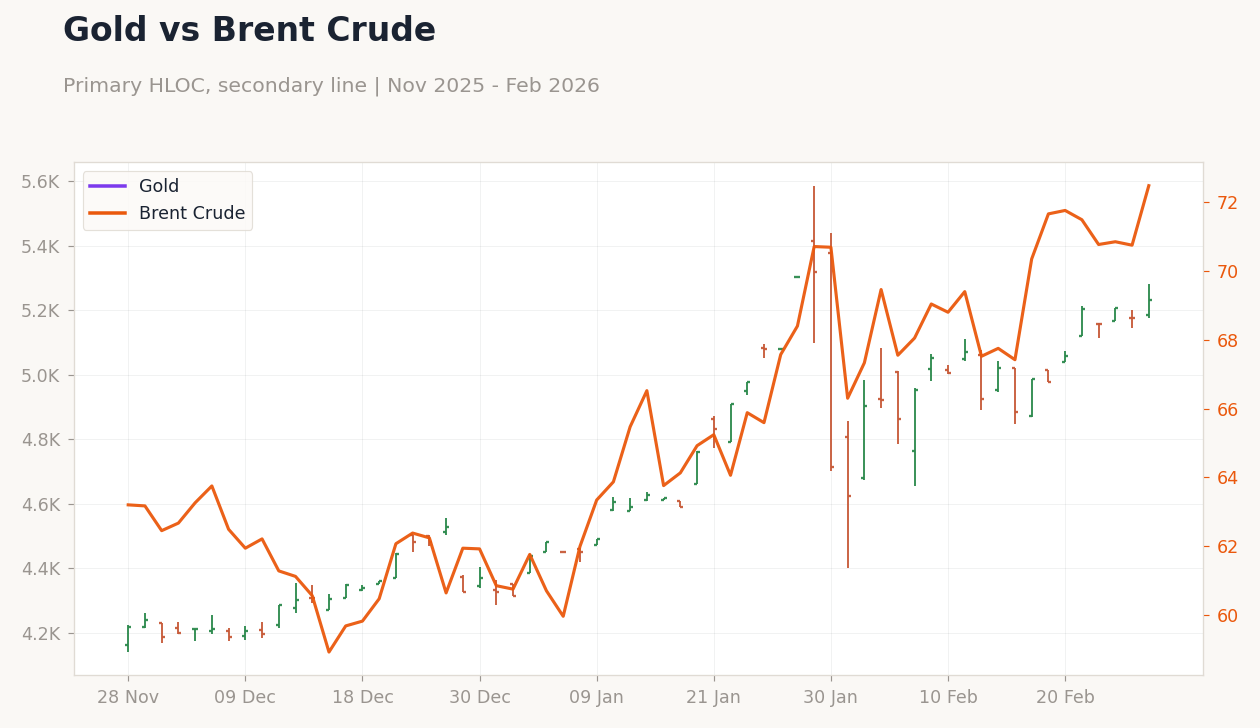
The FTSE 100 rallied 2.07% on the week to close at 10,846.70, its best weekly performance in six weeks. But the move had little to do with domestic fundamentals. Thursday's 1.18% surge — the standout daily move — was driven by US tech earnings spillover and European equity momentum, not any UK data catalyst. The FTSE 250, more tethered to the domestic economy, gained a more subdued 0.93%. Sterling was the clearest expression of the domestic data weakness: GBP/USD ended the week flat at 1.35 but saw significant intra-week volatility, with Friday's 0.70% decline against the dollar and 0.60% slide against the euro reflecting end-of-week dovish repricing. Gold surged 4.6% on the week to $5,204.80, its strongest weekly gain in two months, as global haven demand and a weaker sterling boosted GBP-denominated returns. UK Natural Gas fell 5.3% to 2.84, easing one input cost pressure but also signalling demand softness. The 10Y Gilt yield held unchanged at 4.45% — a surprising lack of response to the soft data, suggesting the rates market is waiting for harder data (CPI, employment) before moving decisively.

BoE Watch

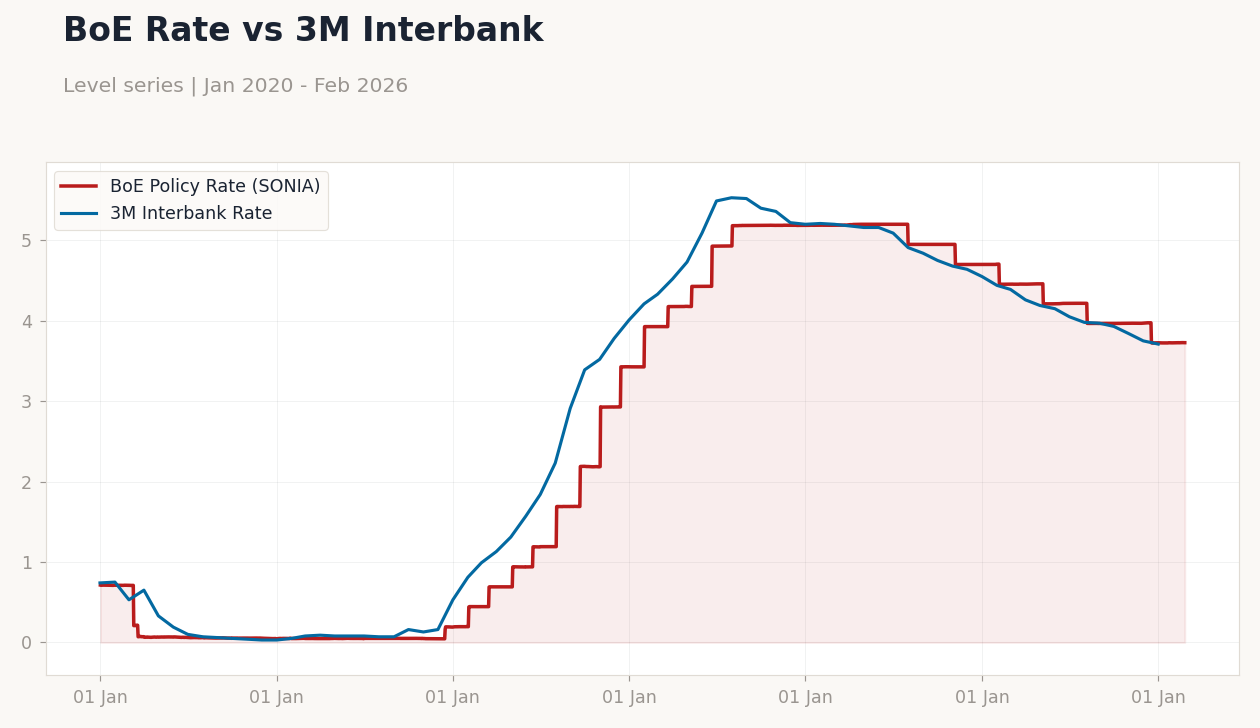
No MPC members spoke publicly this week, leaving the data to do the talking. The Bank Rate stands at 3.75% after 150bp of cumulative cuts from the 5.25% peak, with the MPC moving cautiously and flagging data-dependence on the pace of further easing. This week's sentiment collapse — CBI at -43, GFK at -19 — materially strengthens the case for faster cuts, but the BoE has been clear that it needs to see services inflation and wage growth decelerate before accelerating the easing cycle. January's CPI at 3.2% remains 120bp above target, and average earnings growth near 6% keeps the MPC measured.

SONIA OIS pricing shifted modestly dovish this week, with markets now pricing an additional 75bp of cuts by year-end, roughly 25bp more than a fortnight ago. The key question is whether the demand-side weakness evidenced by CBI and GFK will feed through to softer services inflation in the March and April prints — if it does, the case for accelerating the quarterly cutting pace becomes compelling. If not, the BoE is trapped between weakening growth and sticky prices, a stagflationary configuration that limits the pace of further easing. The upcoming Mortgage Approvals and housing data next week will be closely watched for signs that tighter credit conditions are amplifying the demand slowdown.

Page 2

UK Macro Weekly

February 27, 2026 robomacro.com

Week Ahead Calendar (Mar 2–6)

DayEventPriorCons
Monday, Mar 2
Nationwide Housing MoM0.3%0.3%
Nationwide Housing YoY1.0%0.7%
BoE Consumer Credit£1,524M
Mortgage Approvals61,01062,000
Mortgage Lending£4,600M
Thursday, Mar 5
S&P Construction PMI46.447.9
Friday, Mar 6
Halifax HPI MoM0.7%
Halifax HPI YoY1.0%
UK Property Prices (BIS Index)
UK Retail Sales YoY
GBP/USD (Sterling Outlook)
Gold vs Brent Crude

The Week Ahead

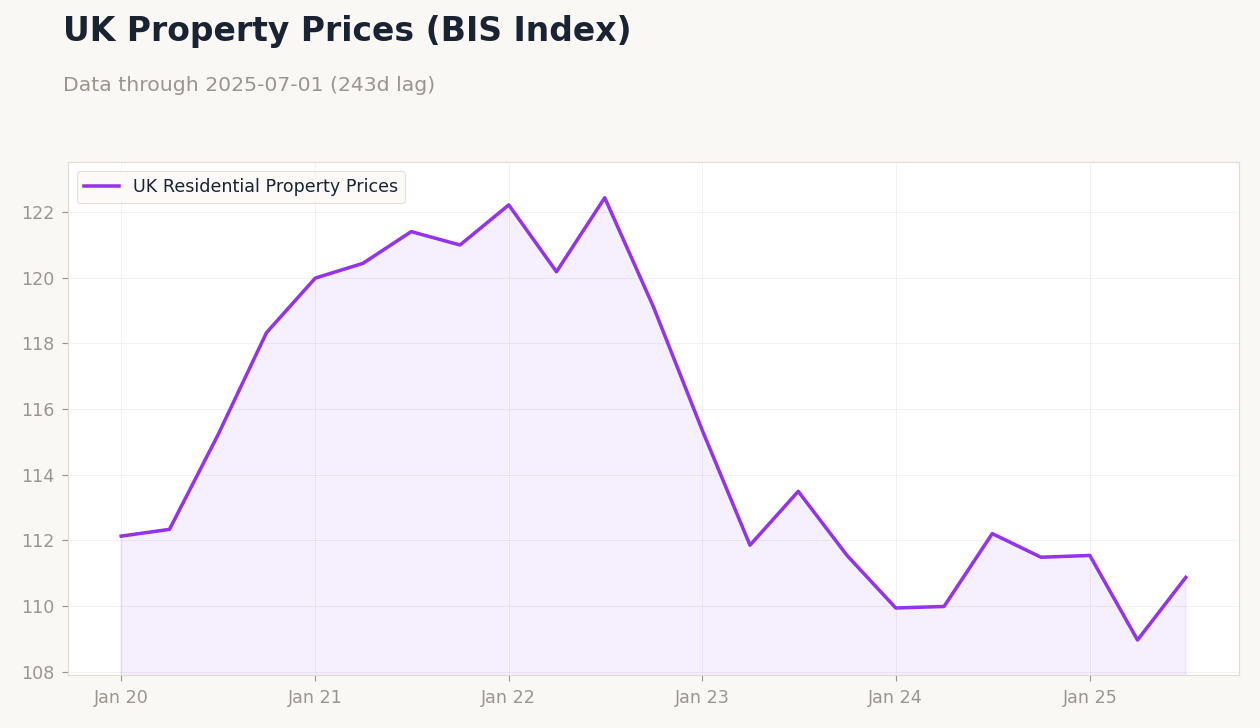
Next week's UK calendar is dominated by the housing complex — and after this week's retail and consumer sentiment collapse, the data takes on elevated significance. Monday delivers a cluster: Nationwide Housing Prices (MoM consensus 0.3%, YoY consensus decelerating to 0.7% from 1.0%), BoE Consumer Credit, Mortgage Approvals (consensus 62,000 vs prior 61,010), and Mortgage Lending. If mortgage approvals disappoint alongside this week's CBI/GFK misses, it would paint a picture of demand weakness spreading from retail into housing — a channel the BoE monitors closely given the UK economy's sensitivity to property.

Thursday's S&P Global Construction PMI (prior 46.4, consensus 47.9) remains in contraction territory even at the optimistic end. A miss here would mark the sector's continued drag on GDP. Friday's Halifax House Price Index provides a second read on property, allowing cross-referencing with Monday's Nationwide figures. Beyond the UK, global context matters: US PCE (due earlier next week) and eurozone CPI could shift cross-currency dynamics and indirectly affect Gilt pricing. Any unscheduled BoE speakers would attract significant attention given the increasingly conflicted data picture.

Risks & Themes to Watch

The central risk heading into next week is that the demand weakness evidenced by CBI and GFK proves broader than retail. If mortgage approvals undershoot consensus and Nationwide housing prices decelerate, the narrative shifts from "soft patch in retail" to "systemic demand destruction" — a materially different macro outlook that would force faster BoE repricing. Conversely, the upside scenario is that housing proves resilient: approvals holding above 60K and stable prices would suggest the sentiment readings are lagging indicators overstating current weakness, with the labour market still supporting consumption through elevated wage growth.

The FTSE 100's 2.1% rally despite collapsing domestic sentiment is itself a risk signal. This divergence between equity performance and economic fundamentals — driven by global flows rather than UK-specific positioning — means UK equities are vulnerable to any reversal in US tech sentiment while offering limited upside from domestic catalysts. SONIA OIS pricing implies ~75bp of further cuts by year-end (to ~3.00%); if next week's data confirms demand weakness, the curve may price closer to 100bp, benefiting duration but pressuring sterling further. The GBP/USD 1.35 level has held as support through the week — a break below on housing data misses would target 1.33.

Global Macro Context

US equity strength provided the primary tailwind for UK large-caps this week, with the S&P 500 and Nasdaq driving cross-Atlantic flows that overwhelmed domestic sentiment weakness. European equities also contributed, with the Stoxx 600 at multi-month highs — the rising tide lifted FTSE despite UK-specific headwinds. Energy dynamics were supportive at the margin: Brent crude stabilised near $71 (down 0.5% on the week), while UK natural gas dropped 5.3%, easing one cost pressure on both consumers and corporates. Gold's 4.6% surge to $5,205 reflected broader global haven demand and USD weakness mid-week, amplifying GBP-denominated returns. US tariff policy remains a background risk for UK exporters, though this week brought no new developments. The ECB's dovish tone earlier this month continues to support the view that European central banks are closer to easing than tightening — a macro backdrop that strengthens the case for BoE cuts if domestic data permits.

Page 3

UK Macro Weekly

February 27, 2026 robomacro.com
UK Consumer Confidence
UK Yield Curve: 3M vs 10Y
UK GDP Real YoY
UK Industrial Production YoY

Macro Narrative Tracker

This week crystallised a theme that has been building for several weeks: the UK domestic economy is weakening faster than the BoE's rate stance acknowledges. The CBI Distributive Trades print at -43 is not a one-off — it follows a trend of deteriorating retail readings through late 2025 and into 2026. The GFK Consumer Confidence decline to -19 confirms this is not confined to the retail sector but reflects a broader household pessimism.

What changed this week is the magnitude. A CBI miss of 27 points against consensus is a signal, not noise. It suggests that despite 150bp of cuts from the 5.25% peak, the lagged effects of a still-restrictive 3.75% Bank Rate are hitting the real economy with force, even as headline inflation remains sticky at 3.2%. This creates a classic late-cycle tension: the growth data is screaming for faster cuts while the inflation data says go slow. The BoE's challenge is that accelerating the easing cycle risks re-igniting inflation expectations, while maintaining a cautious quarterly pace risks tipping the economy into a more protracted slowdown.

The equity-sentiment divergence is the week's most notable development. FTSE 100 at record-adjacent levels while consumer confidence is at multi-year lows is historically unsustainable — one of these signals will prove correct. The resolution likely depends on whether the demand weakness translates into softer services inflation over the coming months. If it does, the BoE gets the cover to cut and the FTSE rally finds fundamental support. If services inflation stays sticky despite weakening demand, the UK faces a stagflationary configuration that is negative for both equities and bonds. Next week's housing data is the next data point in resolving this question.

The medium-term outlook increasingly favours an earlier BoE cutting cycle than previously expected. Markets have pulled forward the pace of further easing, with cumulative additional cut expectations rising toward 100bp by year-end. The trajectory of this repricing will be determined by the March CPI print (due mid-March) and the spring employment data — but this week's demand-side collapse has meaningfully shifted the balance of risks toward earlier action.

Page 4