US Macro Daily(Beta Mode)
Manufacturing Softens, Stocks Mixed
Market Snapshot
| Asset | Level | Change |
|---|---|---|
| S&P 500 | 7,173.91 | +0.12% |
| Nasdaq 100 | 27,305.68 | +0.01% |
| Dow Jones | 49,167.79 | -0.13% |
| Russell 2000 | 2,788.19 | +0.04% |
| USD/JPY | 159.58 | -0.11% |
| EUR/USD | 1.17 | +0.06% |
| GBP/USD | 1.35 | -0.06% |
| Gold | 4,585.20 | -1.93% |
| WTI Crude | 99.52 | +3.27% |
| Bitcoin | 75,967.57 | -1.81% |
| US 2Y Treasury | 3.78% | -1.31% |
| US 10Y Treasury | 4.31% | -0.69% |
Prior Economic Events
| Data | Prior | Cons | Actual |
|---|---|---|---|
| Dallas Fed Manufacturing Index | -0.20 | - | -2.30 |
| ADP Employment Change Weekly | 40,250 | - | 39,250 |
| S&P/Case-Shiller Home Price Year-over-Year | 1.20 | 1.10 | 0.90 |
| Cb Consumer Confidence | 91.80 | - | 92.80 |
 US Industrial Production Index | Type: macro_line | Index 2017=100: 0.7417 (2026-03-01) | Range: -1.558–15.67 | Trend(6pt): 15.67,0.9687,-0.2672,-1.558,1.53,0.7417
Today's Economic Events
| Data | Prior | Cons | Time |
|---|---|---|---|
| API Weekly Crude Oil Stocks | -4.4m | - | 12:30 |
| Wednesday (2026-04-29) | |||
| MBA 30-Year Mortgage Rate | 6.35 | - | 03:00 |
| Building Permits Prel | 1.4m | - | 04:30 |
| Building Permits Prel | - | 1.4m | 04:30 |
| Durable Goods Orders Month-over-Month | -1.40 | 0.50 | 04:30 |
| Housing Starts Level | 1.5m | - | 04:30 |
| Housing Starts Level | - | 1.4m | 04:30 |
| Building Permits Month-over-Month Prel | -4.70 | - | 04:30 |
| Building Permits Month-over-Month Prel | - | - | 04:30 |
- US manufacturing data weakened with Dallas Fed index at -2.3, signaling regional slowdown amid broader resilience.
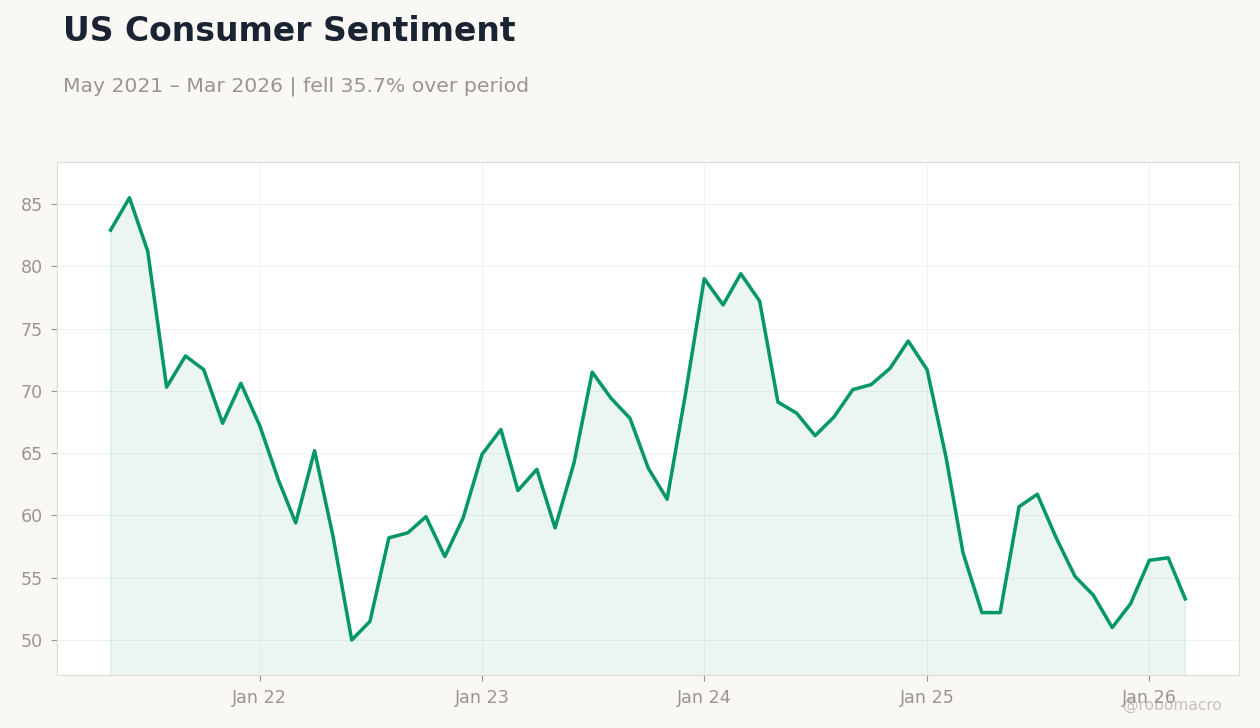
- Consumer confidence edged up to 92.8, while home prices cooled to 0.9% YoY, reflecting mixed economic signals.
- Equities showed modest gains in S&P 500 (+0.12%) and Nasdaq (+0.01%), with Treasury yields declining.
Yesterday's Recap
Yesterday's US data releases painted a picture of softening manufacturing and housing sectors amid steady consumer sentiment. The Dallas Fed Manufacturing Index dropped to -2.3 in April, below the previous -0.2, highlighting ongoing weakness in regional production. ADP Employment Change Weekly eased to 39,250 from 40,250, suggesting a slight cooling in labor market momentum.
S&P/Case-Shiller Home Price Index rose 0.9% YoY, missing consensus of 1.1% and prior 1.2%, indicating decelerating housing inflation. CB Consumer Confidence improved marginally to 92.8 from 91.8, offering some offset to the softer prints. Markets reacted with mixed equity performance: S&P 500 rose 0.12% to 7,173.91, Nasdaq 100 edged up 0.01% to 27,305.68, while Dow Jones dipped 0.13% to 49,167.79 and Russell 2000 gained 0.04% to 2,788.19.
Treasury yields fell, with the 2-year at 3.78% (-1.31%) and 10-year at 4.31% (-0.69%), supporting bond rallies, as oil climbed 3.27% to $99.52 amid global supply news.
The Day Ahead
Today's calendar features the API Weekly Crude Oil Stocks at 12:30 ET, with prior at -4.4 million barrels, potentially influencing energy markets amid UAE's OPEC exit. Tomorrow brings high-impact data including Building Permits Prel (consensus 1.39 million) and Housing Starts (consensus 1.4 million) at 4:30 ET, both critical for assessing residential construction trends. Durable Goods Orders MoM is expected at 0.5% (prior -1.4%), with ex-transport at 0.4% (prior 0.8%), offering insights into business investment.
MBA 30-Year Mortgage Rate follows at 3:00 ET, after prior 6.35%, amid ongoing housing affordability concerns. These releases could sway Treasury yields and equity sentiment ahead of the Fed's upcoming meeting. Markets will watch for any surprises that might alter rate-cut expectations.
Other Economic Notes
Broader US economic themes highlight persistent inflation moderation, with CPI YoY at 2.31% as of April 2025, supporting a soft-landing narrative despite unemployment at 4.30% in March. Tariff impacts from the Trump administration are pressuring small businesses, as per Fed surveys, potentially curbing growth in trade-sensitive sectors. (cont...)