ANZ Macro Daily(Beta Mode)
RBNZ Hike Looms as AUD Climbs on RBA Hawkishness
Market Snapshot
| Asset | Level | Change |
|---|---|---|
| ASX 200 | 8,844.40 | +1.37% |
| NZX 50 | 13,763.10 | +1.06% |
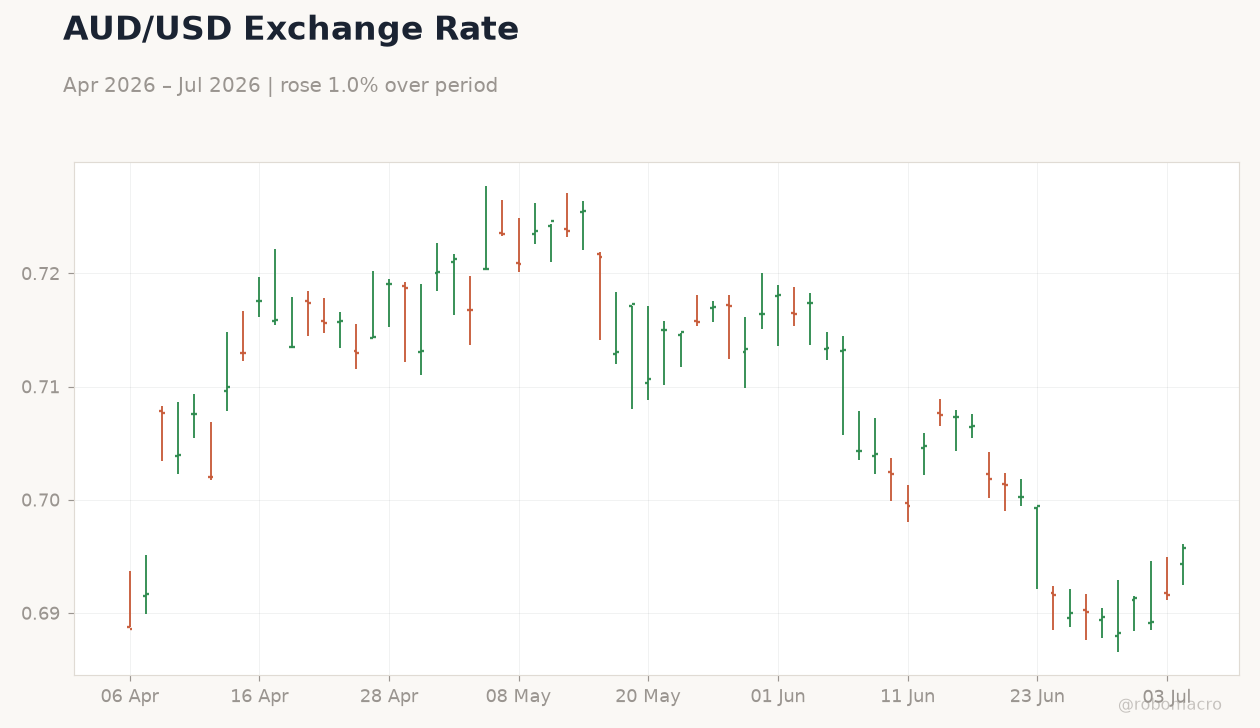
| AUD/USD | 0.70 | +0.62% |
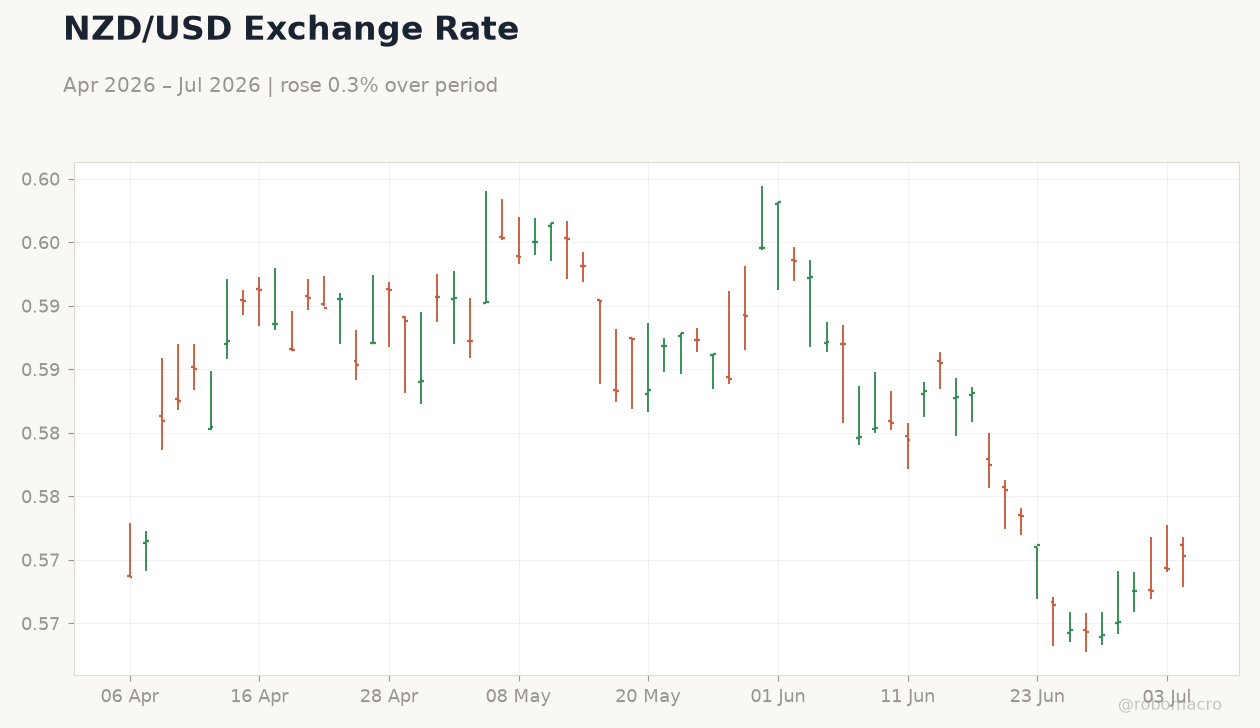
| NZD/USD | 0.57 | +0.20% |
| AUD/NZD | 1.22 | +0.14% |
| BHP | 60.50 | +1.56% |
| Gold | 4,175.10 | +1.52% |
| Brent Crude | 72.13 | +0.46% |
| Bitcoin | 63,654.41 | +0.17% |
| Australia 10Y Govt Yield | 4.99% | +0.42% |
| NZ Short-term Rate | 4.33% | -9.60% |
Prior Economic Events
| Data | Prior | Cons | Actual |
|---|---|---|---|
| No events available | |||
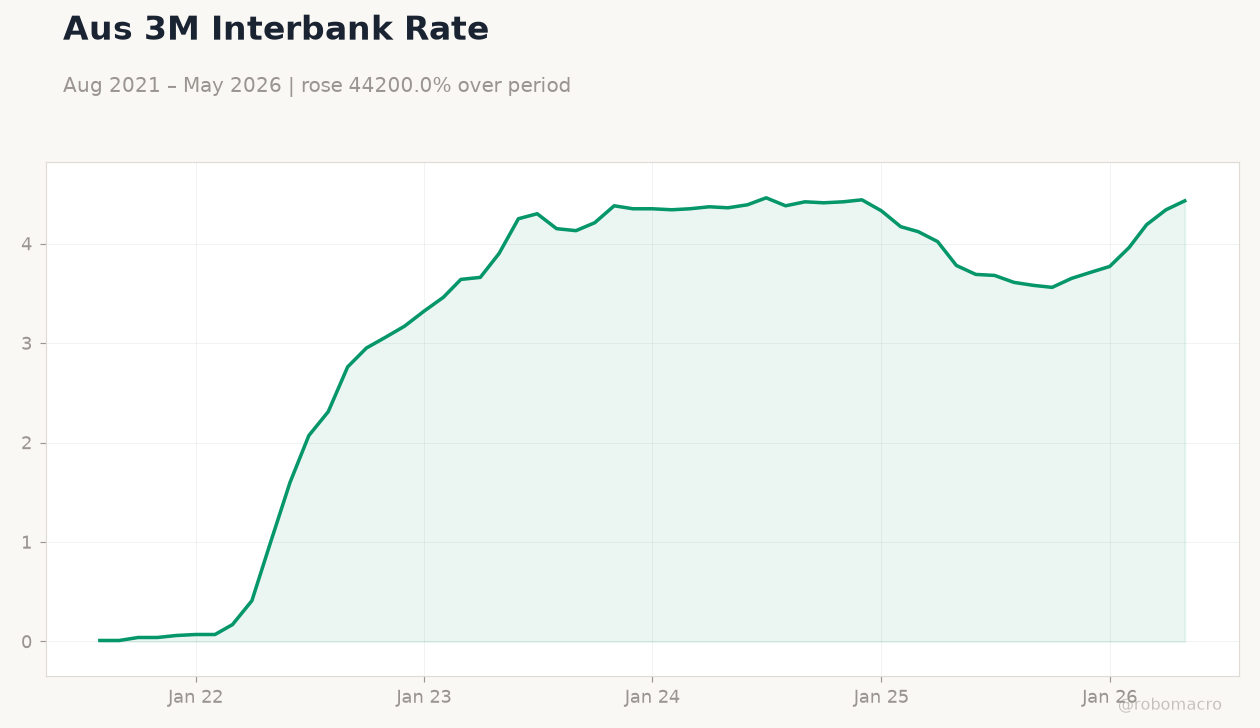
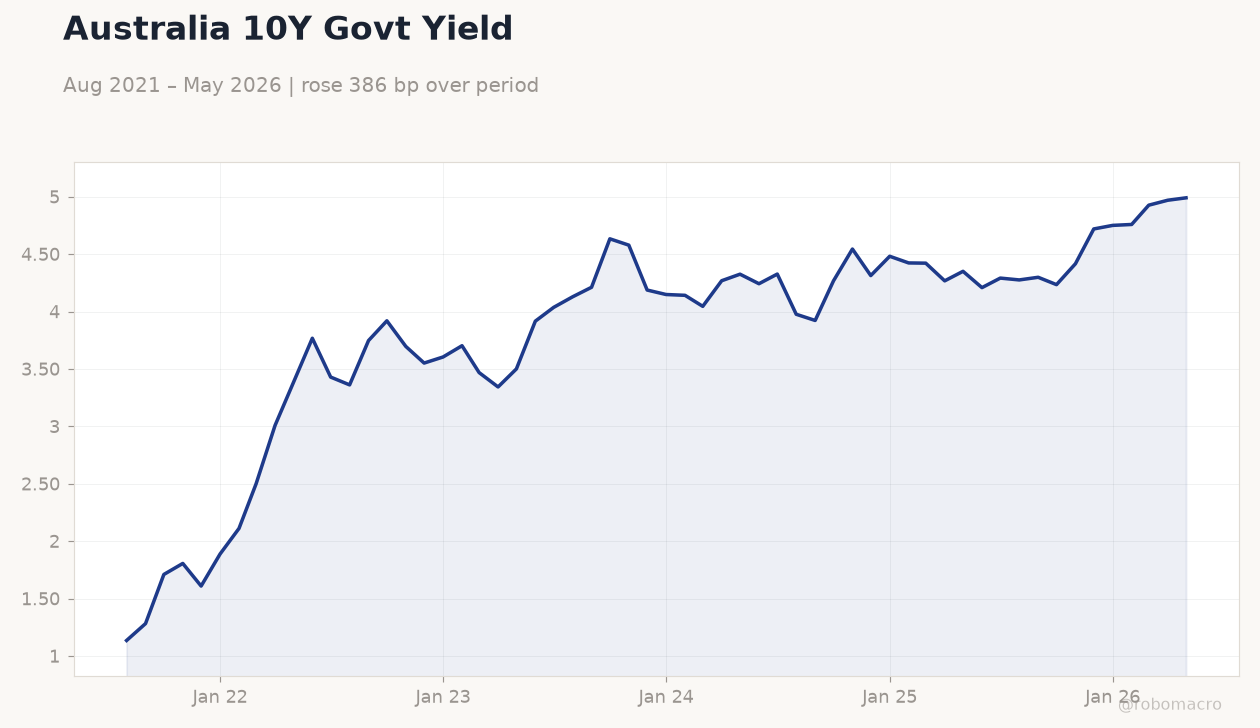 Australia 10Y Govt Yield | Type: macro_line | Yield %: 4.99 (2026-05-01) | Range: 1.135–4.99 | Trend(6pt): 1.135,3.919,4.187,4.423,4.969,4.99
Today's Economic Events
| Data | Prior | Cons | Time |
|---|---|---|---|
| RBA Hunter Speech | - | - | 17:00 |
| RBNZ Interest Rate Decision | 2.25 | 2.50 | 18:00 |
| Business NZ PMI | 49.90 | - | 14:30 |
- RBNZ expected to lift OCR to 2.50% from 2.25% amid persistent inflation.
- AUD/USD climbs 0.62% to 0.70 after hawkish RBA hold signals.
- ASX 200 gains 1.37% to 8,844.40 while NZX 50 rises 1.06%.
Yesterday's Recap
Equity markets advanced across ANZ with the ASX 200 closing at 8,844.40, up 1.37%, led by BHP which gained 1.56% to 60.50 on firmer iron ore prices. The NZX 50 ended at 13,763.10, higher by 1.06%. AUD/USD rose to 0.70 while NZD/USD edged up to 0.57.
Australian 10-year yields increased 0.42% to 4.99% and NZ short-term rates fell 9.60% to 4.33%. No major data releases occurred in Australia or New Zealand on 5 July, leaving recent RBA communications and commodity flows as the dominant drivers. Hawkish RBA rhetoric supported the Australian dollar despite softer TD-MI inflation gauge readings.
The Day Ahead
Attention centres on the RBNZ cash rate decision at 18:00 ET, with consensus pointing to a 25 bp hike to 2.50%. RBA Assistant Governor Hunter delivers a high-impact speech at 17:00 ET that markets will parse for further tightening signals. New Zealand’s Business NZ PMI follows on 8 July.
Australia faces no major releases until later in the week, keeping focus on central bank rhetoric and China trade linkages. Positioning ahead of the RBNZ outcome may keep NZD volatility elevated.
Other Economic Notes
Australia’s commodity exports continue to benefit from elevated gold prices at 4,175.10, up 1.52%, reinforcing trade surplus momentum. New Zealand’s dairy and tourism sectors remain sensitive to global growth and currency swings. Housing markets in both countries stay supported by tight supply, though higher rates are curbing credit demand.
China’s steel output data remain the key external variable for Australian miners and the broader ASX.
Global Macro News
Global risk appetite improved, lifting Brent crude 0.46% to 72.13 and supporting AUD and NZD. Fed policy expectations eased after softer US jobs data, reducing pressure on ANZ yields. Yen weakness near 40-year lows reflects divergent central bank paths and may influence carry trades involving AUD and NZD.
Bitcoin held steady near 63,654, showing limited spillover to risk assets. Broader commodity strength, especially iron ore, underpins Australian terms of trade while New Zealand faces headwinds from softer global dairy sentiment. Markets now price a higher probability of RBNZ tightening relative to RBA.