ANZ Macro Daily(Beta Mode)
RBNZ Hike Looms as RBA Holds Amid Soft Data
Market Snapshot
| Asset | Level | Change |
|---|---|---|
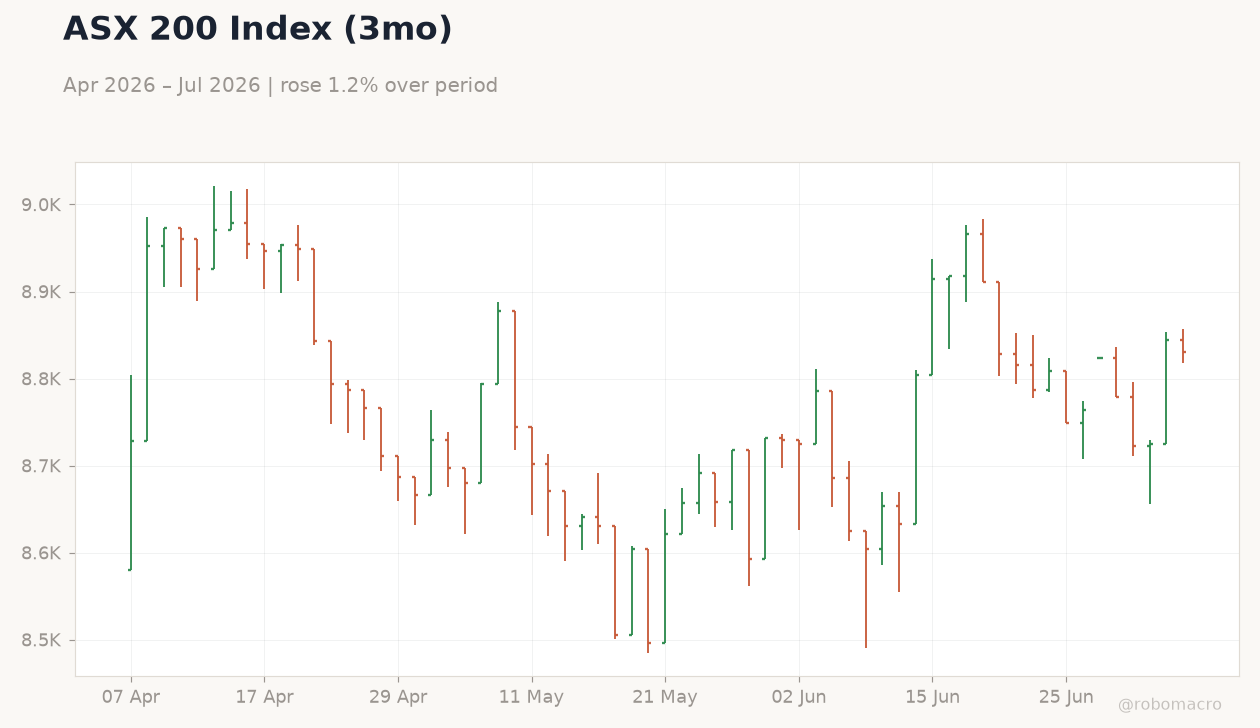
| ASX 200 | 8,831.00 | -0.15% |
| NZX 50 | 13,762.79 | -0.00% |
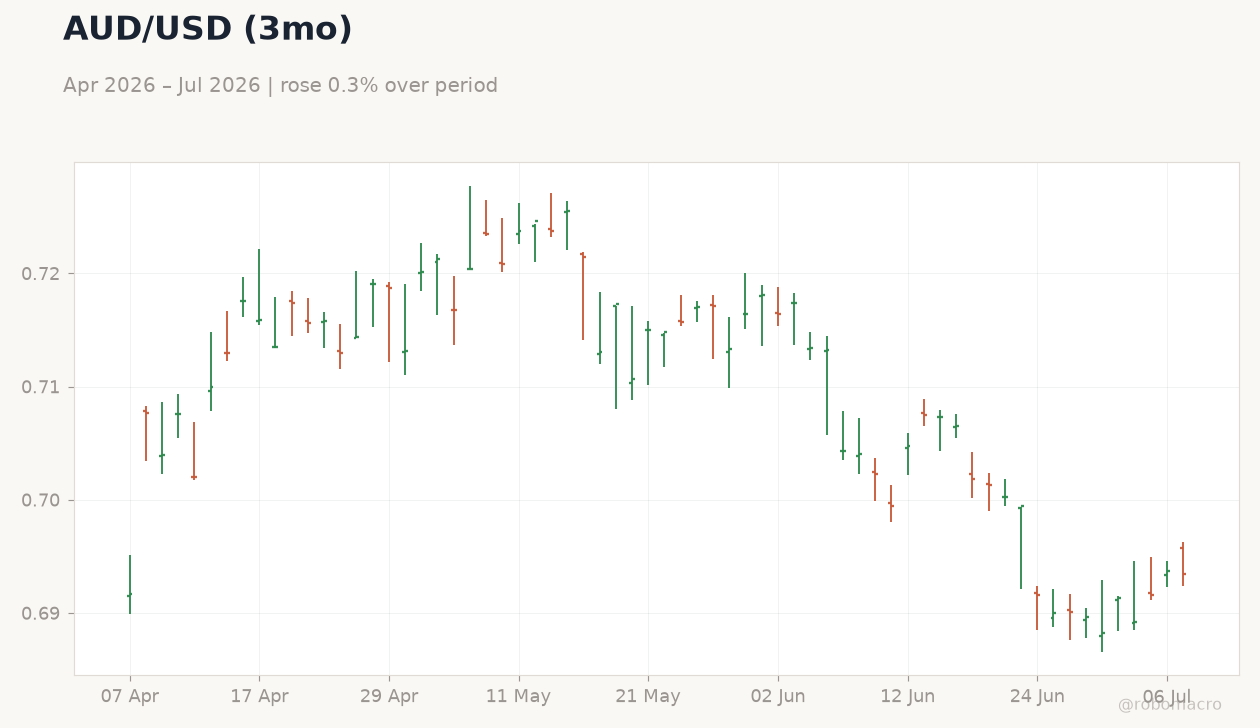
| AUD/USD | 0.69 | -0.04% |
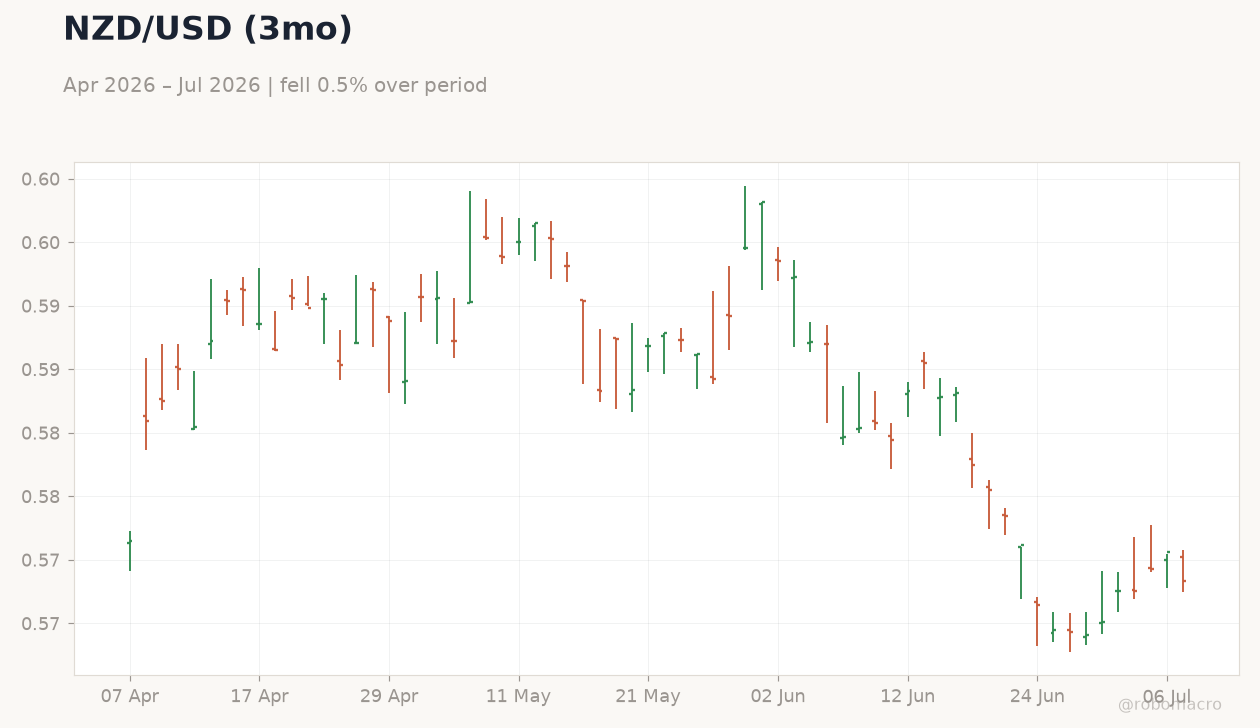
| NZD/USD | 0.57 | -0.40% |
| AUD/NZD | 1.22 | +0.27% |
| BHP | 58.87 | -1.92% |
| Gold | 4,122.40 | -0.79% |
| Brent Crude | 75.67 | +5.11% |
| Bitcoin | 63,784.38 | -0.33% |
| Australia 10Y Govt Yield | 4.99% | +0.42% |
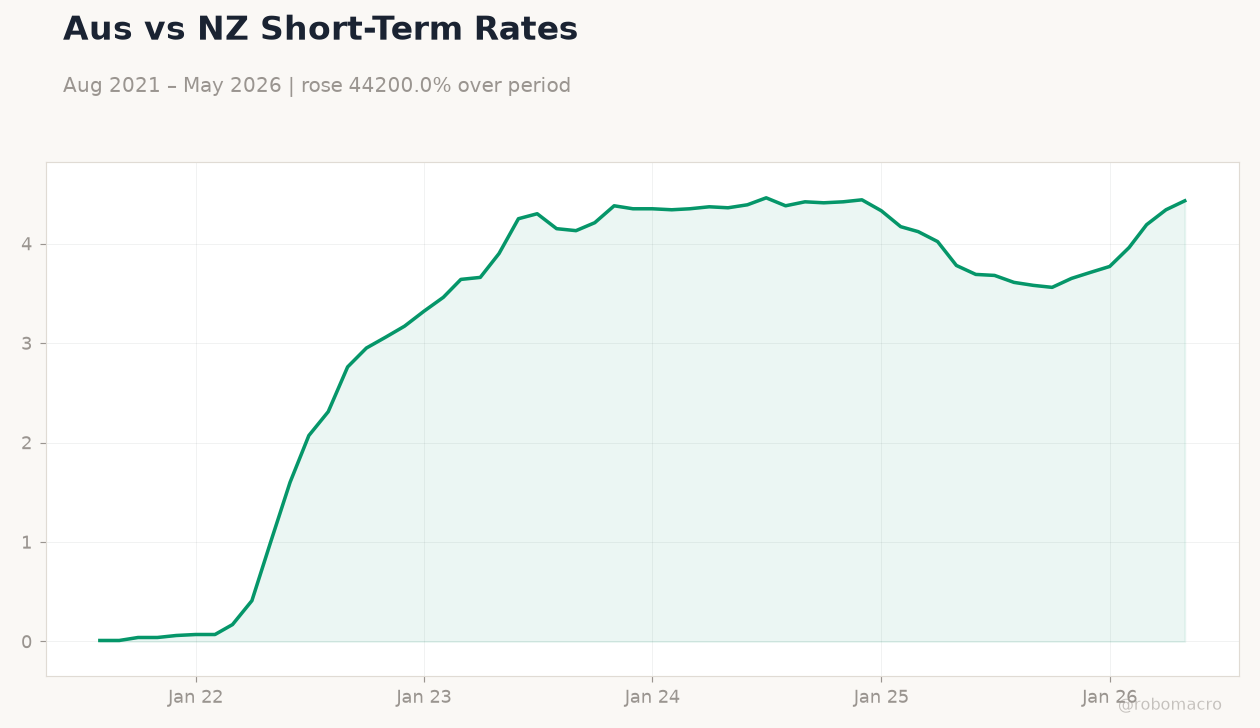
| NZ Short-term Rate | 4.33% | -9.60% |
Prior Economic Events
| Data | Prior | Cons | Actual |
|---|---|---|---|
| No events available | |||
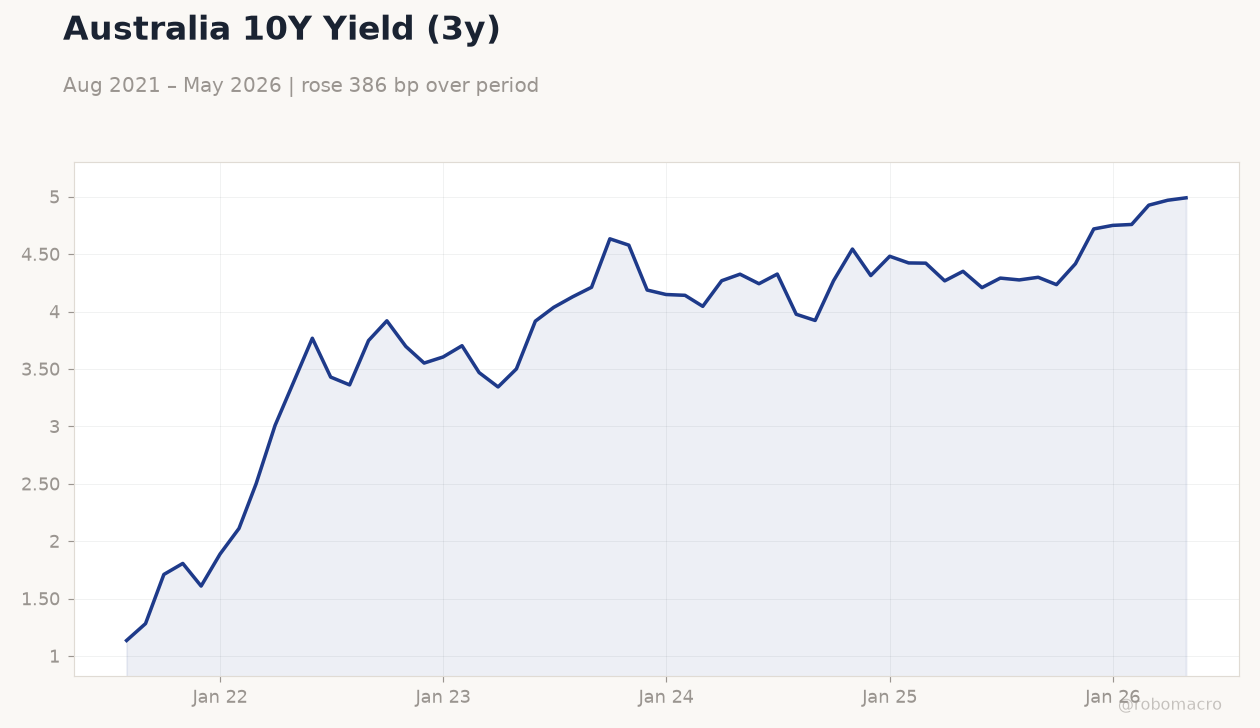 Australia 10Y Yield (3y) | Type: macro_line | Percent: 4.99 (2026-05-01) | Range: 1.135–4.99 | Trend(6pt): 1.135,3.919,4.187,4.423,4.969,4.99
Today's Economic Events
| Data | Prior | Cons | Time |
|---|---|---|---|
| RBA Hunter Speech | - | - | 17:00 |
| RBNZ Interest Rate Decision | 2.25 | 2.50 | 18:00 |
| Business NZ PMI | 49.90 | - | 14:30 |
- RBNZ expected to lift cash rate 25bp to 2.50% today while RBA remains on hold at 4.31%.
- Australian growth concerns intensify after Deloitte warns of longest sub-2% stretch since 1990s recession.
- ASX 200 slips 0.15% and AUD/USD eases to 0.69 as softer TD-MI inflation gauge weighs on sentiment.
Yesterday's Recap
Equity and currency markets closed mixed with no major ANZ data releases. The ASX 200 fell 0.15% to 8,831 while the NZX 50 held flat at 13,762.79. AUD/USD declined 0.04% to 0.69 and NZD/USD dropped 0.40% to 0.57, pushing AUD/NZD up 0.27% to 1.22.
BHP fell 1.92% to 58.87 as iron-ore futures softened. Australia’s 10-year government yield rose 0.42% to 4.99% while NZ short-term rates fell 9.60% to 4.33%. Brent crude gained 5.11% to 75.67, supporting commodity-linked AUD, while gold slipped 0.79% to 4,122.40.
Bitcoin eased 0.33% to 63,784.38.
The Day Ahead
Attention centres on the RBNZ cash-rate decision at 18:00 ET, with markets pricing a 25bp hike to 2.50%. RBA Assistant Governor Hunter speaks at 17:00 ET, likely reiterating the board’s data-dependent stance. Tomorrow brings New Zealand’s Business NZ PMI, which will test whether manufacturing momentum has improved after the June print of 49.9.
No Australian releases are scheduled, leaving focus on global trade data and any RBA commentary.
Other Economic Notes
Deloitte Access Economics highlights Australia’s weakest productivity growth in decades, warning that further expansion without inflation pressure will prove difficult. Weak housing approvals and cooling credit growth reinforce the view that domestic demand is losing steam. Commodity revenue continues to underpin both fiscal balances, yet softer dairy prices are widening New Zealand’s current-account gap.
China demand signals remain the dominant external driver for Australian iron-ore and LNG exports.
Global Macro News
Softer US jobs data eased near-term Fed hike bets, supporting risk assets globally while pressuring the yen near 40-year lows. Middle East tensions lifted the US dollar, capping NZD gains ahead of today’s decision. Australian inflation remains elevated at 3.96% y/y, challenging the RBA’s hawkish rhetoric according to BNY.
<i>↓ p.2</i>