ANZ Macro Daily(Beta Mode)
RBNZ Hikes Rates as Hunter Turns Hawkish
Market Snapshot
| Asset | Level | Change |
|---|---|---|
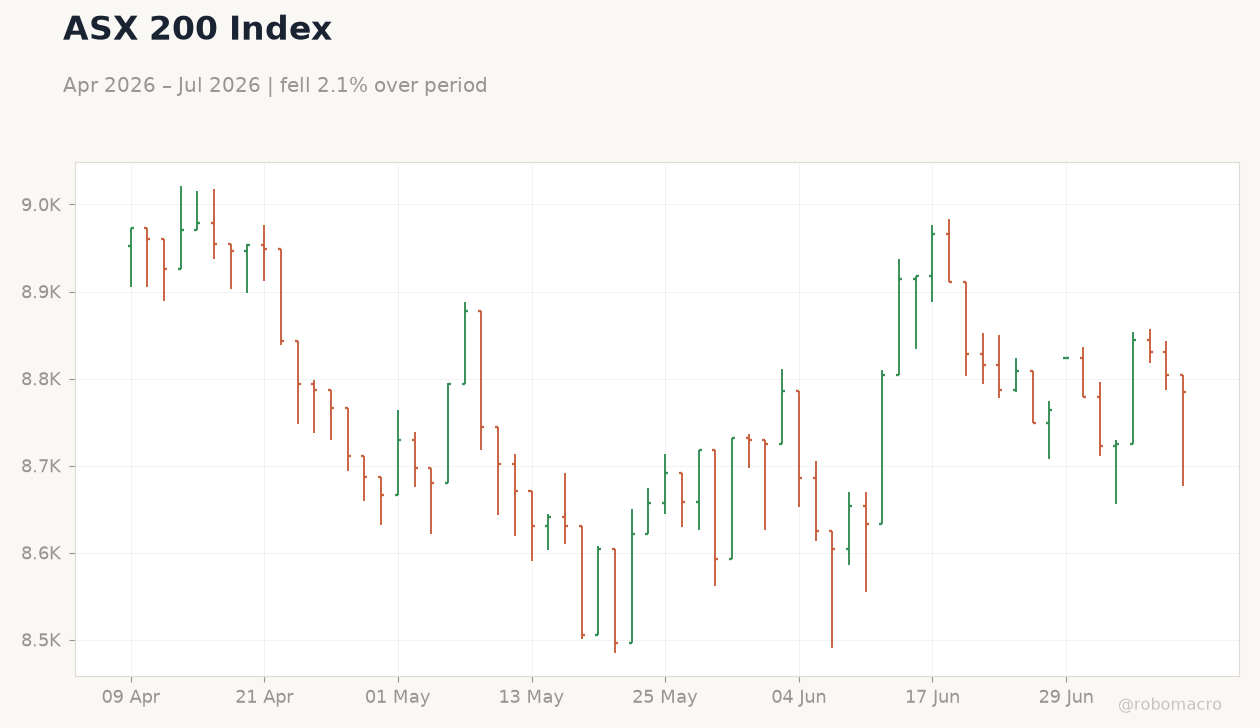
| ASX 200 | 8,785.10 | -0.21% |
| NZX 50 | 13,785.67 | +0.88% |
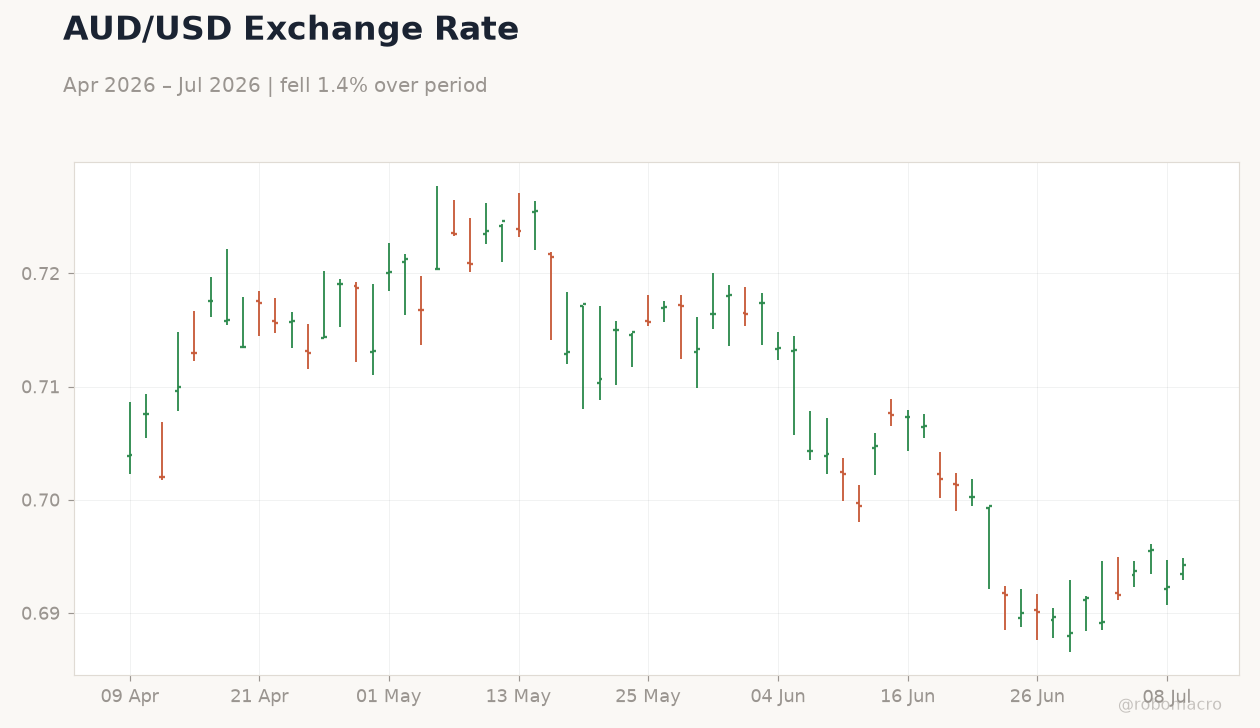
| AUD/USD | 0.69 | +0.29% |
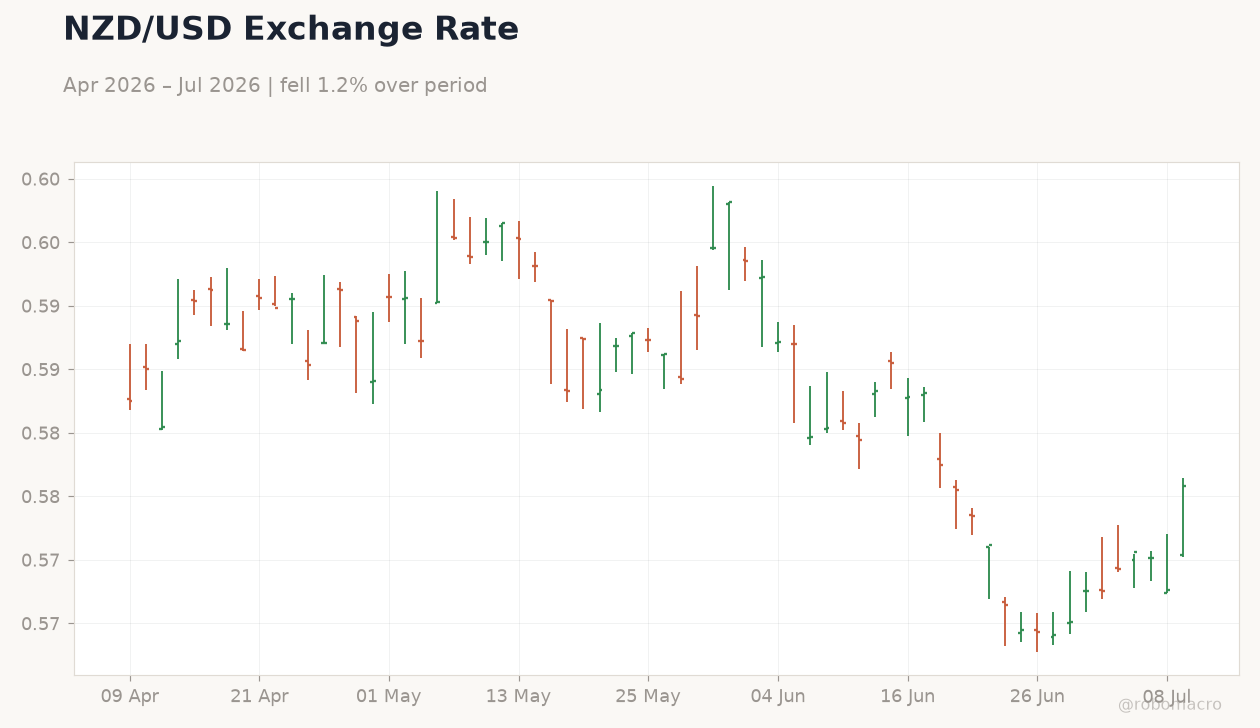
| NZD/USD | 0.58 | +1.43% |
| AUD/NZD | 1.21 | -1.15% |
| BHP | 56.87 | -1.11% |
| Gold | 4,132.20 | +1.51% |
| Brent Crude | 76.10 | -2.46% |
| Bitcoin | 63,198.94 | +1.51% |
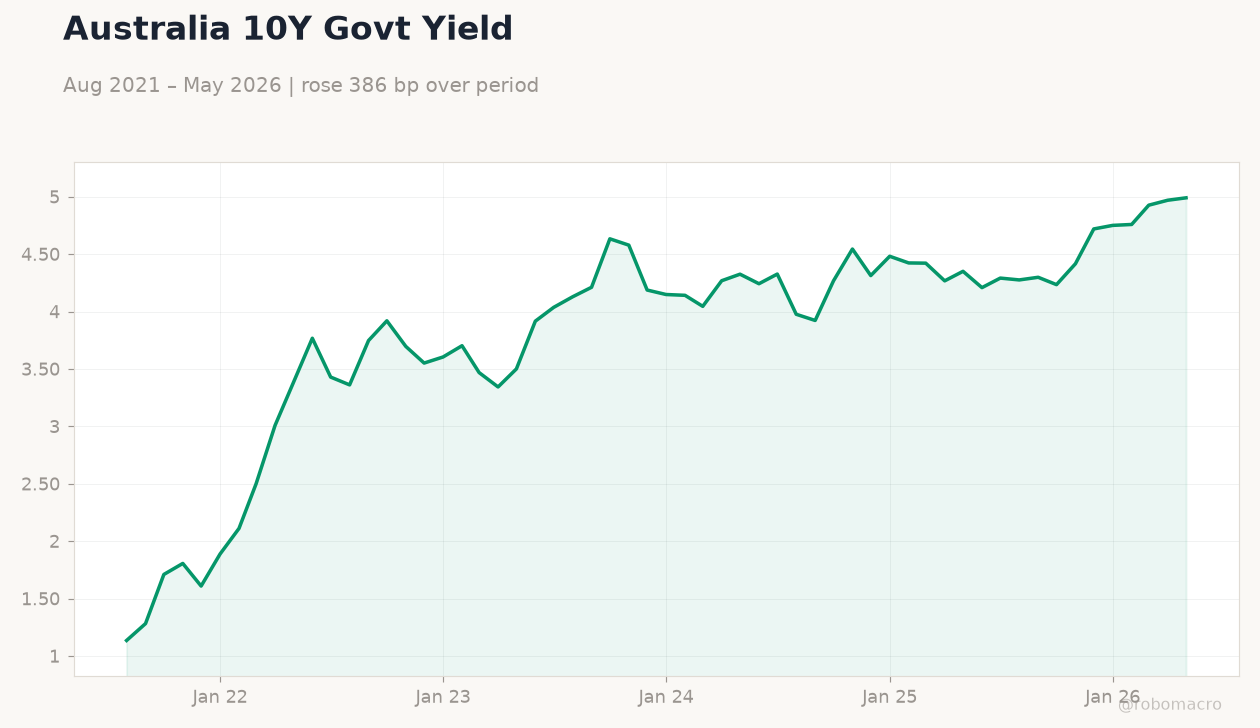
| Australia 10Y Govt Yield | 4.99% | +0.42% |
| NZ Short-term Rate | 4.33% | -9.60% |
Prior Economic Events
| Data | Prior | Cons | Actual |
|---|---|---|---|
| RBA Hunter Speech | - | - | - |
| RBNZ Interest Rate Decision | 2.25 | 2.50 | 2.50 |
| Business NZ PMI | 51.30 | - | 59.70 |
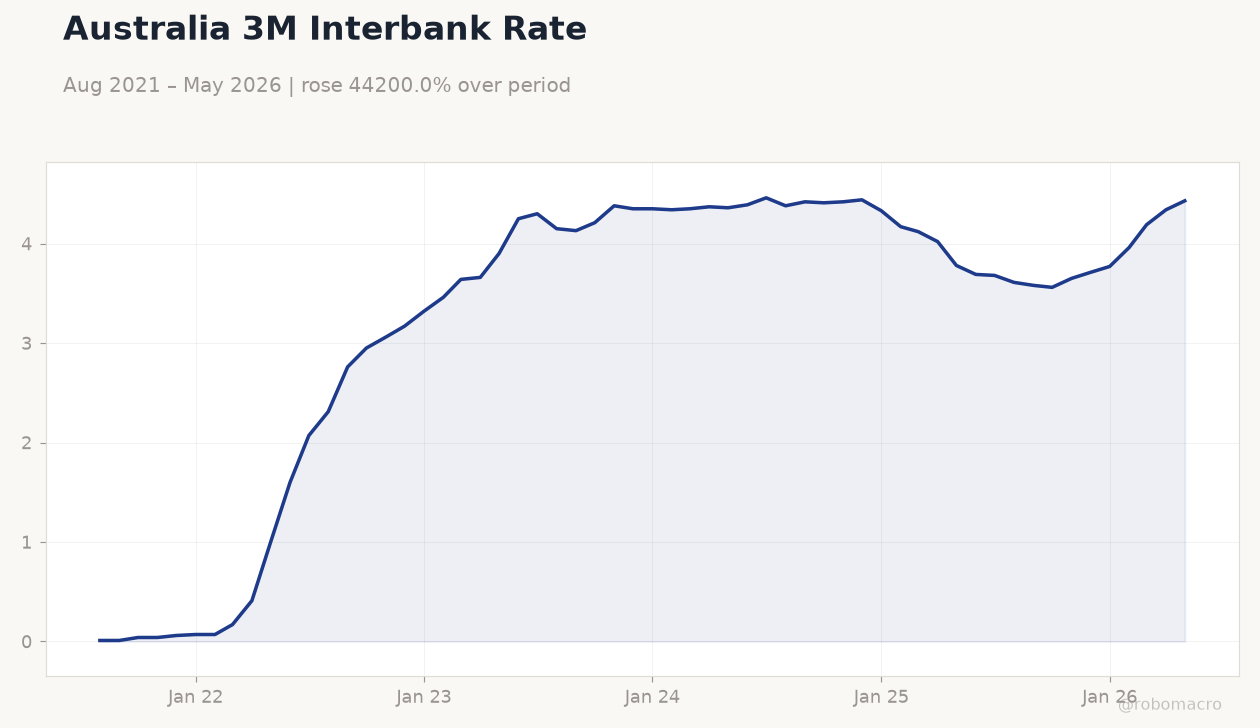 Australia 3M Interbank Rate | Type: macro_line | Rate %: 4.43 (2026-05-01) | Range: 0.01–4.46 | Trend(6pt): 0.01,2.95,4.35,4.17,4.34,4.43
Today's Economic Events
| Data | Prior | Cons | Time |
|---|---|---|---|
| No events available | |||
- RBNZ lifted the cash rate to 2.50% and signalled further tightening, lifting NZD/USD 1.43%.
- RBA economist Hunter warned of persistent inflation risks and possible additional rate hikes.
- ASX 200 fell 0.21% while NZX 50 gained 0.88% amid divergent central-bank signals.
Yesterday's Recap
The RBNZ raised its policy rate to 2.50% from 2.25%, citing inflation pressures and committing to further tightening if needed. NZ Business PMI surged to 59.7 from 51.3, confirming stronger activity. RBA chief economist Sarah Hunter delivered hawkish remarks, highlighting risks from Middle East conflict and repeated supply shocks that could keep inflation elevated.
AUD/USD rose 0.29% to 0.69 while NZD/USD jumped 1.43% to 0.58, pushing AUD/NZD down 1.15% to 1.21. The ASX 200 slipped 0.21% to 8,785.10 as BHP fell 1.11% to 56.87. NZX 50 advanced 0.88% to 13,785.67.
Australia 10-year yields rose 0.42% to 4.99% and NZ short-term rates dropped 9.60% to 4.33%. Gold climbed 1.51% to 4,132.20 while Brent crude fell 2.46% to 76.10. RBA Cash Rate stands at 4.31%, Australia CPI YoY at 3.96% and New Zealand CPI YoY at 3.10%.
The Day Ahead
No major ANZ data releases are scheduled for today or tomorrow. Markets will focus on any follow-up commentary from RBA or RBNZ officials. Chinese trade and inflation prints due overnight may influence commodity-linked currencies.
AUD and NZD positioning will remain sensitive to global risk sentiment and oil-price moves. Housing-market data from both countries are not expected until later in the month.
Other Economic Notes
Australia’s commodity-export model remains tightly linked to Chinese steel output and infrastructure demand. Iron-ore and LNG prices continue to drive the trade balance and AUD valuation. New Zealand’s dairy and tourism sectors face softer terms of trade after recent GDT price declines.
Both economies remain exposed to global supply disruptions that RBA and RBNZ officials now view as more frequent. Housing-market resilience in Australia and New Zealand continues to support household spending despite higher borrowing costs.
Global Macro News
Escalating Middle East tensions have raised the prospect of renewed energy-price spikes that could feed into ANZ inflation. <i>↓ p.2</i>