ANZ Macro Daily(Beta Mode)
RBA Hawkish Tone Bolsters AUD as NZD Lags
Market Snapshot
| Asset | Level | Change |
|---|---|---|
| ASX 200 | 8,806.00 | +0.50% |
| NZX 50 | 13,723.20 | -0.45% |
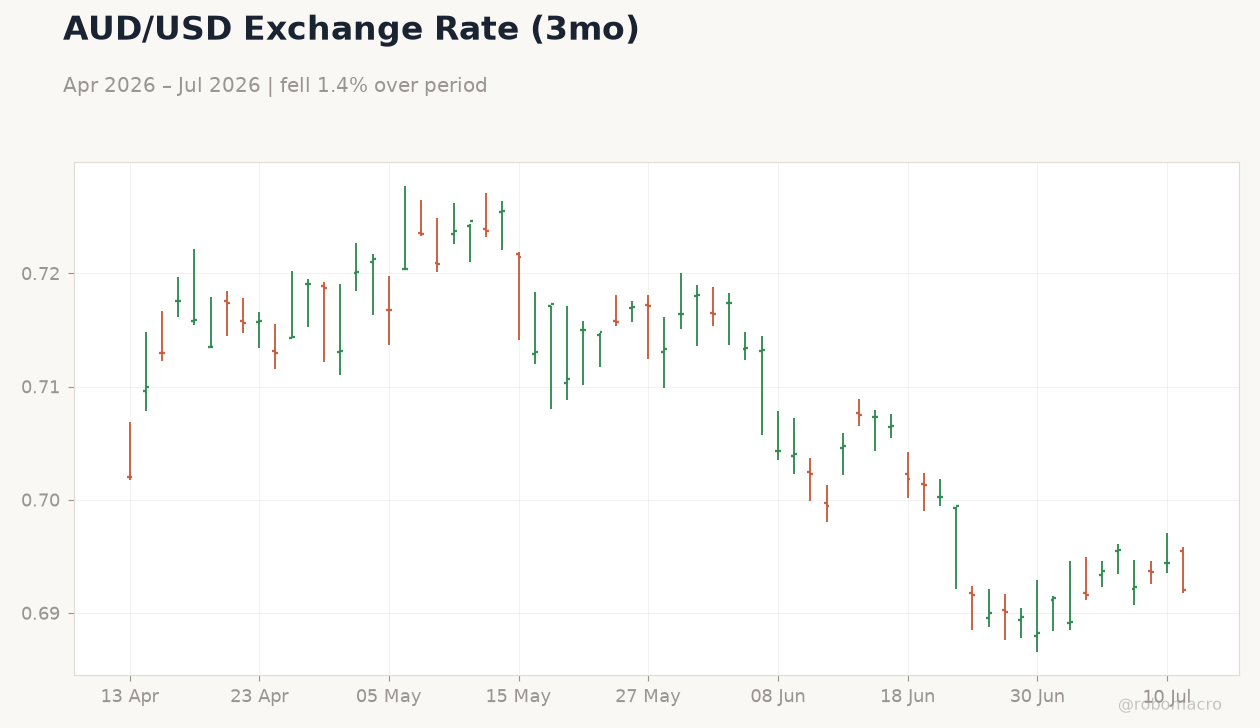
| AUD/USD | 0.69 | -0.35% |
| NZD/USD | 0.58 | -0.18% |
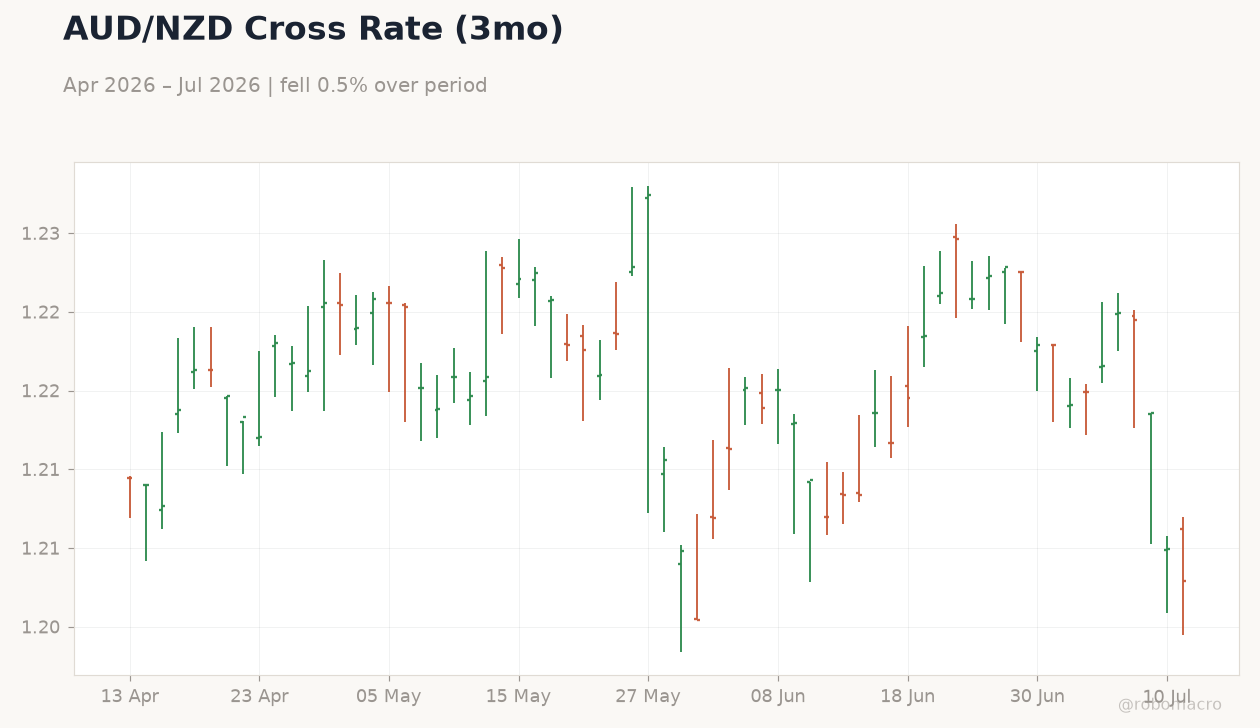
| AUD/NZD | 1.21 | +0.05% |
| BHP | 58.28 | +2.48% |
| Gold | 4,006.70 | -2.37% |
| Brent Crude | 83.02 | +9.22% |
| Bitcoin | 62,175.74 | -2.48% |
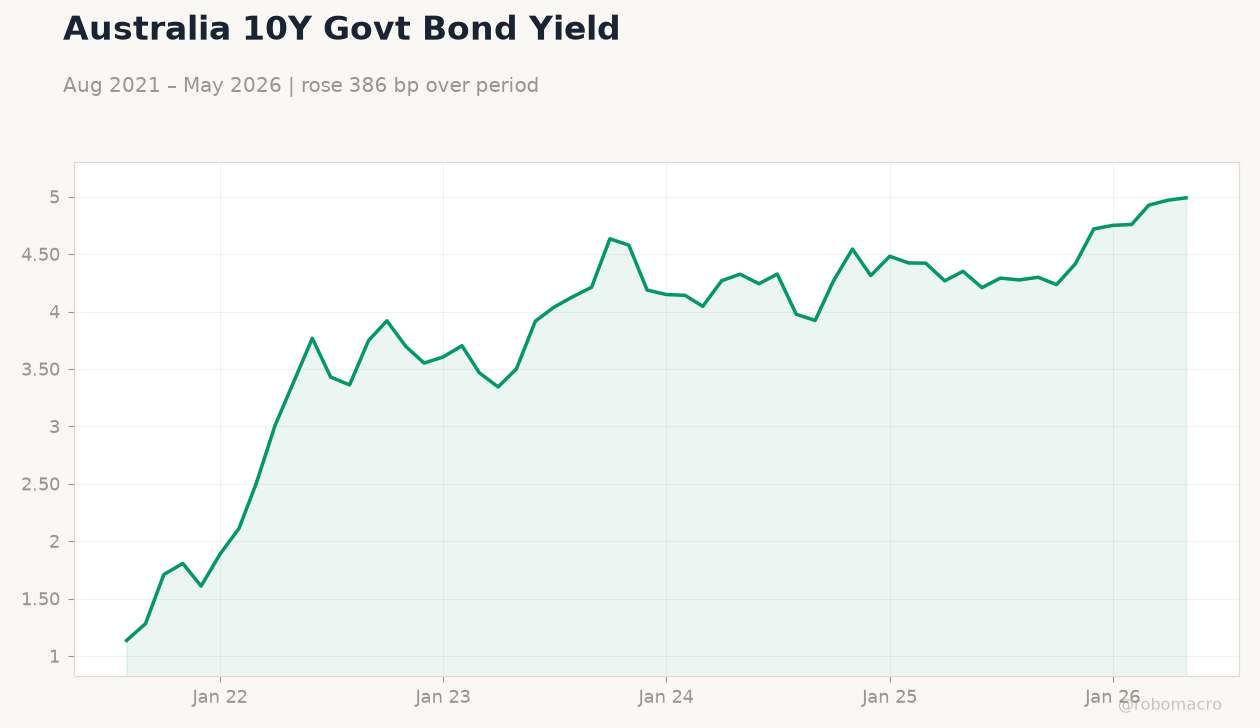
| Australia 10Y Govt Yield | 4.99% | +0.42% |
| NZ Short-term Rate | 4.33% | -9.60% |
Prior Economic Events
| Data | Prior | Cons | Actual |
|---|---|---|---|
| No events available | |||
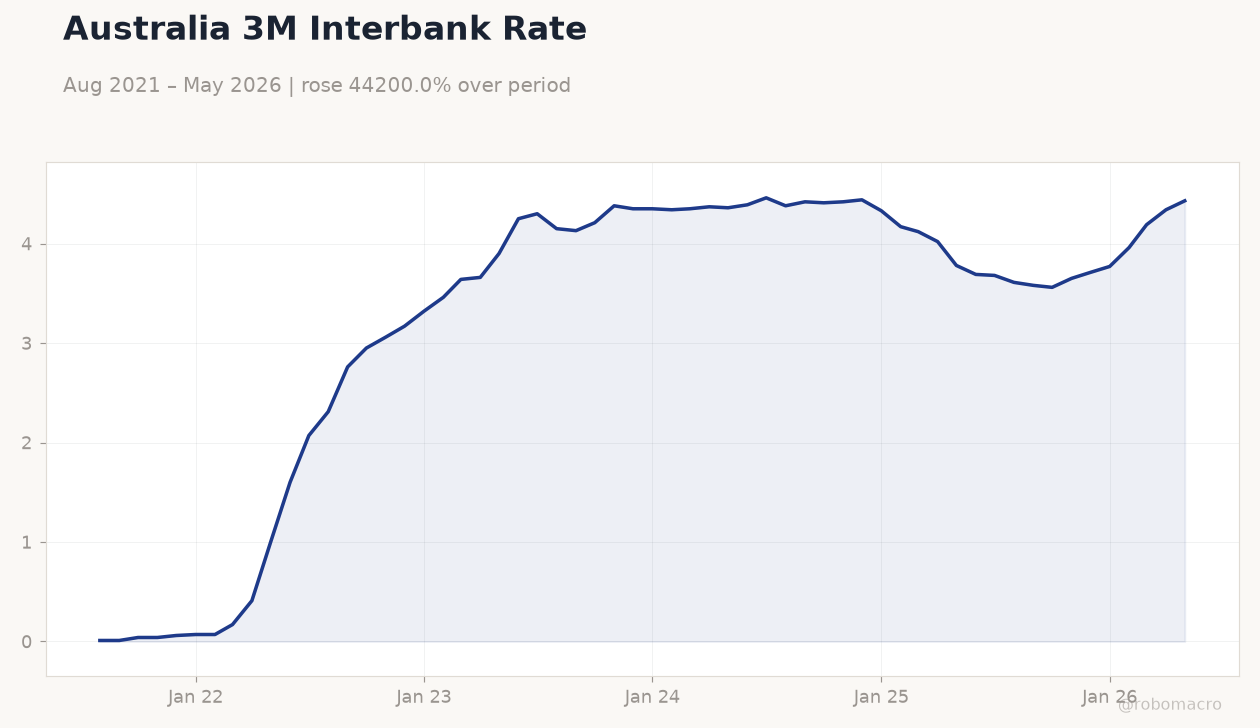 Australia 3M Interbank Rate | Type: macro_line | Rate (%): 4.43 (2026-05-01) | Range: 0.01–4.46 | Trend(6pt): 0.01,2.95,4.35,4.17,4.34,4.43
Today's Economic Events
| Data | Prior | Cons | Time |
|---|---|---|---|
| Westpac Consumer Confidence Change | -2.90 | - | 16:30 |
| Westpac Consumer Confidence Index | 80.60 | - | 16:30 |
| NAB Business Confidence Index | -14 | - | 17:30 |
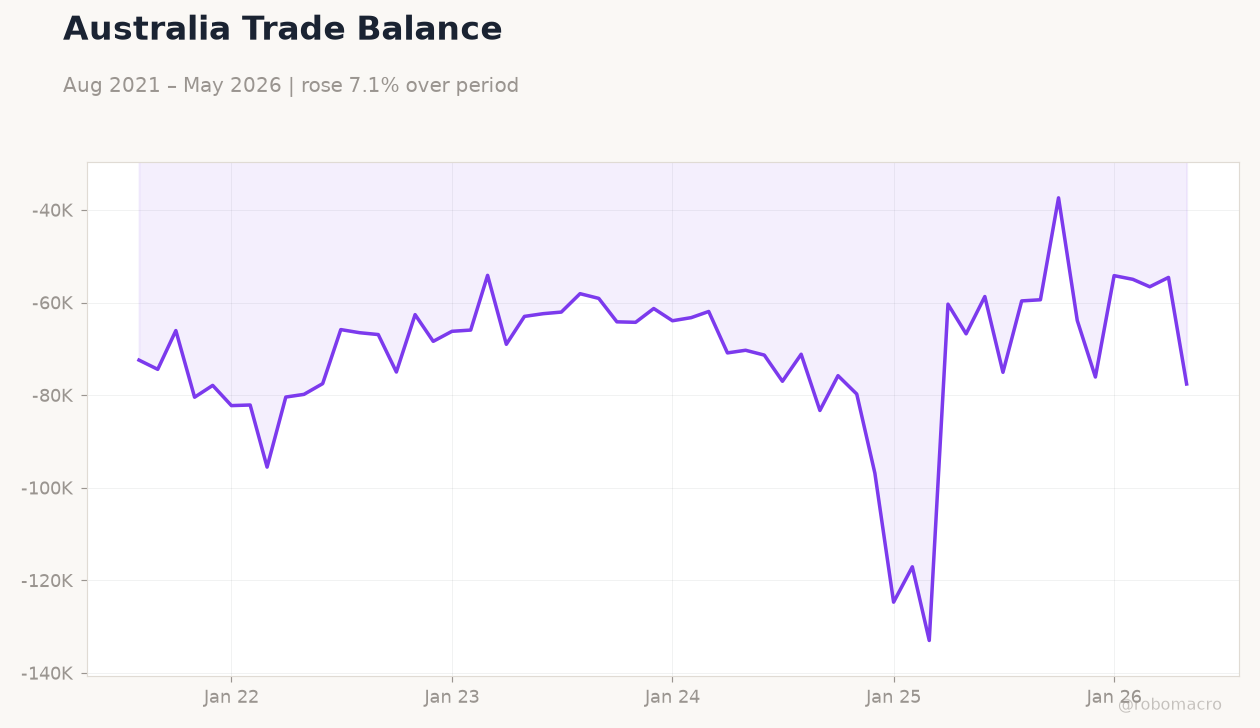
| Trade Balance | 800m | - | 14:45 |
- RBA signals further tightening, lifting AUD/USD toward 0.6950 amid mixed growth signals.
- Westpac and NAB confidence surveys due today to gauge Australian household and business sentiment.
- RBNZ flags additional policy tightening, supporting NZD but highlighting divergence from RBA path.
Yesterday's Recap
Markets closed 12 July with ASX 200 at 8,806.00, up 0.50 percent, driven by BHP rising 2.48 percent to 58.28 on iron-ore strength. NZX 50 fell 0.45 percent to 13,723.20. AUD/USD slipped 0.35 percent to 0.69 while NZD/USD eased 0.18 percent to 0.58, leaving AUD/NZD 0.05 percent higher at 1.21.
Australia 10-year yield climbed 0.42 percent to 4.99 percent. NZ short-term rate dropped 9.60 percent to 4.33 percent. Gold fell 2.37 percent to 4,006.70 and Brent crude surged 9.22 percent to 83.02.
No Australian or New Zealand data releases occurred on 12 July. Commodity price moves continued to shape currency performance, with iron-ore gains supporting Australian export revenues and mining equities while dairy softness weighed on New Zealand terms of trade.
The Day Ahead
Australian Westpac Consumer Confidence Change and Index print at 16:30 ET, followed by NAB Business Confidence Index at 17:30 ET, both high-impact releases that will test whether recent RBA hawkish comments have lifted sentiment. New Zealand Trade Balance for May appears tomorrow at 14:45 ET. Markets will also watch commodity flows, particularly iron-ore and dairy prices, given their direct transmission to AUD and NZD terms of trade.
No central-bank speeches are scheduled. These surveys provide timely readings on whether policy expectations are feeding through to households and firms, with any upside surprise likely to reinforce rate-hike pricing for the RBA.
Other Economic Notes
Australian GDP per person growth has averaged just 0.7 percent annually since 2020, the weakest decade on record and a drag on domestic demand despite commodity support. Housing markets in both countries remain sensitive to rate expectations, with Perth suburbs showing resilience that contrasts national rate pressures. China stimulus speculation continues to underpin Australian mining revenues while softer Chinese imports weigh on New Zealand dairy earnings.
These linkages keep external demand the dominant swing factor for ANZ growth and currencies. Persistent weakness in per-capita output limits the scope for broad-based consumption recovery even as mining royalties bolster fiscal positions in Australia.