ANZ Macro Daily(Beta Mode)
RBA, RBNZ Flag Further Tightening Risks
Market Snapshot
| Asset | Level | Change |
|---|---|---|
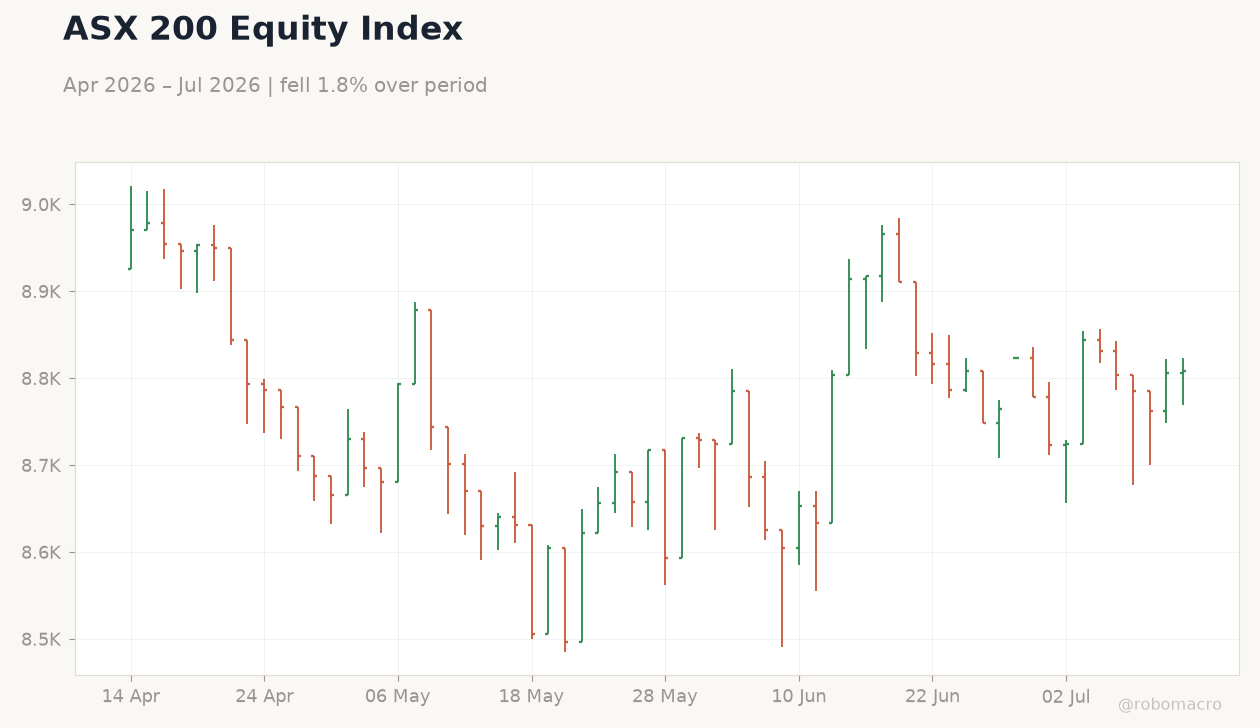
| ASX 200 | 8,808.50 | +0.03% |
| NZX 50 | 13,651.22 | -0.52% |
| AUD/USD | 0.70 | +0.48% |
| NZD/USD | 0.58 | +0.89% |
| AUD/NZD | 1.20 | -0.42% |
| BHP | 58.71 | +0.63% |
| Gold | 4,058.90 | +1.55% |
| Brent Crude | 85.20 | +2.28% |
| Bitcoin | 64,519.03 | +3.66% |
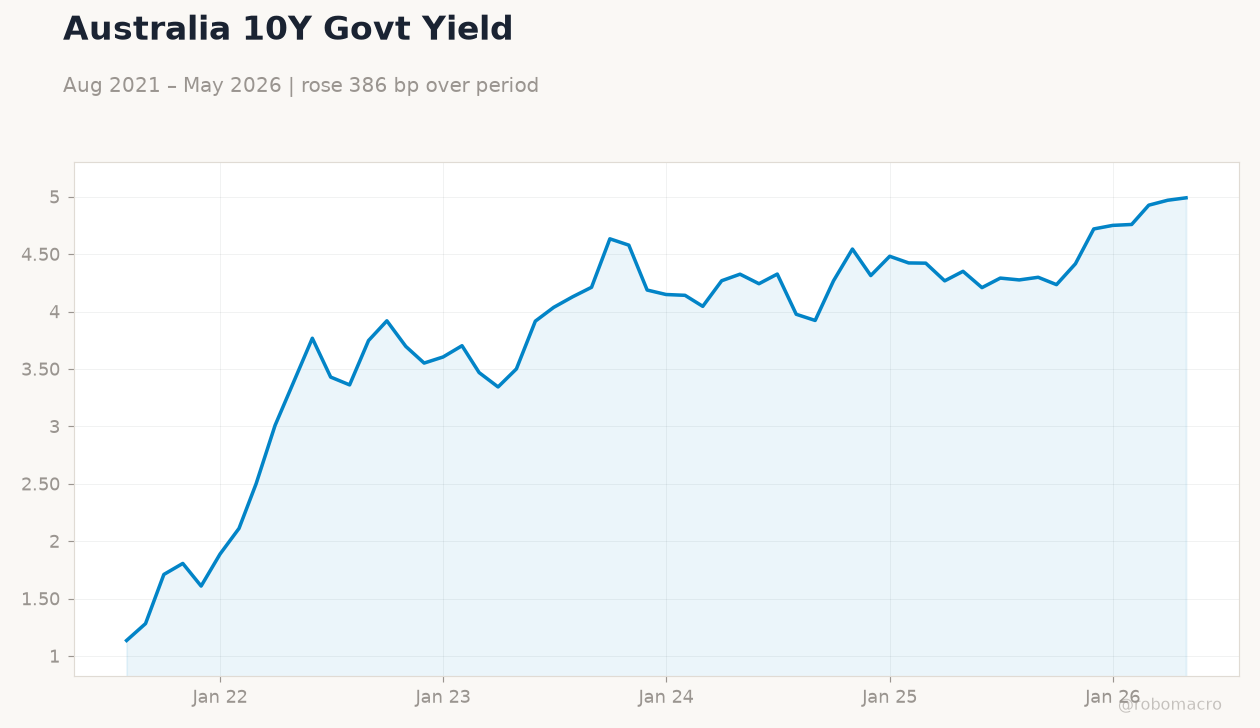
| Australia 10Y Govt Yield | 4.99% | +0.42% |
| NZ Short-term Rate | 4.33% | -9.60% |
Prior Economic Events
| Data | Prior | Cons | Actual |
|---|---|---|---|
| Westpac Consumer Confidence Change | -2.90 | - | 4.10 |
| Westpac Consumer Confidence Index | 80.60 | - | 83.90 |
| NAB Business Confidence Index | -14 | - | -5 |
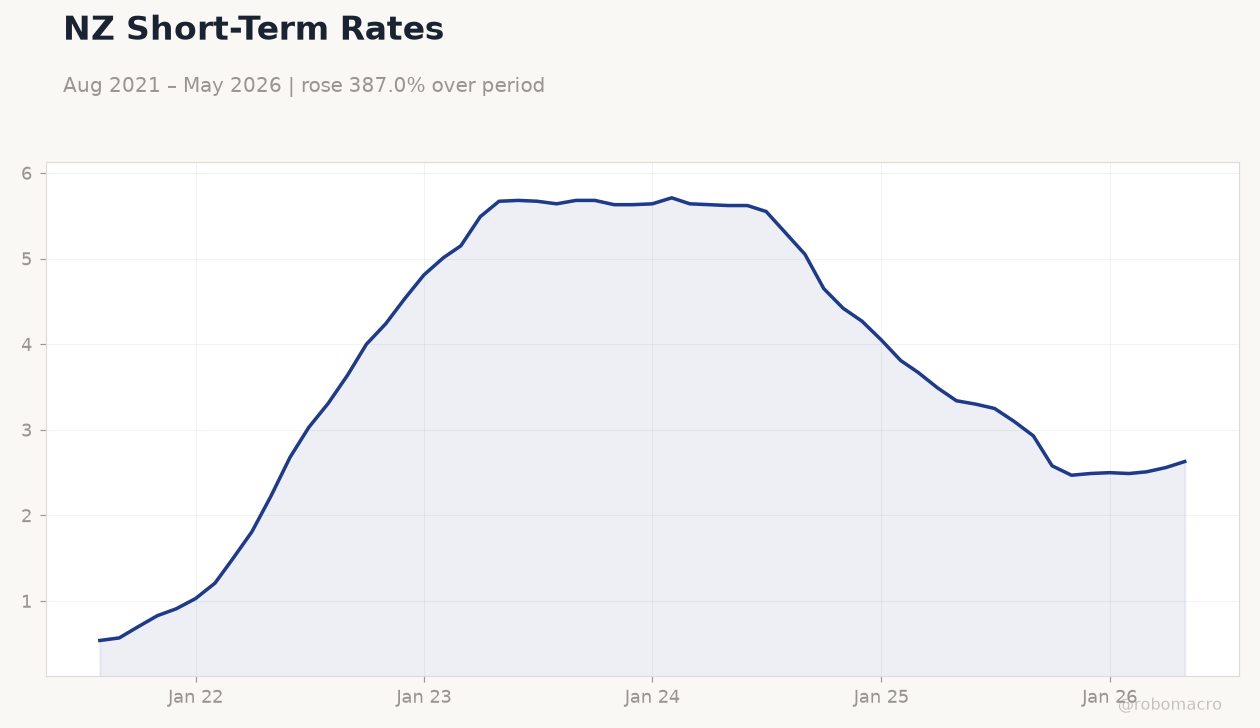 NZ Short-Term Rates | Type: macro_line | Percent: 2.63 (2026-05-01) | Range: 0.54–5.71 | Trend(6pt): 0.54,4,5.63,3.81,2.56,2.63
Today's Economic Events
| Data | Prior | Cons | Time |
|---|---|---|---|
| Trade Balance | 800m | - | 14:45 |
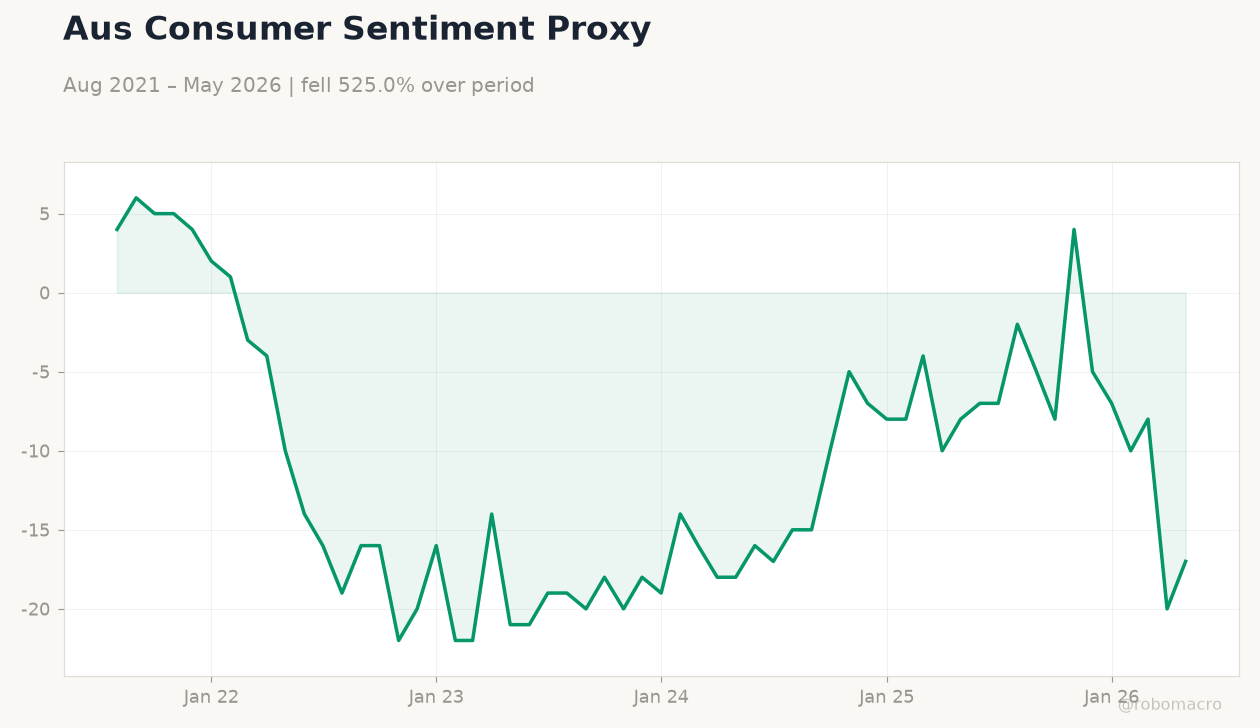
- Australian consumer and business confidence rebounded sharply on 13 July, with Westpac index rising to 83.9 and NAB index to -5.
- AUD and NZD both strengthened against USD amid higher commodity prices and Middle East tensions lifting oil.
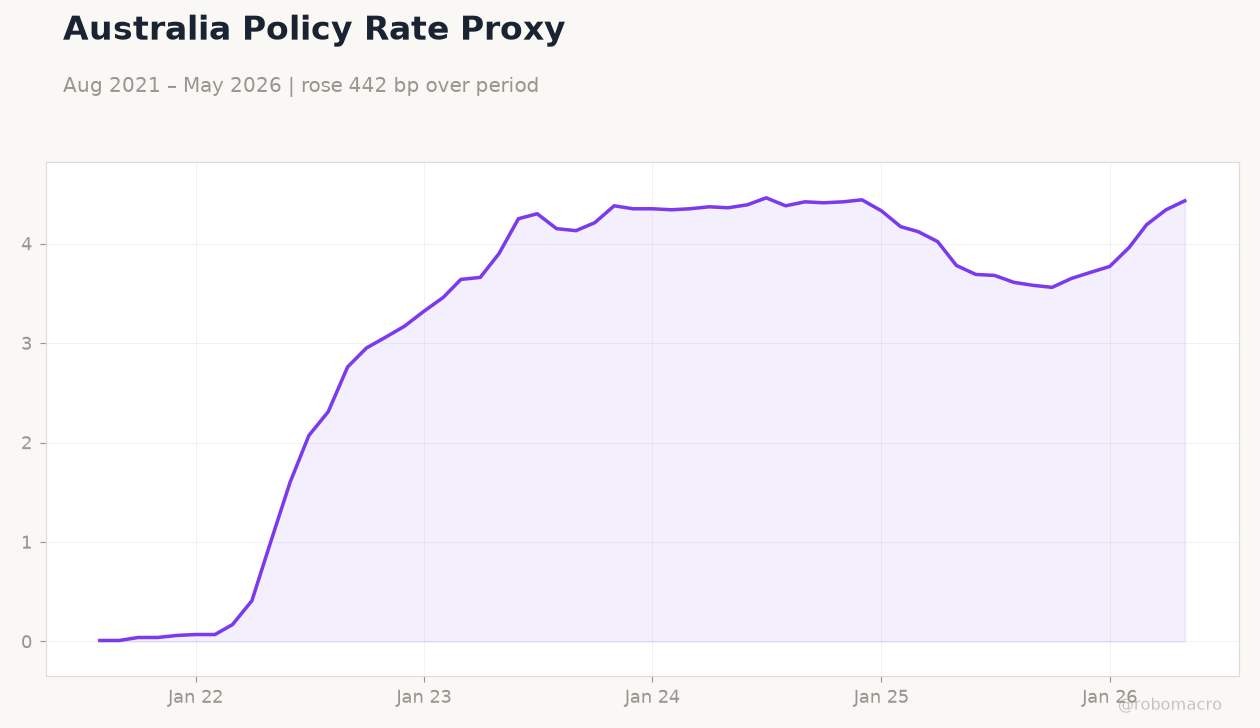
- RBA and RBNZ officials signalled potential additional rate hikes if inflation pressures from conflict persist.
Yesterday's Recap
Australian data releases on 13 July showed clear improvement in sentiment. Westpac Consumer Confidence Change printed +4.1 while the index climbed to 83.9 from 80.6. NAB Business Confidence Index rose to -5 from -14, indicating less negative conditions.
Equity markets diverged, with ASX 200 edging 0.03% higher to 8,808.50 while NZX 50 fell 0.52% to 13,651.22. AUD/USD advanced 0.48% to 0.70 and NZD/USD gained 0.89% to 0.58. Gold rose 1.55% to 4,058.90 and Brent crude climbed 2.28% to 85.20, supporting commodity-linked currencies.
Australian 10-year yields increased 0.42% to 4.99% while NZ short-term rates fell sharply. Iron-ore prices near US$106/t and a 3.2% y/y rise in China’s June iron-ore import volumes reinforced Australia’s trade surplus position.
The Day Ahead
New Zealand releases Trade Balance data on 19 July at 14:45 ET, providing the next read on external balances. No major Australian data prints are scheduled for the immediate session. Markets will monitor any follow-through from yesterday’s confidence gains into retail spending trends.
China industrial production and retail sales due later in the week remain key external inputs for both economies. Commodity price movements, especially iron ore and dairy, will continue to drive AUD and NZD flows. GDT dairy auction results showing a 1.4% price rise offer modest support for New Zealand’s terms of trade.
Other Economic Notes
Australia’s position as a major commodity exporter leaves it exposed to any softening in Chinese steel output. Iron ore and LNG receipts underpin the trade surplus and support the currency. New Zealand relies more on dairy prices and tourism receipts, both sensitive to global growth and travel demand.
Housing markets in both countries remain critical transmission channels for monetary policy. Persistent inflation above target keeps pressure on central banks to maintain restrictive settings. Thermal coal at US$138/t and LNG at US$11.8/mmbtu provide additional revenue stability for Australian exporters.