ANZ Macro Daily(Beta Mode)
RBA Holds Steady as NZ Data Eyed
Market Snapshot
| Asset | Level | Change |
|---|---|---|
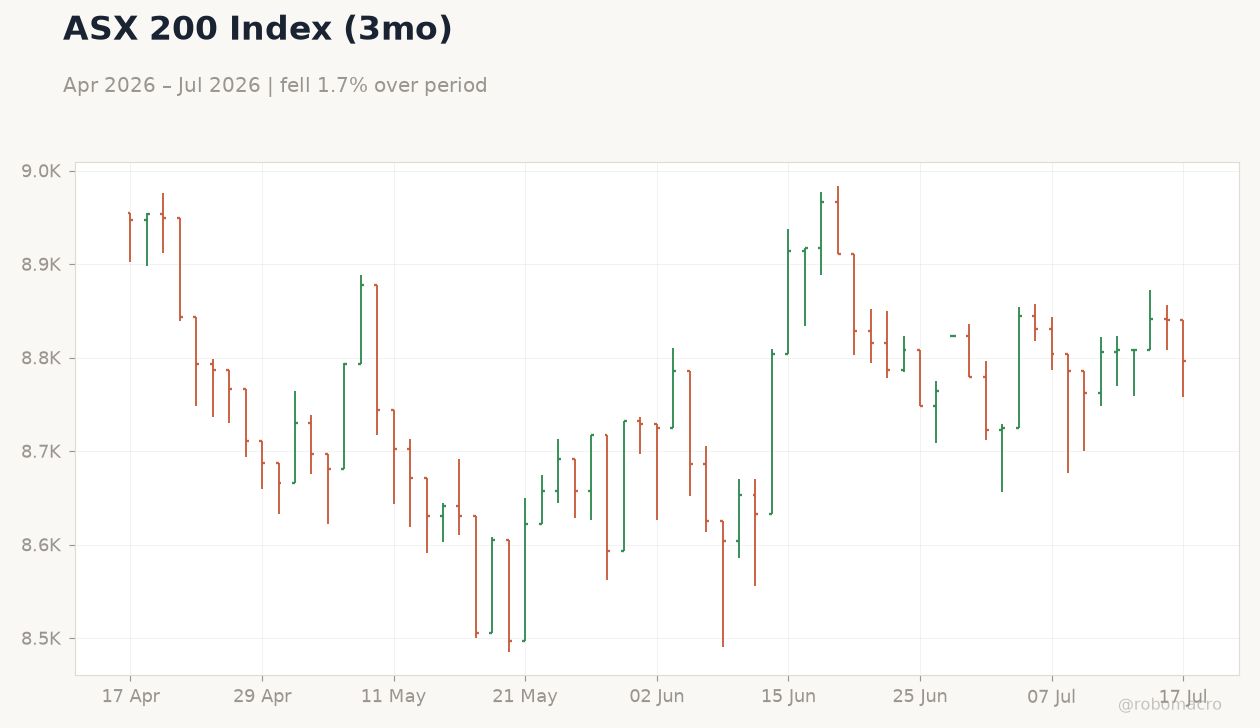
| ASX 200 | 8,796.70 | -0.50% |
| NZX 50 | 13,694.68 | +0.59% |
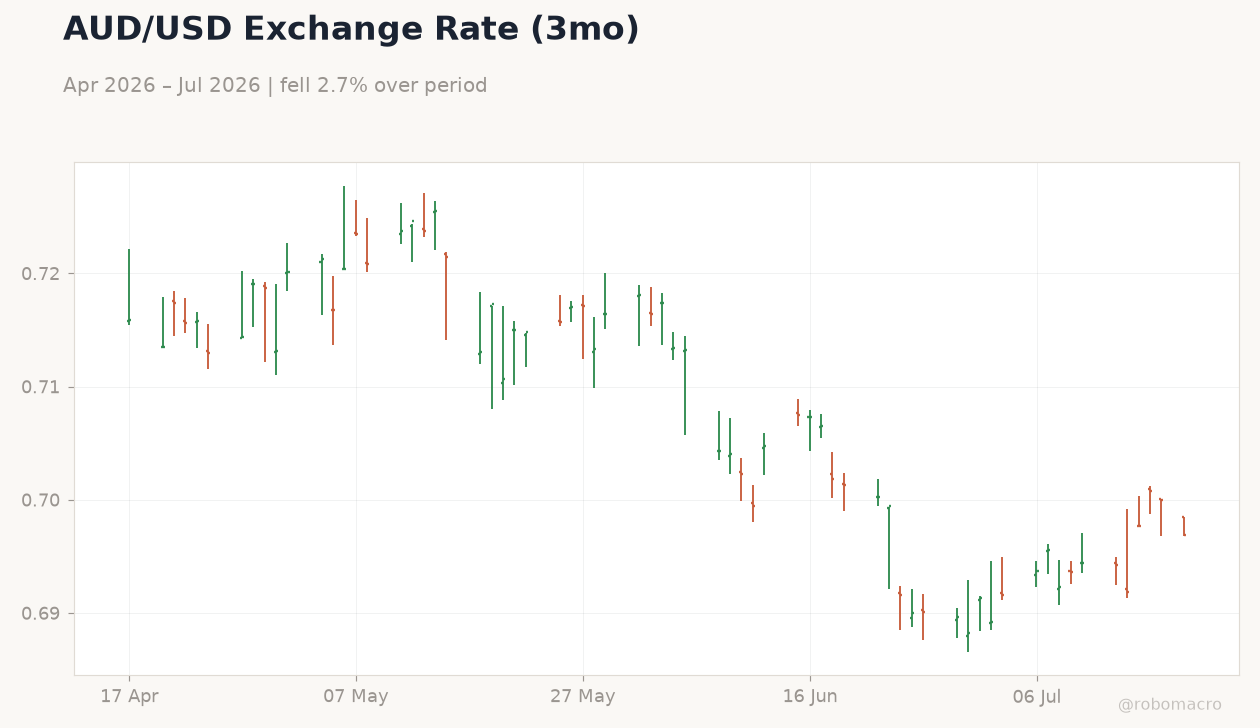
| AUD/USD | 0.70 | -0.44% |
| NZD/USD | 0.58 | -0.24% |
| AUD/NZD | 1.19 | -0.27% |
| BHP | 57.54 | -2.71% |
| Gold | 4,018.80 | +0.83% |
| Brent Crude | 88.10 | +4.59% |
| Bitcoin | 64,458.00 | -0.52% |
| Australia 10Y Govt Yield | 4.83% | -3.03% |
| NZ Short-term Rate | 4.33% | -9.60% |
Prior Economic Events
| Data | Prior | Cons | Actual |
|---|---|---|---|
| No events available | |||
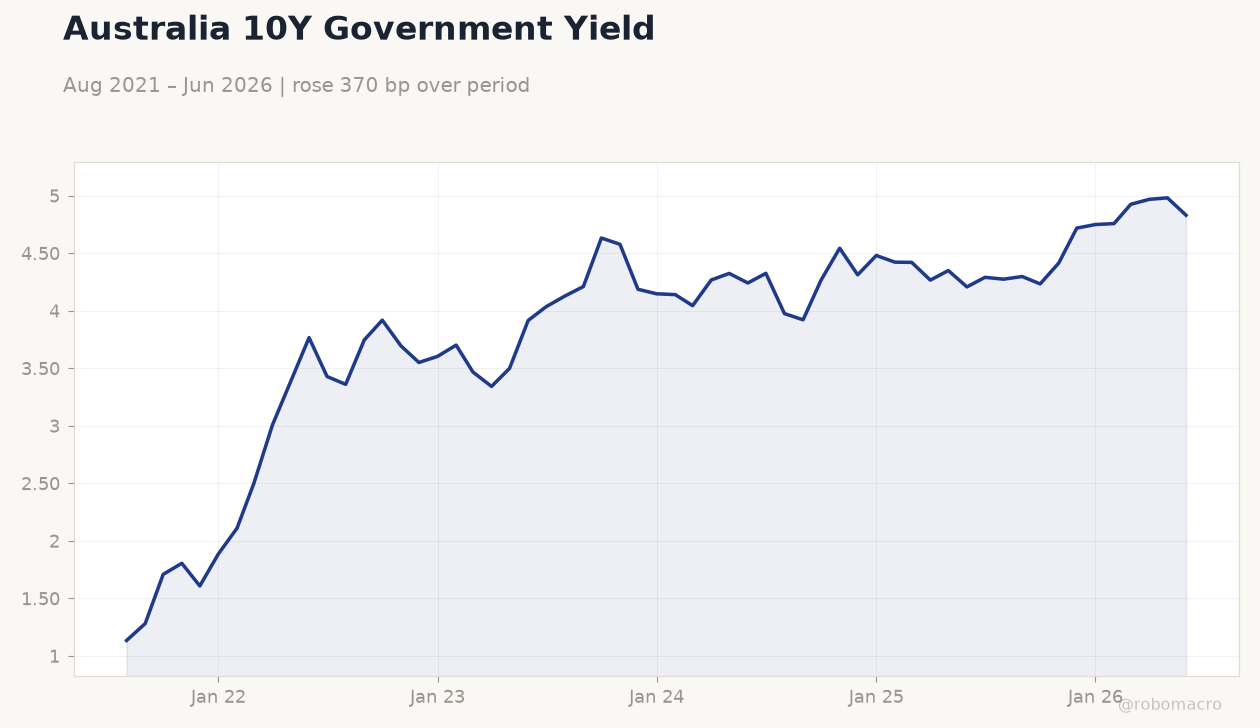 Australia 10Y Government Yield | Type: macro_line | Yield (%): 4.831 (2026-06-01) | Range: 1.135–4.982 | Trend(6pt): 1.135,3.919,4.187,4.423,4.969,4.831
Today's Economic Events
| Data | Prior | Cons | Time |
|---|---|---|---|
| Trade Balance | 800m | 250m | 18:45 |
| Inflation Rate Quarter-over-Quarter | 0.90 | 1.40 | 18:45 |
| Employment Change | 40,300 | 15,000 | 21:30 |
| Full-Time Employment Change | 5,200 | - | 21:30 |
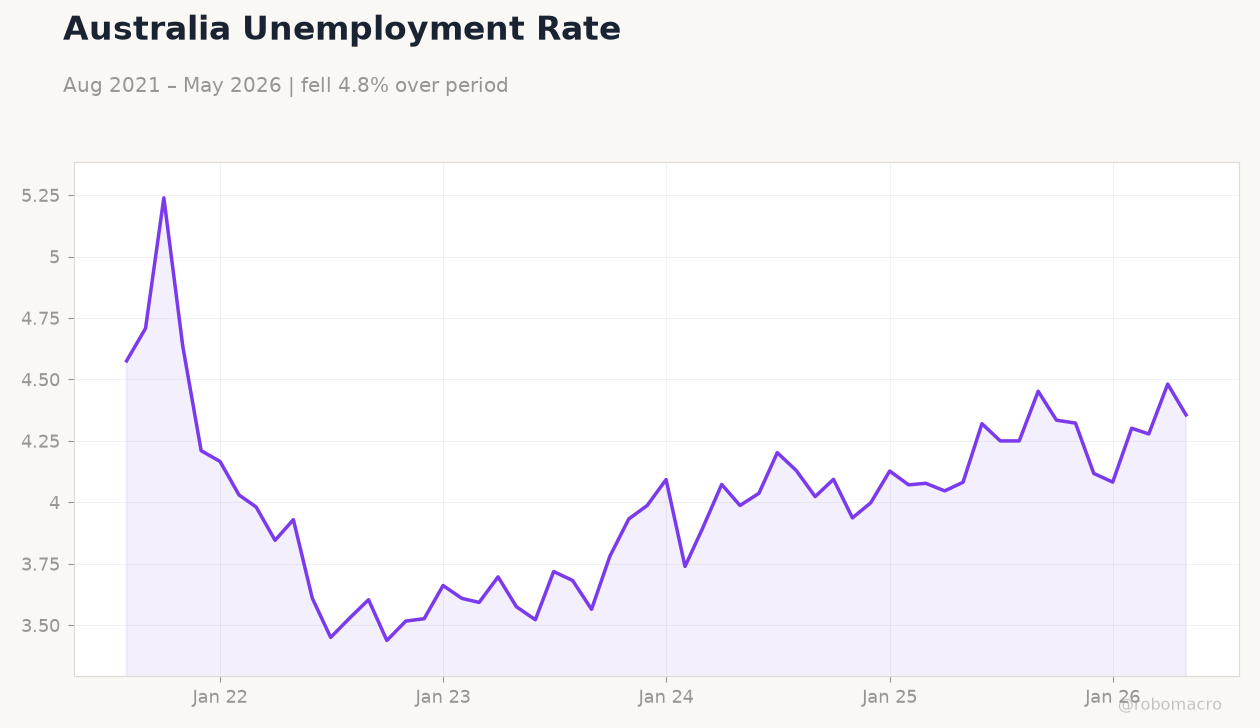
| Headline Unemployment Rate | 4.40 | 4.40 | 21:30 |
| S&P Global Manufacturing PMI Flash | - | - | 19:00 |
| S&P Global Services PMI Flash | - | - | 19:00 |
- ASX 200 fell 0.50% while NZX 50 rose 0.59% on dairy support
- AUD/USD slipped 0.44% to 0.70 as Brent crude jumped 4.59%
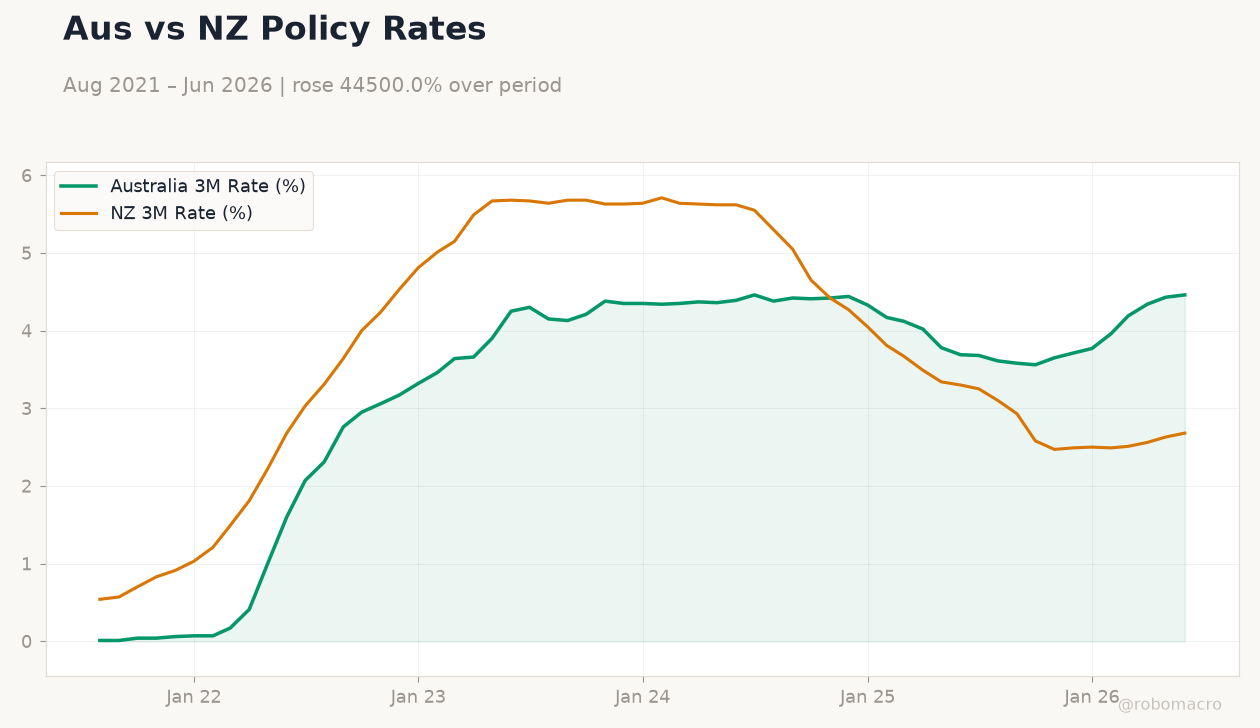
- RBA cash rate holds at 4.35% with RBNZ OCR at 2.50%
Yesterday's Recap
No Australian or New Zealand data releases occurred on 18 July. The ASX 200 closed at 8,796.70 after a 0.50% decline led by BHP’s 2.71% drop. The NZX 50 advanced 0.59% to 13,694.68, supported by firmer dairy futures.
AUD/USD fell 0.44% to 0.70 while NZD/USD eased 0.24% to 0.58. Australia’s 10-year government bond yield dropped 3.03% to 4.83%. NZ short-term rates declined 9.60% to 4.33%.
Gold rose 0.83% to 4,018.80 amid safe-haven demand. Commodity price movements reflected ongoing Chinese demand signals and Middle East supply concerns that lifted Brent crude sharply higher.
The Day Ahead
New Zealand’s June trade balance is scheduled for release at 18:45 ET today with a consensus surplus of NZ$250 million. Australia’s June employment report follows on 22 July, forecasting a 15,000 rise in total employment and an unchanged 4.4% unemployment rate. S&P Global flash manufacturing and services PMIs for Australia are due 23 July.
Markets will also monitor any RBA commentary ahead of the next policy meeting. China’s steel output and property data remain key external inputs for both currencies. The upcoming inflation print for New Zealand on 20 July will provide further insight into price pressures after the March year-on-year reading of 3.10%.
Other Economic Notes
Australia’s commodity export earnings remain sensitive to Chinese steel production and restocking cycles. New Zealand’s dairy prices have lifted export receipts yet domestic demand stays soft. Housing markets in both countries continue to influence household spending and inflation persistence.
The divergence between RBA and RBNZ policy rates reflects different inflation trajectories and labour-market conditions. BHP share price movements serve as a timely gauge of mining-sector sentiment. Elevated iron-ore and coking-coal prices continue to support Australia’s terms of trade while New Zealand benefits from successive gains in the global dairy price index.
Global Macro News
Brent crude surged 4.59% to 88.10 on Middle East supply concerns, boosting AUD terms of trade. The US dollar remained steady after softer inflation data reduced near-term rate-hike expectations. <i>↓ p.2</i>