ANZ Macro Daily(Beta Mode)
Hot NZ CPI Bolsters RBNZ Hike Bets
Market Snapshot
| Asset | Level | Change |
|---|---|---|
| ASX 200 | 8,791.30 | -0.06% |
| NZX 50 | 13,656.03 | -0.29% |
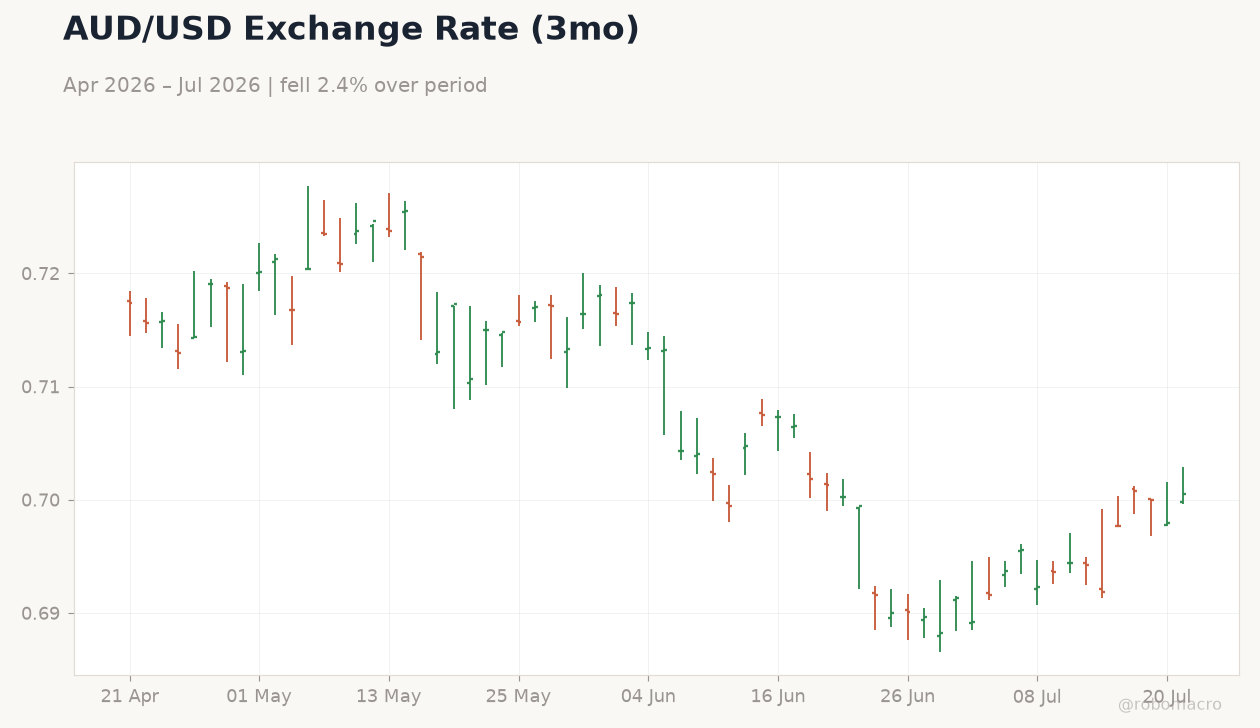
| AUD/USD | 0.70 | +0.38% |
| NZD/USD | 0.58 | -0.15% |
| AUD/NZD | 1.20 | -0.25% |
| BHP | 57.54 | -2.71% |
| Gold | 4,088.80 | +1.96% |
| Brent Crude | 91.48 | +2.53% |
| Bitcoin | 66,330.02 | +1.69% |
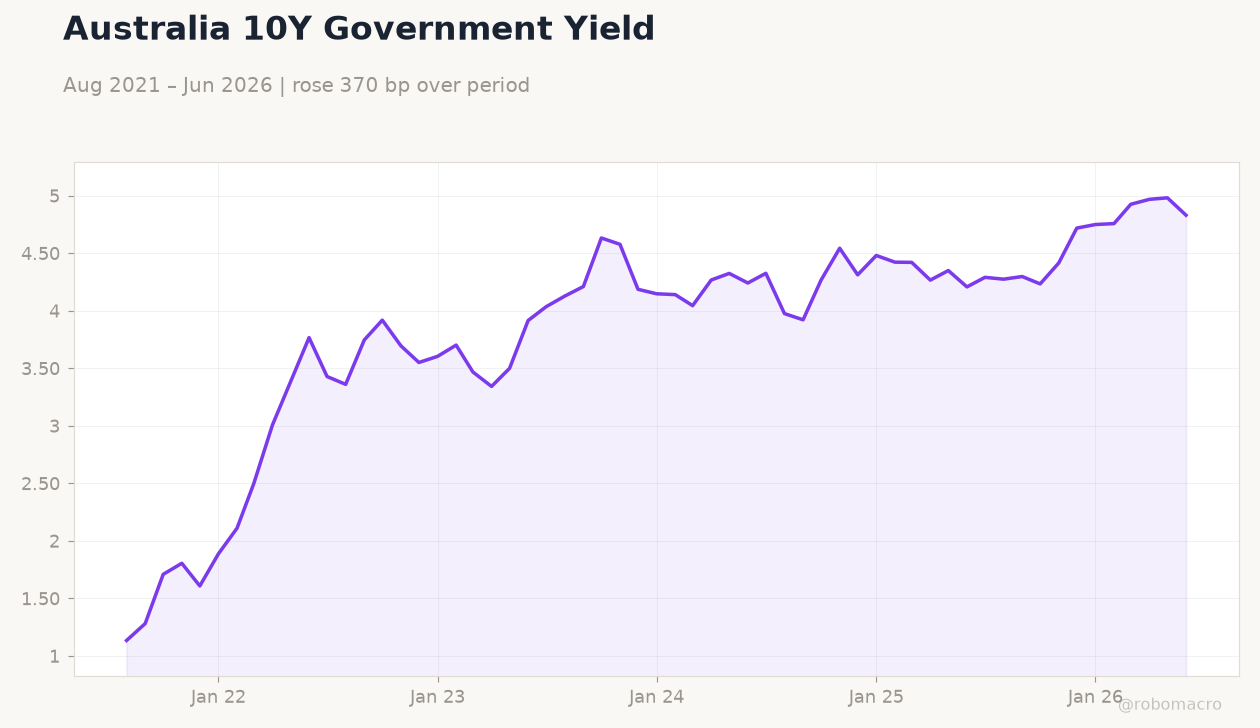
| Australia 10Y Govt Yield | 4.83% | -3.03% |
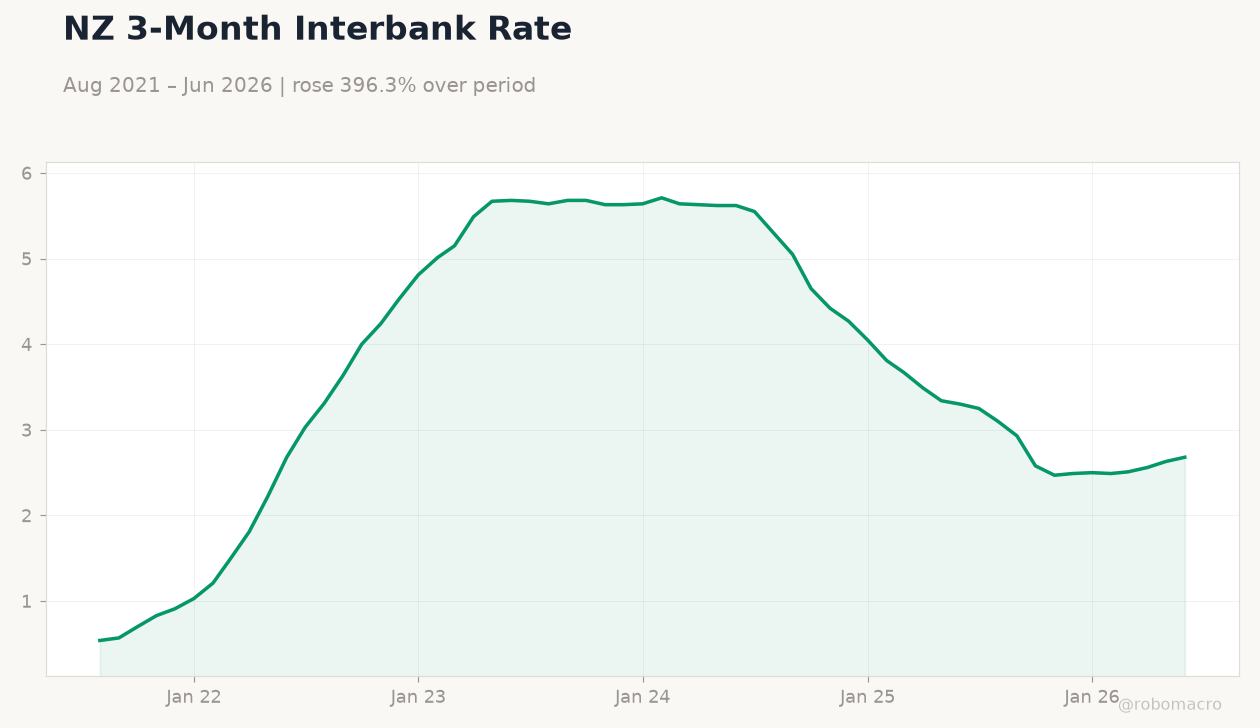
| NZ Short-term Rate | 4.33% | -9.60% |
Prior Economic Events
| Data | Prior | Cons | Actual |
|---|---|---|---|
| Inflation Rate Quarter-over-Quarter | 0.90 | 1.40 | 1.50 |
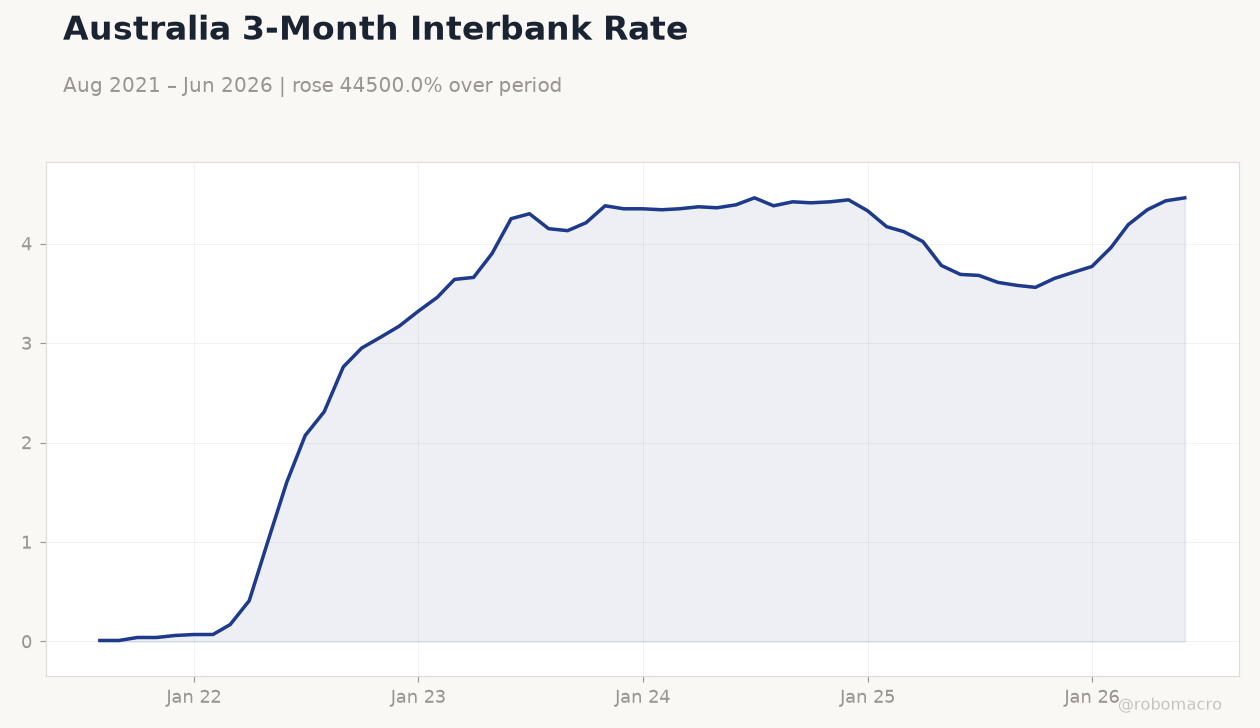 Australia 3-Month Interbank Rate | Type: macro_line | 3M Rate %: 4.46 (2026-06-01) | Range: 0.01–4.46 | Trend(6pt): 0.01,2.95,4.35,4.17,4.34,4.46
Today's Economic Events
| Data | Prior | Cons | Time |
|---|---|---|---|
| Employment Change | 40,300 | 15,000 | 17:30 |
| Full-Time Employment Change | 5,200 | - | 17:30 |
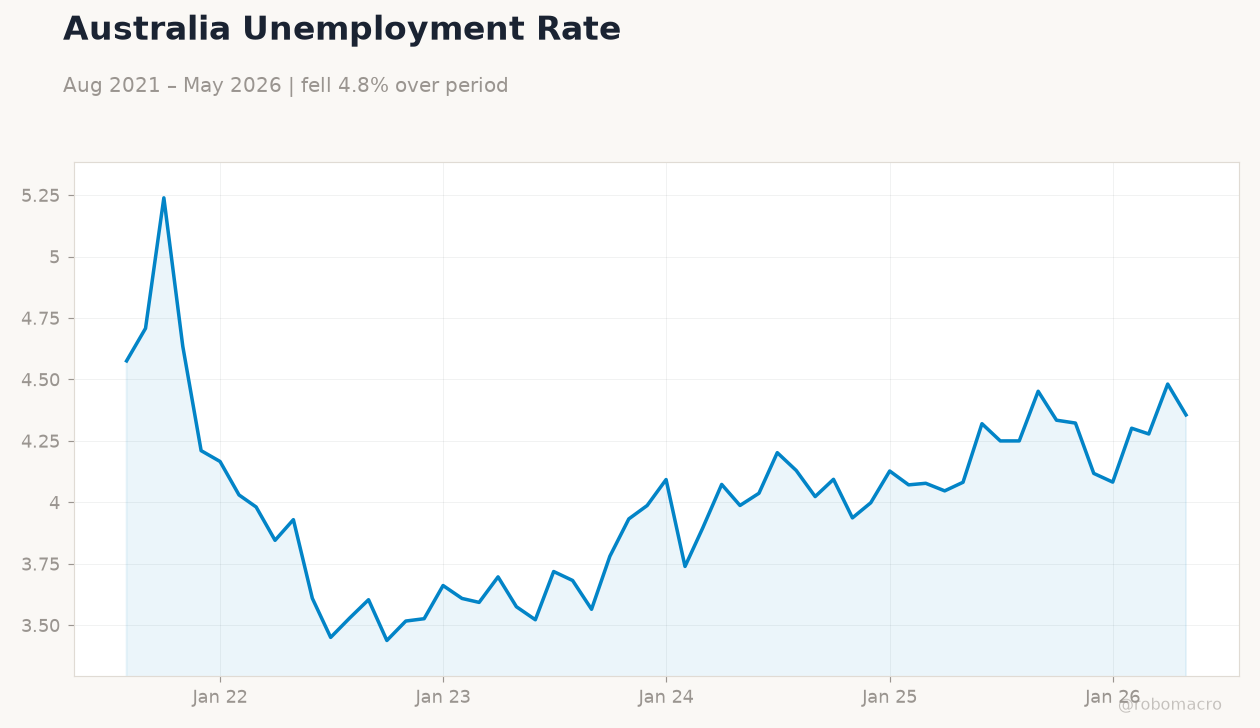
| Headline Unemployment Rate | 4.40 | 4.40 | 17:30 |
| S&P Global Manufacturing PMI Flash | - | - | 15:00 |
| S&P Global Services PMI Flash | - | - | 15:00 |
- New Zealand Q2 inflation exceeded forecasts, lifting NZD and reinforcing RBNZ tightening expectations.
- Australian labor data due today are expected to show slower jobs growth, supporting the RBA’s pause at 4.35%.
- AUD/USD rose 0.38% to 0.70 while ASX 200 slipped 0.06% amid mixed commodity moves.
Yesterday's Recap
New Zealand’s Q2 inflation rate rose 1.5% quarter-over-quarter, above the 1.4% consensus and prior 0.9%, pushing NZ CPI YoY to 4.10%. The NZX 50 fell 0.29% to 13,656.03 as investors digested the hotter print. In Australia, the ASX 200 edged 0.06% lower to 8,791.30 while BHP dropped 2.71% to 57.54 despite firmer iron-ore futures.
AUD/USD gained 0.38% to 0.70 on steady China demand signals, whereas NZD/USD slipped 0.15% to 0.58. The Australia 10-year yield fell 3.03% to 4.83% and NZ short-term rates dropped 9.60% to 4.33%. Gold rose 1.96% to 4,088.80 and Brent crude added 2.53% to 91.48 on supply concerns.
The Day Ahead
Australia releases June employment change, full-time employment change and the headline unemployment rate at 17:30 AEST, with consensus pointing to a 15,000 jobs gain and steady 4.4% unemployment. Markets will watch whether the data reinforce the RBA’s hold at 4.35%. S&P Global flash manufacturing and services PMIs for July follow on 23 July.
Overnight China activity indicators will shape iron-ore and AUD sentiment. RBNZ speakers may clarify how the hotter CPI affects the 2.50% OCR path.
Other Economic Notes
Australia’s commodity exports remain the dominant growth driver, with iron ore, LNG and gold prices directly supporting the trade balance and AUD. New Zealand’s dairy and tourism sectors benefit from firmer global prices but face construction headwinds from higher rates. Housing credit growth in both countries stays sensitive to rate differentials, with Australia’s larger economy amplifying any RBA policy signal.
China’s steel output and restocking cycle continue to set the tone for BHP and broader ASX mining names.
Global Macro News
Geopolitical tensions between the US and Iran lifted safe-haven flows into gold and Brent, indirectly supporting AUD via higher commodity revenues. The widening RBA-BoJ rate differential pushed AUD higher against the yen, raising intervention risks for Japanese authorities. <i>↓ p.2</i>