ANZ Macro Daily(Beta Mode)
NZ CPI Beats, AUD Steady on RBA Hawkishness
Market Snapshot
| Asset | Level | Change |
|---|---|---|
| ASX 200 | 8,793.30 | +0.02% |
| NZX 50 | 13,763.18 | +0.78% |
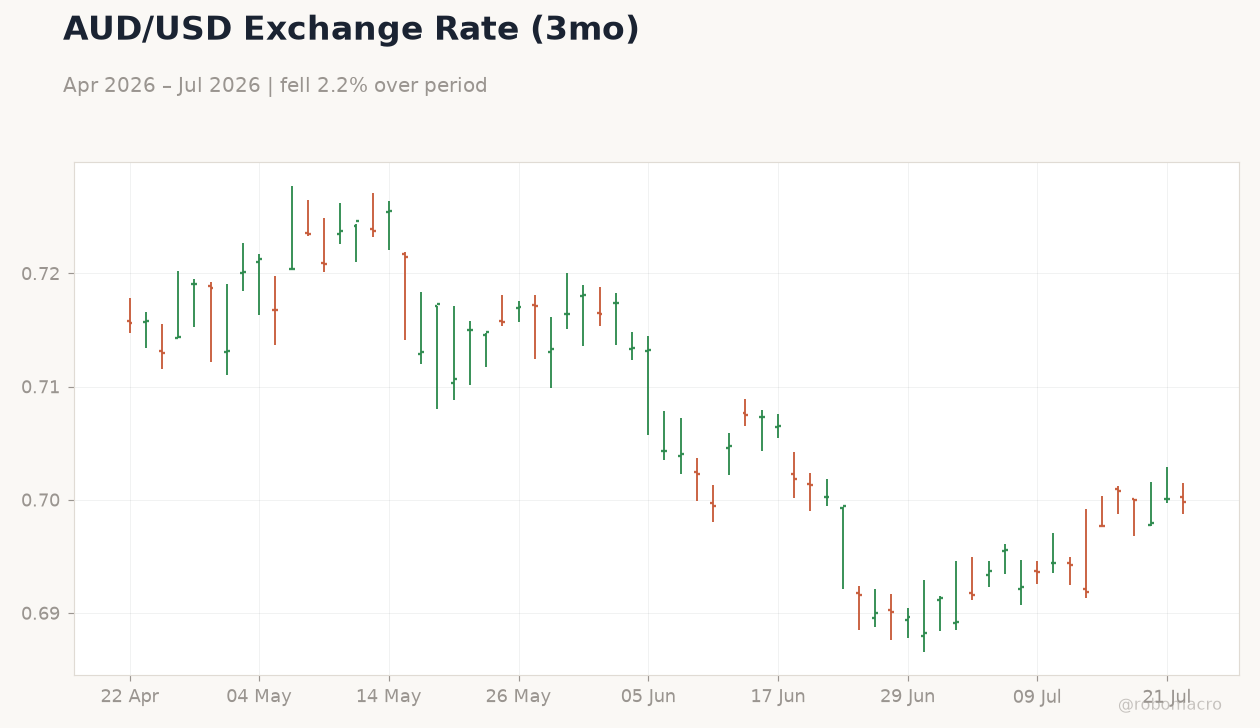
| AUD/USD | 0.70 | -0.03% |
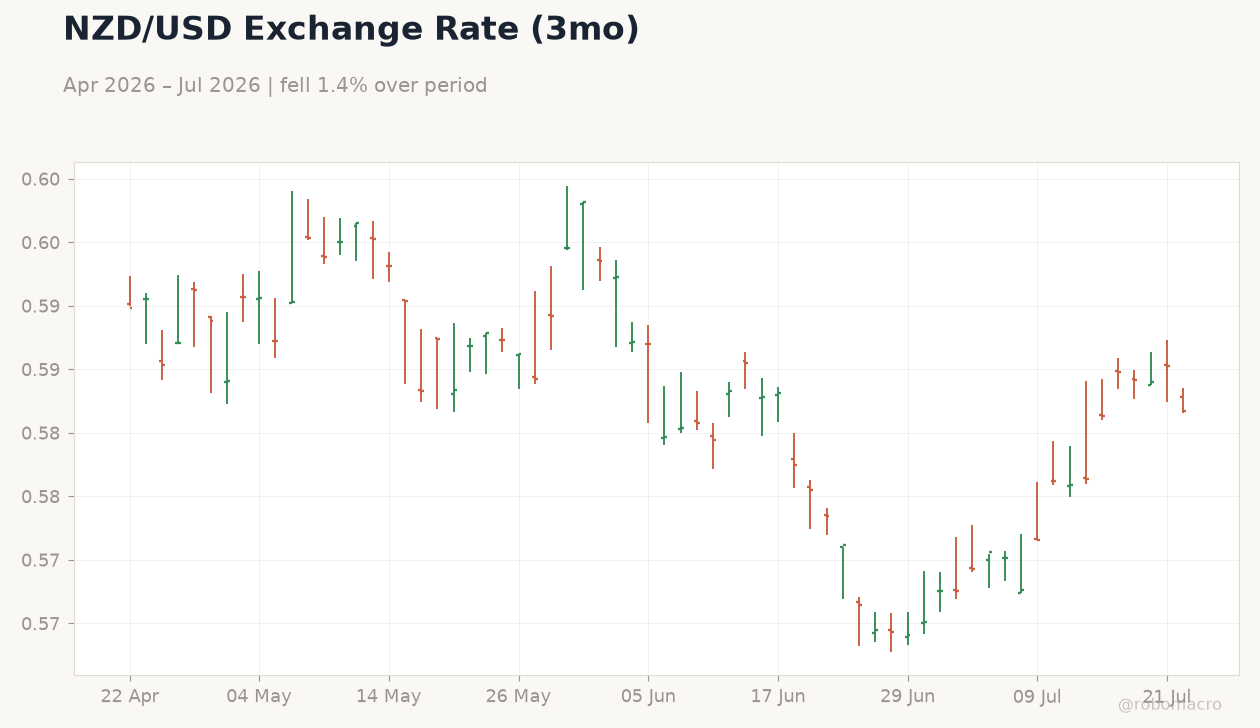
| NZD/USD | 0.58 | -0.61% |
| AUD/NZD | 1.20 | +0.56% |
| BHP | 59.76 | +2.52% |
| Gold | 4,138.40 | +1.65% |
| Brent Crude | 93.98 | +3.26% |
| Bitcoin | 65,902.89 | -0.91% |
| Australia 10Y Govt Yield | 4.83% | -3.03% |
| NZ Short-term Rate | 4.33% | -9.60% |
Prior Economic Events
| Data | Prior | Cons | Actual |
|---|---|---|---|
| Inflation Rate Quarter-over-Quarter | 0.90 | 1.40 | 1.50 |
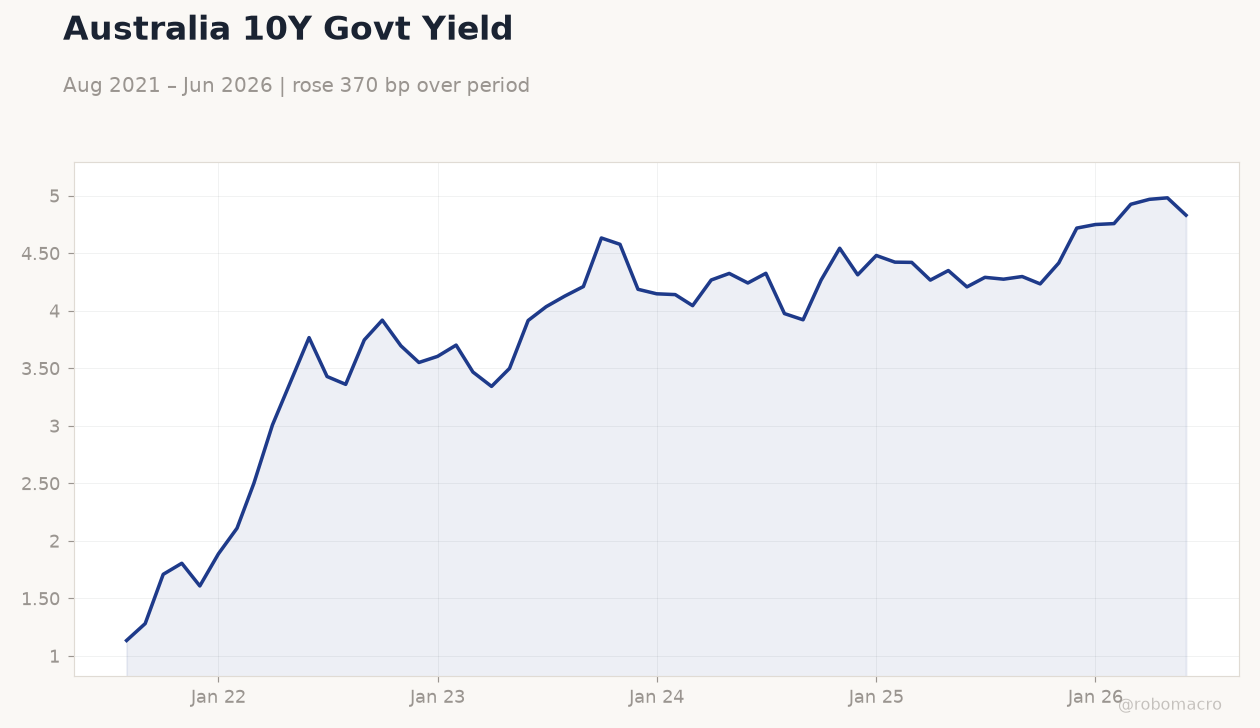 Australia 10Y Govt Yield | Type: macro_line | 10Y Yield %: 4.831 (2026-06-01) | Range: 1.135–4.982 | Trend(6pt): 1.135,3.919,4.187,4.423,4.969,4.831
Today's Economic Events
| Data | Prior | Cons | Time |
|---|---|---|---|
| Employment Change | 40,300 | 15,000 | 17:30 |
| Full-Time Employment Change | 5,200 | - | 17:30 |
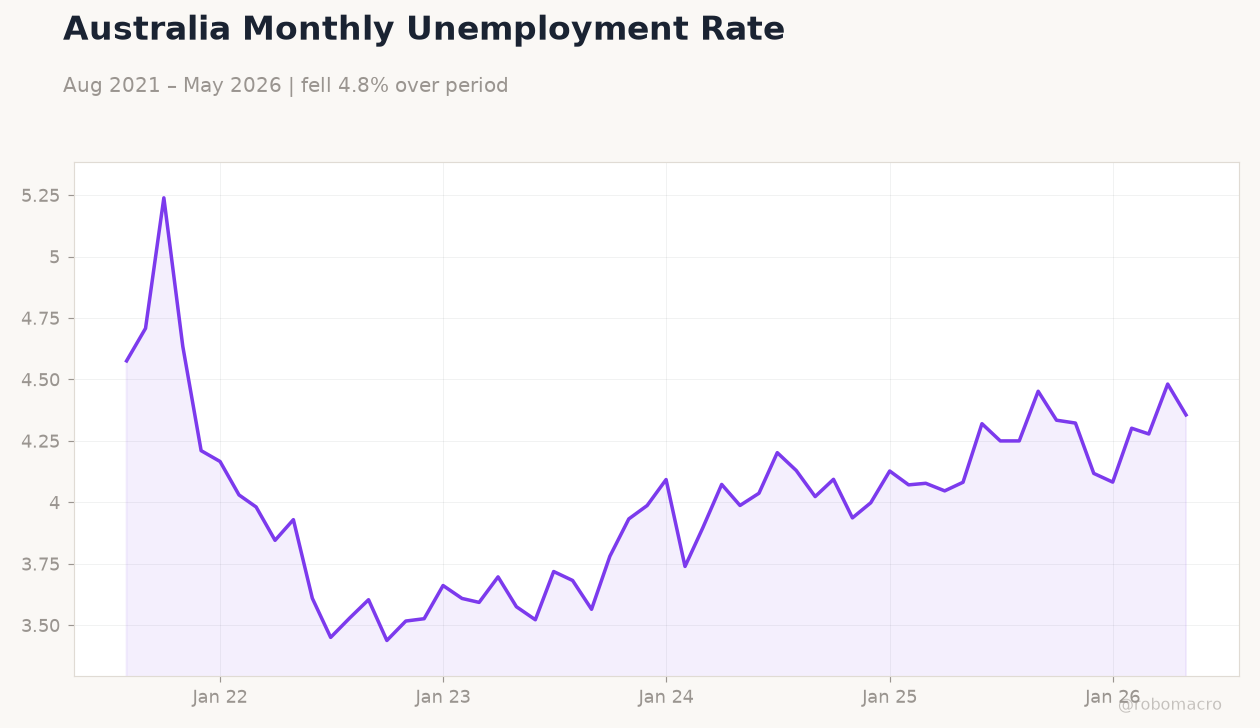
| Headline Unemployment Rate | 4.40 | 4.40 | 17:30 |
| S&P Global Manufacturing PMI Flash | - | - | 15:00 |
| S&P Global Services PMI Flash | - | - | 15:00 |
- New Zealand Q2 inflation exceeded forecasts, lifting RBNZ hike expectations.
- Australian labour data due today with markets pricing steady unemployment at 4.4%.
- AUD holds above 0.7000 while NZD slips on global risk aversion.
Yesterday's Recap
New Zealand’s Q2 inflation rate rose 1.5% quarter-over-quarter, above the 1.4% consensus and prior 0.9%, pushing the annual rate to 4.10%. The hotter print reinforced bets for further RBNZ tightening. The ASX 200 edged 0.02% higher to 8,793.30 while the NZX 50 gained 0.78% to 13,763.18.
AUD/USD traded near 0.70 with a 0.03% decline, whereas NZD/USD fell 0.61% to 0.58. BHP rose 2.52% to 59.76 on firmer iron-ore prices, and gold advanced 1.65% to 4,138.40. Brent crude climbed 3.26% to 93.98 amid supply concerns.
Australian 10-year yields eased 3.03% to 4.83% while the NZ short-term rate dropped 9.60% to 4.33%. Commodity strength, particularly in gold and iron ore, provided direct support to Australian export revenues and terms of trade, while dairy price gains offered only modest NZD offset.
The Day Ahead
Australia releases June employment change, full-time employment change and the headline unemployment rate at 17:30 ET, with consensus pointing to a 15,000 rise in jobs and steady 4.4% unemployment. Markets will watch for signs of labour-market cooling that could temper RBA hike expectations. Tomorrow brings S&P Global flash manufacturing and services PMI readings for Australia at 15:00 ET.
These surveys will provide the first look at July business conditions after the recent inflation print. China’s influence on commodity demand remains the dominant external variable for both economies. Any softening in employment growth could reduce the probability of near-term RBA tightening while still leaving the central bank focused on persistent price pressures.
Other Economic Notes
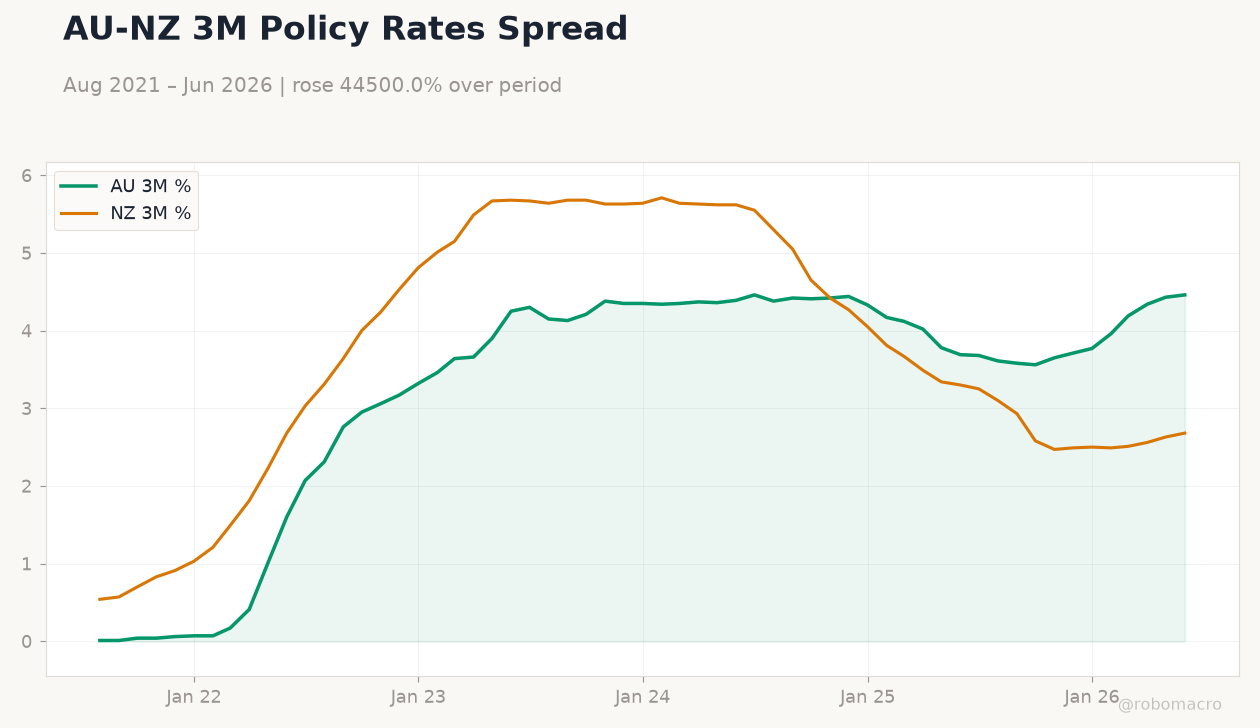
Australia’s CPI stands at 3.96% year-over-year, keeping the RBA on a hawkish footing at the 4.35% cash rate. New Zealand’s 4.10% inflation rate has widened the gap with the RBNZ’s 2.50% OCR, increasing the chance of policy divergence. Commodity exports, especially iron ore and gold, continue to anchor Australian terms of trade and AUD support.
Housing-market resilience in both countries transmits directly into inflation persistence and central-bank caution. <i>↓ p.2</i>