ANZ Macro Daily(Beta Mode)
AUD Climbs as Oil Slides, RBA CPI Looms
Market Snapshot
| Asset | Level | Change |
|---|---|---|
| ASX 200 | 8,772.30 | -0.75% |
| NZX 50 | 13,850.69 | +0.57% |
| AUD/USD | 0.70 | +0.40% |
| NZD/USD | 0.58 | +0.08% |
| AUD/NZD | 1.21 | +0.30% |
| BHP | 58.85 | -2.94% |
| Gold | 4,089.20 | +0.53% |
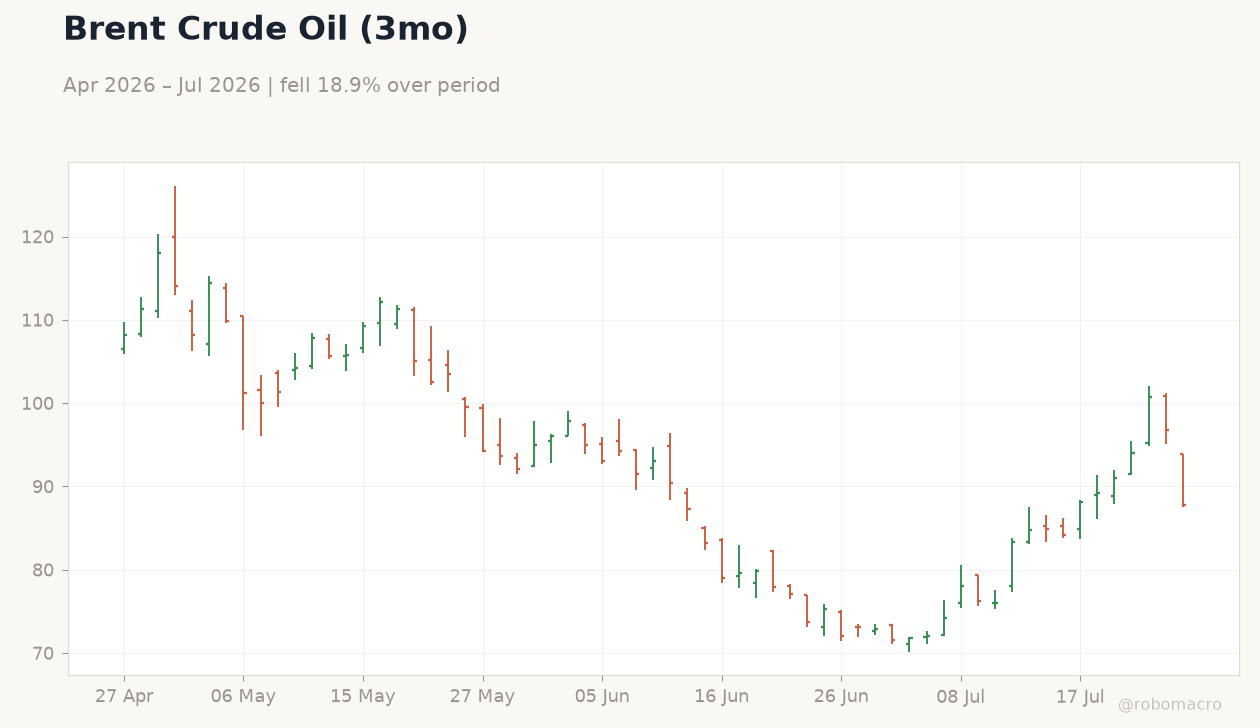
| Brent Crude | 87.75 | -9.33% |
| Bitcoin | 64,972.49 | -0.56% |
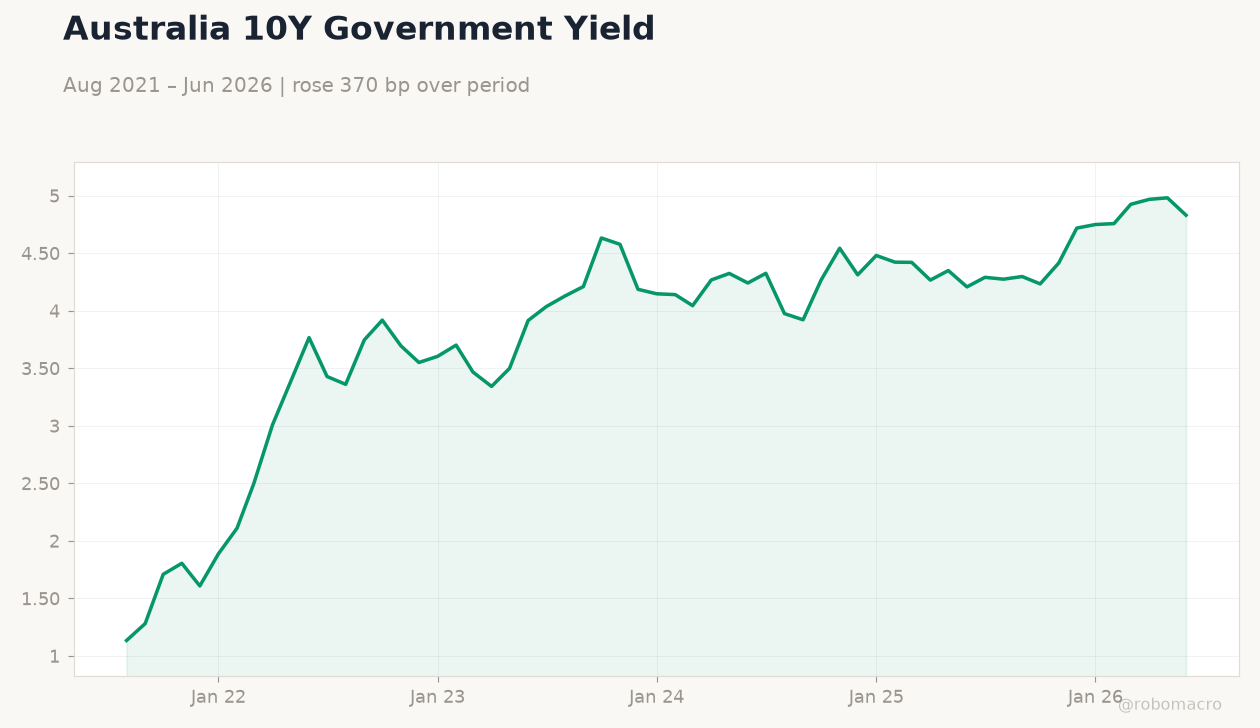
| Australia 10Y Govt Yield | 4.83% | -3.03% |
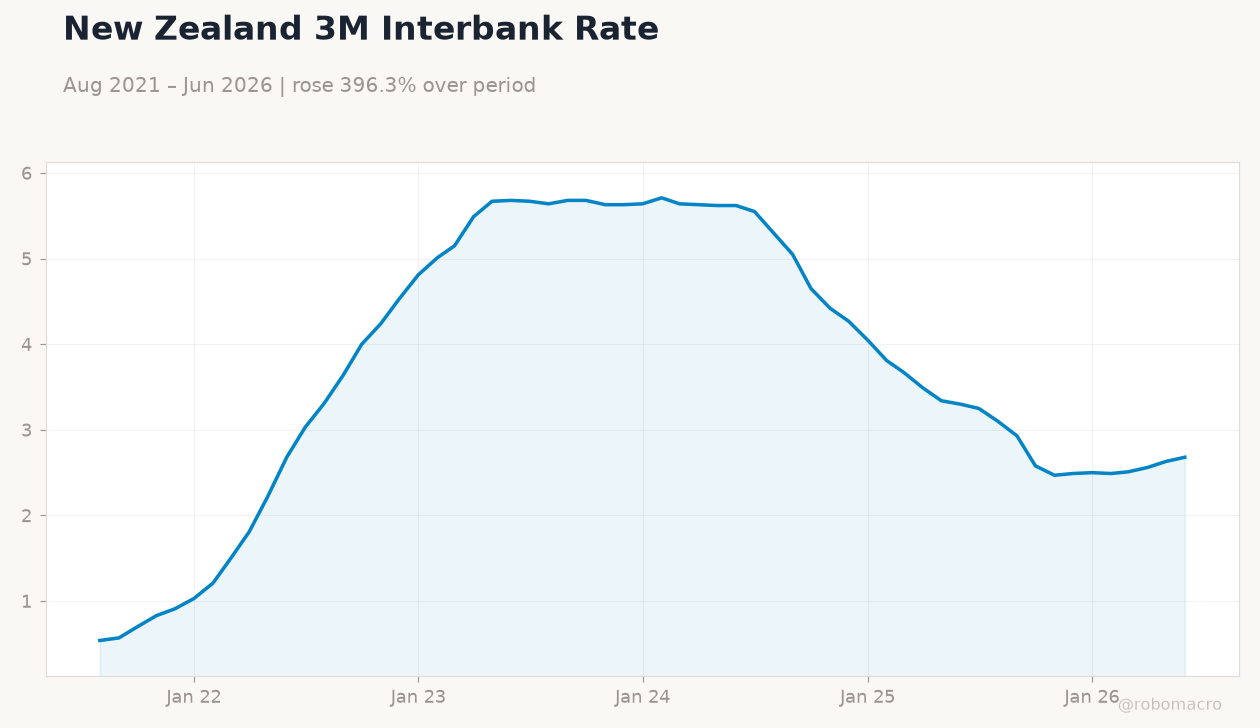
| NZ Short-term Rate | 4.33% | -9.60% |
Prior Economic Events
| Data | Prior | Cons | Actual |
|---|---|---|---|
| No events available | |||
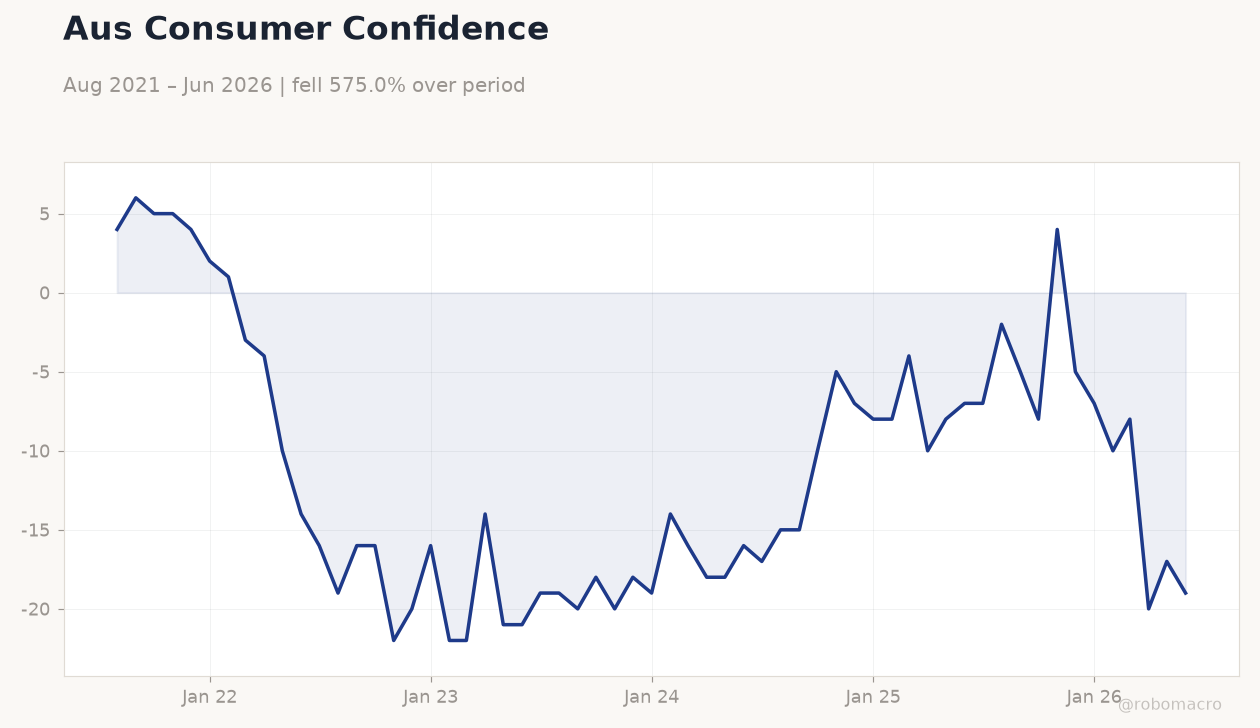 Aus Consumer Confidence | Type: macro_line | Index: -19 (2026-06-01) | Range: -22–6 | Trend(6pt): 4,-16,-18,-8,-20,-19
Today's Economic Events
| Data | Prior | Cons | Time |
|---|---|---|---|
| RBA Gov Bullock Speech | - | - | 19:05 |
| Inflation Rate Month-over-Month | -0.70 | 0.20 | 17:30 |
| Inflation Rate Year-over-Year | 4 | 4 | 17:30 |
| RBA Trimmed Mean CPI Month-over-Month | 0.40 | 0.40 | 17:30 |
| RBA Trimmed Mean CPI Year-over-Year | 3.60 | - | 17:30 |
| RBA Hunter Speech | - | - | 14:40 |
| ANZ Business Confidence | 36.60 | - | 17:00 |
| Building Permits Month-over-Month Prel | -1.10 | -0.50 | 17:30 |
| PPI Quarter-over-Quarter | 0.40 | 0.30 | 17:30 |
- Australian markets closed lower with ASX 200 at 8,772.30 (-0.75%) while NZX 50 rose to 13,850.69 (+0.57%).
- AUD/USD advanced to 0.70 (+0.40%) as Brent crude fell 9.33% to 87.75, easing imported inflation concerns.
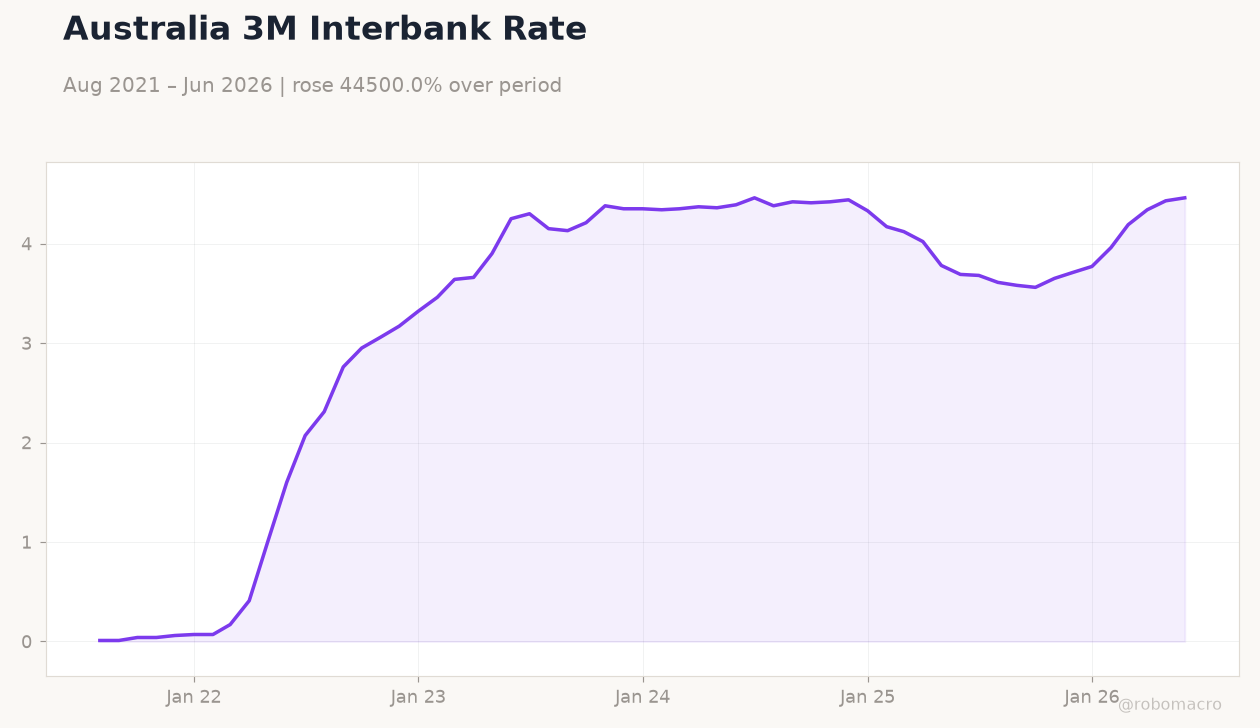
- RBA cash rate holds at 4.35% and RBNZ OCR at 2.50% ahead of Australian CPI and RBA speeches.
Yesterday's Recap
Equity markets diverged across the Tasman as the ASX 200 fell 0.75% to 8,772.30, pressured by a 2.94% drop in BHP shares, while the NZX 50 gained 0.57% to 13,850.69. The Australian dollar strengthened to 0.70 against the US dollar, supported by a sharp 9.33% decline in Brent crude that reduced imported inflation risks for Australia. New Zealand’s short-term rate eased 9.60% to 4.33%, reflecting softer local funding conditions.
Australian 10-year government yields dropped 3.03% to 4.83%, signalling reduced rate-hike expectations ahead of tomorrow’s inflation print. NZD/USD edged up 0.08% to 0.58, tracking the broader commodity currency recovery. Gold rose 0.53% to 4,089.20, providing modest support to Australia’s trade balance given its status as a key export.
No major data releases occurred in either Australia or New Zealand yesterday, leaving market moves driven by global oil dynamics and positioning ahead of the RBA Governor Bullock speech.
The Day Ahead
Attention centres on RBA Governor Bullock’s speech at 19:05 AEST today, which may clarify the central bank’s reaction function ahead of the inflation release. Tomorrow brings Australia’s July CPI data at 17:30 AEST, with year-over-year expected to print at 4.0% and month-over-month rebounding to 0.2%. The RBA trimmed mean measures will also be watched for underlying price pressures.
New Zealand’s ANZ Business Confidence survey at 17:00 AEST on 29 July will offer an early read on corporate sentiment. Australian building permits and PPI data later in the week will round out the domestic calendar, while RBA Board member Hunter speaks on 29 July.
Other Economic Notes
Australia’s commodity export profile continues to dominate regional flows, with iron ore and LNG prices sensitive to Chinese demand signals. New Zealand’s dairy and tourism sectors remain exposed to global growth and travel trends, though construction activity has slowed. Housing markets in both countries stay sensitive to rate expectations, with Australian yields near multi-year highs reflecting persistent inflation concerns.
<i>↓ p.2</i>