ANZ Macro Daily(Beta Mode)
RBA Set to Hold Rates Amid AUD Strength
Market Snapshot
| Asset | Level | Change |
|---|---|---|
| ASX 200 | 9,263.60 | -0.09% |
| NZX 50 | 13,824.13 | -0.96% |
| AUD/USD | 0.71 | +0.48% |
| NZD/USD | 0.59 | +0.46% |
| AUD/NZD | 1.20 | -0.09% |
| BHP | 62.97 | +0.24% |
| Gold | 4,399.70 | +3.72% |
| Brent Crude | 83.55 | +1.29% |
| Bitcoin | 65,131.10 | +0.35% |
| Australia 10Y Govt Yield | 4.83% | -3.03% |
| NZ Short-term Rate | 4.33% | -9.60% |
Prior Economic Events
| Data | Prior | Cons | Actual |
|---|---|---|---|
| No events available | |||
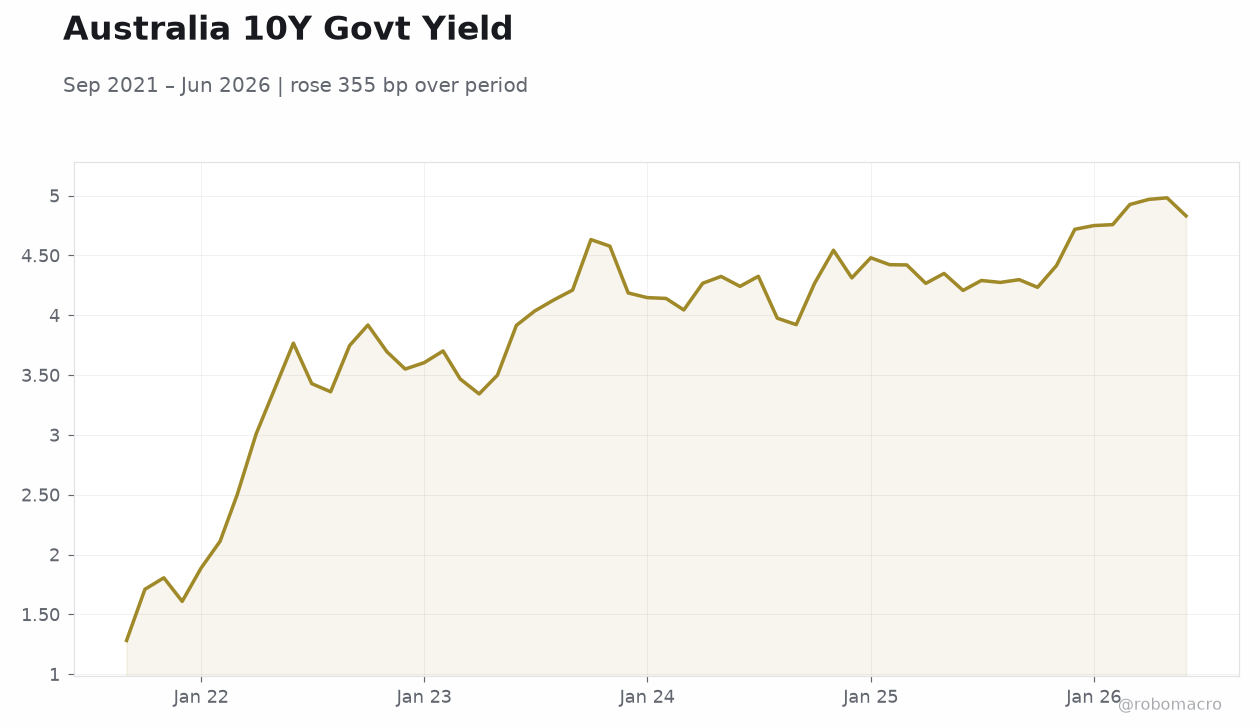 Australia 10Y Govt Yield | Type: macro_line | Percent: 4.831 (2026-06-01) | Range: 1.282–4.982 | Trend(6pt): 1.282,3.696,4.148,4.421,4.982,4.831
Today's Economic Events
| Data | Prior | Cons | Time |
|---|---|---|---|
| NAB Business Confidence Index | -5 | - | 21:30 |
| RBA Interest Rate Decision | 4.35 | 4.35 | 00:30 |
| Press Conference by RBA | - | - | 01:30 |
| Speech by RBA's Kent | - | - | 20:15 |
| Business NZ PMI Index | 59.70 | - | 18:30 |
| Speech by RBA's Gov Bullock | - | - | 19:30 |
| Home Loans Quarter-over-Quarter | -4.30 | - | 21:30 |
| Investment Lending for Homes | -3 | - | 21:30 |
- RBA cash rate steady at 4.35% ahead of 11 August decision; RBNZ OCR at 2.50%.
- ASX 200 edges down 0.09% to 9,263.60 while NZX 50 falls 0.96%; AUD/USD climbs to 0.71.
- Australia 10-year yield drops 3.03% to 4.83% as gold surges 3.72% to 4,399.70.
Yesterday's Recap
Equity markets in Australia and New Zealand closed mixed on 8 August with limited domestic data releases. The ASX 200 slipped 0.09% to 9,263.60 while the NZX 50 declined 0.96% to 13,824.13 amid broader risk-off sentiment. AUD/USD advanced 0.48% to 0.71 and NZD/USD gained 0.46% to 0.59, supported by commodity price strength.
Australia’s 10-year government yield fell 3.03% to 4.83% while the NZ short-term rate dropped 9.60% to 4.33%. Gold jumped 3.72% to 4,399.70 and Brent crude rose 1.29% to 83.55, reflecting safe-haven demand and supply concerns. BHP gained 0.24% to 62.97, tracking iron-ore futures.
No high-impact ANZ economic prints occurred on the day. Bitcoin rose 0.35% to 65,131.10 while AUD/NZD eased 0.09% to 1.20.
The Day Ahead
Markets focus on the RBA’s 11 August interest-rate decision, with consensus pointing to a hold at 4.35%. NAB Business Confidence Index releases on 10 August at 21:30, followed by the RBA press conference on 11 August. RBA Assistant Governor Kent speaks on 12 August and Governor Bullock on 13 August.
New Zealand’s Business NZ PMI prints on 13 August while Australian home-loans and investment-lending data follow the same day. These events will shape near-term views on policy divergence between the RBA and RBNZ. The NAB survey and housing figures will provide fresh signals on business sentiment and credit demand ahead of the RBA meeting.
Other Economic Notes
Australia’s CPI at 3.75% year-on-year continues to anchor RBA deliberations while New Zealand’s 4.06% rate keeps the RBNZ on a tighter path. Commodity linkages remain central, with iron ore, coal and LNG exports driving Australian trade balances and dairy prices supporting New Zealand’s external accounts. Housing-market data due later this week will test credit-demand trends in both economies.
China’s growth trajectory stays the dominant external variable for ANZ terms of trade and fiscal revenues. The verified inflation prints underscore why the RBA maintains a higher cash rate than the RBNZ despite similar external pressures.


