ANZ Macro Daily(Beta Mode)
RBA Holds as Markets Ease on Flat Data
Market Snapshot
| Asset | Level | Change |
|---|---|---|
| ASX 200 | 9,232.60 | -0.33% |
| NZX 50 | 13,860.66 | -0.20% |
| AUD/USD | 0.71 | -0.00% |
| NZD/USD | 0.59 | -0.10% |
| AUD/NZD | 1.20 | +0.08% |
| BHP | 63.93 | +0.65% |
| Gold | 4,429.10 | +1.54% |
| Brent Crude | 89.13 | +1.61% |
| Bitcoin | 63,535.56 | -0.59% |
| Australia 10Y Govt Yield | 4.83% | -3.03% |
| NZ Short-term Rate | 4.33% | -9.60% |
Prior Economic Events
| Data | Prior | Cons | Actual |
|---|---|---|---|
| NAB Business Confidence Index | -6 | - | -6 |
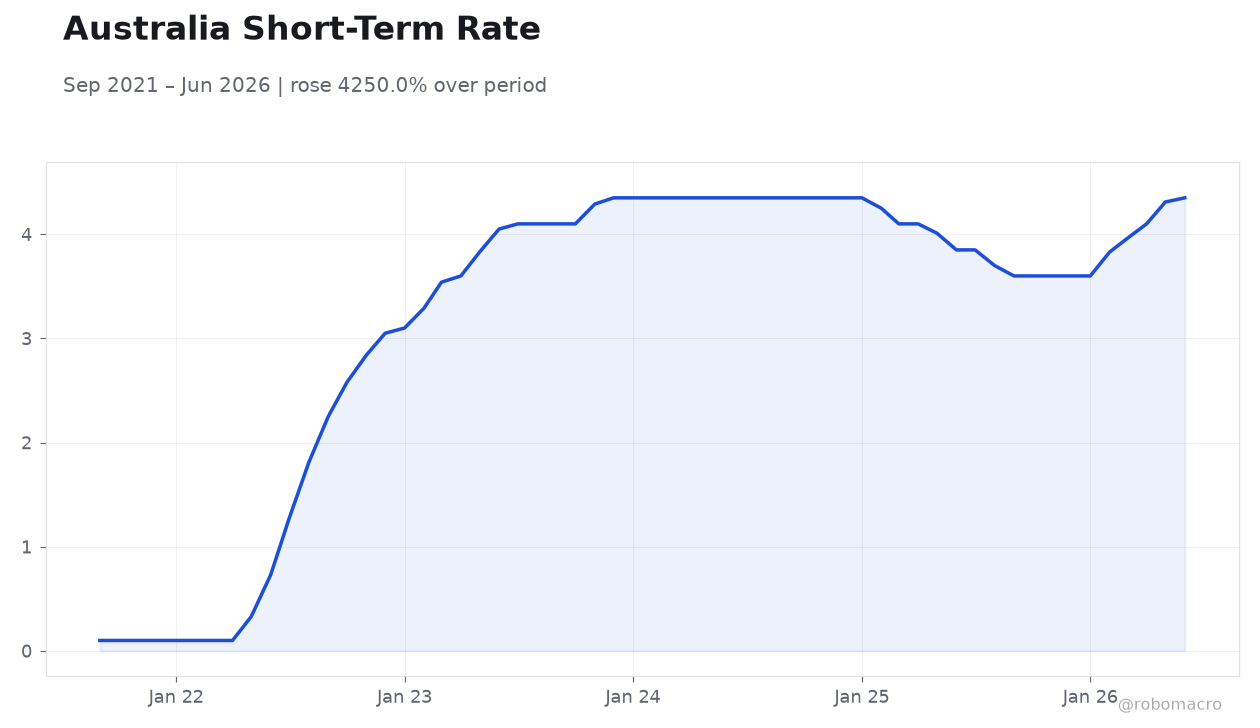
| RBA Interest Rate Decision | 4.35 | 4.35 | 4.35 |
| Press Conference by RBA | - | - | - |
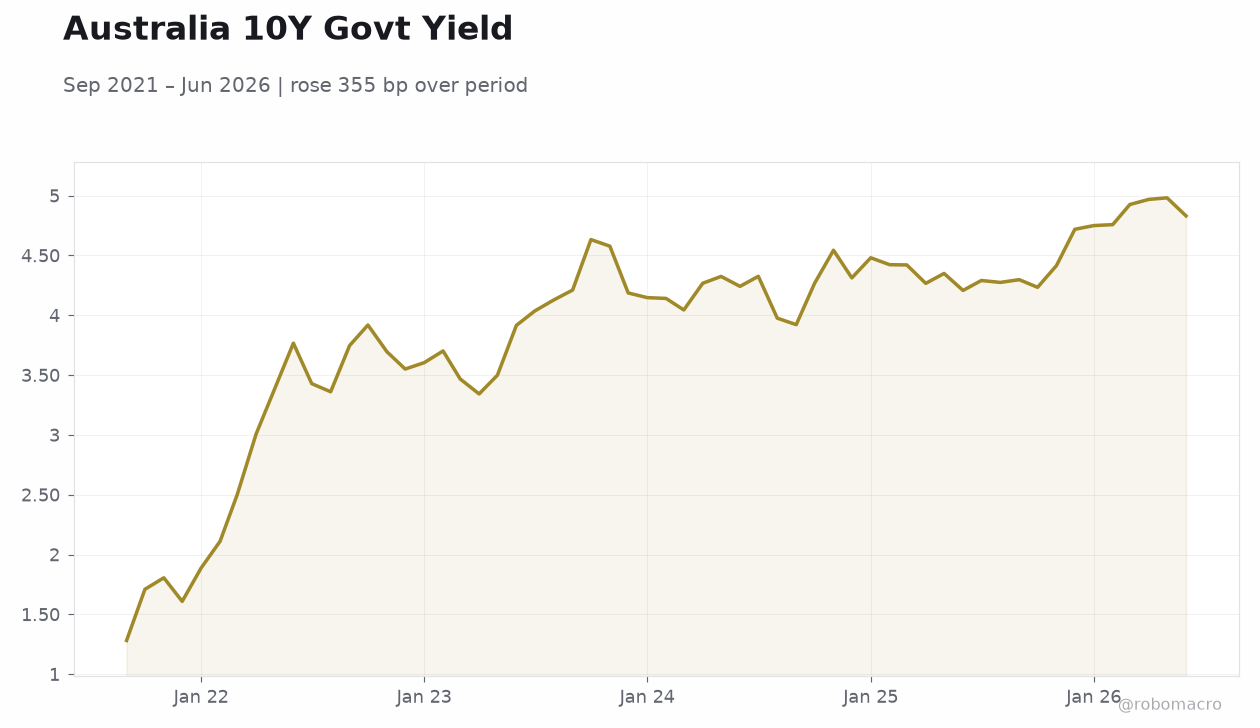 Australia 10Y Govt Yield | Type: macro_line | Yield %: 4.831 (2026-06-01) | Range: 1.282–4.982 | Trend(6pt): 1.282,3.696,4.148,4.421,4.982,4.831
Today's Economic Events
| Data | Prior | Cons | Time |
|---|---|---|---|
| Speech by RBA's Kent | - | - | 16:15 |
| Business NZ PMI Index | 59.70 | - | 14:30 |
| Speech by RBA's Gov Bullock | - | - | 15:30 |
| Home Loans Quarter-over-Quarter | -4.30 | - | 17:30 |
| Investment Lending for Homes | -3 | - | 17:30 |
- RBA kept cash rate at 4.35% as expected, with NAB business confidence unchanged at -6.
- ASX 200 fell 0.33% while Australia 10-year yields dropped 3.03% to 4.83%.
- AUD/USD held at 0.71 and NZD/USD eased 0.10% amid steady commodity prices.
Yesterday's Recap
The RBA held the cash rate at 4.35% on 10 August, matching consensus and leaving policy unchanged after the prior meeting. NAB Business Confidence printed at -6, identical to the previous reading and signalling persistent weakness in Australian business sentiment. The accompanying press conference reinforced the central bank's data-dependent stance without signalling near-term shifts.
Equity markets reacted with the ASX 200 declining 0.33% to 9,232.60 while the NZX 50 slipped 0.20% to 13,860.66. Government bond yields fell sharply, with the Australia 10-year dropping 3.03% to 4.83% and NZ short-term rates easing 9.60% to 4.33%. Commodity prices provided some offset, as gold rose 1.54% to 4,429.10 and Brent crude gained 1.61% to 89.13.
The AUD/USD pair remained flat at 0.71 while AUD/NZD edged 0.08% higher to 1.20, reflecting limited currency volatility after the decision. BHP rose 0.65% to 63.93 on firmer iron-ore futures, while Bitcoin eased 0.59% to 63,535.56.
The Day Ahead
Attention turns to RBA Assistant Governor Kent's speech at 16:15 ET on 12 August, which may clarify the board's reaction function. Governor Bullock speaks the following day at 15:30 ET, offering further insight into inflation and labour-market dynamics. New Zealand's Business NZ PMI for July releases at 14:30 ET on 13 August, providing an early read on manufacturing momentum.
Australian home-loans data and investment lending figures, both due at 17:30 ET on 13 August, will test whether housing credit is stabilising after recent weakness. These releases arrive against a backdrop of resilient domestic demand and will feed directly into RBA and RBNZ deliberations. The calendar shows five events clustered across the next two sessions, underscoring the data-heavy period ahead for both central banks.
Other Economic Notes
Australia's commodity-export model remains tightly linked to Chinese steel output and restocking cycles, with BHP serving as the key sentiment gauge. New Zealand's dairy and tourism sectors continue to drive external balances, though softer CPI prints have eased some imported inflation pressure. <i>↓ p.2</i>