ANZ Macro Daily(Beta Mode)
RBA Hawkishness Supports AUD as NZD Weakens
Market Snapshot
| Asset | Level | Change |
|---|---|---|
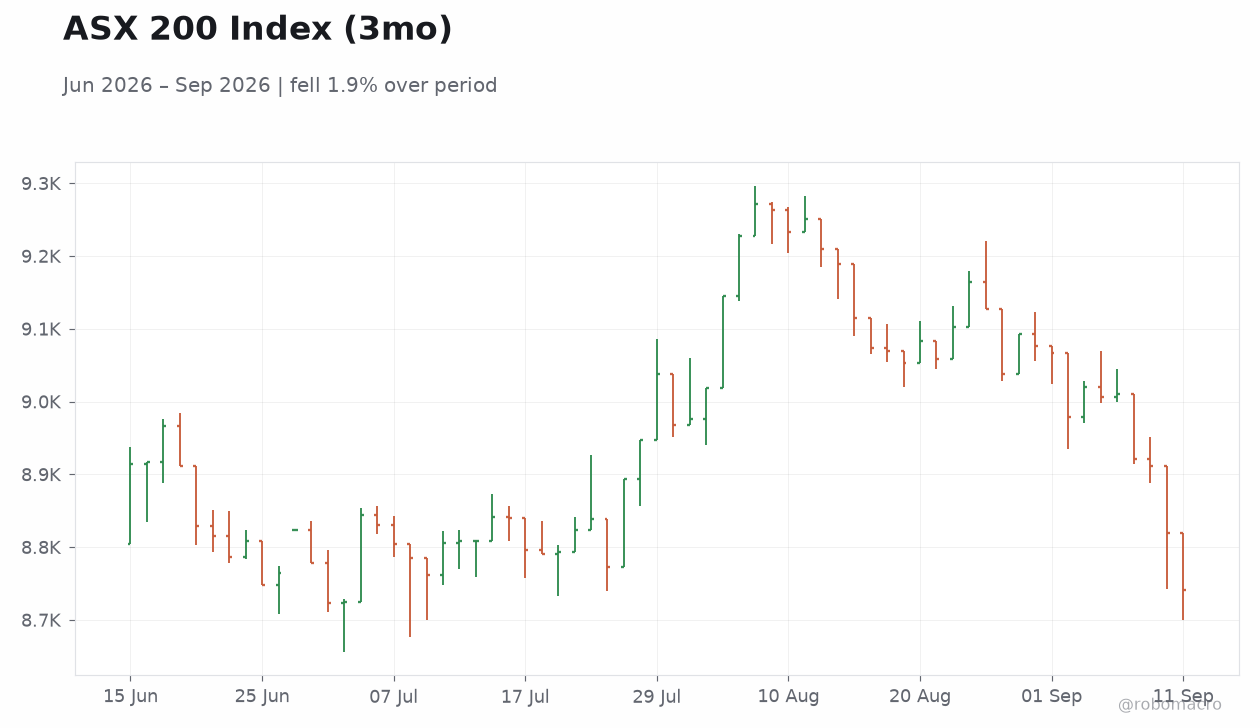
| ASX 200 | 8,741.20 | -0.89% |
| NZX 50 | 13,560.69 | -0.14% |
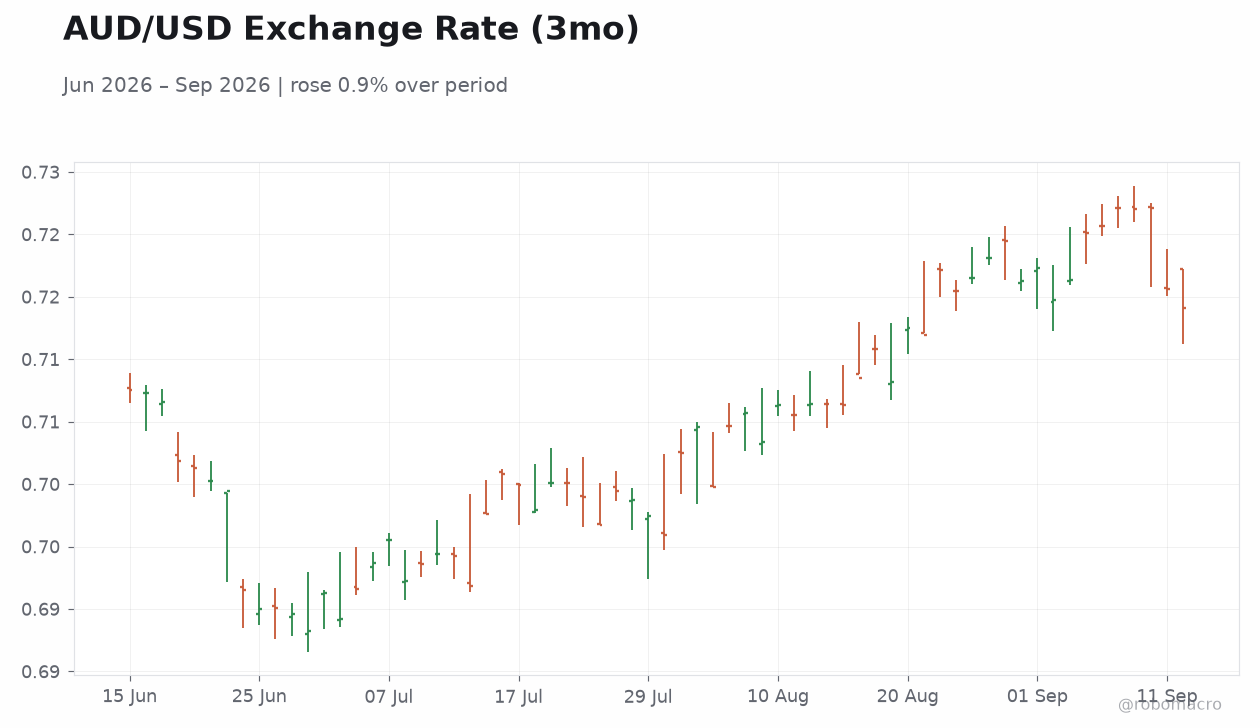
| AUD/USD | 0.71 | -0.19% |
| NZD/USD | 0.58 | -0.45% |
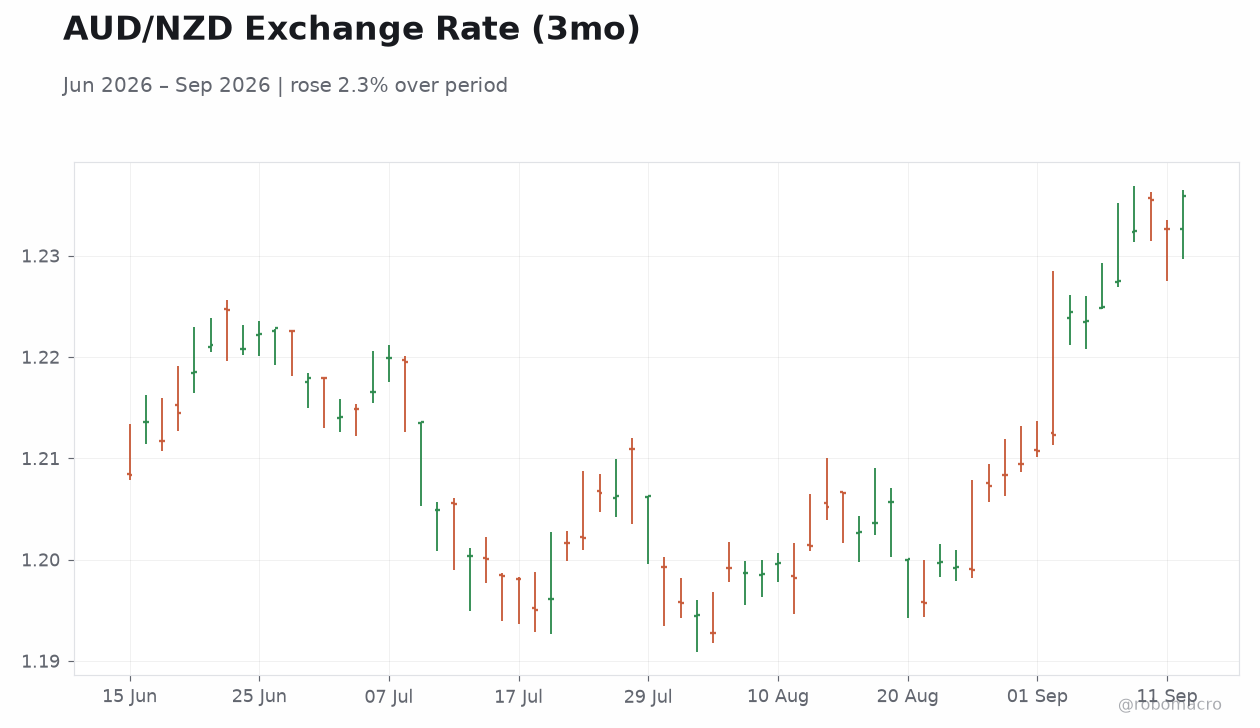
| AUD/NZD | 1.24 | +0.25% |
| BHP | 60.87 | -4.05% |
| Gold | 4,326.90 | -1.86% |
| Brent Crude | 106.15 | +1.47% |
| Bitcoin | 78,977.00 | +2.78% |
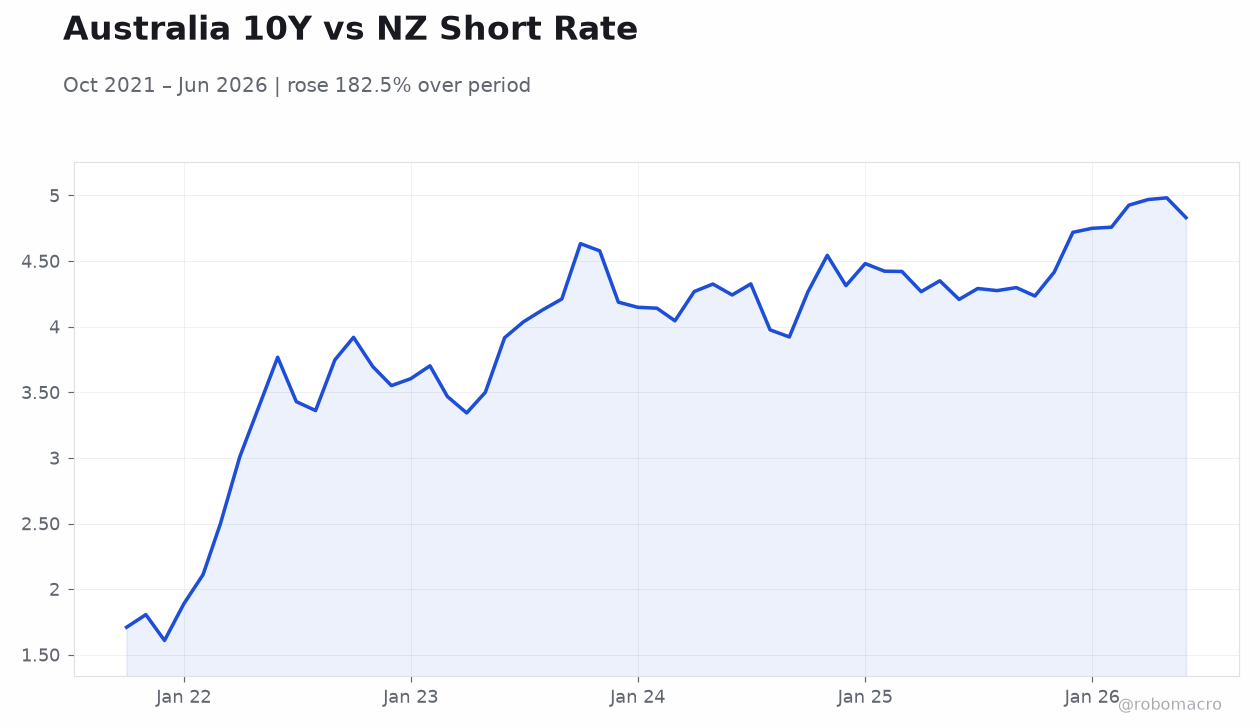
| Australia 10Y Govt Yield | 4.83% | -3.03% |
| NZ Short-term Rate | 4.33% | -9.60% |
Prior Economic Events
| Data | Prior | Cons | Actual |
|---|---|---|---|
| Speech by RBA's Hunter | - | - | - |
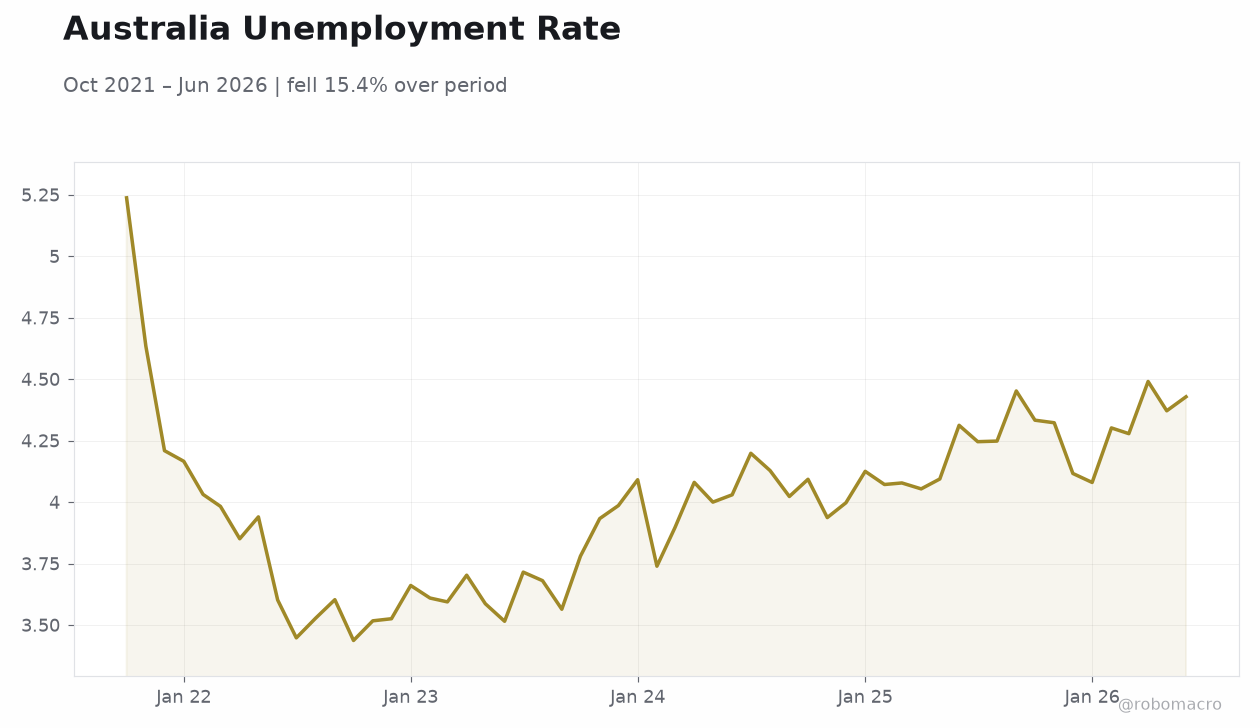 Australia Unemployment Rate | Type: macro_line | Percent: 4.428 (2026-06-01) | Range: 3.437–5.238 | Trend(5pt): 5.238,3.526,3.739,4.054,4.428
Today's Economic Events
| Data | Prior | Cons | Time |
|---|---|---|---|
| Current Account Balance | -1,010m | -2,650m | 18:45 |
| GDP Growth Quarter-over-Quarter | 0.80 | 0.10 | 18:45 |
| GDP Growth Year-over-Year | 1.50 | 2.30 | 18:45 |
| Trade Balance | -1,950m | -1,275m | 18:45 |
| Speech by RBA's Hunter | - | - | 15:00 |
- RBA signals raise odds of further tightening amid 3.45% CPI
- ASX 200 falls 0.89% while AUD/USD holds at 0.71
- NZ GDP and current account releases loom this week
Yesterday's Recap
Equity markets closed lower across ANZ. The ASX 200 declined 0.89% to 8,741.20, led lower by BHP which fell 4.05% to 60.87. The NZX 50 slipped 0.14% to 13,560.69.
In FX, AUD/USD eased 0.19% to 0.71 while NZD/USD dropped 0.45% to 0.58 and AUD/NZD rose 0.25% to 1.24. Australian 10-year yields fell 3.03% to 4.83% and New Zealand short-term rates declined 9.60% to 4.33%. Gold fell 1.86% to 4,326.90 while Brent crude rose 1.47% to 106.15.
The only scheduled event was a speech by RBA's Hunter that reinforced hawkish signals on persistent inflation pressures. Elevated oil prices above 100 USD were flagged as a direct upside risk to the CPI outlook, adding to concerns already visible in the 3.45% Australian reading.
The Day Ahead
New Zealand releases dominate the coming sessions. The Current Account Balance is due with consensus at -2.65 billion NZD versus the prior -1.01 billion. GDP growth is expected at 0.1% quarter-over-quarter and 2.3% year-over-year.
Trade Balance data follow with consensus at -1.275 billion NZD. An RBA speech by Hunter is also scheduled later in the period. Markets will watch for any fresh commentary on inflation risks from elevated oil prices.
These prints will help clarify whether New Zealand's softer momentum is deepening or stabilising ahead of further policy decisions.
Other Economic Notes
Australian growth remains subdued with recent quarterly expansion at just 0.4%, highlighting the drag from higher-for-longer rates. Sticky inflation at 3.45% year-over-year continues to pressure the RBA even as housing costs and food prices keep cost-of-living strains elevated. Commodity linkages remain critical, with Brent above 100 USD adding direct upside risks to the CPI outlook.
New Zealand faces softer momentum, with dovish RBNZ signals already weighing on the NZD. China demand trends stay the dominant external variable for both Australian resource exports and New Zealand dairy and tourism revenues. Divergent growth prints between the two economies are widening the policy gap.