ANZ Macro Daily(Beta Mode)
RBA Warnings Erase ASX Gains
Market Snapshot
| Asset | Level | Change |
|---|---|---|
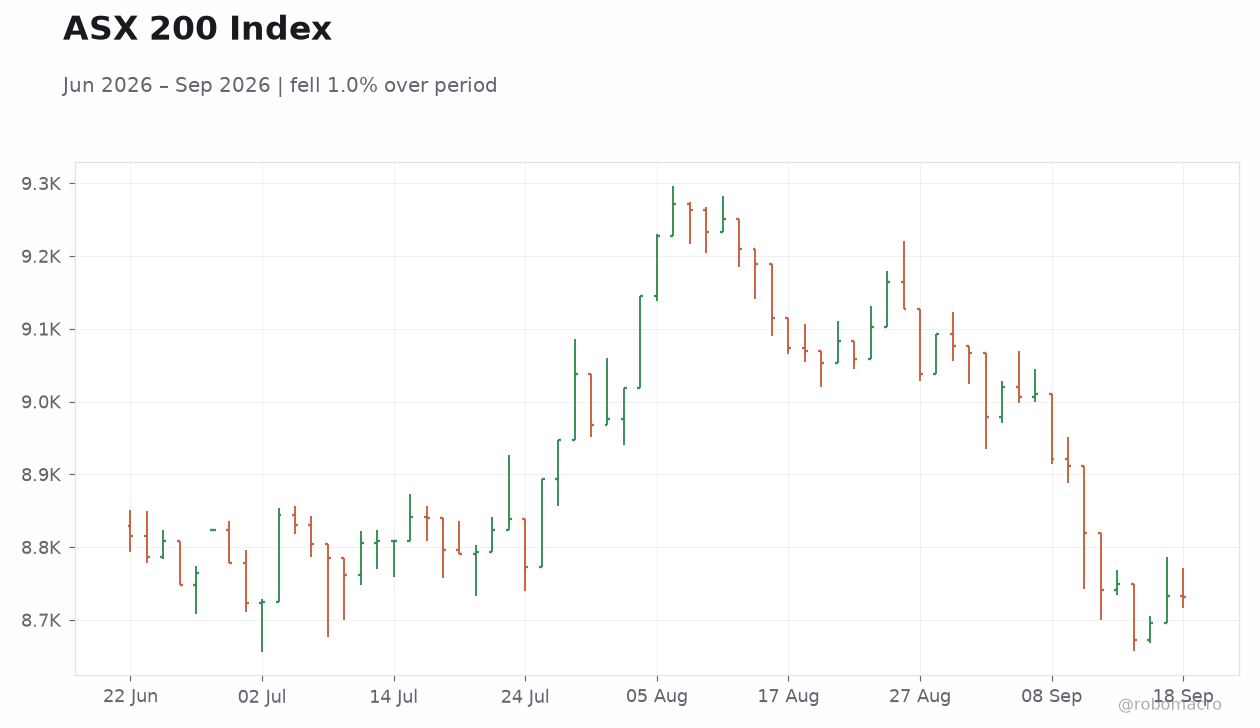
| ASX 200 | 8,731.20 | -0.01% |
| NZX 50 | 13,821.20 | +0.60% |
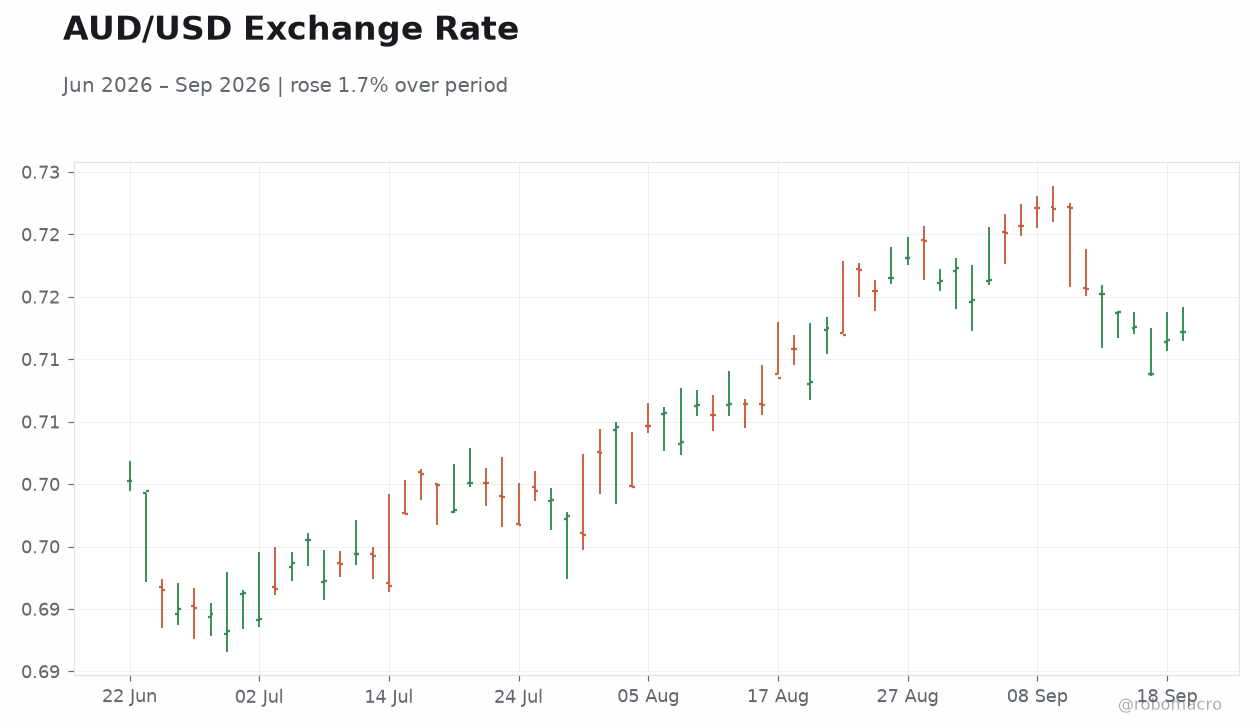
| AUD/USD | 0.71 | +0.08% |
| NZD/USD | 0.57 | -0.19% |
| AUD/NZD | 1.25 | +0.25% |
| BHP | 61.05 | +1.40% |
| Gold | 4,384.00 | -0.92% |
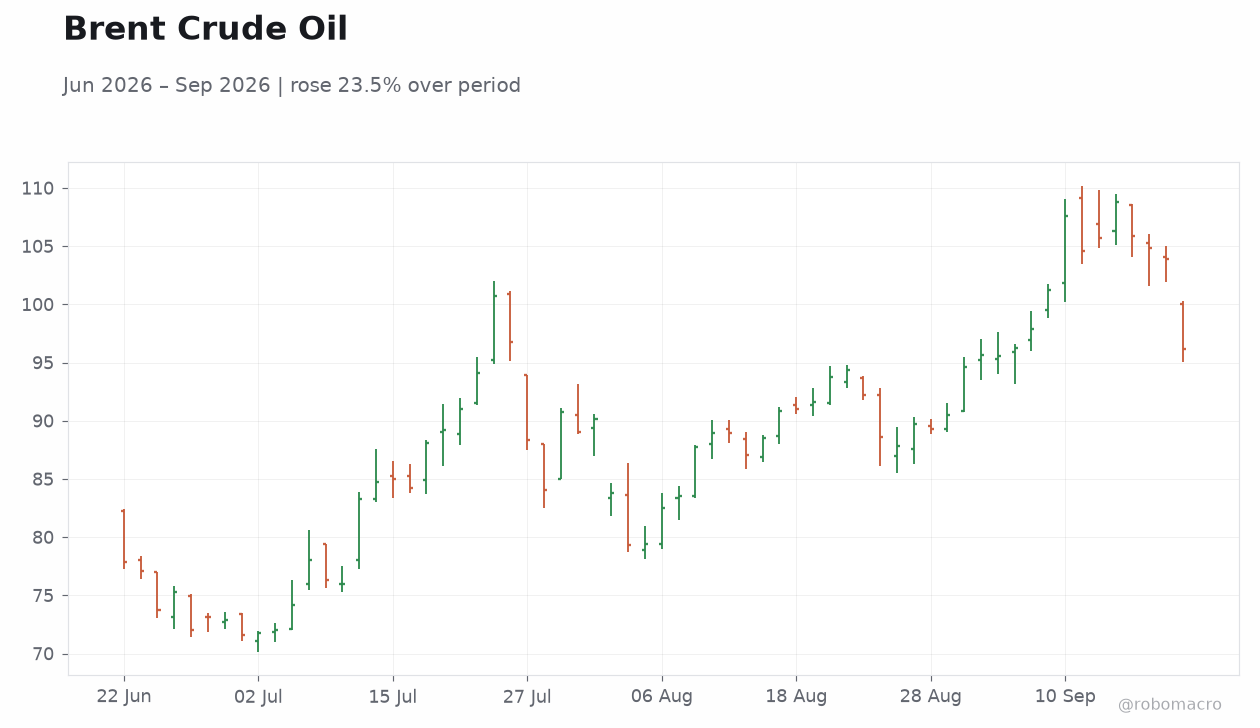
| Brent Crude | 96.17 | -7.41% |
| Bitcoin | 86,581.24 | +6.70% |
| Australia 2Y Govt Yield | 5.00% | -5 bp |
| Australia 10Y Govt Yield | 5.35% | -6 bp |
Prior Economic Events
| Data | Prior | Cons | Actual |
|---|---|---|---|
| Speech by RBA's Hunter | - | - | - |
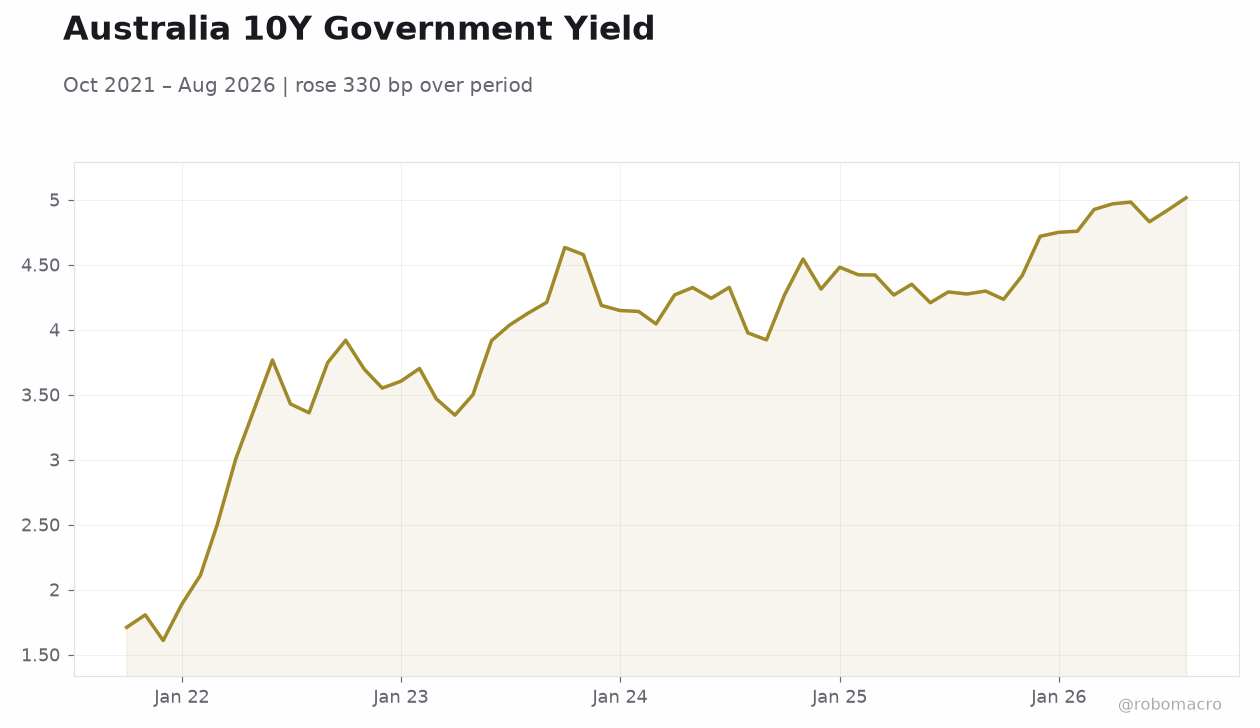 Australia 10Y Government Yield | Type: macro_line | Yield %: 5.015 (2026-08-01) | Range: 1.609–5.015 | Trend(6pt): 1.71,3.551,4.141,4.267,4.831,5.015
Today's Economic Events
| Data | Prior | Cons | Time |
|---|---|---|---|
| S&P Global Manufacturing PMI Flash | 52 | - | 15:00 |
| S&P Global Services PMI Flash | 53.20 | - | 15:00 |
| Employment Change | -15,800 | 20,000 | 17:30 |
| Full-Time Employment Change | 16,300 | - | 17:30 |
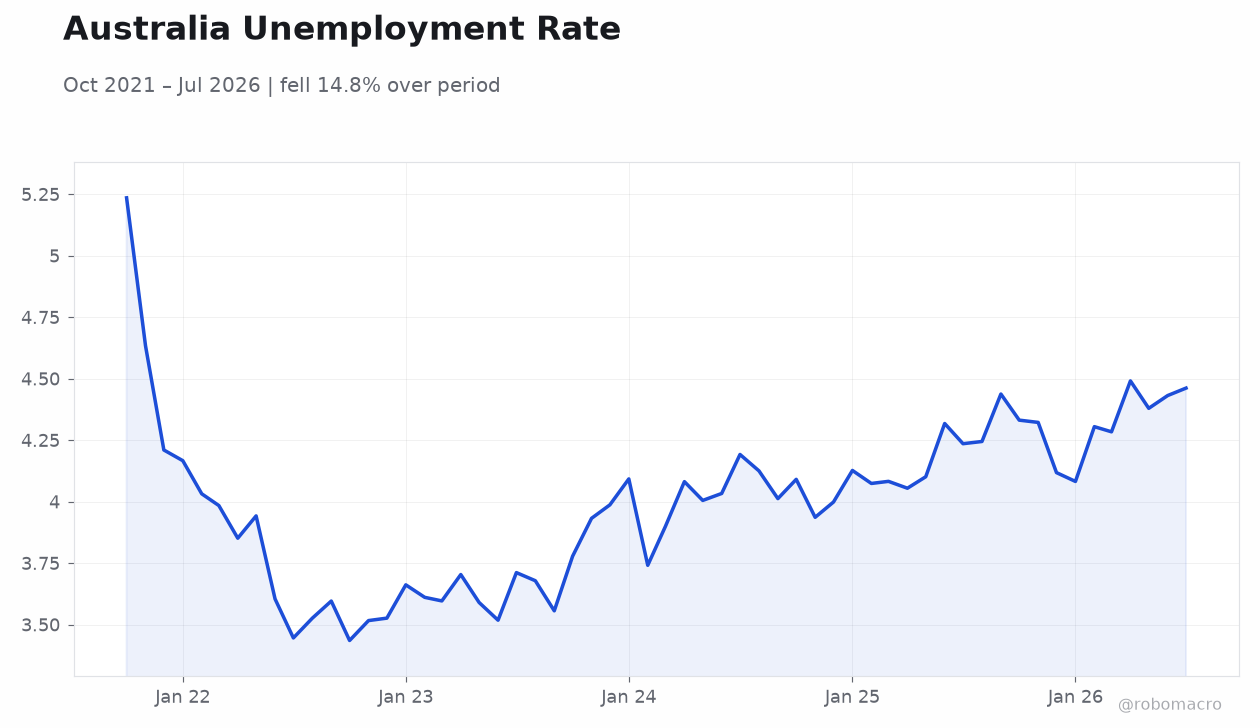
| Unemployment Rate | 4.50 | 4.50 | 17:30 |
- RBA Governor Bullock signals persistent inflation risks from oil prices, prioritising price stability over employment.
- ASX 200 edges down 0.01% while NZX 50 rises 0.60%; Australian yields fall 5-6 bp.
- AUD/USD holds at 0.71 as markets await Australian PMI and employment data this week.
Yesterday's Recap
Australian markets reacted to hawkish RBA commentary on 20 September. Governor Michele Bullock stated that global inflation fears, especially from oil prices, are materialising and that the bank has shifted focus to inflation control even if it raises unemployment. The ASX 200 closed at 8,731.20, down 0.01% after earlier gains were erased.
The NZX 50 advanced 0.60% to 13,821.20. Australian 2-year government yields eased 5 bp to 5.00% and the 10-year yield fell 6 bp to 5.35%. AUD/USD rose 0.08% to 0.71 while NZD/USD declined 0.19% to 0.57.
Brent crude dropped 7.41% to 96.17, potentially easing imported inflation pressures for Australia, though RBA rhetoric remains cautious. BHP gained 1.40% to 61.05, outperforming the broader index amid commodity volatility. The only event was a high-impact speech by RBA’s Hunter.
The Day Ahead
Australian data releases dominate the next two sessions. S&P Global Manufacturing and Services PMI Flash prints are due on 22 September, following prior readings of 52.0 and 53.2 respectively. On 23 September, Employment Change is expected to show a rebound to +20,000 after the prior -15,800 decline, with the unemployment rate forecast to hold at 4.5%.
Full-time employment change will also be released. No RBA or RBNZ policy meetings are scheduled. Markets will monitor any follow-up speeches from RBA officials for further signals on rate-path adjustments given the recent hawkish tone.
Other Economic Notes
Australian home prices have declined while affordability has worsened amid expectations of further RBA tightening. An analysis ahead of the 2026 Intergenerational Report highlights that Australians are $14,500 poorer than projected in the 2002 Costello forecast. The RBA has explicitly moved away from its previous “narrow path” balancing act, placing greater weight on inflation outcomes.
New Zealand data remain sparse, with the economy continuing to feel the lagged effects of earlier RBNZ tightening through dairy and construction channels.