ANZ Macro Daily(Beta Mode)
RBA Warnings Weigh on Banks as AUD Slides
Market Snapshot
| Asset | Level | Change |
|---|---|---|
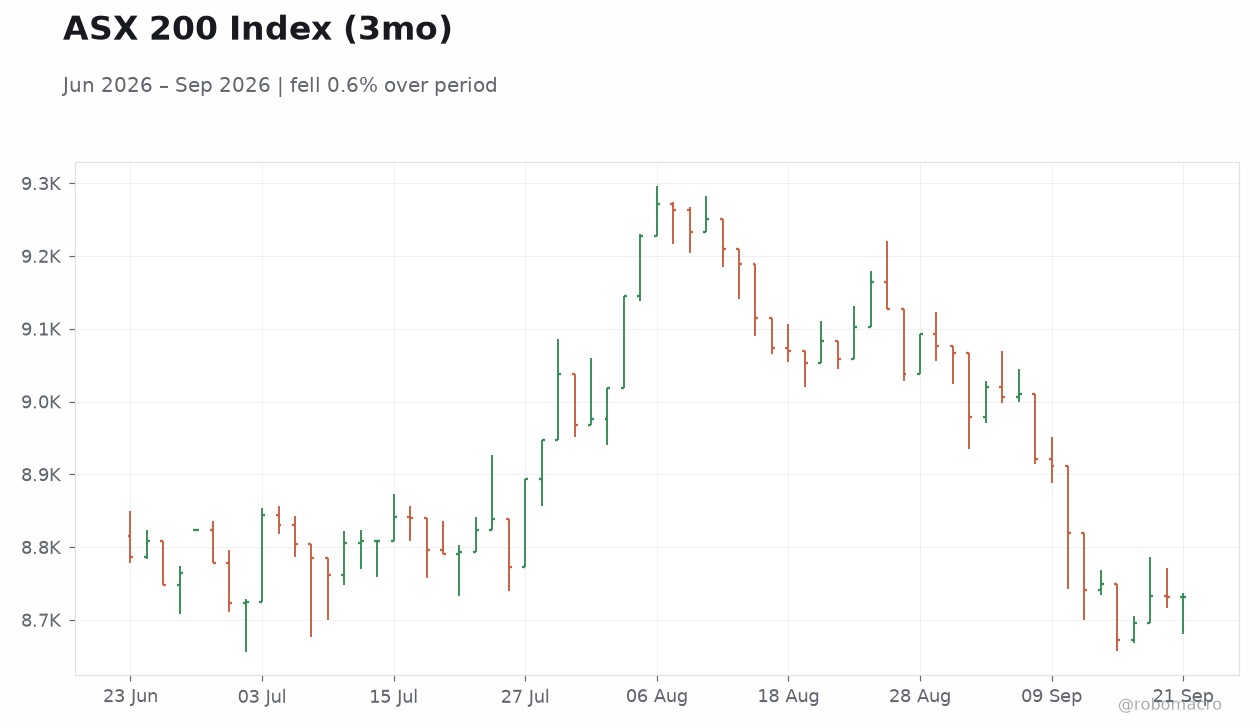
| ASX 200 | 8,731.90 | +0.01% |
| NZX 50 | 13,821.76 | +0.00% |
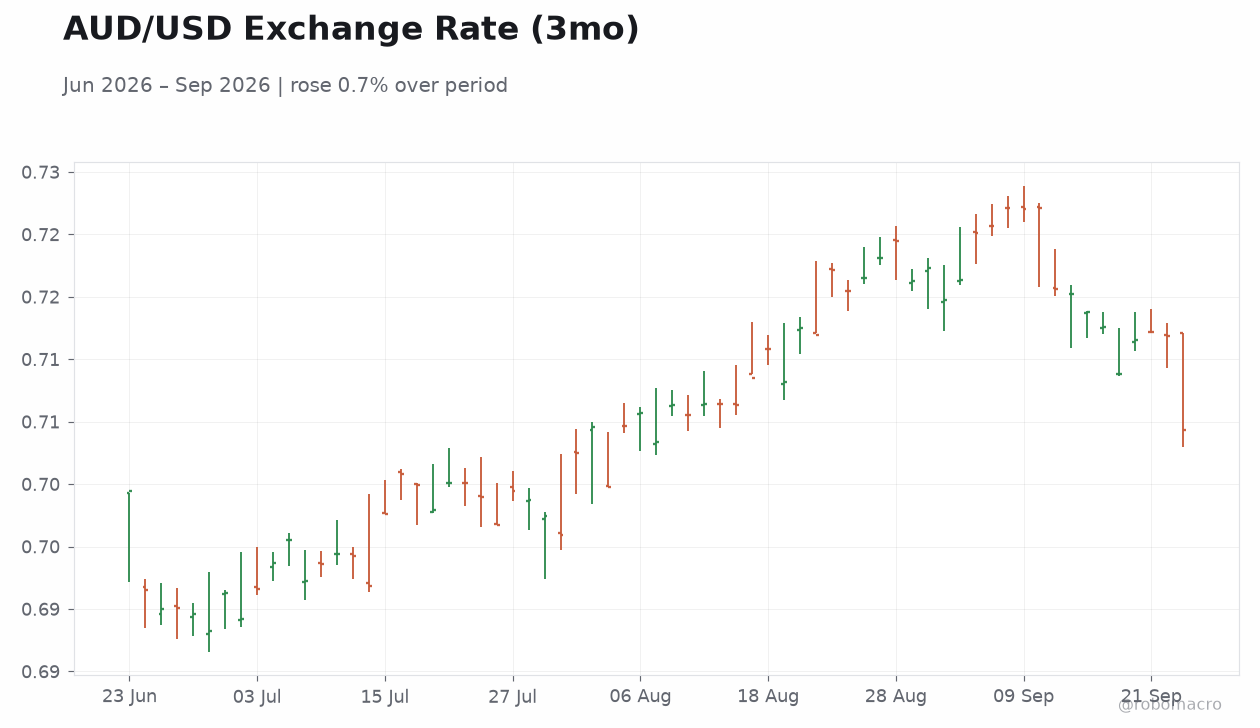
| AUD/USD | 0.70 | -1.07% |
| NZD/USD | 0.57 | -0.62% |
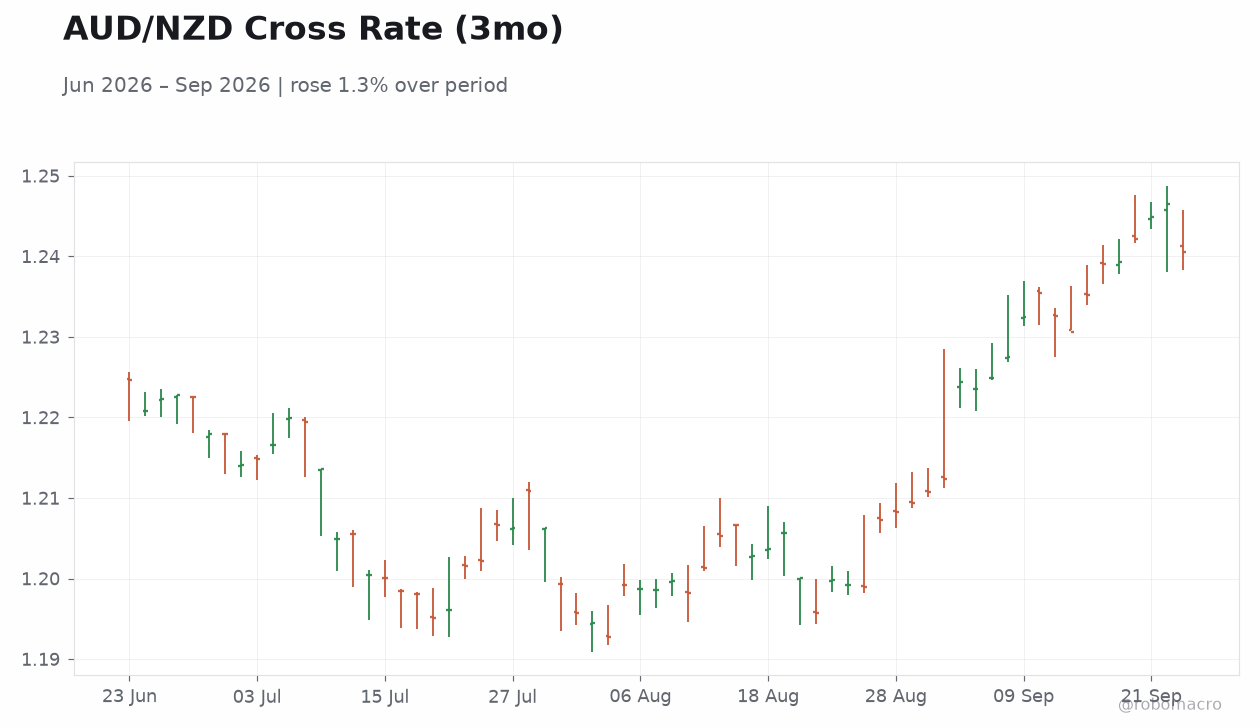
| AUD/NZD | 1.24 | -0.48% |
| BHP | 62.08 | +1.41% |
| Gold | 4,322.80 | -1.22% |
| Brent Crude | 98.42 | -0.84% |
| Bitcoin | 84,545.00 | -1.89% |
| Australia 2Y Govt Yield | 5.00% | -5 bp |
| Australia 10Y Govt Yield | 5.35% | -6 bp |
Prior Economic Events
| Data | Prior | Cons | Actual |
|---|---|---|---|
| No events available | |||
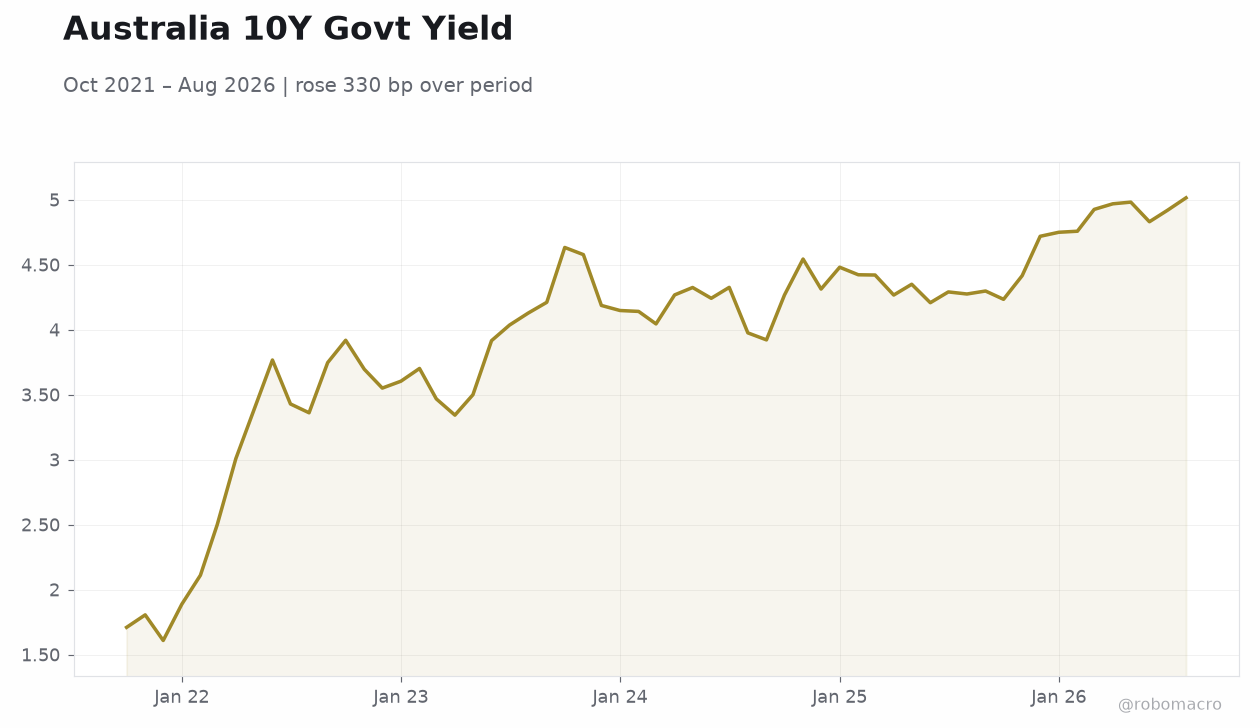 Australia 10Y Govt Yield | Type: macro_line | Yield %: 5.015 (2026-08-01) | Range: 1.609–5.015 | Trend(6pt): 1.71,3.551,4.141,4.267,4.831,5.015
Today's Economic Events
| Data | Prior | Cons | Time |
|---|---|---|---|
| No events available | |||
- RBA signals inflation risks materialising despite no wage-price spiral evidence, lifting September hike odds.
- ASX 200 holds flat while AUD/USD drops 1.07% to 0.70 amid hawkish central-bank rhetoric.
- Australian 10-year yield falls 6 bp to 5.35% as markets price higher policy rates ahead.
Yesterday's Recap
Markets digested fresh RBA commentary on 22 September with no Australian or New Zealand data releases recorded. The ASX 200 closed at 8,731.90, up just 0.01%, as bank stocks fell on renewed rate-hike warnings while materials offset losses through BHP’s 1.41% gain to 62.08. The NZX 50 finished unchanged at 13,821.76.
AUD/USD declined 1.07% to 0.70 and NZD/USD fell 0.62% to 0.57, driving AUD/NZD 0.48% lower to 1.24. Australian yields eased, with the 2-year yield down 5 bp to 5.00% and the 10-year yield down 6 bp to 5.35%. Gold slipped 1.22% to 4,322.80 and Brent Crude declined 0.84% to 98.42, offering little support to the commodity currencies.
News flow centred on RBA Governor Bullock’s inflation concerns and RBNZ signals of gradual tightening.
The Day Ahead
No economic releases or central-bank meetings are scheduled for Australia or New Zealand on 23-24 September. Markets will continue to parse RBA and RBNZ speeches for further policy clues. Attention will also turn to any updates on China’s growth outlook, given its dominant role in Australian commodity exports.
Geopolitical developments may influence risk sentiment and AUD/NZD flows. The absence of hard data leaves commentary and global bond moves as the main drivers.
Other Economic Notes
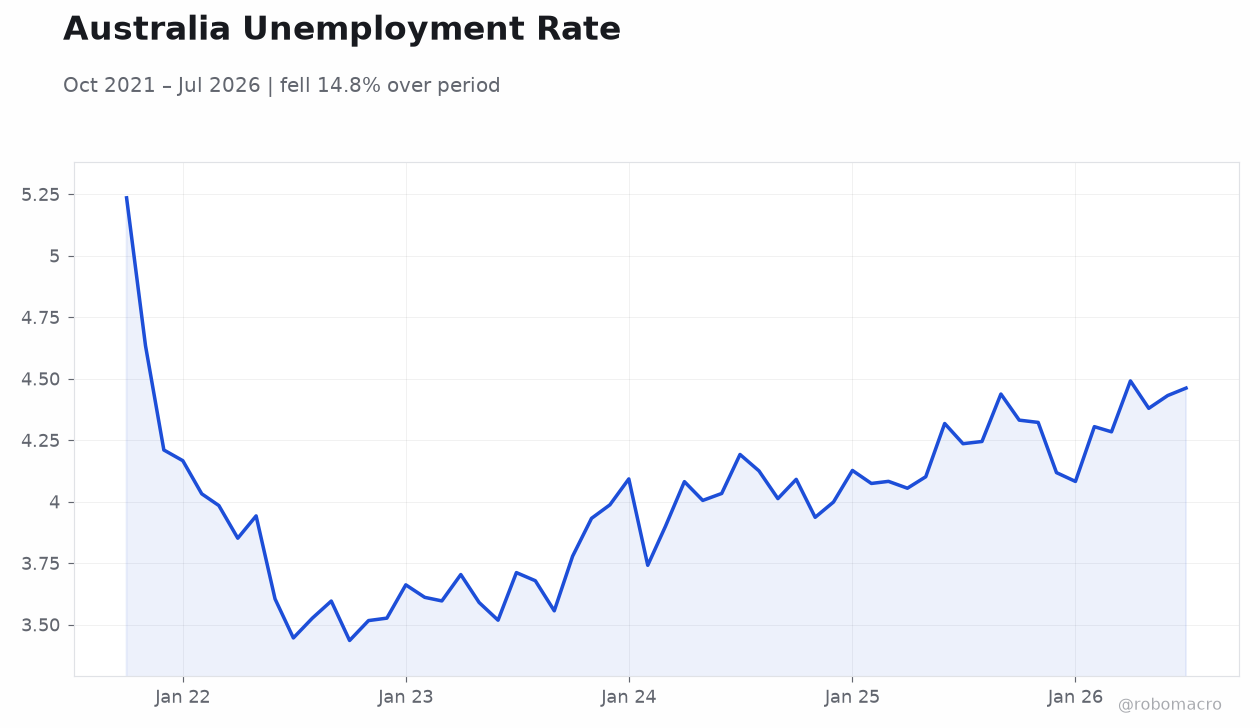
Australia’s CPI at 3.45% and New Zealand’s at 4.10% remain above target, sustaining policy vigilance. Housing markets in both countries stay sensitive to rate expectations, with higher-for-longer cash rates pressuring affordability. Commodity linkages mean any China demand softening would quickly affect Australian iron-ore and LNG revenues and, indirectly, the AUD.
New Zealand’s dairy and tourism sectors face similar external risks but benefit less from the current gold and base-metal price levels.
Global Macro News
A hawkish Federal Reserve continues to squeeze the NZD and, to a lesser extent, the AUD through higher US yields. Geopolitical tensions are adding to inflation uncertainty, prompting RBA Governor Bullock to note that previously flagged risks are now materialising. ↓ p.2