AUD Slips as RBA Hike Bets Fade; Confidence Sags
-4.70 Westpac Consumer80.40 Westpac Consumer-24.20 Ai Group Industry
ASX 2008,660.90-0.77%
NZX 5013,691.85+0.06%
AUD/USD0.70-0.27%
NZD/USD0.56-0.33%
Market Snapshot
| Asset | Level | Change |
|---|
| ASX 200 | 8,660.90 | -0.77% |
| NZX 50 | 13,691.85 | +0.06% |
| AUD/USD | 0.70 | -0.27% |
| NZD/USD | 0.56 | -0.33% |
| AUD/NZD | 1.24 | -0.25% |
| BHP | 61.19 | -2.02% |
| Gold | 4,154.40 | +0.33% |
| Brent Crude | 103.99 | +3.78% |
| Bitcoin | 81,746.48 | -1.84% |
| Australia 2Y Govt Yield | - | - |
| Australia 10Y Govt Yield | - | - |
Prior Economic Events
| Data |
Prior |
Cons |
Actual |
| Westpac Consumer Confidence Change | -5.20 | - | -4.70 |
| Westpac Consumer Confidence Index | 84.40 | - | 80.40 |
| Ai Group Industry Index | -1.60 | - | -24.20 |
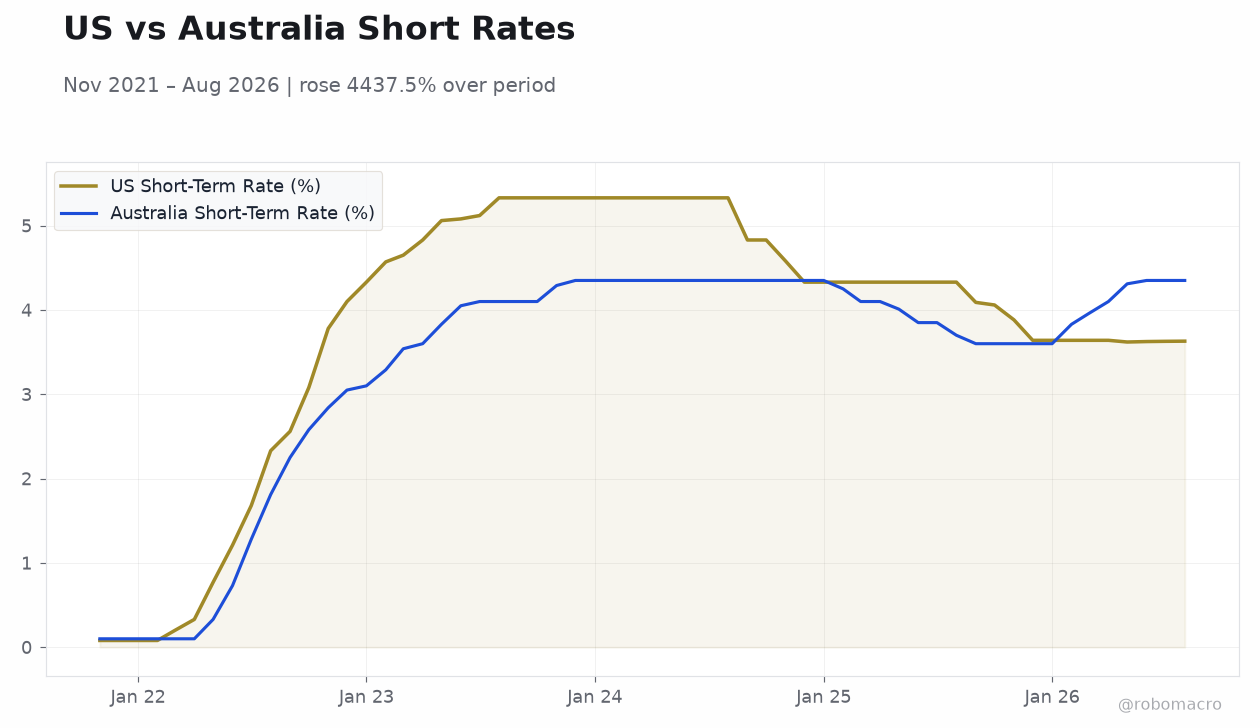 US vs Australia Short Rates | Type: macro_line | US Short-Term Rate (%): 3.63 (2026-08-01) | Range: 0.08–5.33 | Trend(6pt): 0.08,4.33,5.33,4.33,3.628,3.63 | Australia Short-Term Rate (%): 4.35 (2026-08-01) | Range: 0.1–4.35 | Trend(5pt): 0.1,3.1,4.35,4.01,4.35
Today's Economic Events
| Data |
Prior |
Cons |
Time |
| No events available |
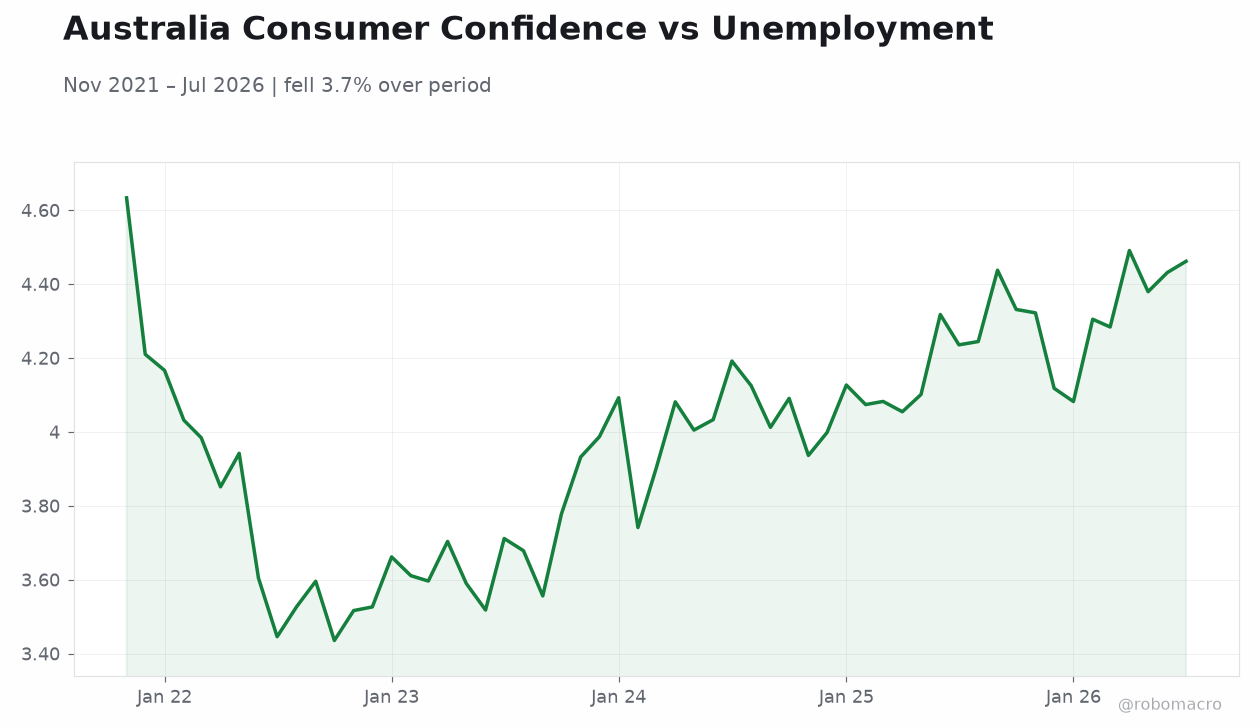
- Australian consumer confidence fell 4.7% to 80.4, extending weakness as mortgage-cost concerns linger
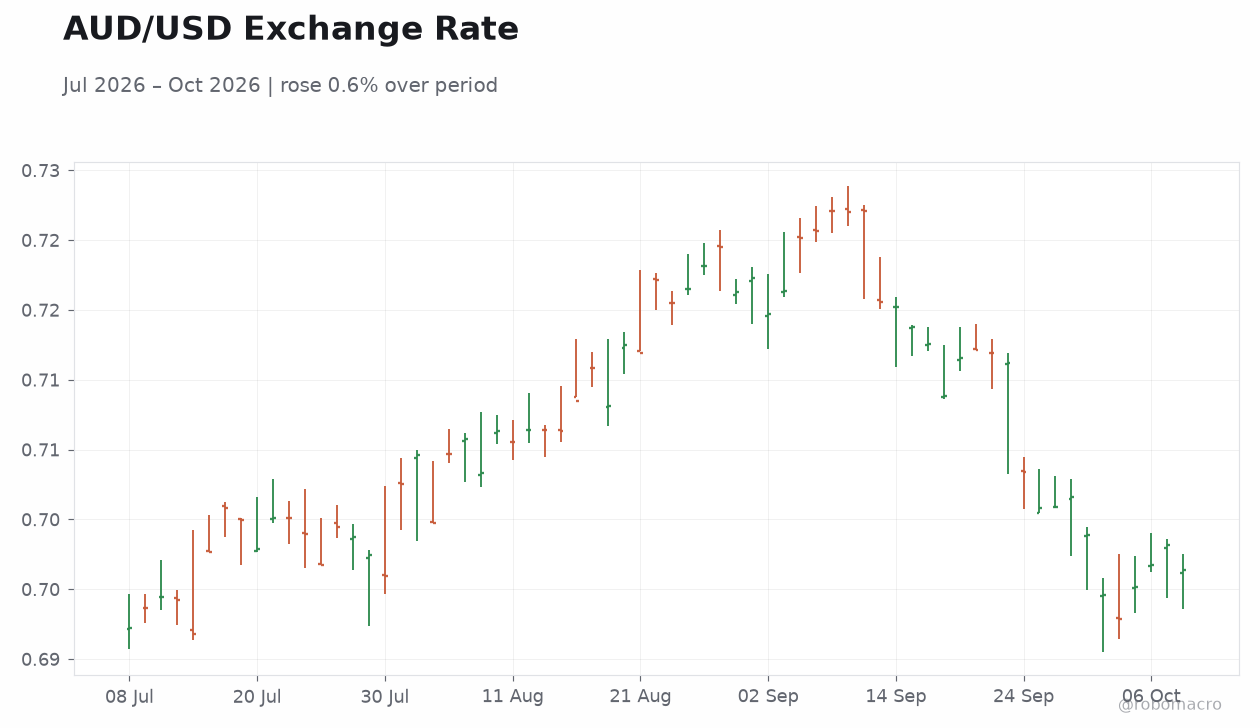
- AUD slipped 0.27% to 0.70 as markets pared expectations of further RBA tightening
- RBNZ chief Breman overhauls senior leadership; recruitment begins for two assistant governors
Yesterday's Recap
Australian data dominated yesterday's calendar. Westpac consumer confidence fell 4.7% in the latest survey, with the index dropping to 80.4 from a prior 84.4 — a level deep in pessimistic territory below the 100 neutral mark, reflecting persistent pressure on households from elevated borrowing costs. The decline followed the previous month's 5.2% fall, underscoring the fragility of sentiment as the RBA's tightening cycle continues to weigh on mortgaged households.
The Ai Group industry index also printed, collapsing to -24.2 from -1.6 previously, a deterioration that points to broadening weakness across the industrial economy and contrasts with the resilience seen in services earlier in the year. Equity markets diverged across the Tasman: the ASX 200 lost 0.77% to close at 8,660.90, with heavyweight BHP down 2.02% to 61.19 as mining sentiment softened, while the NZX 50 edged up 0.06% to 13,691.85. On currency markets, the AUD slipped 0.27% to 0.70 and the NZD fell 0.33% to 0.56, with AUD/NZD easing 0.25% to 1.24 as the cross continued to favour the NZD on relative rate expectations.
Brent crude surged 3.78% to 103.99, a tailwind for energy exporters but a cost pressure for both economies, while gold firmed 0.33% to 4,154.40. Bitcoin retreated 1.84% to 81,746.48.
The Day Ahead
The Australian calendar is quiet today, with no tier-one releases scheduled, leaving markets to digest the confidence and industry survey prints and position ahead of the RBA's next meeting. Attention will remain on the AUD, which faces a soft macro backdrop after rate-hike bets faded and US yields climbed into the release of Federal Reserve minutes. New Zealand likewise has no major data scheduled, so the NZX 50 and NZD will take their cues from global risk sentiment and commodity flows.
With both central banks in a quiet period between meetings, liquidity may be thinner and moves exaggerated. Later in the week, markets will begin looking toward the next round of Australian labour market data, which will be pivotal for the RBA's assessment of slack in the economy. Housing market indicators remain a key watch given the sensitivity of both economies to mortgage servicing costs at current policy settings.
Page 1
Never miss an issue
Subscribe to ANZ Macro Daily and get each new issue delivered to your inbox.
Already a member? Visit robomacro.com
to log in and manage subscriptions, or use Forgot Password to set a password.