| Asset | Level | Change |
|---|---|---|
| ASX 200 | 8,783.20 | +0.76% |
| NZX 50 | 13,827.62 | +0.57% |
| AUD/USD | 0.70 | +0.01% |
| NZD/USD | 0.56 | -0.32% |
| AUD/NZD | 1.24 | -0.11% |
| BHP | 60.94 | -0.41% |
| Gold | 4,193.00 | -0.55% |
| Brent Crude | 106.23 | +1.44% |
| Bitcoin | 82,750.17 | -1.11% |
| Australia 2Y Govt Yield | 4.94% | +1 bp |
| Australia 10Y Govt Yield | 5.40% | +1 bp |
| Data | Prior | Cons | Actual |
|---|---|---|---|
| No events available | |||
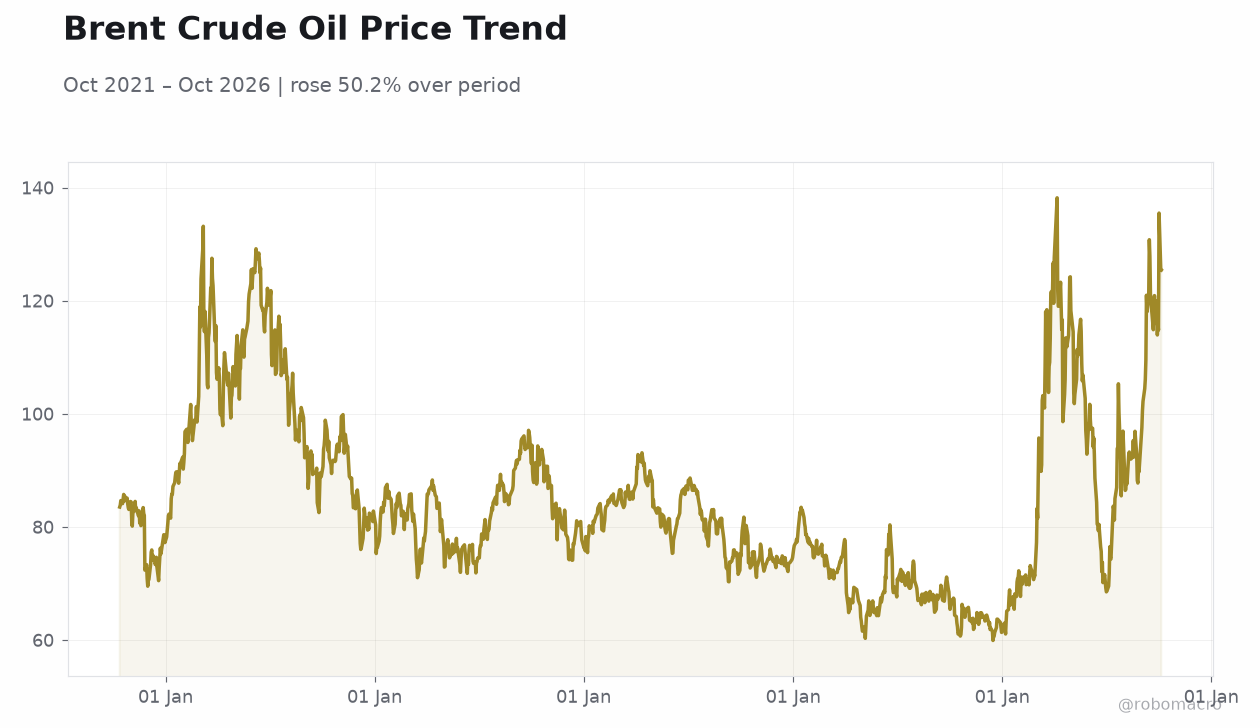
Brent Crude Oil Price Trend | Type: macro_line | USD/bbl: 125.4 (2026-10-06) | Range: 59.93–138.2 | Trend(6pt): 83.53,81.11,91.57,72.5,135.5,125.4
| Data | Prior | Cons | Time |
|---|---|---|---|
| NAB Business Confidence Index | -8 | - | 20:30 |
| RBA Meeting Minutes | - | - | 20:30 |
| Employment Change | 39,500 | 20,000 | 20:30 |
| Full-Time Employment Change | -6,300 | - | 20:30 |
| Headline Unemployment Rate | 4.60 | 4.60 | 20:30 |
| Business NZ PMI | 53.10 | - | 17:30 |
| Trade Balance | -1,349m | - | 17:45 |
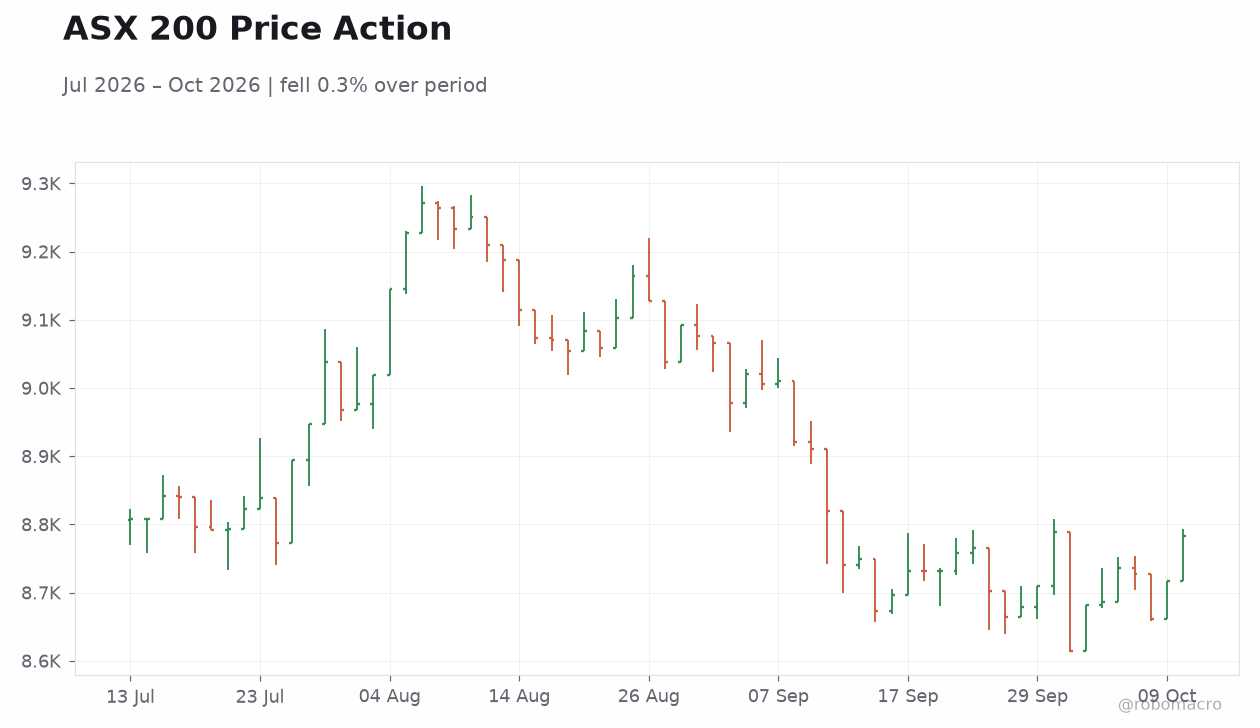
Australian equities staged a solid recovery, with the ASX 200 closing at 8,783.20, up 0.76%, bouncing back from the prior session's sharp sell-off. The rebound was broad-based, though BHP slipped 0.41% to 60.94, tempering gains in the resources complex and signalling lingering caution on the China-facing mining outlook. Across the Tasman, the NZX 50 advanced 0.57% to 13,827.62, tracking the risk-on tone in Asia.
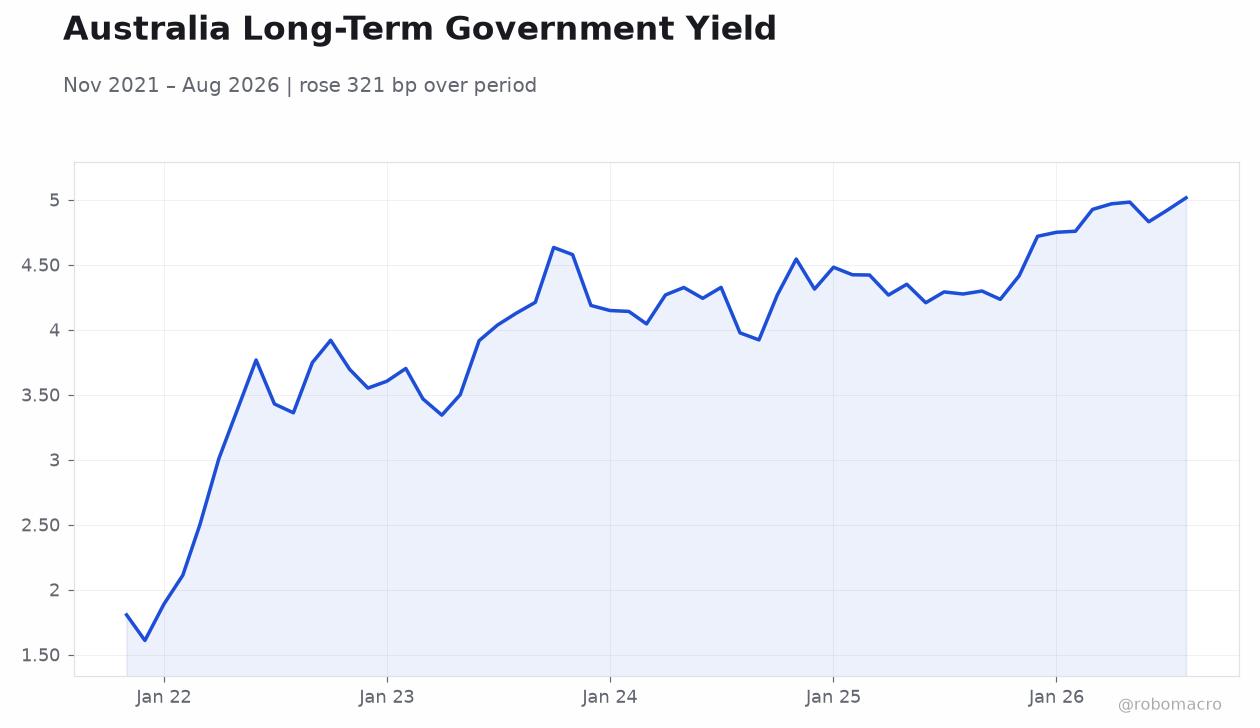
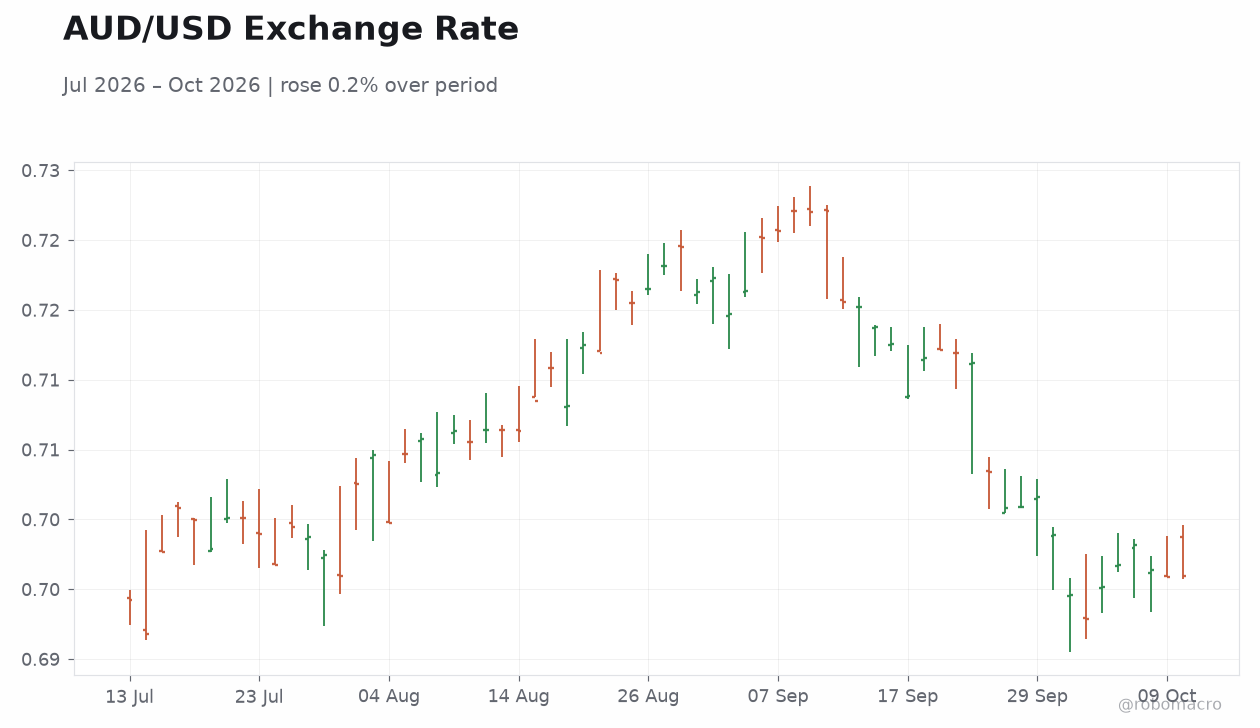
In rates, Australian government yields edged marginally higher, with the 2-year at 4.94% and the 10-year at 5.40%, both up 1 bp, reflecting a modest steepening bias as markets position for a busy week of domestic data. On currency, AUD/USD was essentially flat at 0.70, up just 0.01%, showing resilience despite dollar strength globally. NZD/USD underperformed, easing 0.32% to 0.56, while AUD/NZD firmed slightly to 1.24, up 0.11% on a cross basis.
In commodities, Brent crude rallied 1.44% to 106.23, supported by escalating Middle East tensions, a tailwind for Australia's LNG exporters but a cost pressure for both economies. Gold eased 0.55% to 4,193.00, and Bitcoin fell 1.11% to 82,750.17 as speculative appetite cooled into the new week.
Today's Australian calendar features two high-impact releases at 20:30 AEDT: the NAB Business Confidence Index, previously at -8, and the minutes from the Reserve Bank of Australia's most recent meeting. The NAB survey will be scrutinised for signs that soft confidence is translating into weaker hiring and investment intentions, particularly given the negative prior reading. The RBA minutes will be parsed for nuance on the Board's reaction function following the cash rate's steady setting at 4.35%, with markets keen to gauge the balance of risks between persistent services inflation and slowing demand.
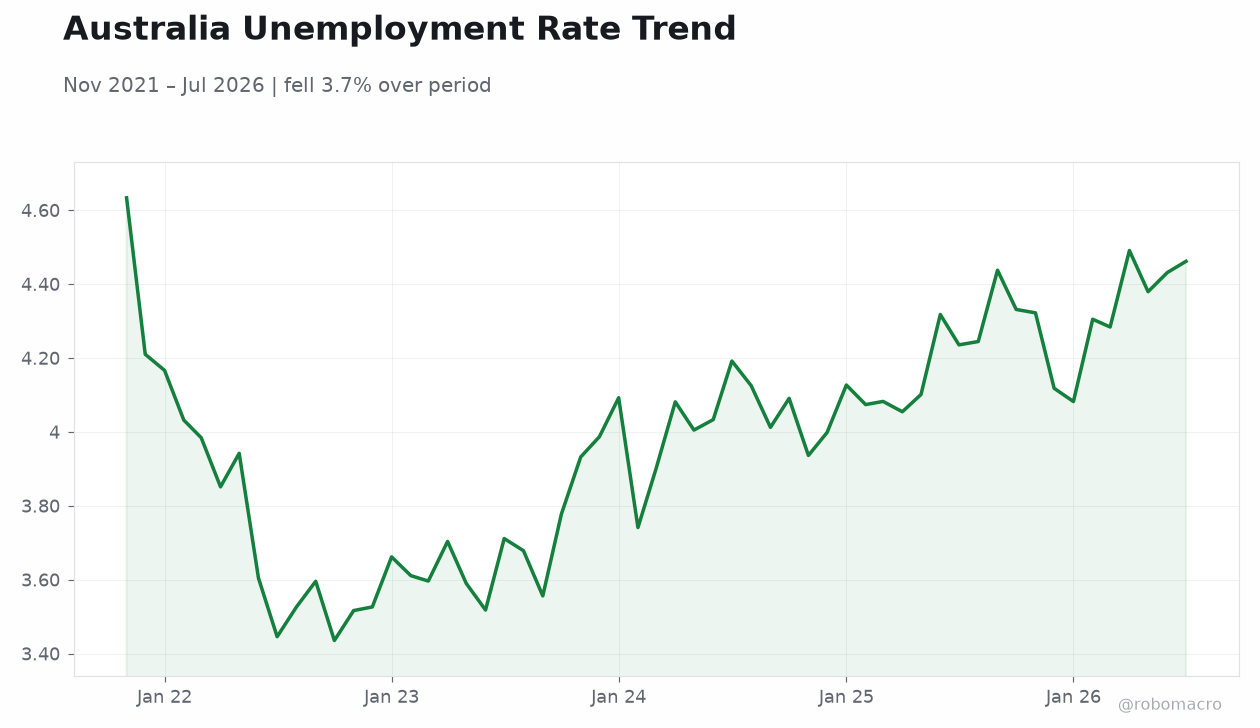
Looking later in the week, Thursday brings the Australian labour report, where consensus looks for employment growth of 20,000 following last month's outsized 39,500 gain, with the headline unemployment rate expected to hold at 4.6%. Full-time employment change will be watched closely after last month's 6,300 contraction. New Zealand's Business NZ PMI arrives Wednesday, from a prior of 53.1, offering a timely read on manufacturing momentum.
Subscribe to ANZ Macro Daily and get each new issue delivered to your inbox.
Already a member? Visit robomacro.com to log in and manage subscriptions, or use Forgot Password to set a password.
Australia Long-Term Government Yield | Type: macro_line | 10Y Yield (%): 5.015 (2026-08-01) | Range: 1.609–5.015 | Trend(6pt): 1.806,3.604,4.045,4.35,4.919,5.015
Australia Unemployment Rate Trend | Type: macro_line | Unemployment Rate (%): 4.462 (2026-07-01) | Range: 3.436–4.634 | Trend(5pt): 4.634,3.662,3.9,4.101,4.462
ASX 200 Price Action | Type: market_hloc | Index Level: 8783 (2026-10-12) | Range: 8614–9272 | Trend(6pt): 8808,9146,9128,8732,8717,8783
AUD/USD Exchange Rate | Type: market_hloc | Rate: 0.6959 (2026-10-12) | Range: 0.6918–0.7221 | Trend(6pt): 0.6942,0.6998,0.7165,0.7088,0.6959,0.6959
Australia's inflation picture remains the dominant macro theme, with CPI running at 4.00% year-on-year, well above the RBA's 2-3% target band, keeping the policy debate alive between hawks citing sticky services prices and doves pointing to cooling demand. The domestic commentary has turned pointed, with industry groups criticising the RBA's stance and its perceived impact on productivity, underscoring the political economy of restrictive policy. New Zealand's inflation dynamics mirror Australia's, with CPI at 4.10% year-on-year, and the housing channel remains a key transmission concern on both sides of the Tasman.
Structural questions about Australia's export future, particularly around gas policy and emissions regulation, are gaining prominence as the economy seeks new growth engines beyond iron ore and coal. China's trajectory remains the single largest external swing factor for both ANZ economies, given the depth of trade linkages in commodities and services.
The US dollar held firm near 18-month highs, underpinned by safe-haven flows as the Middle East conflict escalated, keeping global investors wary ahead of key US inflation data. That dollar strength is a persistent headwind for both AUD and NZD, though the Australian dollar's stability near 0.70 suggests domestic factors are providing some offset. Oil's advance, with Brent up 1.44% at 106.23, adds a global inflation impulse that complicates the disinflation narratives at the RBA and RBNZ.
↓ p.3
Central banks globally have been trimming dollar reserves, a structural theme that could eventually soften the greenback's ascent, with Korea's won push emblematic of diversification efforts. In Asia, the yen continues to trade within a broader range against the dollar, while Goldman Sachs sees USD/JPY at 150 in 12 months, implying further yen weakness. Emerging market currencies showed mixed performance, with the rupiah strengthening as oil and the dollar index softened intraday.
Bitcoin's pullback to 82,750.17 suggests a modest risk-off tilt in speculative assets even as equity indices in ANZ rallied. Gold's retreat from 4,193.00 despite geopolitical tension suggests profit-taking after a strong run.
The RBA's cash rate stands at 4.35%, and today's meeting minutes will be the key near-term signal on the Board's thinking, particularly regarding the persistence of services inflation against a backdrop of 4.00% headline CPI. Market commentary suggests rate-cut expectations for Australia have been pared back, with recent reporting pouring cold water on near-term easing bets, and industry voices openly criticising the Bank's restrictive stance. Thursday's labour data will be pivotal for the RBA's reaction function: consensus sees employment growth moderating to 20,000 with unemployment steady at 4.6%, but upside surprises would reinforce the hold narrative.
Across the Tasman, the RBNZ's OCR sits at 2.75% as of early October, a markedly different starting point from the RBA's 4.35%, reflecting the more aggressive easing cycle the Reserve Bank of New Zealand has already delivered. New Zealand mortgage borrowers have experienced a slow-motion rate shock as fixed terms roll over, a transmission channel the RBNZ is monitoring closely. The 160 bp policy gap between the two central banks represents one of the widest divergences in the developed world, and it is visible in the cross rate, with AUD/NZD at 1.24.
Wednesday's Business NZ PMI, from 53.1 previously, will inform whether the RBNZ's easing has gained traction in the real economy, while the trade balance later in the month rounds out the data picture. The asymmetry is clear: the RBA is defending a hold against sticky inflation, while the RBNZ is managing the aftermath of rapid easing.