ANZ Macro Daily(Beta Mode)
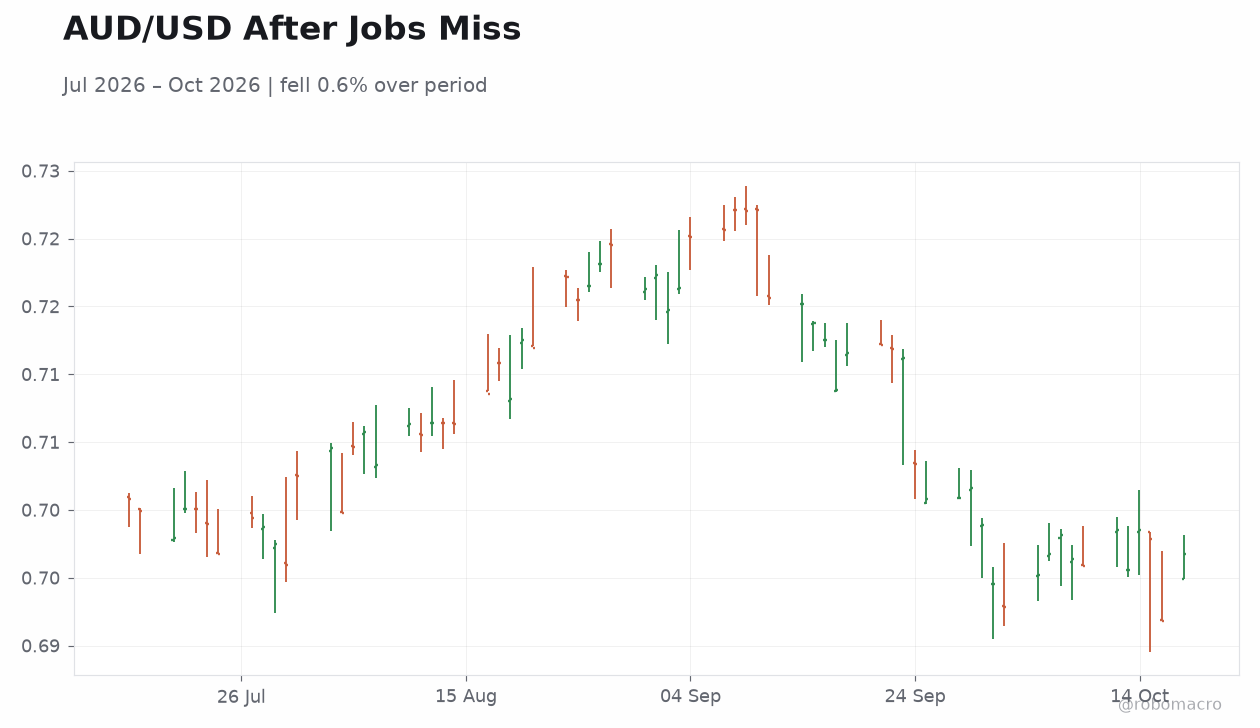
AUD Slips as RBA Hike Bets Fade Post-Jobs Miss
Market Snapshot
| Asset | Level | Change |
|---|---|---|
| ASX 200 | 8,806.70 | +1.00% |
| NZX 50 | 13,753.73 | -0.57% |
| AUD/USD | 0.70 | +0.79% |
| NZD/USD | 0.57 | +0.59% |
| AUD/NZD | 1.23 | -0.09% |
| BHP | 60.03 | +3.50% |
| Gold | 4,181.10 | +0.26% |
| Brent Crude | 109.86 | +3.72% |
| Bitcoin | 80,865.42 | -0.63% |
| Australia 2Y Govt Yield | - | - |
| Australia 10Y Govt Yield | - | - |
Prior Economic Events
| Data | Prior | Cons | Actual |
|---|---|---|---|
| NAB Business Confidence Index | -8 | - | -13 |
| RBA Meeting Minutes | - | - | - |
| Employment Change | 29,300 | 20,000 | -39,300 |
| Full-Time Employment Change | -4,000 | - | 34,400 |
| Headline Unemployment Rate | 4.70 | 4.60 | 4.70 |
| Business NZ PMI | 53.30 | - | 56.50 |
| RBA Kent Speech | - | - | - |
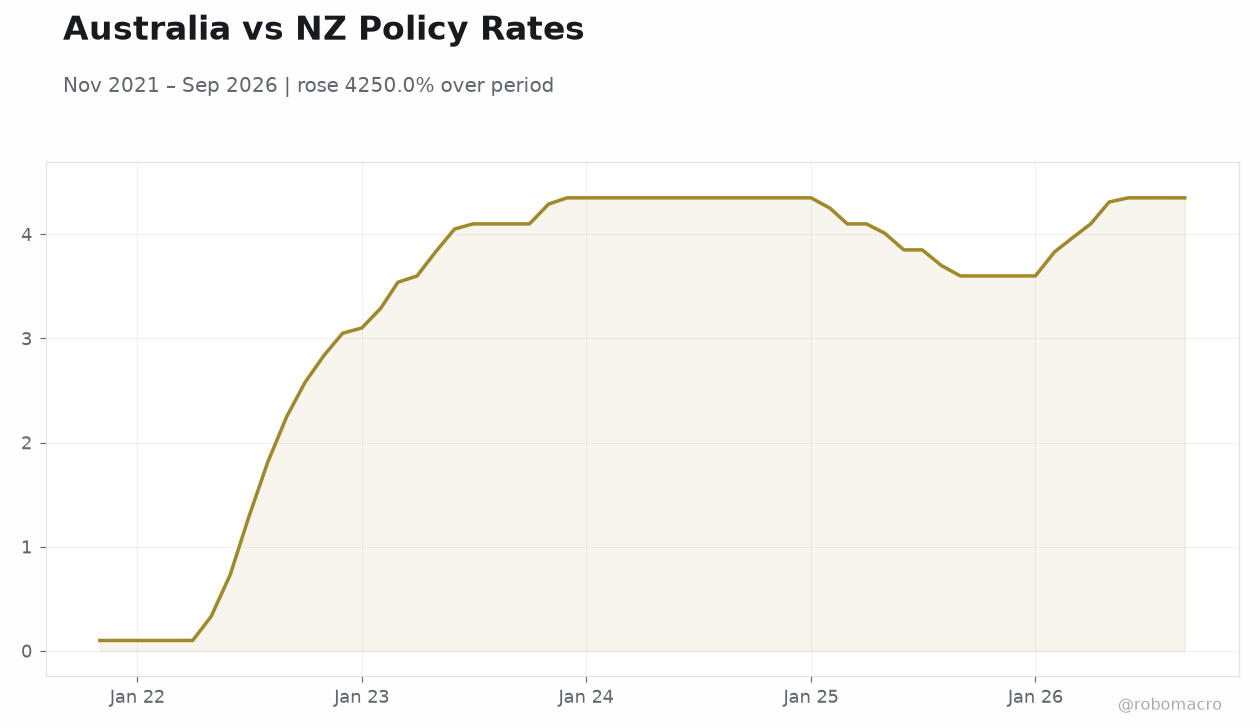 Australia vs NZ Policy Rates | Type: macro_line | AU Short Rate (%): 4.35 (2026-09-01) | Range: 0.1–4.35 | Trend(5pt): 0.1,3.1,4.35,4.01,4.35
Today's Economic Events
| Data | Prior | Cons | Time |
|---|---|---|---|
| Trade Balance | -1,349m | -775m | 17:45 |
| RBA Kent Speech | - | - | 19:05 |
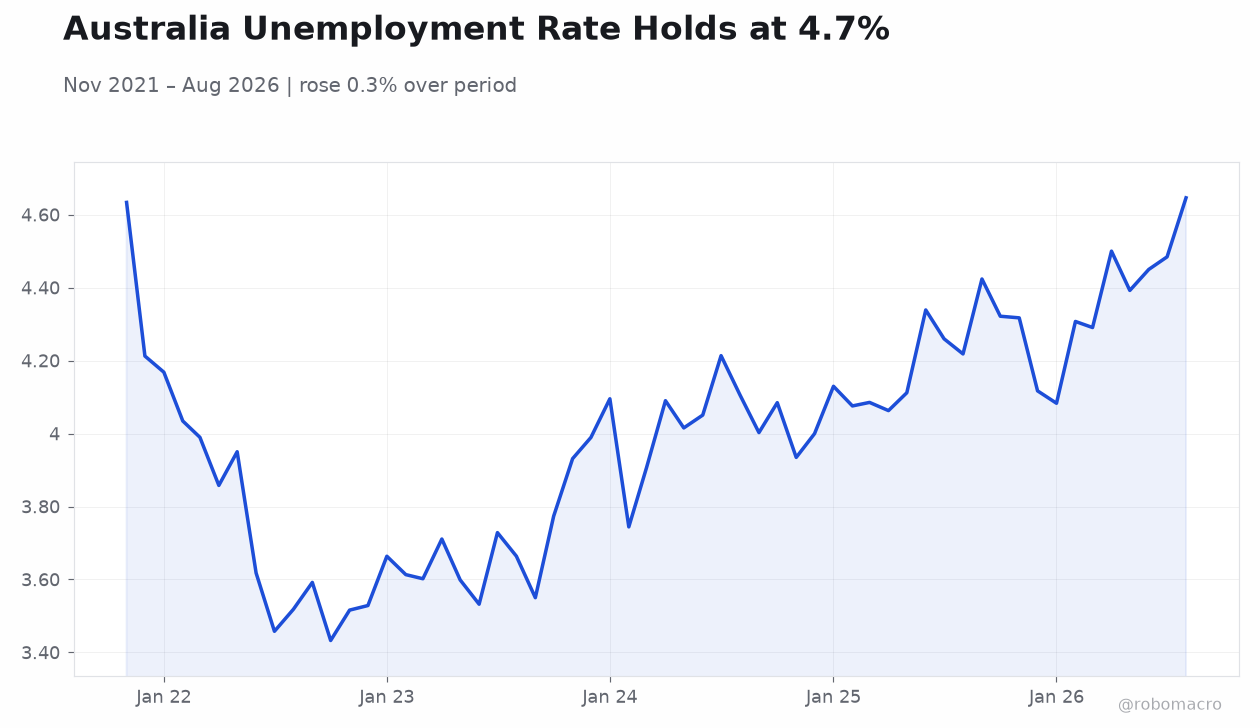
- Australia shed 39,300 jobs in September, far below the 20,000 consensus, keeping unemployment at 4.7% and prompting markets to abandon November RBA hike expectations.
- New Zealand's Business PMI surged to 56.5 from 53.3, though ANZ research suggests disinflation remains incomplete.
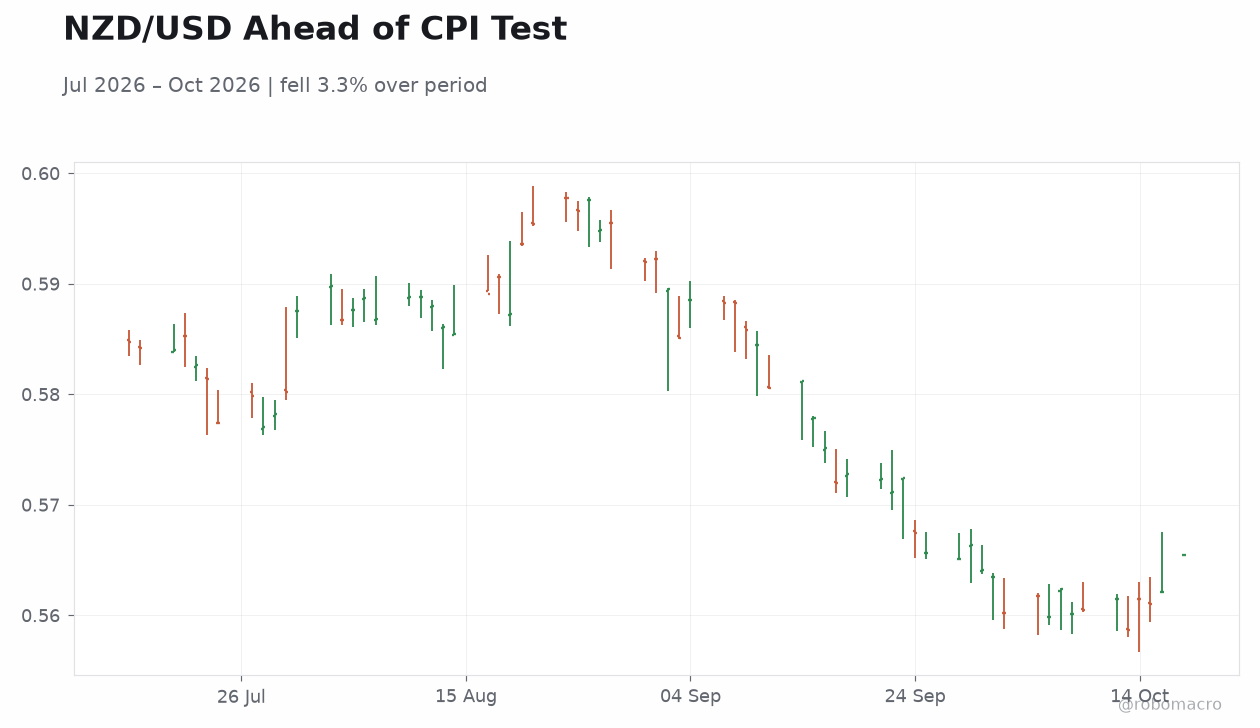
- AUD pared weekly gains as the US dollar steadied on reduced Fed hike odds; NZD faces a critical CPI test after five straight quarterly declines.
Yesterday's Recap
Friday's session delivered a pivotal Australian labour print that reshaped the rate outlook. Employment Change contracted by 39,300 against expectations of a 20,000 gain, though composition was more encouraging with Full-Time Employment adding 34,400 after a 4,000 decline previously. The unemployment rate held at 4.7%, above the 4.6% consensus, reinforcing the cooling-labour narrative.
The AUD initially crumbled on the release as traders slashed November RBA hike bets, but later pared losses, closing at 0.70, up 0.79%, as the US dollar weakened on diminished Fed tightening expectations. Equities diverged: the ASX 200 rallied 1.00% to 8,806.70, led by BHP's 3.50% surge to 60.03, while the NZX 50 slipped 0.57% to 13,753.73. Brent crude jumped 3.72% to 109.86 and gold edged higher to 4,181.10, supporting resource-heavy names.
Earlier in the week, New Zealand's Business PMI printed 56.5 on October 15, up sharply from 53.3, signalling robust manufacturing expansion, while NAB Business Confidence deteriorated to -13 from -8.
The Day Ahead
Today's calendar is thin but not empty. New Zealand's Trade Balance is due at 17:45 ET, with the previous reading a NZD 1.349 billion deficit and consensus looking for a narrower NZD 775 million shortfall; a smaller deficit would offer modest NZD support. RBA Assistant Governor Kent speaks at 19:05 ET, a high-impact event where markets will scrutinise every word for hints on the rate path following the labour disappointment.
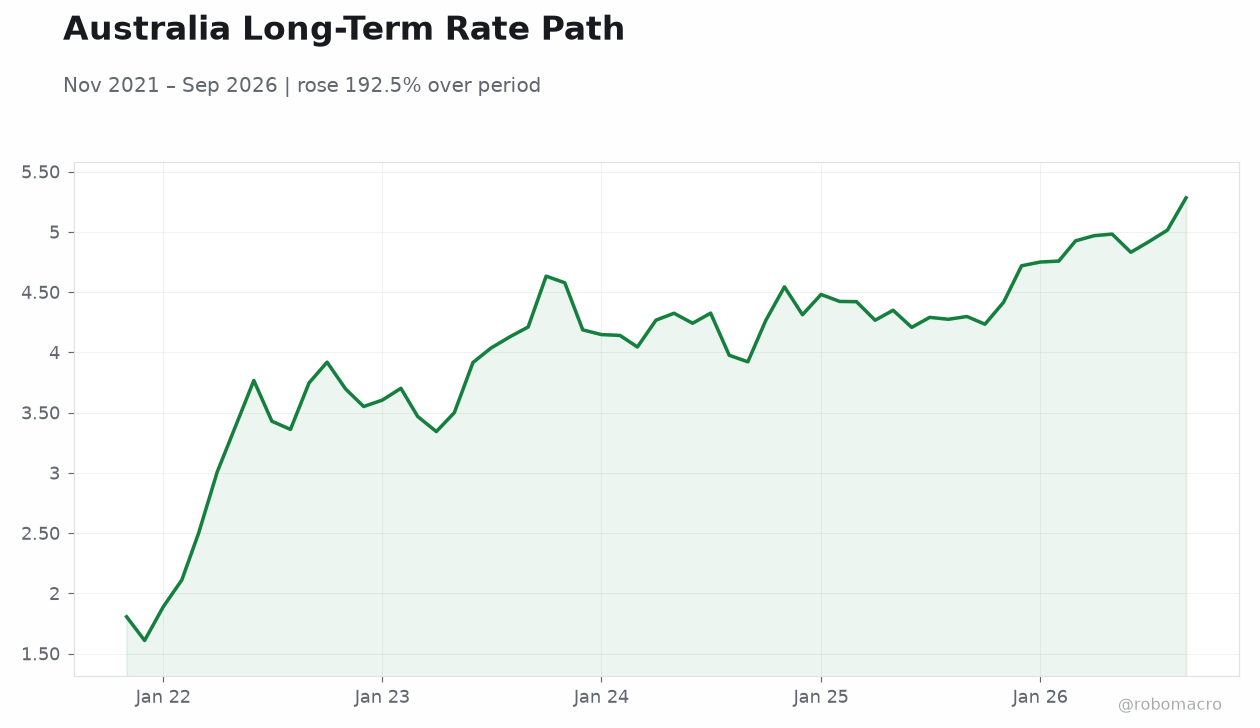
With the cash rate at 4.60% after four hikes, Kent's commentary on employment softness will be critical for pricing the next move. Tomorrow's calendar is currently empty, leaving the week's data heavy lifting largely complete. Traders should also monitor the upcoming New Zealand CPI release, viewed as make-or-break for the kiwi's five-quarter losing streak.
Other Economic Notes
Australia's labour market is at an inflection point, with headline job losses masking a solid full-time gain that suggests hours-based softness rather than wholesale deterioration. ↓ p.2