ANZ Macro Daily(Beta Mode)
RBA Hike Bets Build as RBNZ Stands Pat
Market Snapshot
| Asset | Level | Change |
|---|---|---|
| ASX 200 | 8,908.10 | +0.18% |
| NZX 50 | 13,797.00 | +0.63% |
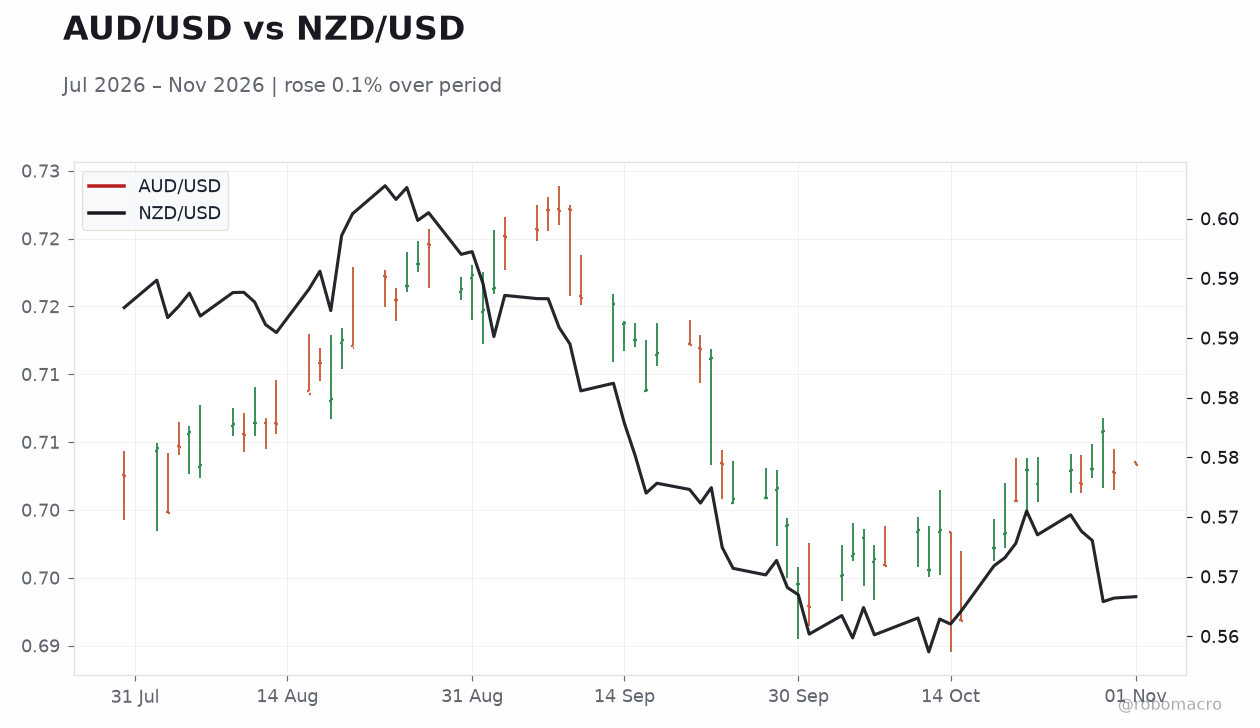
| AUD/USD | 0.70 | +0.08% |
| NZD/USD | 0.56 | +0.02% |
| AUD/NZD | 1.25 | +0.02% |
| BHP | 57.56 | +0.07% |
| Gold | 3,898.90 | -3.29% |
| Brent Crude | 113.43 | -1.26% |
| Bitcoin | 77,743.98 | +0.40% |
| Australia 2Y Govt Yield | 4.95% | +7 bp |
| Australia 10Y Govt Yield | 5.21% | +6 bp |
Prior Economic Events
| Data | Prior | Cons | Actual |
|---|---|---|---|
| RBA Senate Appearance | - | - | "" |
| Inflation Rate Month-over-Month | 0.40 | 0.70 | 0.80 |
| Inflation Rate Year-over-Year | 4 | 4.20 | 4.30 |
| RBA Trimmed Mean CPI Month-over-Month | 0.20 | 0.30 | 0.30 |
| RBA Trimmed Mean CPI Year-over-Year | 3.50 | 3.60 | 3.60 |
| RBNZ Interest Rate Decision | 2.75 | 3 | 2.75 |
| RBNZ Rate Statement | - | - | - |
| RBNZ Press Conference | - | - | - |
| ANZ Business Confidence | 51.90 | - | 52.50 |
| PPI Quarter-over-Quarter | 1.30 | 1 | 1.10 |
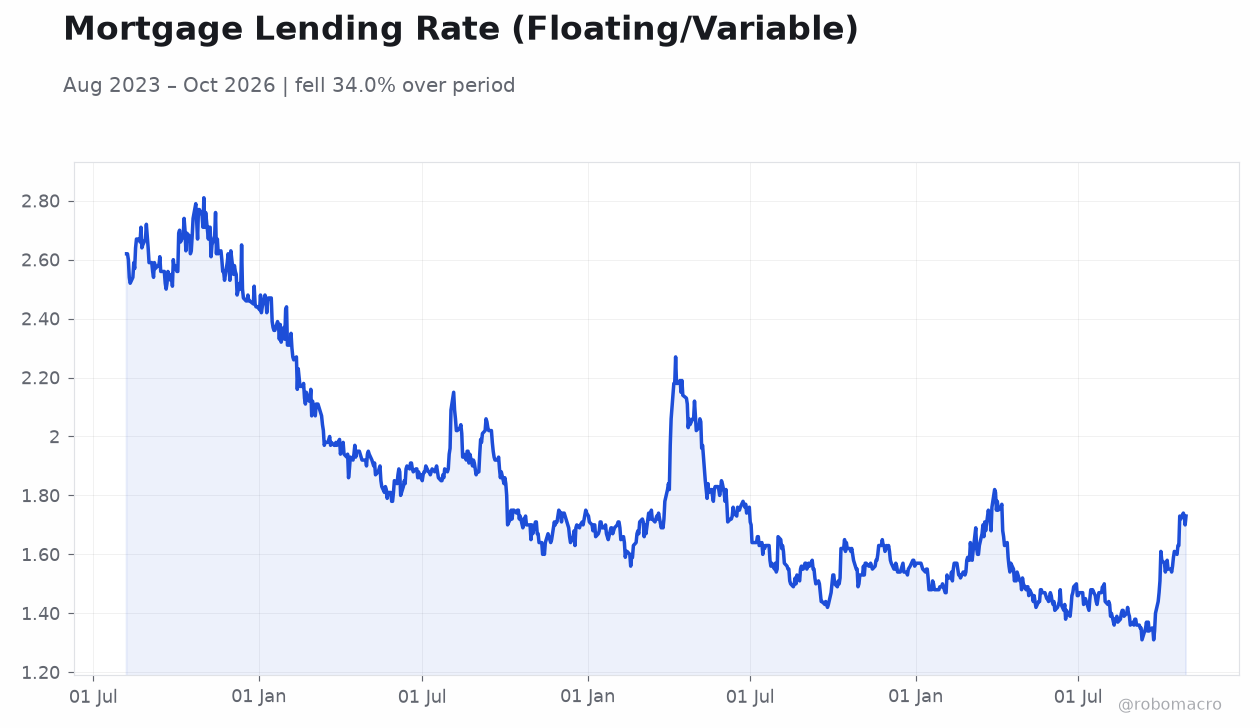
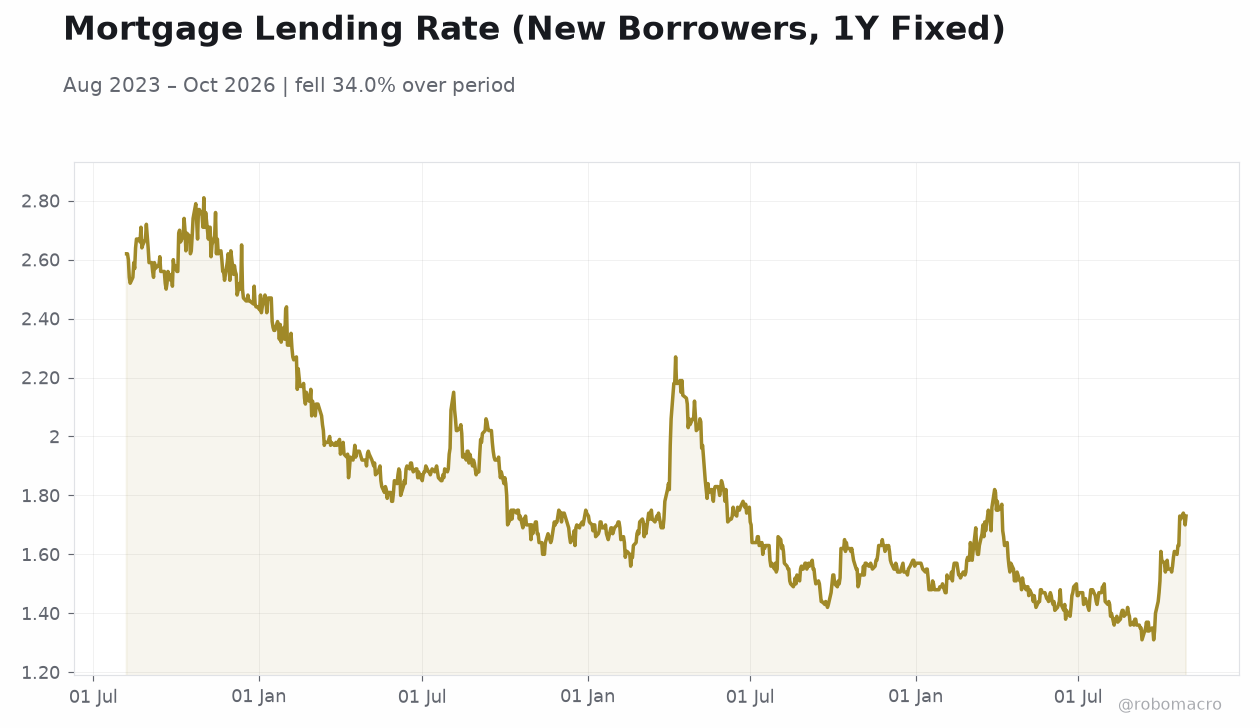 Mortgage Lending Rate (New Borrowers, 1Y Fixed) | Type: macro_line | Mortgage Lending Rate (New Borrowers, 1Y Fixed): 1.73 (2026-10-29) | Range: 1.31–2.81 | Trend(5pt): 2.62,1.78,1.72,1.54,1.73
Today's Economic Events
| Data | Prior | Cons | Time |
|---|---|---|---|
| No events available | |||
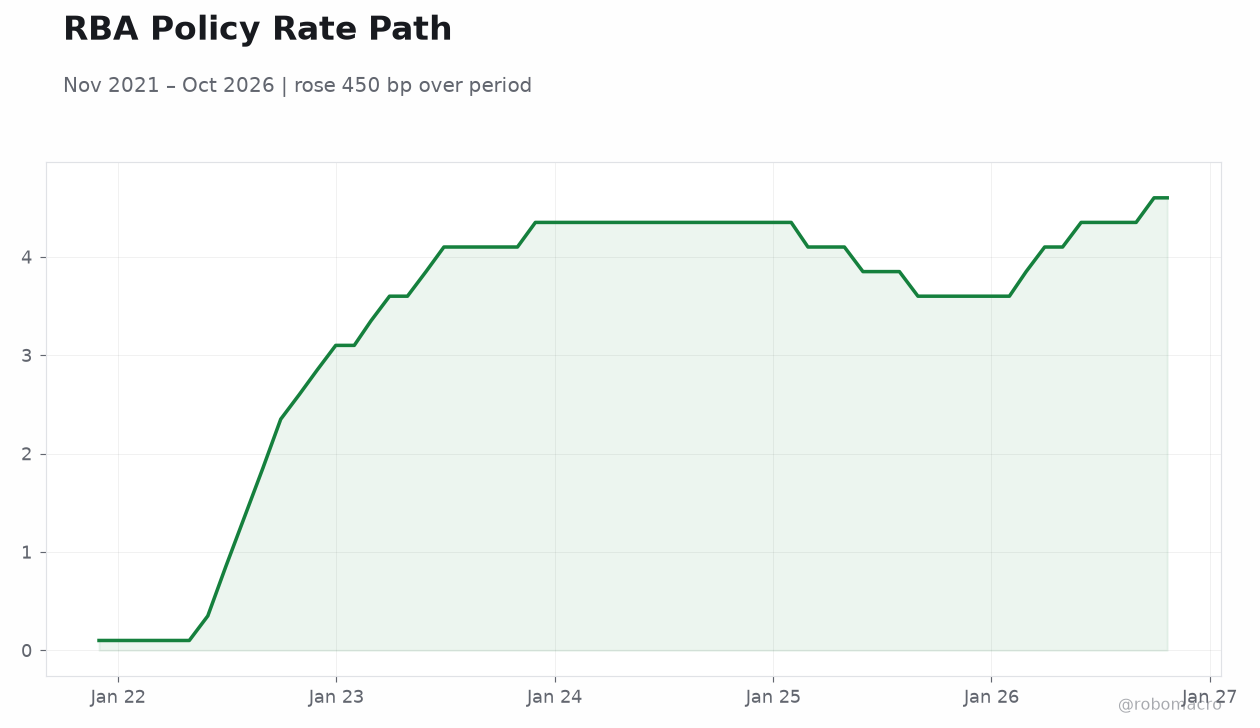
- Australia's Q3 CPI surprised to the upside, with headline inflation at 4.3% y/y and trimmed mean at 3.6% y/y, reviving RBA tightening expectations ahead of the 3 November meeting.
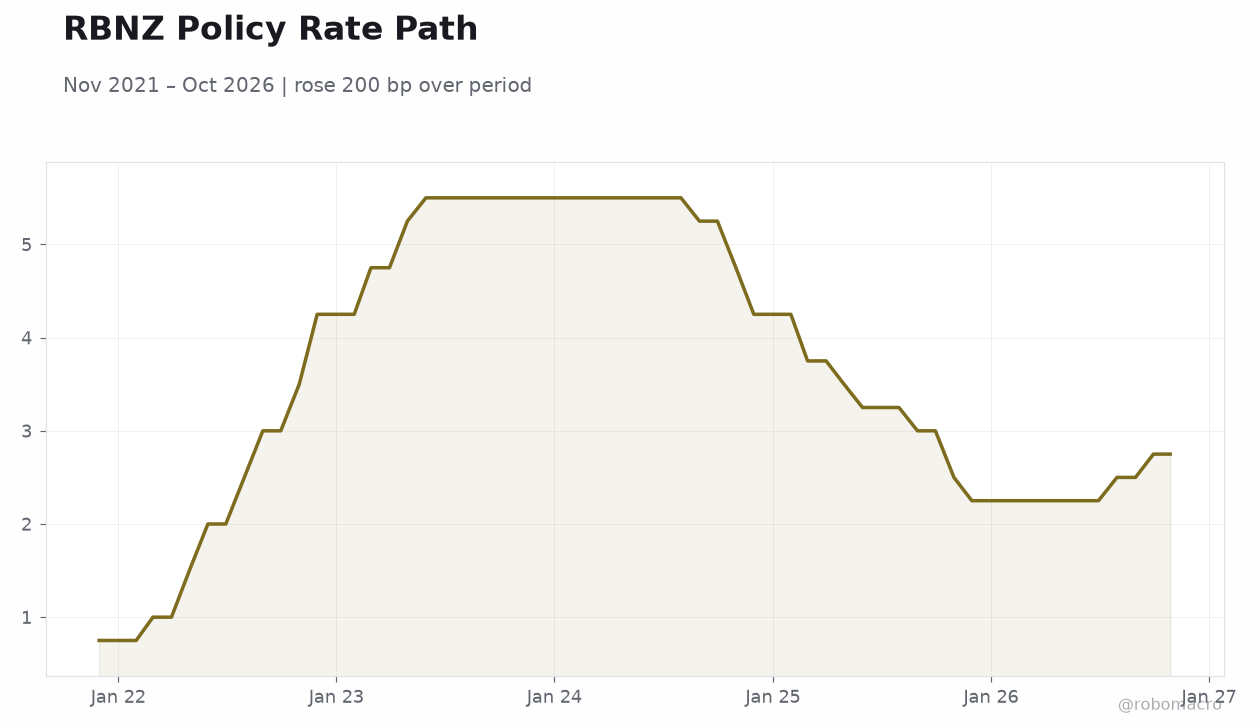
- The RBNZ held the OCR at 2.75% on 28 October, though a hawkish outlook and survey pricing point to a December hike.
- Australian yields pushed higher (2Y +7 bp to 4.95%, 10Y +6 bp to 5.21%) while the AUD firmed modestly; NZX 50 outperformed the ASX 200.
Yesterday's Recap
Australia's Q3 CPI printed above consensus, with the headline month-over-month rate at 0.8% versus a 0.7% expectation and the year-over-year rate at 4.3% against a 4.2% forecast, while the RBA trimmed mean came in at 0.3% m/m and 3.6% y/y, both a touch above consensus. The hotter inflation reading revived RBA tightening bets and lent modest support to the Australian dollar, which edged higher to around 0.70 against the USD. Producer prices added to the firm price picture, with PPI up 1.1% q/q versus a 1.0% consensus.
Across the Tasman, the RBNZ held the OCR at 2.75% on 28 October, in line with the prior level but below the 3.0% consensus, accompanied by a rate statement and press conference. New Zealand's ANZ Business Confidence rose to 52.5 from 51.9 previously, signalling resilient activity sentiment. In markets, the ASX 200 added 0.18% to 8,908.10 while the NZX 50 gained 0.63% to 13,797.00, and Australian 2Y and 10Y government yields rose 7 bp and 6 bp to 4.95% and 5.21% respectively.
The Day Ahead
The calendar is empty for both Australia and New Zealand on 1 November, with no tier-one releases scheduled. Attention instead pivots to the RBA's 3 November policy meeting, which will be the dominant event for Australian markets in the coming days and where the hot CPI print has sharpened the case for a hike. For New Zealand, the focus remains on the RBNZ's hawkish guidance and the December meeting path following the October hold.
With no domestic data to trade, AUD and NZD direction will likely be driven by offshore risk sentiment and commodity moves. Markets will also watch for any RBA commentary or speeches that could refine expectations ahead of the decision.
Other Economic Notes
Australia's inflation overshoot keeps the RBA firmly in restrictive territory, with the cash rate at 4.60% and markets now leaning toward further tightening. New Zealand's business confidence at 52.5 suggests activity is holding up despite the OCR at 2.75%, complicating the disinflation narrative. Housing remains a critical transmission channel in both economies, with higher Australian rates squeezing mortgage holders and pressuring spending, a theme echoed in local coverage urging households to cut back.
↓ p.2