ANZ Macro Daily(Beta Mode)
RBA Tightens Further as NZ Labour Market Cracks
Market Snapshot
| Asset | Level | Change |
|---|---|---|
| ASX 200 | 9,020.80 | -0.49% |
| NZX 50 | 13,998.50 | +0.61% |
| AUD/USD | 0.69 | -0.83% |
| NZD/USD | 0.56 | -0.62% |
| AUD/NZD | 1.23 | -0.43% |
| BHP | 57.62 | -2.34% |
| Gold | 4,074.90 | -0.94% |
| Brent Crude | 98.32 | +0.03% |
| Bitcoin | 75,807.11 | +0.08% |
| Australia 2Y Govt Yield | 4.83% | 0 bp |
| Australia 10Y Govt Yield | 5.08% | -1 bp |
Prior Economic Events
| Data | Prior | Cons | Actual |
|---|---|---|---|
| RBA Interest Rate Decision | 4.60 | 4.85 | 4.85 |
| RBA Monetary Policy Statement | - | - | - |
| RBA Rate Statement | - | - | - |
| RBA Press Conference | - | - | - |
| Employment Change Quarter-over-Quarter | 0.50 | 0.40 | -0.10 |
| Headline Unemployment Rate | 5.60 | 5.50 | 5.70 |
| Ai Group Industry Index | -24.20 | - | -19.10 |
| Trade Balance | 184m | 800m | 2,826m |
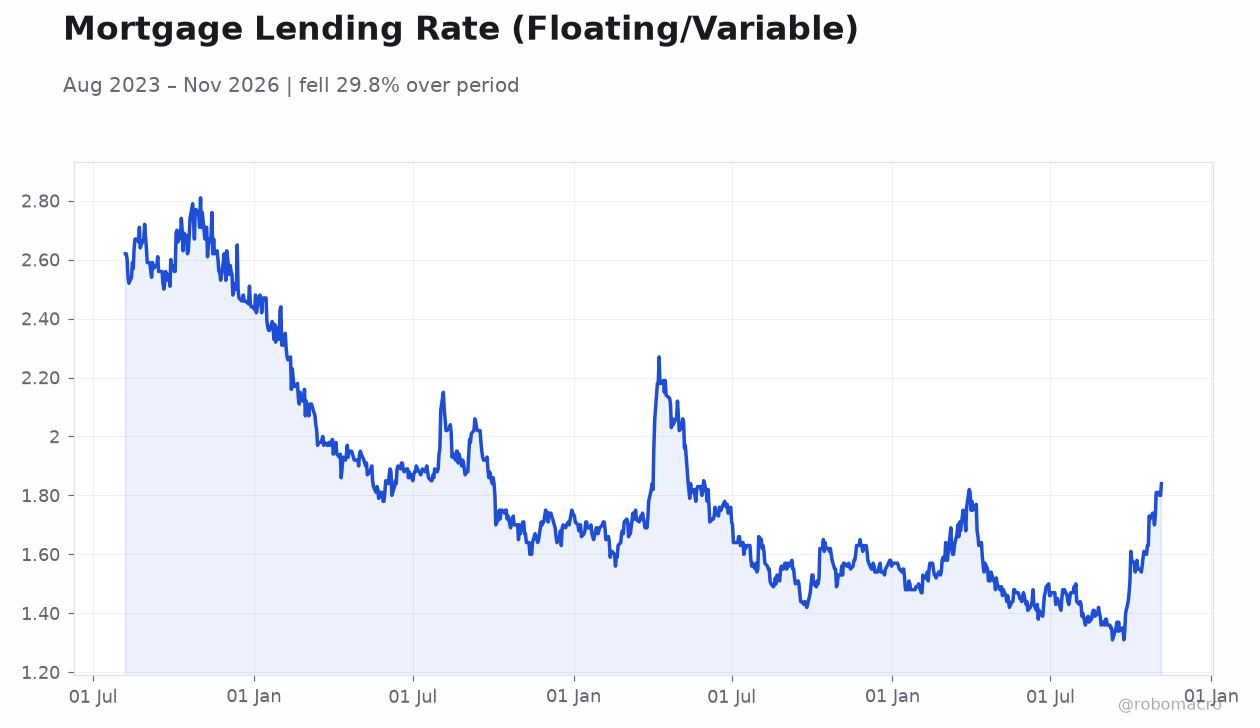
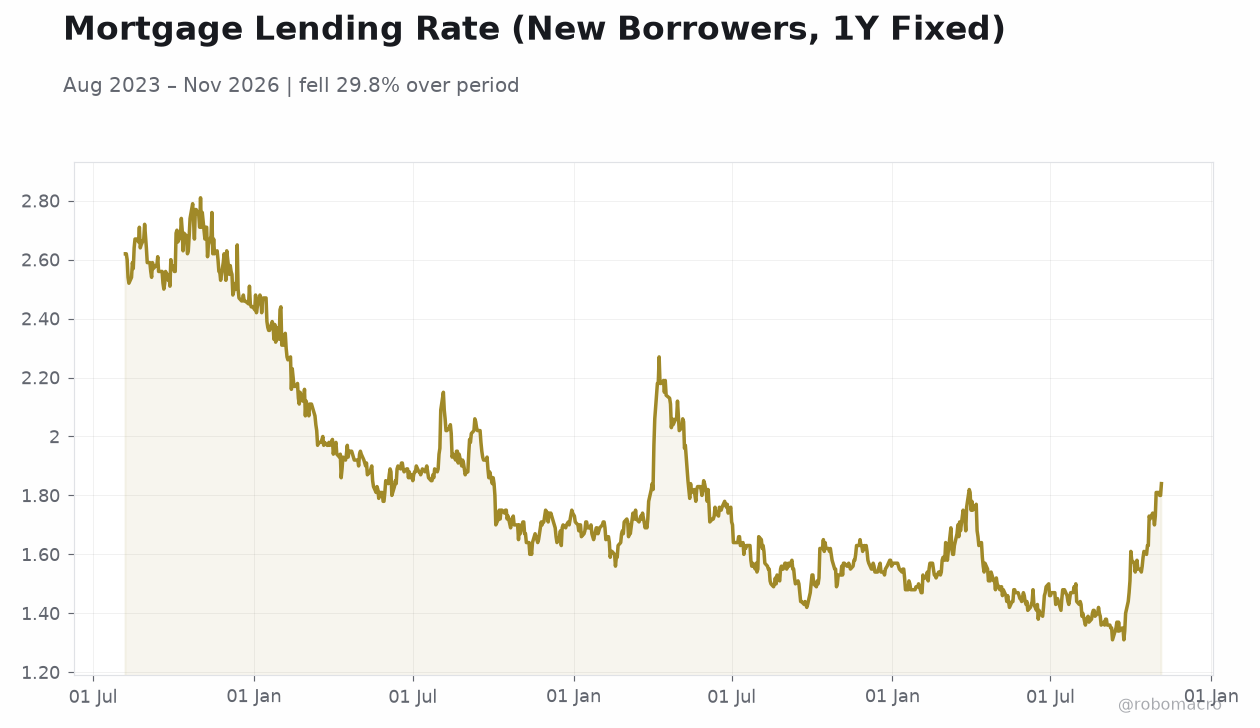 Mortgage Lending Rate (New Borrowers, 1Y Fixed) | Type: macro_line | Mortgage Lending Rate (New Borrowers, 1Y Fixed): 1.84 (2026-11-05) | Range: 1.31–2.81 | Trend(5pt): 2.62,1.81,1.69,1.52,1.84
Today's Economic Events
| Data | Prior | Cons | Time |
|---|---|---|---|
| RBA Hunter Speech | - | - | 17:30 |
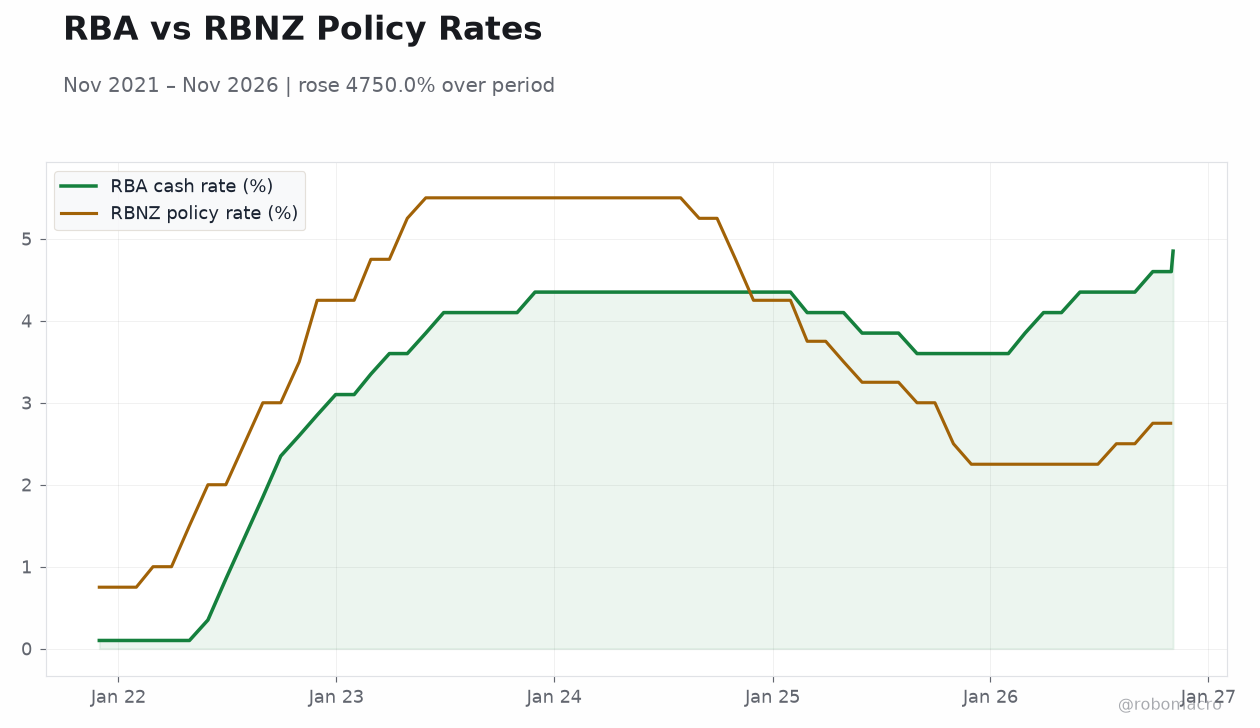
- RBA raised the cash rate to 4.85% at its November 3 decision, with reporting suggesting a finely balanced vote and markets debating a possible December pause
- New Zealand's labour market deteriorated sharply, with employment contracting 0.1% q/q and unemployment rising to 5.7%
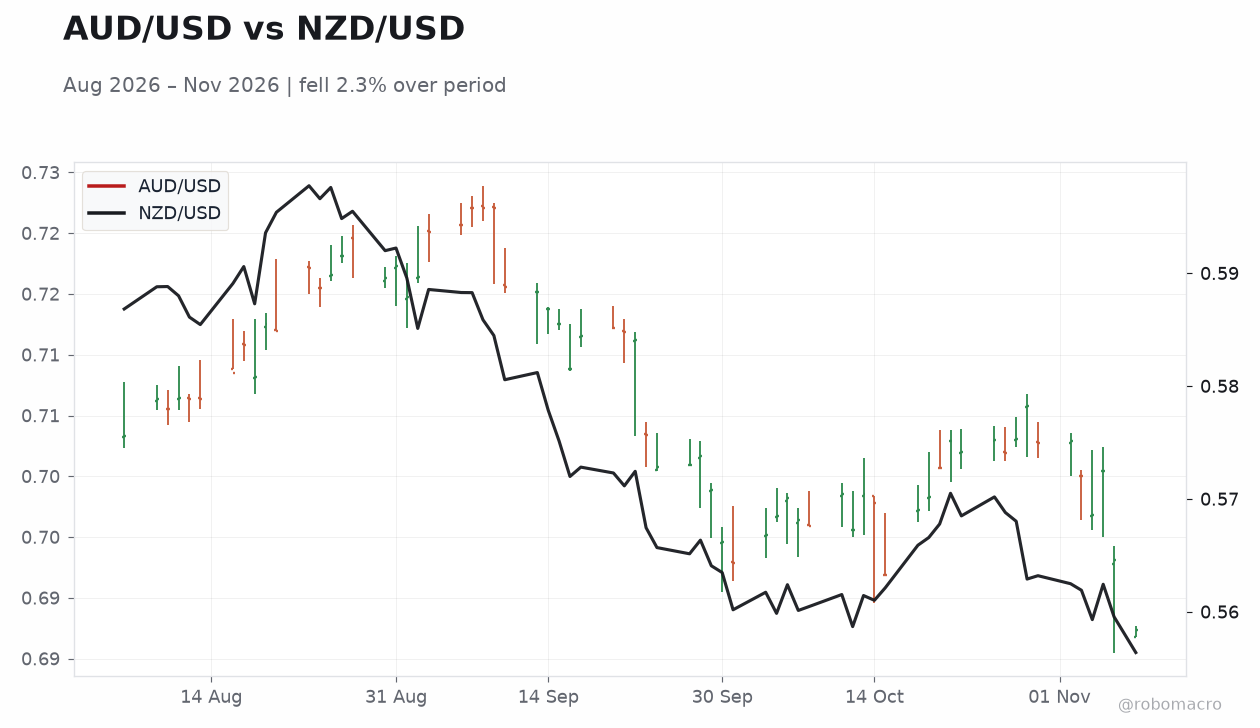
- AUD/USD fell 0.83% to 0.69 and NZD/USD dropped 0.62% to 0.56 as the kiwi remains under pressure amid NZ election uncertainty
Yesterday's Recap
The Reserve Bank of Australia raised the cash rate to 4.85% at its November 3 meeting as the Board continues its fight against inflation running at 3.90% y/y. The accompanying monetary policy statement and press conference reinforced the RBA's hawkish stance, though reporting suggests the decision was finely balanced, raising the prospect of a pause at the December 8 meeting. In New Zealand, the labour market data released November 3 painted a deteriorating picture: employment change contracted 0.1% q/q against consensus of 0.4%, while the headline unemployment rate rose to 5.7% versus expectations of 5.5%.
Australia's Ai Group Industry Index improved to -19.1 from -24.2 previously, though it remains deep in contraction territory. The Australian trade balance printed at A$2.826 billion, comfortably beating consensus of A$800 million and the prior A$184 million, reflecting resilient commodity export flows. Equity markets diverged, with the ASX 200 falling 0.49% to 9,020.80 while the NZX 50 gained 0.61% to 13,998.50.
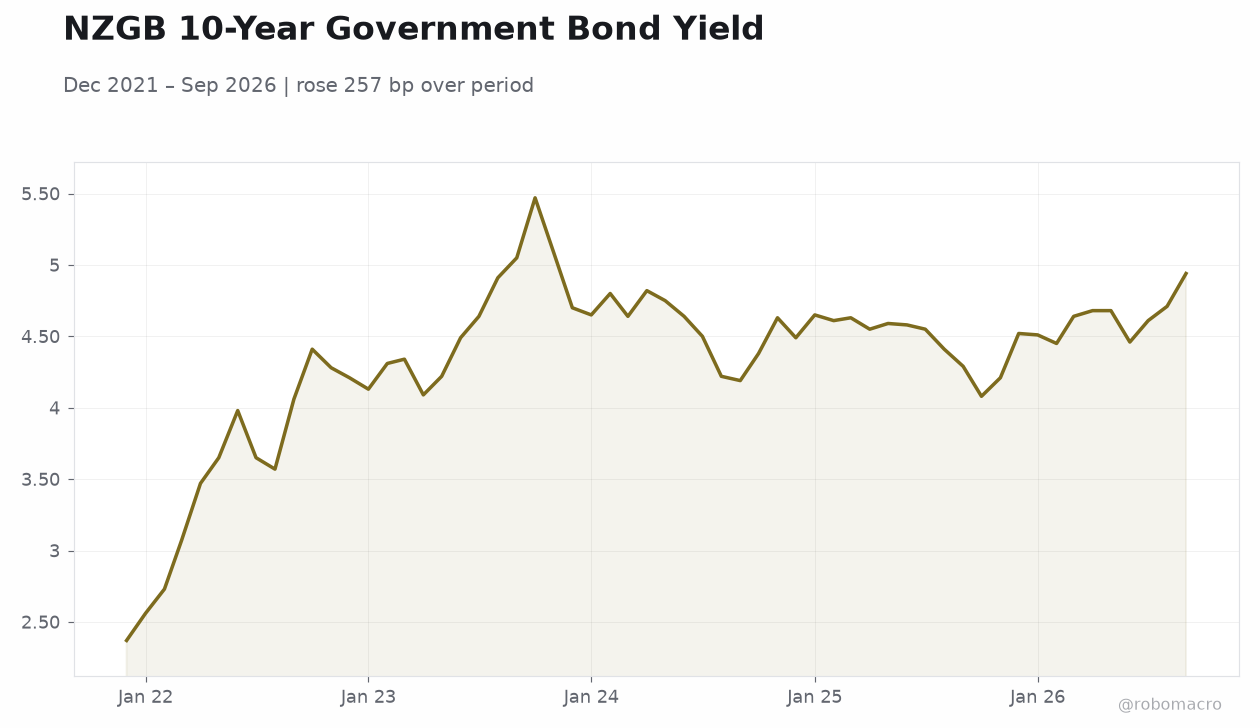
BHP dropped 2.34% to A$57.62, weighing on the Australian index, while the Australian 10-year yield eased 1 bp to 5.08% and the 2-year held at 4.83%.
The Day Ahead
The calendar is light, with the sole scheduled event being RBA Deputy Governor Hunter's speech at 17:30 ET. Markets will parse his remarks for any signal on the December 8 decision, particularly given the closeness of the November hike and the RBA's repeated emphasis on data dependence. With no Australian or New Zealand data releases scheduled, attention shifts to offshore drivers, particularly US dollar dynamics and any China-related developments.
The speech carries elevated importance as the last scheduled RBA communication before the December meeting, and any deviation from the November statement's tone could move AUD and front-end yields.
Other Economic Notes
Australia's housing market is showing pronounced weakness, with the WSJ noting the slump is deepening as the RBA prepares for further tightening — a dynamic that complicates the transmission of monetary policy given household leverage. ↓ p.2