ANZ Macro Daily(Beta Mode)
RBA Tightening Bias, Housing Slide Deepens
Market Snapshot
| Asset | Level | Change |
|---|---|---|
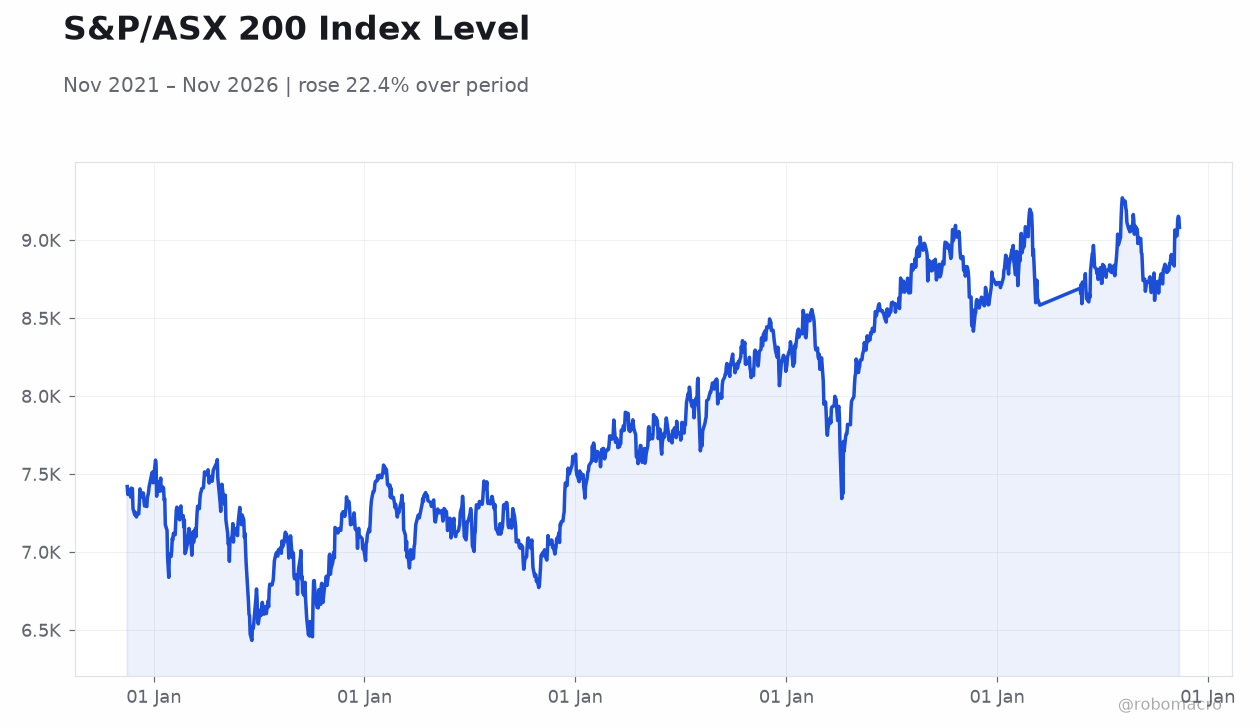
| ASX 200 | 9,082.20 | -0.71% |
| NZX 50 | 14,173.68 | -0.08% |
| AUD/USD | 0.68 | -0.43% |
| NZD/USD | 0.55 | -0.35% |
| AUD/NZD | 1.23 | -0.18% |
| BHP | 58.86 | -1.26% |
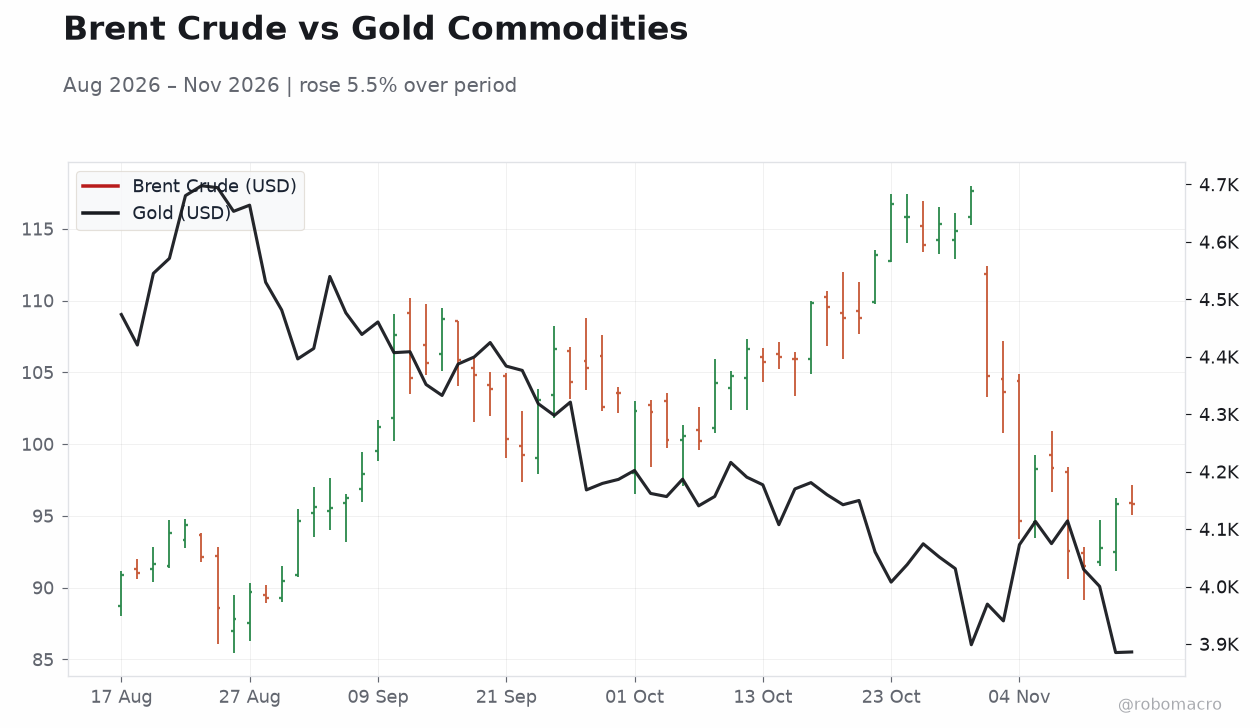
| Gold | 3,886.30 | +0.03% |
| Brent Crude | 95.84 | +0.02% |
| Bitcoin | 64,750.00 | +0.97% |
| Australia 2Y Govt Yield | 4.81% | +7 bp |
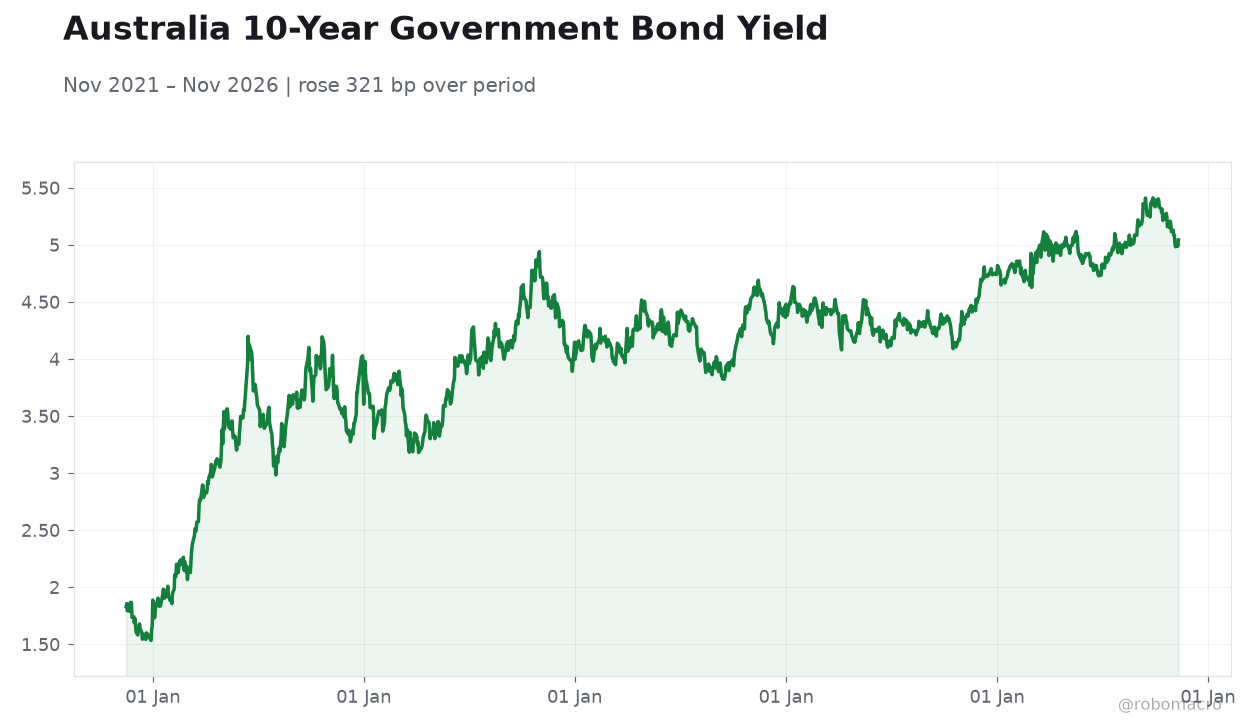
| Australia 10Y Govt Yield | 5.04% | +5 bp |
Prior Economic Events
| Data | Prior | Cons | Actual |
|---|---|---|---|
| Westpac Consumer Confidence Change | -4.70 | - | -2.70 |
| Westpac Consumer Confidence Index | 80.40 | - | 78.20 |
| NAB Business Confidence Index | -14 | - | -15 |
| RBNZ Financial Stability Report | - | - | - |
| RBNZ Press Conference | - | - | - |
| Home Loans Quarter-over-Quarter | -2 | - | -5.30 |
| Investment Lending for Homes | -11.20 | - | -32.30 |
| RBA Baker Speech | - | - | - |
| Business NZ PMI | 56.50 | - | 54.90 |
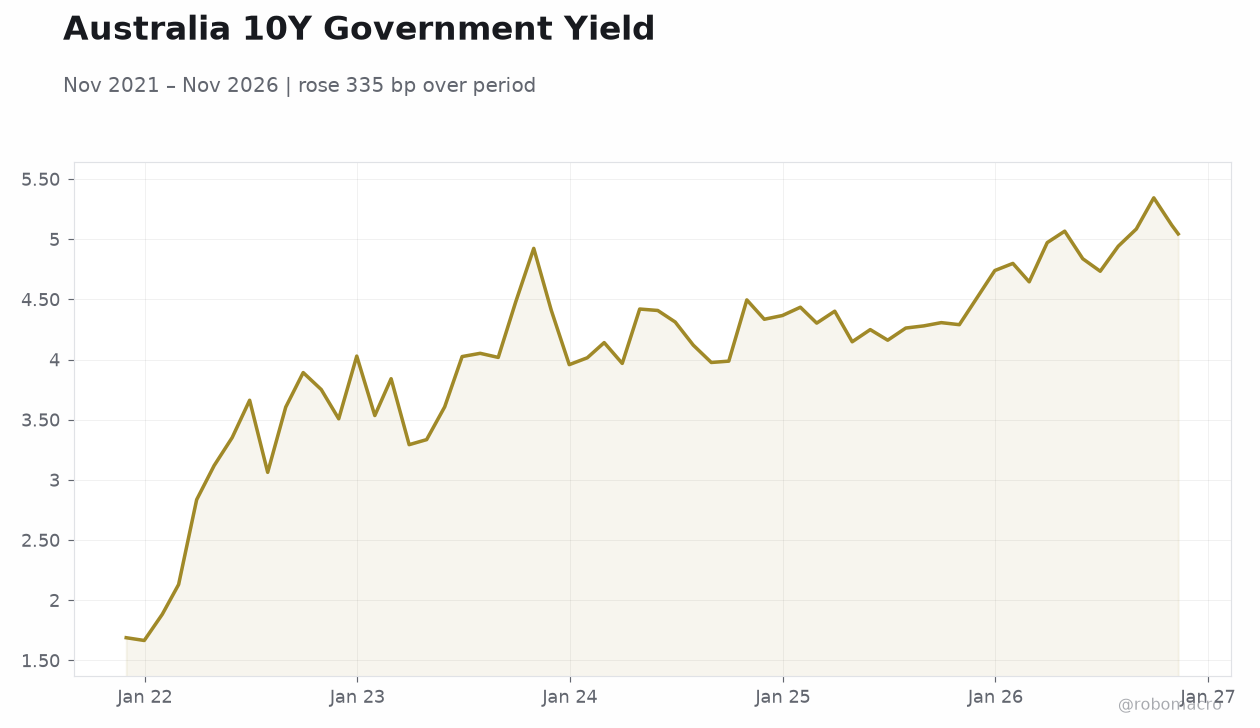 Australia 10Y Government Yield | Type: macro_line | Australia 10Y Yield (%): 5.044 (2026-11-11) | Range: 1.666–5.344 | Trend(5pt): 1.689,3.841,4.408,4.28,5.044
Today's Economic Events
| Data | Prior | Cons | Time |
|---|---|---|---|
| No events available | |||
- Australia's RBA retains a firm tightening bias after the November +25bp hike to 4.85%, with CPI at 3.90% YoY keeping the committee tilted toward restraint.
- Australian housing finance deteriorated sharply: home loans fell 5.30% QoQ and investment lending plunged 32.30%, while Westpac consumer confidence slipped to 78.2.
- NZ business activity softened as the Business NZ PMI eased to 54.9, with the RBNZ holding the OCR at 2.75% following its September hike.
Yesterday's Recap
Australian data released this week painted a downbeat picture. Westpac consumer confidence fell 2.70% in November, with the index at 78.2, and the NAB business confidence index printed at -15.00. Housing finance was notably weak: home loans declined 5.30% QoQ and investment lending for homes collapsed 32.30%, underscoring the drag from elevated rates.
In New Zealand, the Business NZ PMI eased to 54.9 from 56.5 previously, signalling slower but still-expanding activity. The RBNZ also released its Financial Stability Report and held a press conference, with life and health insurers passing stress tests. Markets were risk-off: the ASX 200 fell 0.71% to 9,082.20 and the NZX 50 slipped 0.08% to 14,173.68.
AUD/USD dropped 0.43% to 0.68 and NZD/USD fell 0.35% to 0.55, while Australian yields pushed higher — the 2-year rose 7bp to 4.81% and the 10-year added 5bp to 5.04%.
The Day Ahead
No scheduled ANZ data releases are due today, leaving markets to digest this week's heavy flow. Attention turns to the RBA's communication ahead of its 8 December meeting and any further commentary from officials following Baker's speech earlier this week. In New Zealand, focus remains on the RBNZ's path to its 9 December decision after the October hold at 2.75%.
With no domestic prints, AUD and NZD will trade on offshore risk sentiment and commodity cues. Australian yields, having backed up this week, remain the key domestic signal to watch.
Other Economic Notes
Australia's housing slowdown is becoming a central macro theme, with the 32.30% collapse in investment lending pointing to sharply reduced investor appetite at current rate settings. Bank CEOs have publicly urged government restraint on spending to help tame inflation, while NAB's CEO warned the nation must end its property "obsession" and rethink capital taxation to lift productivity. Consumer confidence at 78.2 remains deeply pessimistic, consistent with weak retail momentum.
↓ p.2