ANZ Macro Daily(Beta Mode)
Australia Unemployment Jumps, RBA Cut Bets Build
Market Snapshot
| Asset | Level | Change |
|---|---|---|
| ASX 200 | 8,730.40 | -1.04% |
| NZX 50 | 14,247.25 | +0.08% |
| AUD/USD | 0.67 | -1.02% |
| NZD/USD | 0.55 | -0.02% |
| AUD/NZD | 1.21 | -1.01% |
| BHP | 52.34 | -3.68% |
| Gold | 3,679.20 | -1.68% |
| Brent Crude | 89.69 | -2.46% |
| Bitcoin | 62,712.18 | -0.44% |
| Australia 2Y Govt Yield | 4.81% | +7 bp |
| Australia 10Y Govt Yield | 5.04% | +5 bp |
Prior Economic Events
| Data | Prior | Cons | Actual |
|---|---|---|---|
| RBNZ Financial Stability Report | - | - | - |
| RBNZ Press Conference | - | - | - |
| RBA Meeting Minutes | - | - | - |
| RBA Gov Bullock Speech | - | - | - |
| Trade Balance | -1,971m | -1,650m | -2,772,000m |
| Employment Change | -39,300 | 25,000 | -43,500 |
| Full-Time Employment Change | 34,400 | - | -2,900 |
| Headline Unemployment Rate | 4.70 | 4.70 | 4.90 |
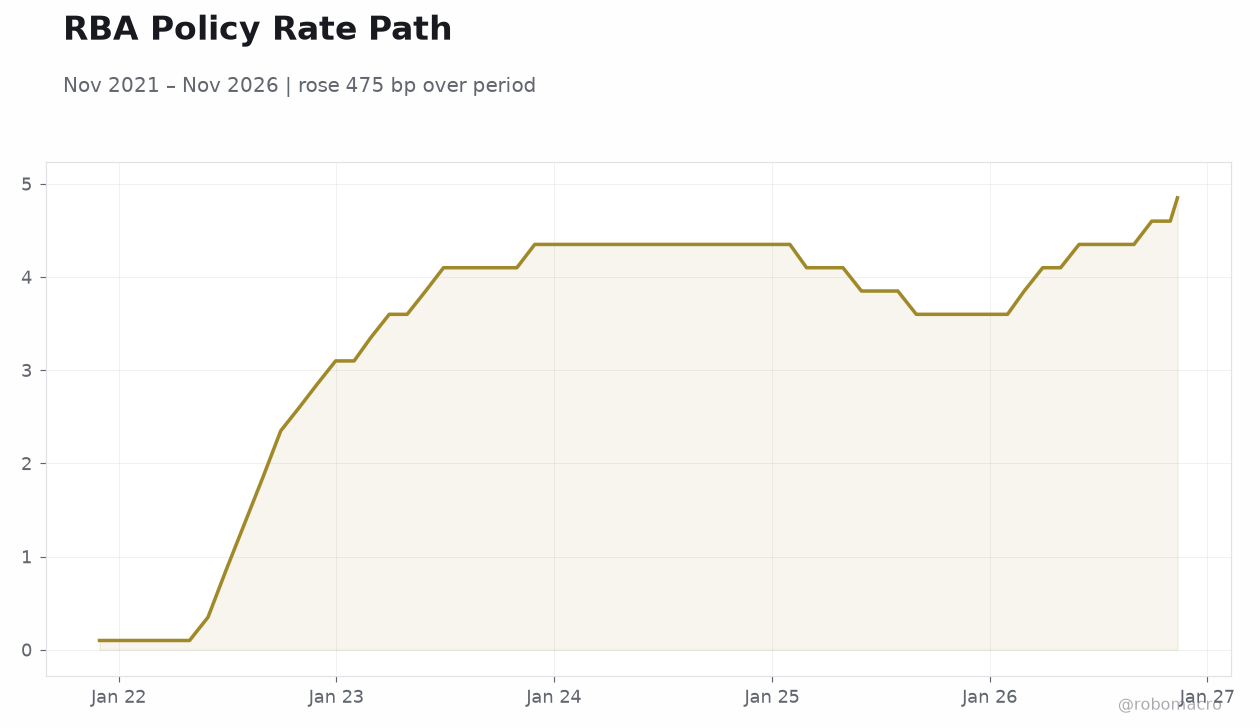 RBA Policy Rate Path | Type: macro_line | RBA Policy Rate (%): 4.85 (2026-11-12) | Range: 0.1–4.85 | Trend(5pt): 0.1,3.35,4.35,3.6,4.85
Today's Economic Events
| Data | Prior | Cons | Time |
|---|---|---|---|
| No events available | |||
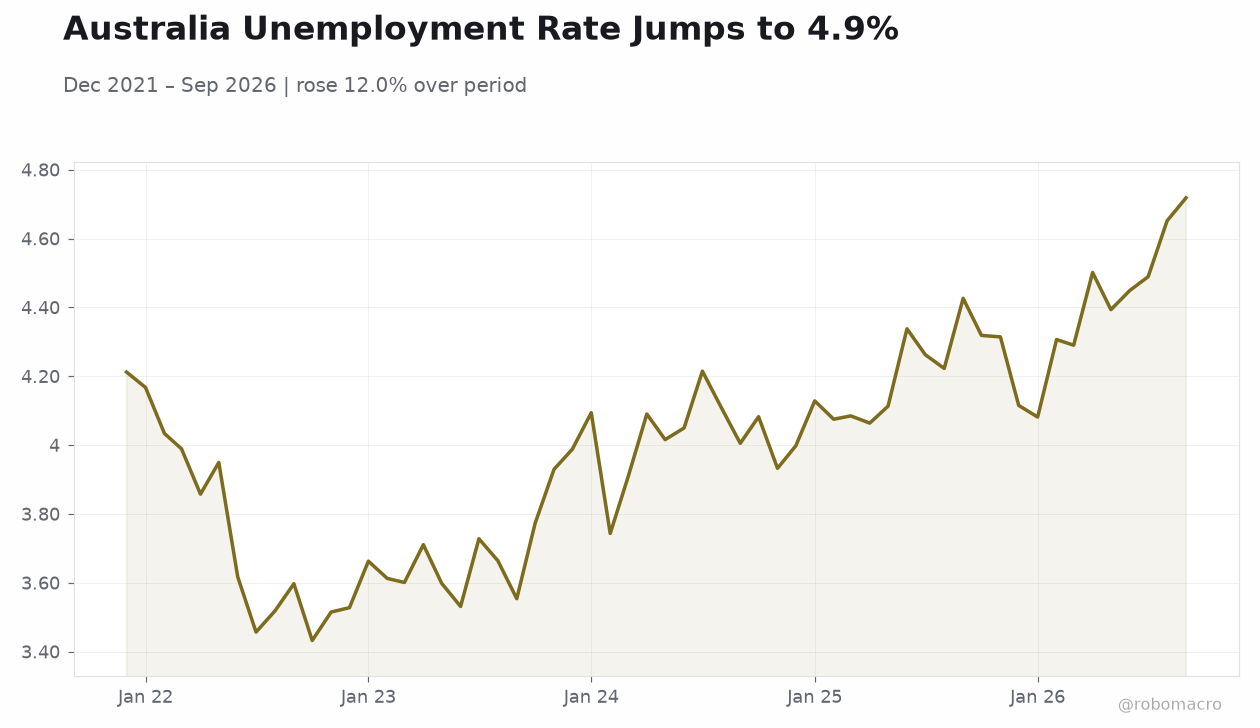
- Australia employment fell 43,500 in October, far worse than the 25,000 consensus gain, pushing unemployment to 4.9% from 4.7%
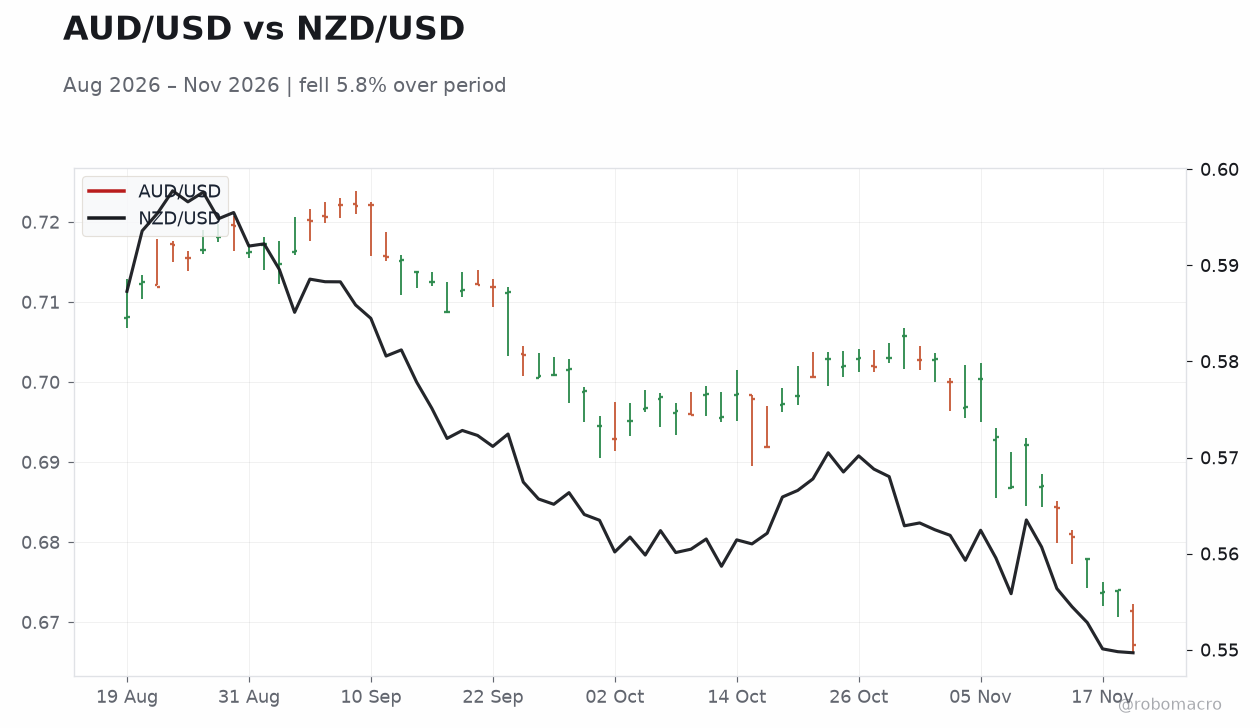
- Traders now price RBA rate cuts, a possible reversal of the November 3 hike to 4.85%, with AUD/USD down 1.02% to 0.67
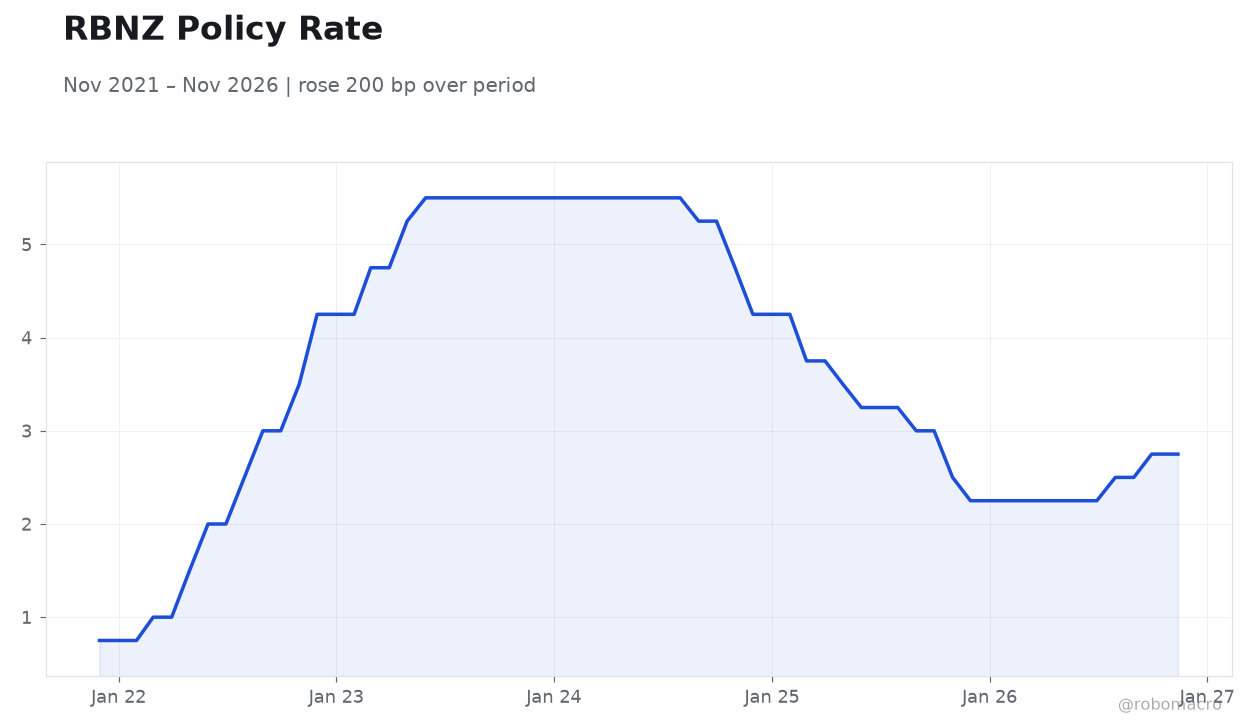
- RBNZ holds OCR at 2.75% and flags elevated inflation with an uneven recovery; NZD near pandemic-era lows
Yesterday's Recap
Australia's October labour force survey printed sharply weaker than expected, with employment falling 43,500 against consensus of a 25,000 gain, following a prior 39,300 decline. Full-time employment slipped 2,900 while the headline unemployment rate jumped to 4.9% from 4.7%, well above the 4.7% consensus. The miss triggered a broad risk-off move in Australian assets: the ASX 200 fell 1.04% to 8,730.40, BHP dropped 3.68% to 52.34, and AUD/USD slid 1.02% to 0.67.
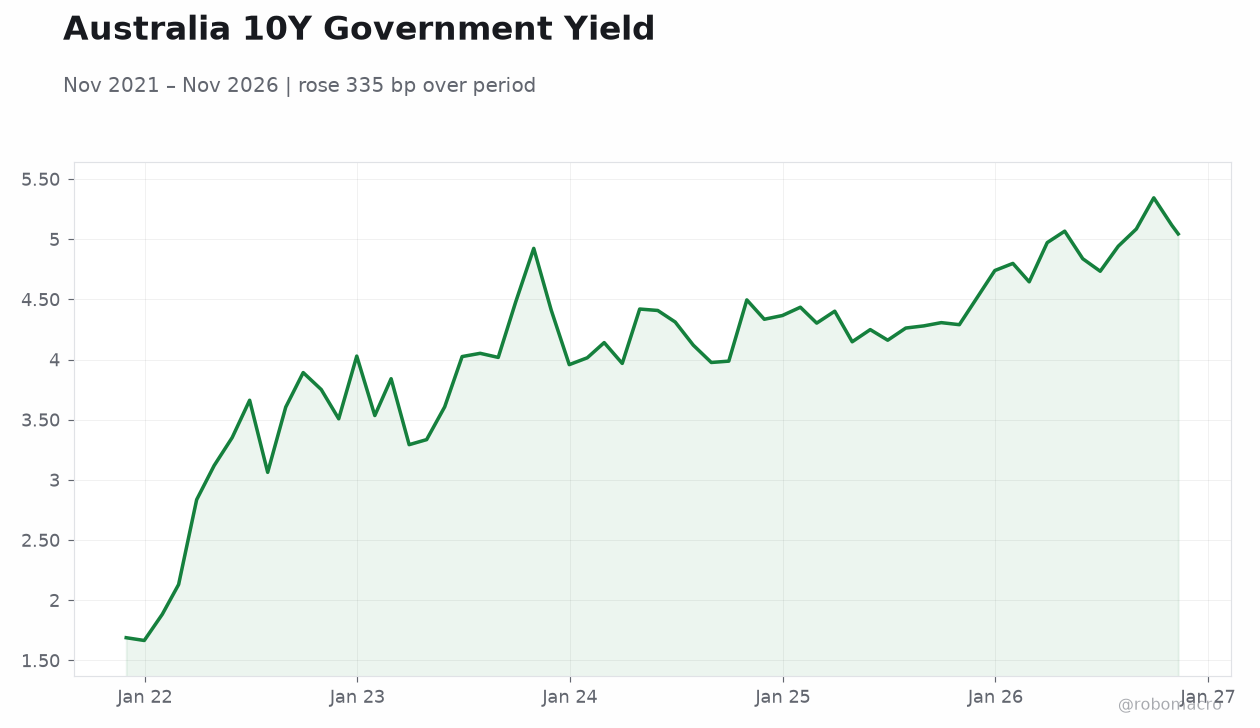
Australian yields rose even as rate-cut bets built, with the 2-year up 7 bp to 4.81% and the 10-year up 5 bp to 5.04%. New Zealand's trade balance printed a deficit of NZ$2.772bn, wider than the NZ$1.65bn consensus and the prior NZ$1.971bn shortfall. NZX 50 edged up 0.08% to 14,247.25 while NZD/USD was roughly flat at 0.55, and AUD/NZD fell 1.01% to 1.21.
The Day Ahead
No tier-one ANZ data releases are scheduled for today, leaving markets to digest yesterday's Australian labour shock and the RBNZ's financial stability messaging. Attention turns to second-order effects: whether Australian rate-cut pricing extends further into the curve and whether the AUD stabilises above 0.67. New Zealand markets will continue to parse the RBNZ's elevated-inflation commentary alongside the wider trade deficit.
With no domestic prints, offshore drivers — particularly commodity prices and China sentiment — will dominate direction for both currencies. The next major domestic catalysts are the RBA's December 8 and RBNZ's December 9 decisions.
Other Economic Notes
The Australian labour market deterioration is now the dominant domestic macro theme, with the unemployment rate at 4.9% and two consecutive months of employment contraction raising recession questions. Australian CPI at 3.90% YoY remains above target even as the labour market softens, creating a difficult policy backdrop. New Zealand's wider trade deficit underscores weak export momentum, with the RBNZ noting higher fuel costs feeding into broader inflation.
Housing and retail are showing strain in Australia, with insolvency data and anecdotal evidence pointing to a consumer slowdown. China's growth outlook remains the critical external variable for both commodity-linked economies.