ANZ Macro Daily(Beta Mode)
Aussie Jobs Shock Tests RBA; Kiwi at GFC Lows
Market Snapshot
| Asset | Level | Change |
|---|---|---|
| ASX 200 | 8,592.60 | -1.58% |
| NZX 50 | 14,107.41 | -0.57% |
| AUD/USD | 0.66 | -0.56% |
| NZD/USD | 0.55 | -0.20% |
| AUD/NZD | 1.21 | -0.40% |
| BHP | 51.40 | -1.80% |
| Gold | 3,515.40 | -4.62% |
| Brent Crude | 89.95 | -2.21% |
| Bitcoin | 60,663.34 | +0.95% |
| Australia 2Y Govt Yield | 4.81% | -5 bp |
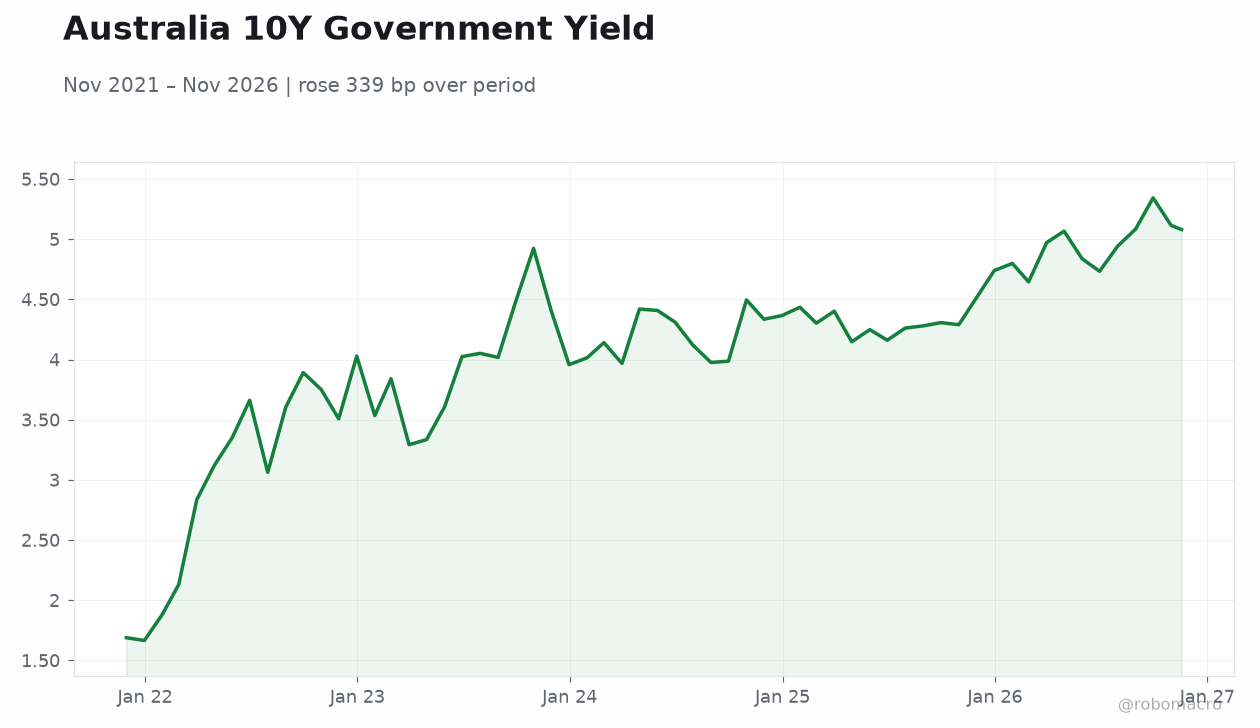
| Australia 10Y Govt Yield | 5.08% | -5 bp |
Prior Economic Events
| Data | Prior | Cons | Actual |
|---|---|---|---|
| RBNZ Financial Stability Report | - | - | - |
| RBNZ Press Conference | - | - | - |
| RBA Meeting Minutes | - | - | - |
| RBA Gov Bullock Speech | - | - | - |
| Trade Balance | -1,971m | -1,650m | -2,772,000m |
| Employment Change | -39,300 | 25,000 | -43,500 |
| Full-Time Employment Change | 34,400 | - | -2,900 |
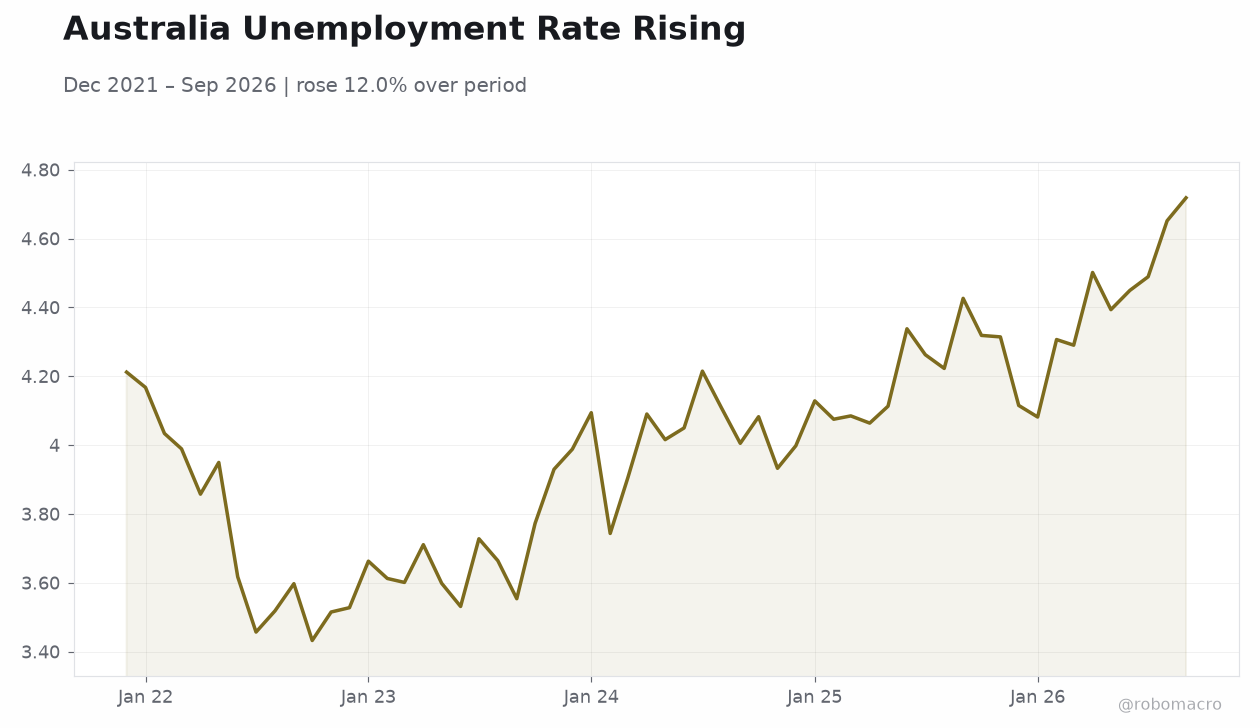
| Headline Unemployment Rate | 4.70 | 4.70 | 4.90 |
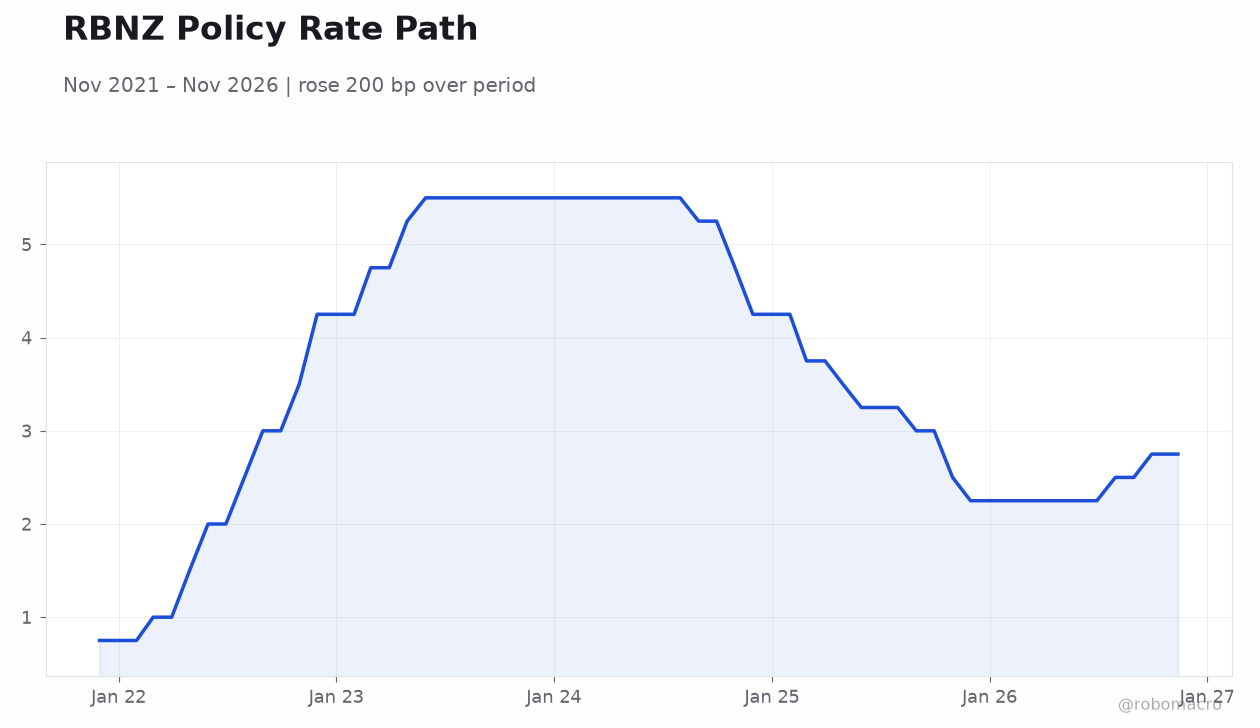
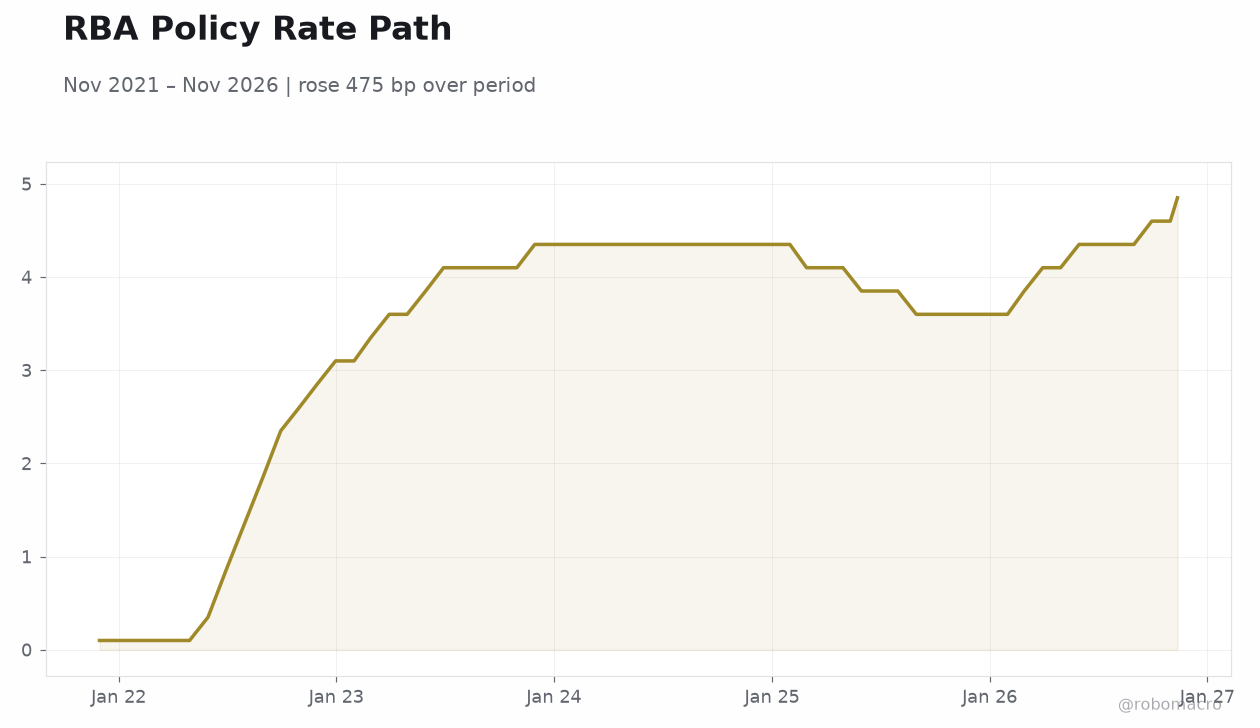 RBA Policy Rate Path | Type: macro_line | RBA Cash Rate (%): 4.85 (2026-11-12) | Range: 0.1–4.85 | Trend(5pt): 0.1,3.35,4.35,3.6,4.85
Today's Economic Events
| Data | Prior | Cons | Time |
|---|---|---|---|
| S&P Global Manufacturing PMI Flash | 49.60 | - | 17:00 |
| S&P Global Services PMI Flash | 48.50 | - | 17:00 |
- Australia's unemployment rate jumped to 4.90% in November, well above the 4.70% consensus, with employment falling 43,500 — a sharp deterioration that questions the RBA's November hike to 4.85%.
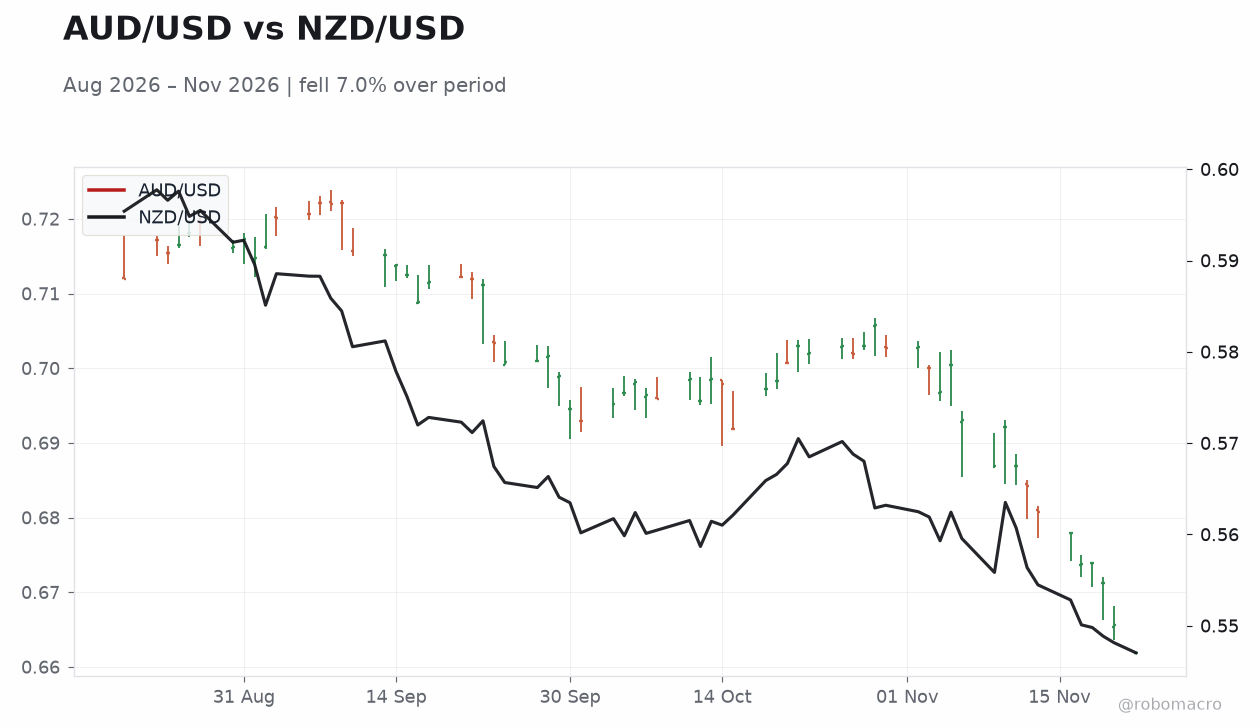
- NZD/USD slid to its weakest level since 2009 as global risk sentiment soured on AI-related doubts, while AUD/USD fell 0.56% to 0.66.
- Australian equities had their worst week since early 2020, with the ASX 200 down 1.58% and A$169bn wiped from the market; Australian 2Y and 10Y yields both eased 5bp.
Yesterday's Recap
Australia's November labour force survey printed decisively weak: employment fell 43,500 against consensus of +25,000, full-time employment declined 2,900, and the headline unemployment rate rose to 4.90% from 4.70%, the highest level since 2021. The result landed just two weeks after the RBA's 3 November decision to hike the cash rate 25bp to 4.85%, sharpening the debate over whether policy has overtightened. New Zealand's trade balance printed a deficit of NZ$2.772bn, wider than the NZ$1.65bn consensus and the prior NZ$1.971bn shortfall, underscoring weak external demand.
Markets were risk-off across the board: the ASX 200 fell 1.58% and the NZX 50 slipped 0.57%, with BHP down 1.80% and gold tumbling 4.62% to US$3,515/oz. Australian 2Y and 10Y government yields each eased 5bp, to 4.81% and 5.08% respectively, as traders pared back expectations of further RBA tightening. AUD/USD fell 0.56% to 0.66 and NZD/USD dropped 0.20% to 0.55, with AUD/NZD at 1.21.
The Day Ahead
The flash S&P Global PMIs for Australia are due today, with manufacturing previously at 49.6 and services at 48.5 — both in contraction territory. A further sub-50 print would reinforce the narrative that the RBA's tightening cycle is biting into private-sector activity. No New Zealand data is scheduled, leaving NZ markets to trade on offshore risk sentiment and the currency's slide.
With tomorrow's calendar empty, today's PMI release is the sole domestic catalyst before attention turns to the RBA's 8 December and RBNZ's 9 December decisions. Liquidity may thin ahead of the weekend, amplifying moves in AUD and NZD crosses.
Other Economic Notes
The Australian labour market deterioration is the dominant domestic theme, with the unemployment rate now at its highest since 2021 and full-time positions contracting. Commentary from RBA Governor Bullock acknowledging the economy "feels like a recession" has fuelled questions over whether the November hike was premature. New Zealand's widening trade deficit reflects soft dairy and tourism receipts alongside weak Chinese demand.
↓ p.2