ANZ Macro Daily(Beta Mode)
RBA CPI Test Looms as Cut Bets Build
Market Snapshot
| Asset | Level | Change |
|---|---|---|
| ASX 200 | 8,726.40 | +1.82% |
| NZX 50 | 13,970.38 | -0.29% |
| AUD/USD | 0.66 | +0.04% |
| NZD/USD | 0.55 | +0.17% |
| AUD/NZD | 1.21 | -0.13% |
| BHP | 53.23 | +1.35% |
| Gold | 3,554.80 | -2.65% |
| Brent Crude | 88.47 | -1.01% |
| Bitcoin | 59,830.03 | -2.26% |
| Australia 2Y Govt Yield | 4.81% | -5 bp |
| Australia 10Y Govt Yield | 5.08% | -5 bp |
Prior Economic Events
| Data | Prior | Cons | Actual |
|---|---|---|---|
| No events available | |||
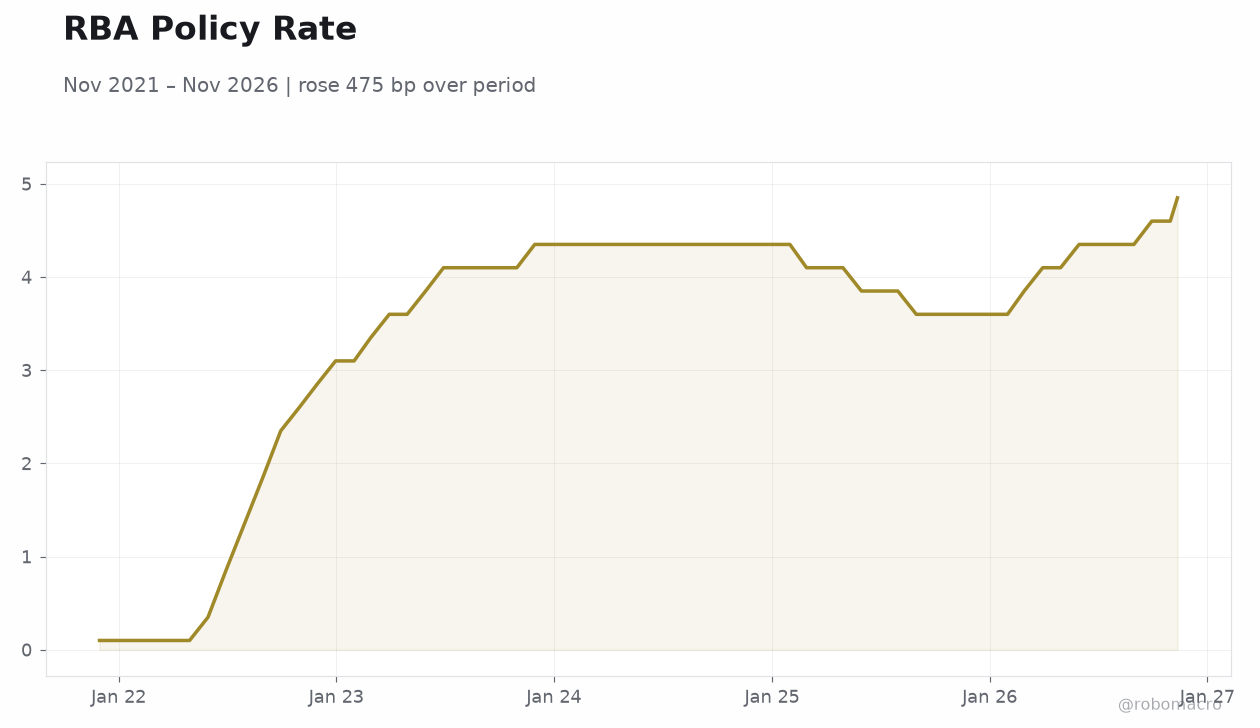 RBA Policy Rate | Type: macro_line | RBA policy rate (%): 4.85 (2026-11-12) | Range: 0.1–4.85 | Trend(5pt): 0.1,3.35,4.35,3.6,4.85
Today's Economic Events
| Data | Prior | Cons | Time |
|---|---|---|---|
| RBA Jacobs Speech | - | - | 18:50 |
| Construction Work Done Quarter-over-Quarter | -2.10 | 0.80 | 19:30 |
| Inflation Rate Month-over-Month | 0.80 | - | 19:30 |
| Inflation Rate Year-over-Year | 4.30 | 4.80 | 19:30 |
| RBA Trimmed Mean CPI Month-over-Month | 0.30 | - | 19:30 |
| RBA Trimmed Mean CPI Year-over-Year | 3.60 | - | 19:30 |
- Australia's Q3 CPI is the day's dominant event, with headline expected to accelerate to 4.8% y/y from 4.3%, keeping the RBA's November hike in play
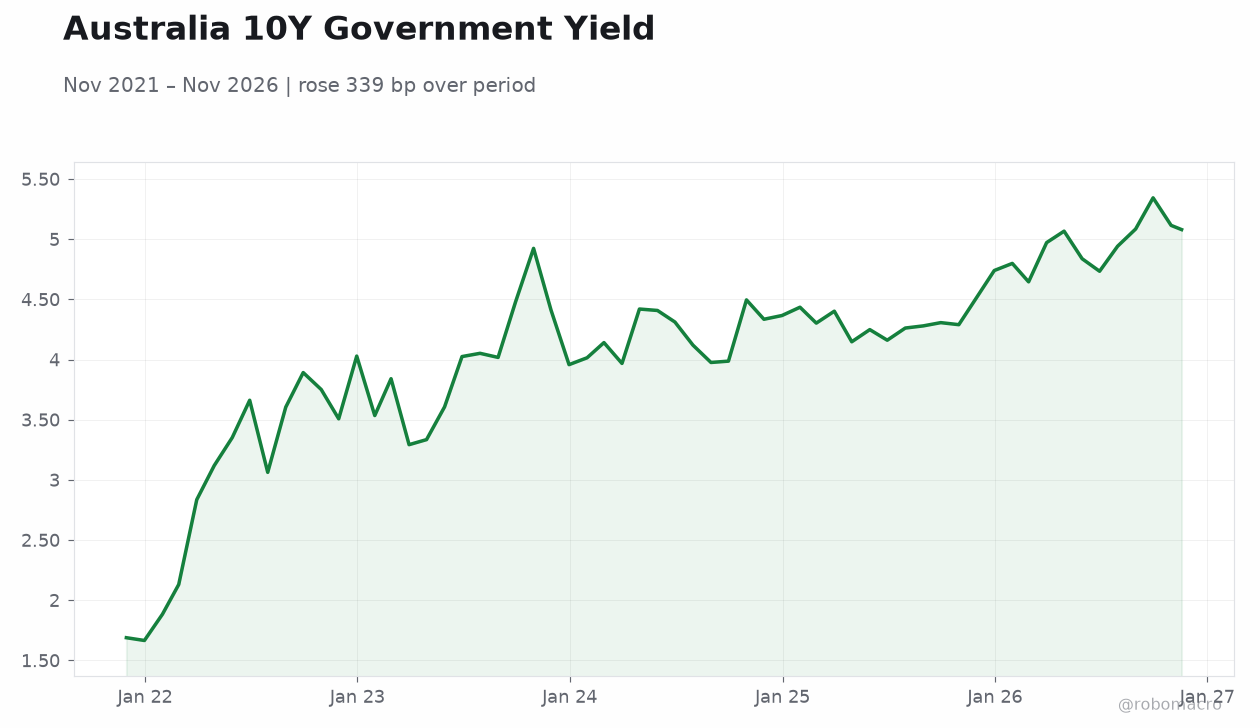
- Australian bonds have rallied hard on rate-cut bets, with 2Y and 10Y yields each easing 5 bp as markets price a possible RBA reversal by mid-2027
- NZ retail sales strength has tempered RBNZ easing expectations, while NZD outperforms AUD; ASX 200 surges 1.82% on miners
Yesterday's Recap
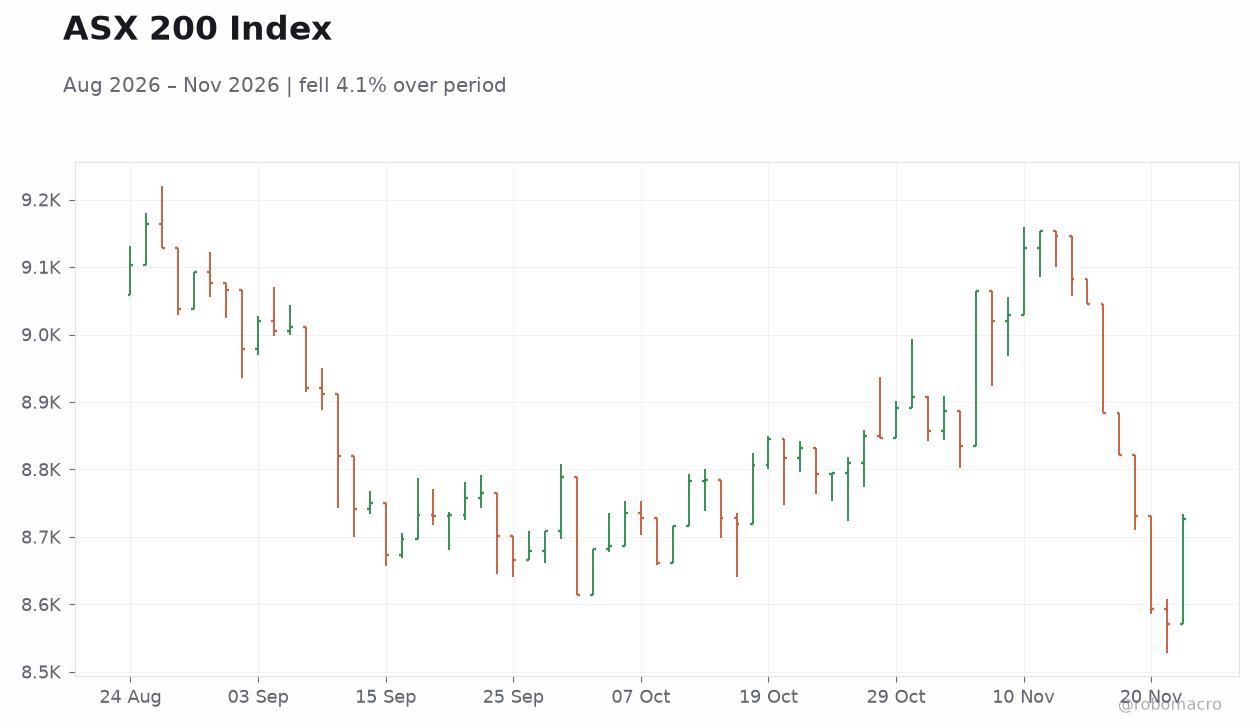
No ANZ macro releases were scheduled for Monday, leaving markets to position ahead of today's Australian CPI print. The ASX 200 rallied 1.82% to 8,726.40, with BHP up 1.35% to A$53.23 as mining and energy names led broad gains. Australian rates markets continued their rally, with the 2-year yield easing 5 bp to 4.81% and the 10-year down 5 bp to 5.08% (as of the 2026-11-18 snapshot), extending the longest bond rally since June on mounting RBA cut speculation.
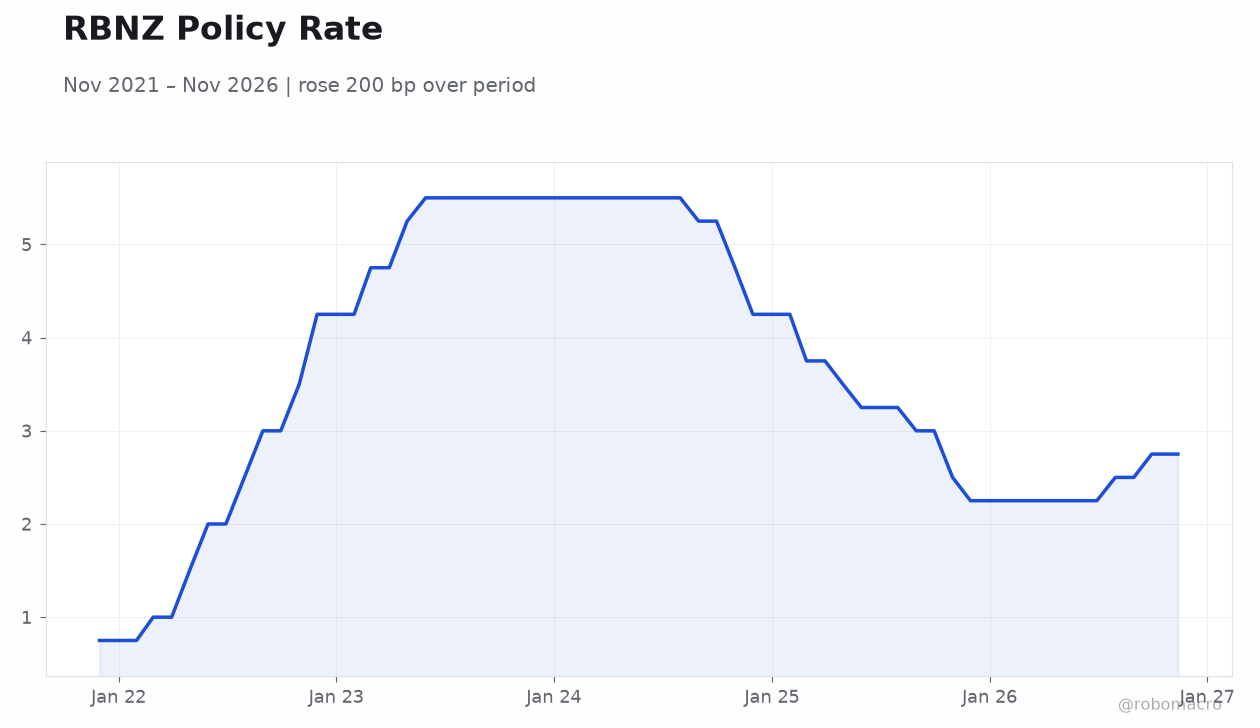
The AUD/USD firmed marginally to 0.66 (+0.04%), though press commentary continues to frame the currency as pressured by fading hike expectations. Across the Tasman, the NZX 50 slipped 0.29% to 13,970.38 even as NZD/USD gained 0.17% to 0.55, with retail sales strength tempering rate-cut bets. AUD/NZD eased 0.13% to 1.21, reflecting the relative NZD outperformance.
Offshore, gold fell 2.65% to US$3,554.80 and Brent crude dropped 1.01% to US$88.47, while Bitcoin slid 2.26%.
The Day Ahead
Australia's Q3 CPI release at 19:30 ET is the critical event, with headline y/y consensus at 4.8% versus the prior 4.3% and m/m prior at 0.8%. The RBA trimmed mean readings — prior 0.3% m/m and 3.6% y/y — will be scrutinised as the key gauge of underlying inflation pressure following the RBA's November hike to 4.85%. Also due at 19:30 ET is Q3 construction work done, with consensus at +0.8% q/q following the prior -2.1% contraction.
RBA Deputy Governor Jacobs speaks at 18:50 ET, ahead of the CPI print, and markets will parse her remarks for signals on the December 8 decision. Tomorrow brings the RBA Bulletin at 19:30 ET, which may offer further detail on the inflation and labour market outlook.
Other Economic Notes
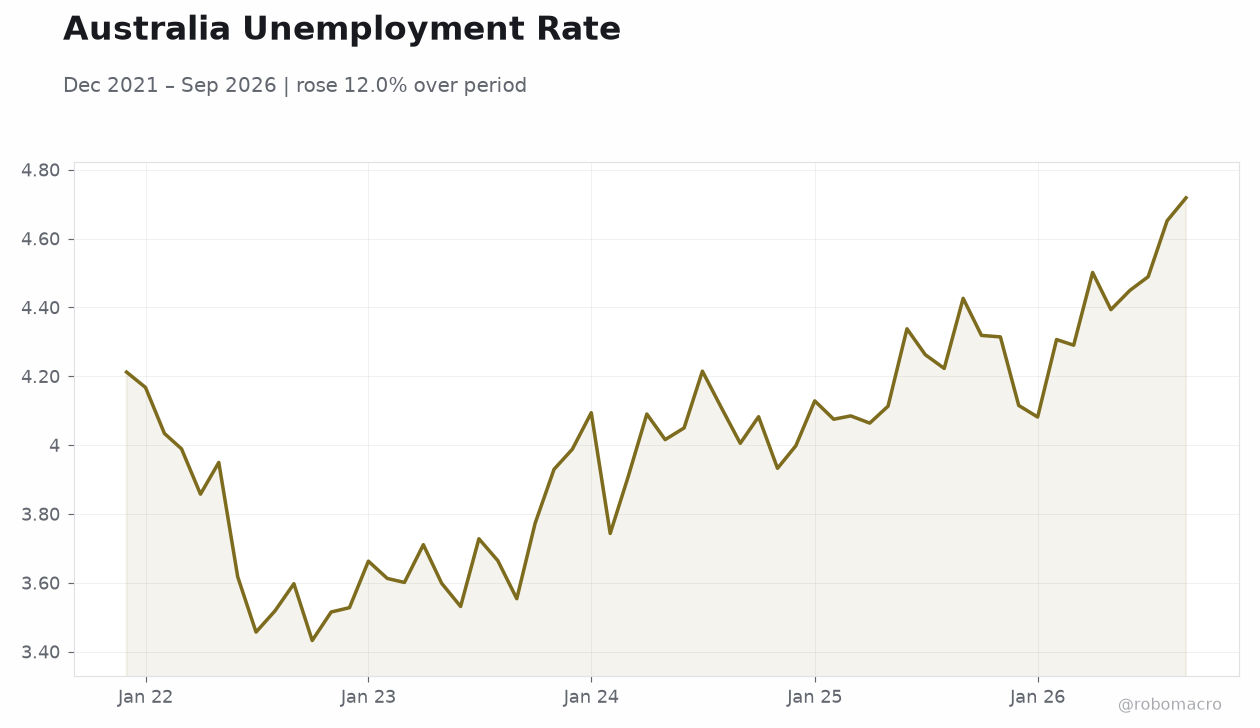
Australia's labour market has softened markedly, with the unemployment rate reported at a five-year high and economists flagging recession risk — a theme likely to feature in RBA deliberations. NAB forecasts rates on hold as the economy cools, while other bank research tips earlier cuts, underscoring the split in market views. Treasurer commentary flagging budget cuts reflects the fiscal backdrop as inflation risks linger.
↓ p.2