ASEAN Macro Daily(Beta Mode)
Rupiah Slides Amid Philippine CPI Focus
Market Snapshot
| Asset | Level | Change |
|---|---|---|
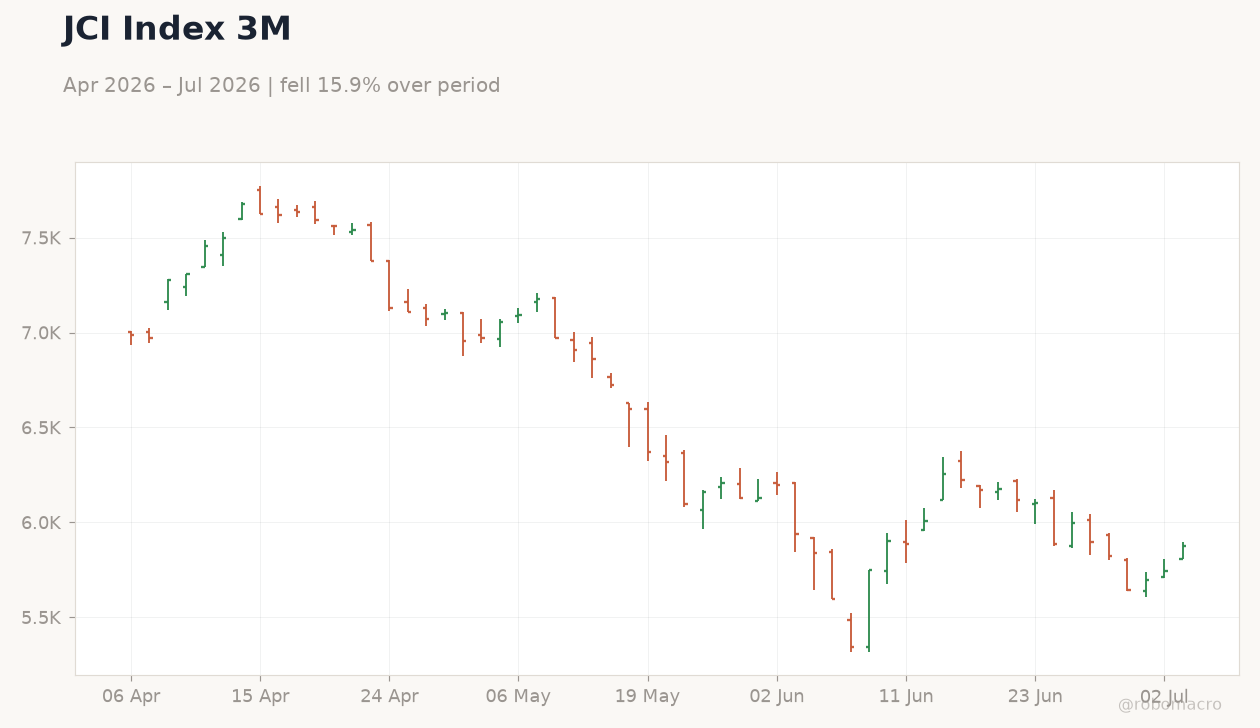
| JCI | 5,875.78 | +2.28% |
| SET | 1,611.28 | +1.11% |
| KLCI | 1,679.05 | +1.04% |
| PSEi | 6,188.03 | +1.02% |
| STI | 5,244.29 | +0.52% |
| USD/IDR | 17,994.00 | +1.16% |
| USD/THB | 33.25 | +0.18% |
| USD/MYR | 4.08 | +0.10% |
| USD/PHP | 61.46 | +0.76% |
| USD/SGD | 1.29 | -0.05% |
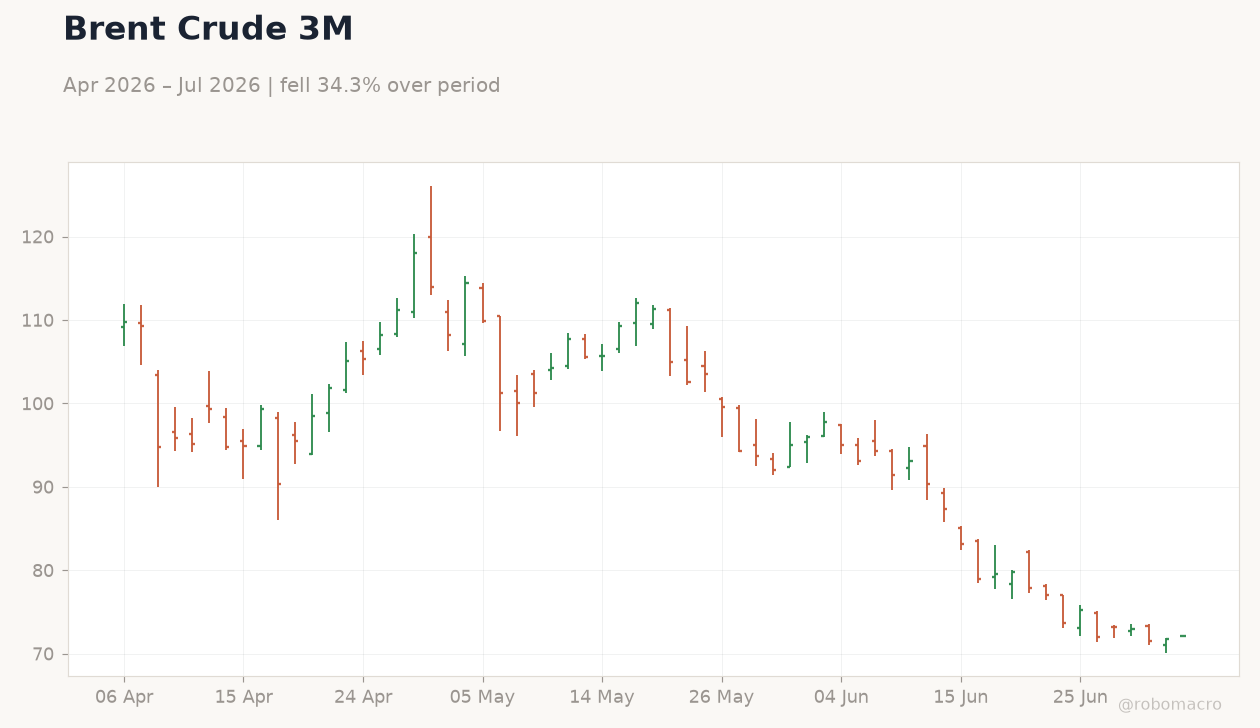
| Brent Crude | 72.13 | +0.46% |
| Gold | 4,178.30 | +1.60% |
| Bitcoin | 64,157.99 | +0.96% |
| Indonesia 10Y Govt Yield | - | - |
| Thailand 10Y Govt Yield | - | - |
Prior Economic Events
| Data | Prior | Cons | Actual |
|---|---|---|---|
| No events available | |||
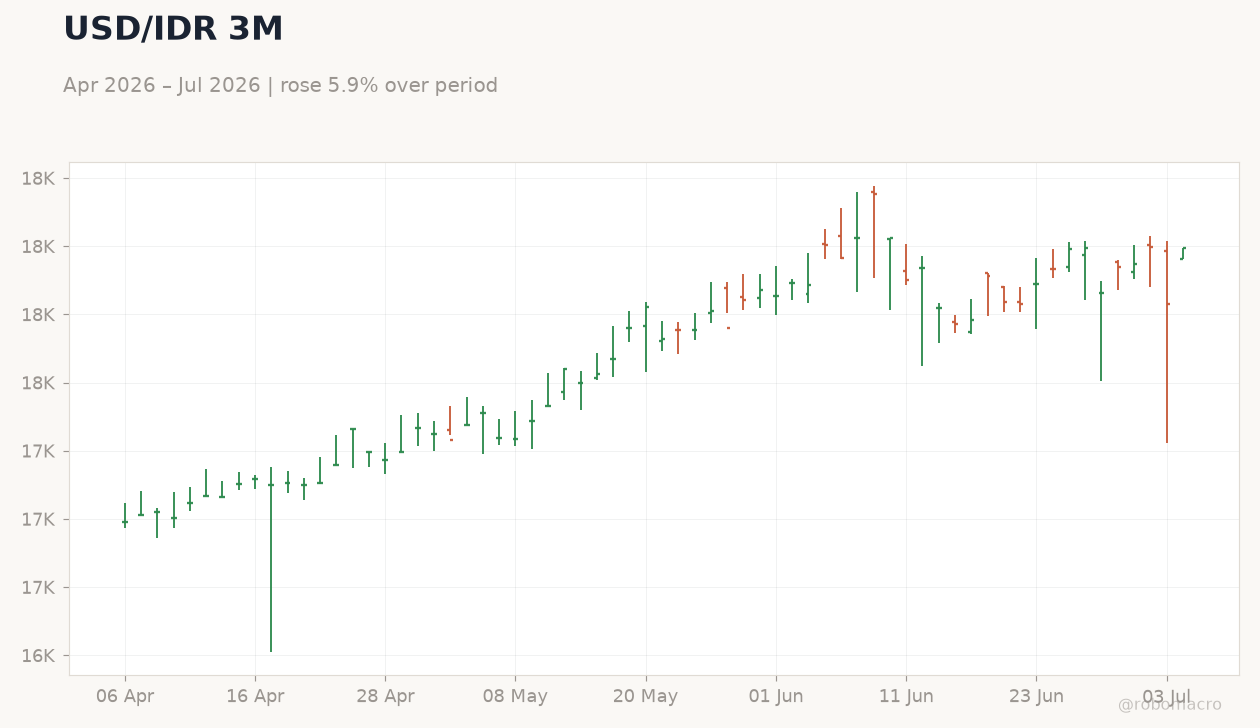 USD/IDR 3M | Type: market_hloc | USD per IDR: 1.799e+04 (2026-07-06) | Range: 1.699e+04–1.819e+04 | Trend(6pt): 1.699e+04,1.722e+04,1.778e+04,1.788e+04,1.779e+04,1.799e+04
Today's Economic Events
| Data | Prior | Cons | Time |
|---|---|---|---|
| Inflation Rate Year-over-Year | 6.80 | 6.60 | 17:00 |
| Headline Unemployment Rate | 4.70 | - | 17:00 |
| Tuesday (2026-07-07) | |||
| Headline Unemployment Rate | 4.70 | - | 17:00 |
- Indonesian rupiah fell 1.16% to 17,994 per USD amid May trade deficit concerns and domestic pressure.
- Regional equities advanced with JCI up 2.28%, SET +1.11% and KLCI +1.04% on thin volumes.
- Philippine inflation expected at 6.6% y/y today while BSP signals room for one more rate hike.
Yesterday's Recap
Indonesian markets dominated ASEAN moves as the rupiah slid to 17,994 against the USD after May trade data showed a widening deficit. JCI rose 2.28% to 5,875.78, supported by commodity prices despite the currency weakness. Thailand’s SET gained 1.11% to 1,611.28 while June headline CPI printed 2.42% y/y, below forecasts.
Malaysia’s KLCI added 1.04% to 1,679.05 and the ringgit eased 0.10% to 4.08 per USD. Philippine PSEi climbed 1.02% to 6,188.03 as BSP Governor Remolona stated the economy could absorb another rate increase. Singapore’s STI rose 0.52% with USD/SGD easing 0.05% to 1.29.
Brent crude finished at 72.13, up 0.46%. Gold rose 1.60% to 4,178.30 and Bitcoin gained 0.96% to 64,157.99.
The Day Ahead
Philippines will release June inflation at 17:00 ET with consensus at 6.6% y/y after May’s 6.8% print. Headline unemployment data follows tomorrow at the same time. No major releases are scheduled for Indonesia, Thailand or Malaysia.
MAS continues to monitor the SGD NEER band amid regional FX volatility. Vietnam and Singapore data calendars remain light through mid-week.
Other Economic Notes
Indonesia’s manufacturing PMI hit a one-year low, raising stagflation concerns and underscoring the need for foreign capital inflows to support the rupiah. Thailand’s tourism recovery slowed, prompting authorities to explore digital payment initiatives including potential baht stablecoins. Supply-chain shifts continue to favor Vietnam, where electronics exports remain robust.
Malaysia’s ringgit faces additional pressure from domestic political noise ahead of elections.
Global Macro News
US rate expectations and China demand signals remain the dominant external drivers for ASEAN currencies and equities. Gold rose 1.60% to 4,178.30, reflecting safe-haven flows that compete with emerging-market assets. Brent crude at 72.13 continues to influence Indonesia’s and Malaysia’s fiscal and current-account balances.
<i>↓ p.2</i>