ASEAN Macro Daily(Beta Mode)
PH Inflation Eases to 6.4%, BI Vows to Defend Rupiah
Market Snapshot
| Asset | Level | Change |
|---|---|---|
| JCI | 5,986.50 | +1.19% |
| SET | 1,611.28 | +1.11% |
| KLCI | 1,682.93 | -0.04% |
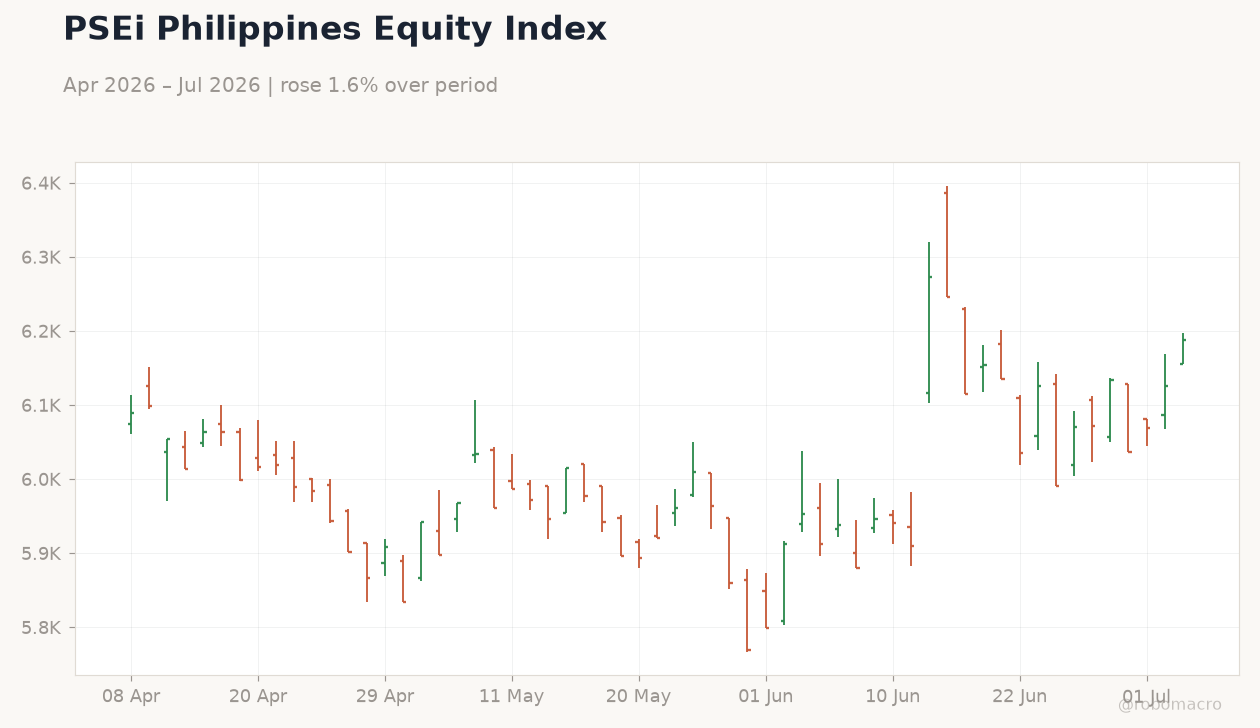
| PSEi | 6,188.03 | +1.02% |
| STI | 5,342.24 | +1.57% |
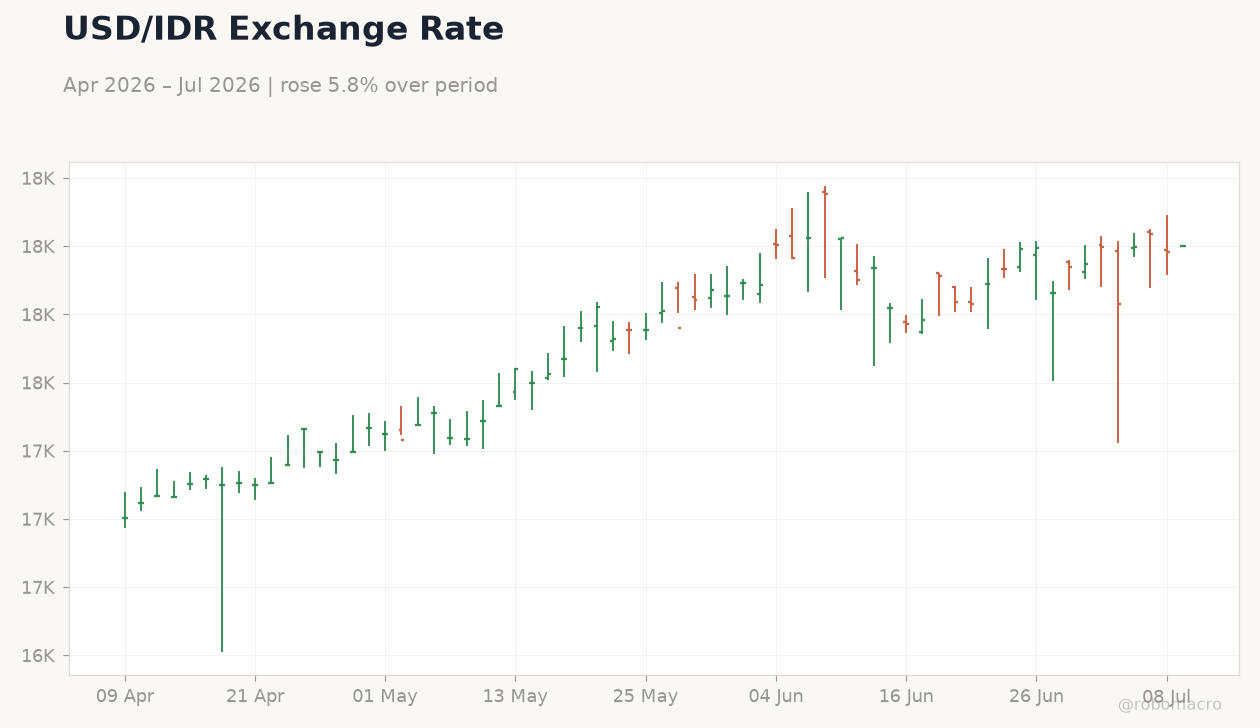
| USD/IDR | 17,979.00 | -0.37% |
| USD/THB | 33.45 | +0.27% |
| USD/MYR | 4.08 | -0.06% |
| USD/PHP | 61.46 | +0.23% |
| USD/SGD | 1.29 | -0.00% |
| Brent Crude | 78.95 | +6.46% |
| Gold | 4,088.80 | -1.36% |
| Bitcoin | 62,265.06 | -1.63% |
| Indonesia 10Y Govt Yield | - | - |
| Thailand 10Y Govt Yield | - | - |
Prior Economic Events
| Data | Prior | Cons | Actual |
|---|---|---|---|
| Inflation Rate Year-over-Year | 6.80 | 6.60 | 6.40 |
| Headline Unemployment Rate | 4.70 | - | 4.80 |
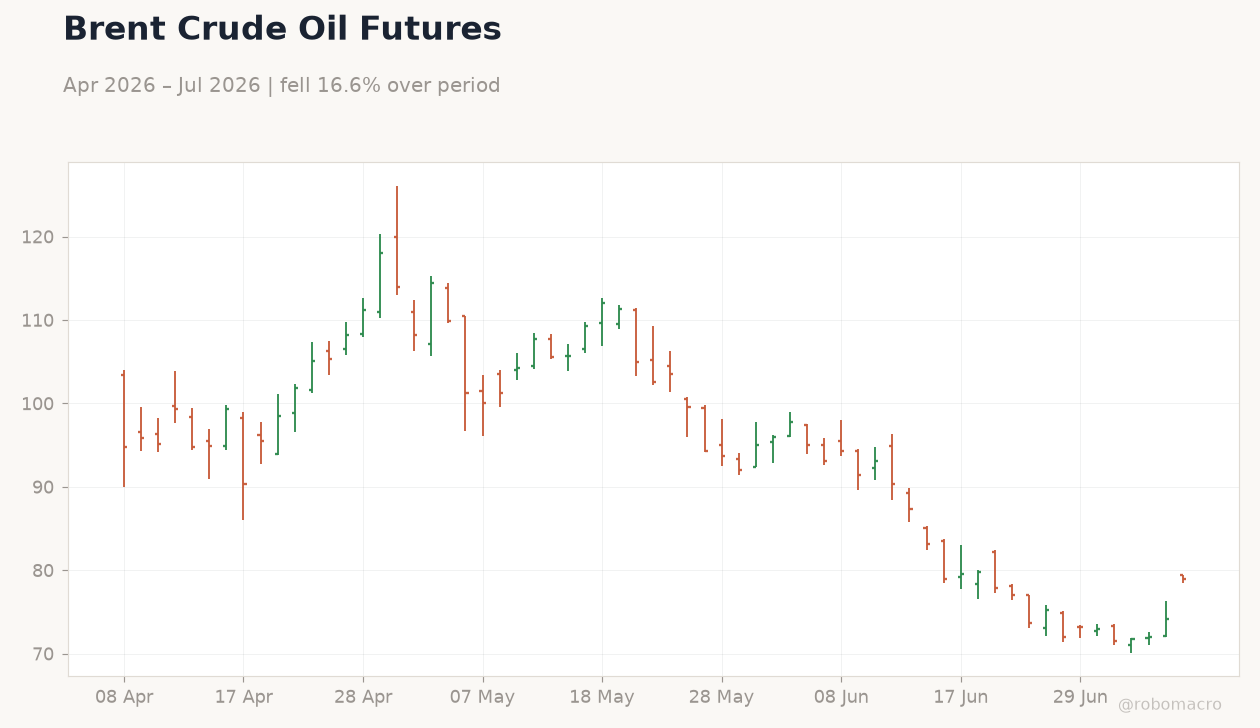 Brent Crude Oil Futures | Type: market_hloc | USD per Barrel: 78.98 (2026-07-08) | Range: 71.57–118 | Trend(6pt): 94.75,118,105,90.38,71.99,78.98
Today's Economic Events
| Data | Prior | Cons | Time |
|---|---|---|---|
| No events available | |||
- Philippines June inflation fell to 6.4% y/y, below 6.6% consensus, while unemployment rose to 4.8%.
- Indonesia June forex reserves rose to $145.6 billion; BI pledged all-out rupiah stabilization amid consumer confidence drop to 117.8.
- Regional equities advanced with JCI +1.19% and STI +1.57%, while Brent crude jumped 6.46% and USD/IDR eased 0.37%.
Yesterday's Recap
Philippines June inflation printed at 6.4% y/y, undershooting consensus and easing price pressures in the remittance-dependent economy. Unemployment ticked up to 4.8%, reflecting modest labor market softening. Indonesia's June forex reserves climbed to $145.6 billion, defying prior declines and supporting external buffers.
Bank Indonesia signaled it would go all out to stabilize the rupiah after consumer confidence slipped to 117.8 in June. Equity markets posted broad gains, led by JCI at 5,986.50 (+1.19%) and STI at 5,342.24 (+1.57%). USD/IDR fell 0.37% to 17,979 while USD/THB rose 0.27% to 33.45.
Brent crude surged 6.46% to $78.95, lifting commodity-linked sentiment across ASEAN. Malaysia's ringgit ended higher against most major currencies despite a weaker print versus the US dollar. Thailand's baht remained range-bound after inflation data, with analysts noting limited scope for near-term rate hikes.
The Day Ahead
ASEAN calendars show no major data releases or central bank meetings scheduled for the next two sessions. Thailand's Public Debt Management Office plans to issue 8 billion baht in Savings Plus bonds during the current fiscal year. Malaysia continues seeking Thai clearance for overland durian exports to China amid domestic oversupply.
Indonesia's budget deficit is projected to remain within target per UOB analysis. Regional FX markets will monitor any follow-through from BI's hawkish rhetoric on rupiah intervention. Thailand's inward investment pipeline nears 1 trillion baht, supporting an upgraded GDP forecast of 2.3%.
Other Economic Notes
Malaysia's international reserves hit a 12-year high after swelling over $2 billion in June, bolstering ringgit resilience. Thailand's inward investment pipeline nears 1 trillion baht, prompting an upgrade in GDP forecasts to 2.3%. Vietnam's manufacturing FDI inflows remain elevated, reinforcing its role in electronics supply-chain shifts.
Commodity price strength, especially in Brent, provides tailwinds for Indonesia's export revenues. Twin deficits in Thailand highlight ongoing external vulnerabilities despite tourism recovery. Kiatnakin expects Thai inflation to stabilize in the second half of 2026.