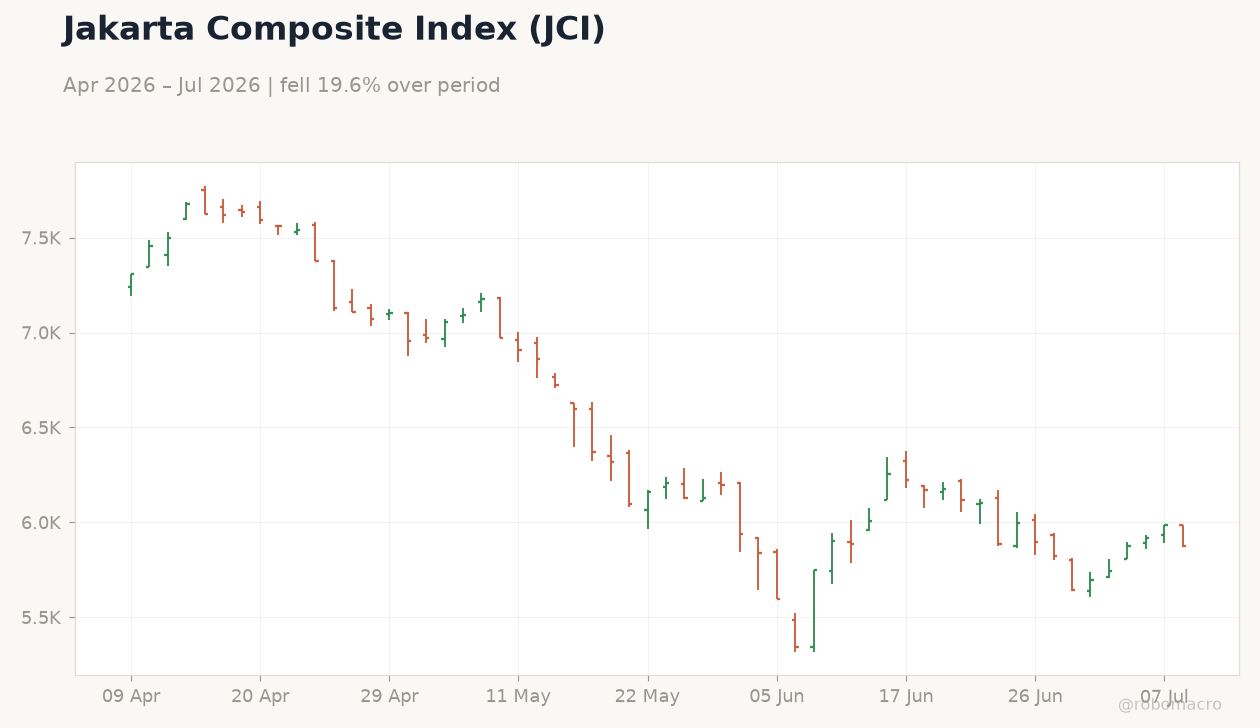
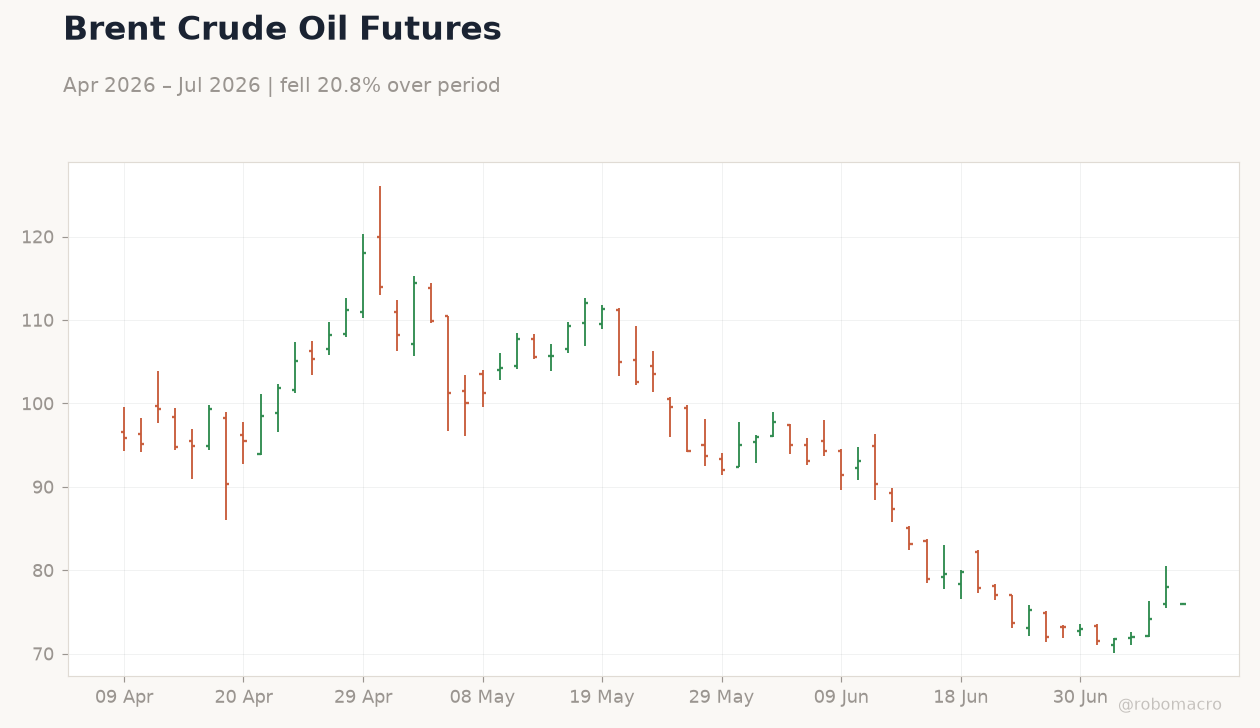
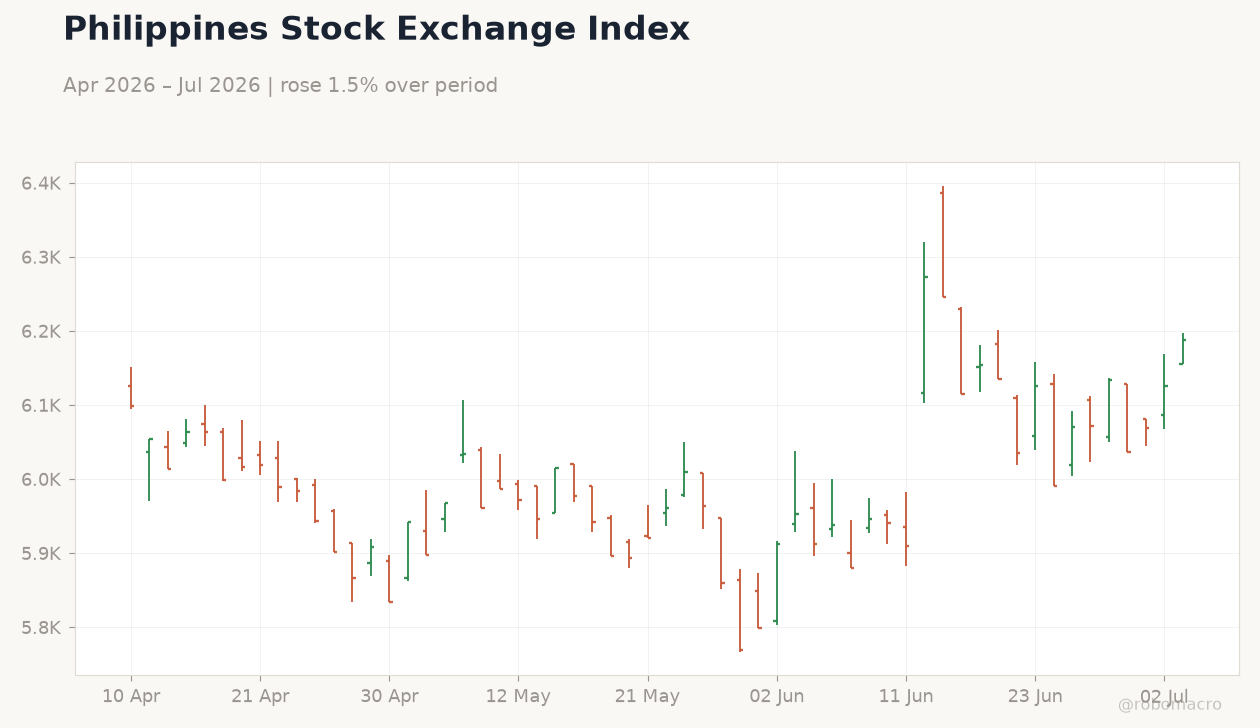
ASEAN Macro Daily(Beta Mode)
BI Pledges All-Out Effort to Defend Rupiah
Market Snapshot
| Asset | Level | Change |
|---|---|---|
| JCI | 5,873.37 | -1.89% |
| SET | 1,611.28 | +1.11% |
| KLCI | 1,683.61 | +0.04% |
| PSEi | 6,188.03 | +1.02% |
| STI | 5,369.57 | +0.51% |
| USD/IDR | 18,125.00 | +0.81% |
| USD/THB | 33.36 | -0.33% |
| USD/MYR | 4.07 | -0.14% |
| USD/PHP | 61.59 | +0.21% |
| USD/SGD | 1.29 | -0.11% |
| Brent Crude | 75.98 | -2.61% |
| Gold | 4,131.50 | +1.49% |
| Bitcoin | 63,151.31 | +1.44% |
| Indonesia 10Y Govt Yield | - | - |
| Thailand 10Y Govt Yield | - | - |
Prior Economic Events
| Data | Prior | Cons | Actual |
|---|---|---|---|
| Headline Unemployment Rate | 4.70 | - | 4.80 |
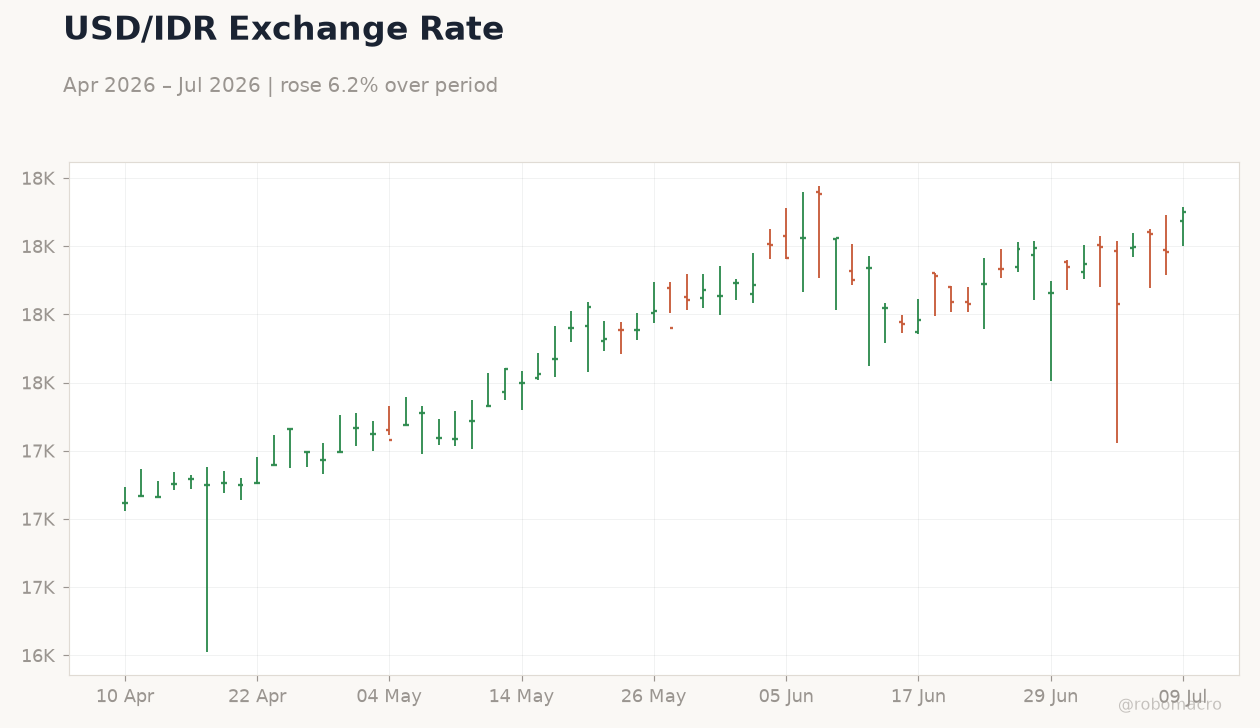 USD/IDR Exchange Rate | Type: market_hloc | USD/IDR: 1.812e+04 (2026-07-09) | Range: 1.706e+04–1.819e+04 | Trend(5pt): 1.706e+04,1.729e+04,1.776e+04,1.773e+04,1.812e+04
Today's Economic Events
| Data | Prior | Cons | Time |
|---|---|---|---|
| GDP Growth Quarter-over-Quarter Advance Estimate | 1 | - | 20:00 |
- Bank Indonesia pledges full support to stabilize the rupiah after it weakens to 18,125 versus the dollar
- Philippine unemployment rate edges up to 4.8% from 4.7% previously
- Regional equities mixed as SET gains 1.11% and PSEi rises 1.02% while JCI falls 1.89%
Yesterday's Recap
Philippine headline unemployment rose to 4.8% on 8 July, marking a modest deterioration from the prior 4.7% print. Indonesia’s rupiah slipped 0.81% to 18,125 per dollar amid escalating geopolitical tensions and disappointing consumer confidence data that hit a nine-month low. Bank Indonesia stated it would go “all out” to defend the currency, with multiple reports confirming the central bank’s readiness to intervene.
Thailand’s SET index advanced 1.11% to 1,611.28 as the baht held range-bound after recent inflation data. Malaysia’s KLCI edged 0.04% higher to 1,683.61 while the ringgit strengthened 0.14% to 4.07 per dollar on softer US dollar sentiment. Singapore’s STI rose 0.51% to 5,369.57 and the Philippines PSEi climbed 1.02% to 6,188.03.
Brent crude fell 2.61% to 75.98, providing some relief to regional importers. Indonesia’s JCI fell 1.89% to 5,873.37. Gold rose 1.49% to 4,131.50 and Bitcoin gained 1.44% to 63,151.31.
The Day Ahead
Singapore will release its GDP growth quarter-over-quarter advance estimate on 13 July, with markets watching for signs of sustained momentum after the prior 1.0% reading. No major data releases are scheduled for the other five ASEAN economies tomorrow. Analysts will monitor any follow-through comments from Bank Indonesia on rupiah intervention tactics.
Thailand’s investment approvals, including Nestlé’s $688 million smart-factory project, may generate further positive sentiment. Regional FX desks remain focused on USD/IDR movements given ongoing geopolitical risks.
Other Economic Notes
Thailand’s GDP forecast was upgraded to a market-high 2.3% on stronger inward investment nearing 1 trillion baht. Indonesia’s consumer confidence decline raises downside risks to domestic demand and could delay any policy easing. Supply-chain shifts continue to favor Vietnam and Malaysia, though Malaysia’s manufacturing PMI slipped below 50.
Lower oil prices are easing import bills across the region but weigh on Indonesia’s export receipts. Capital-flow measures in Malaysia are cited by analysts as potential support for the ringgit. Thai monetary policy remains accommodative to support recovery.