ASEAN Macro Daily(Beta Mode)
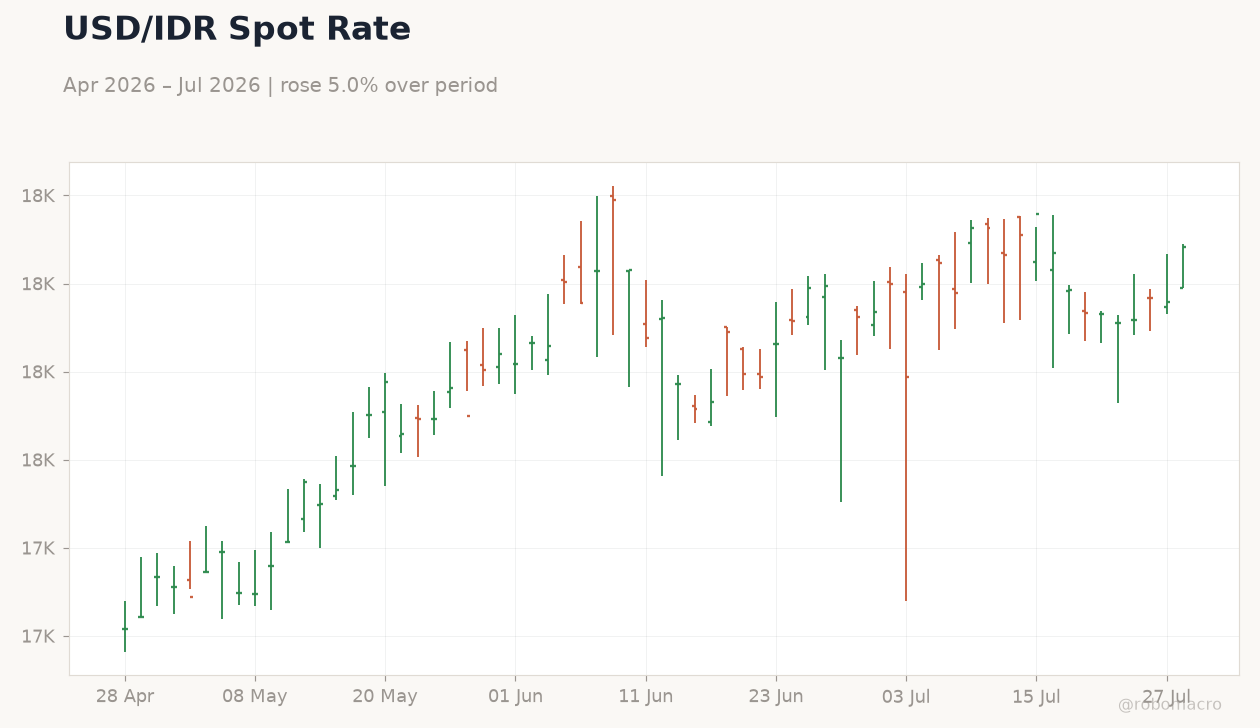
Warjiyo Resigns, Rupiah Breaches 18,000
Market Snapshot
| Asset | Level | Change |
|---|---|---|
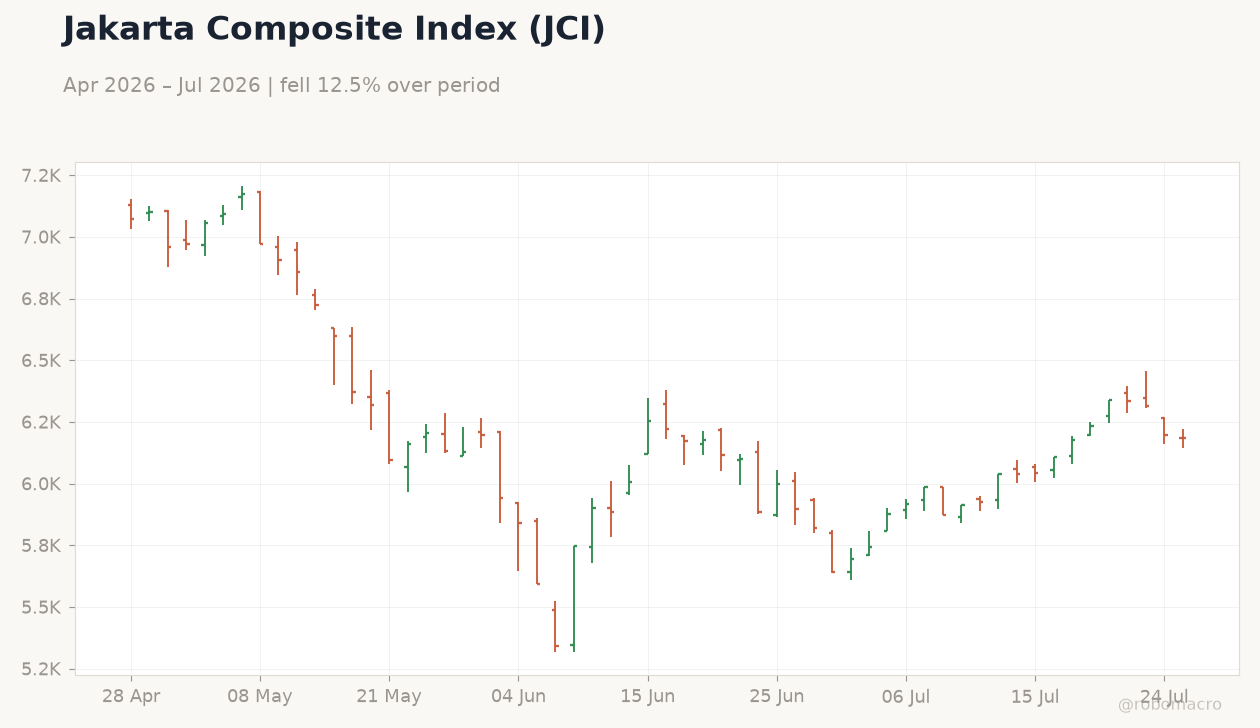
| JCI | 6,185.78 | -0.17% |
| SET | 1,639.04 | +0.23% |
| KLCI | 1,713.09 | +0.71% |
| PSEi | 6,404.11 | +1.25% |
| STI | 5,620.24 | +0.57% |
| USD/IDR | 18,083.00 | +0.70% |
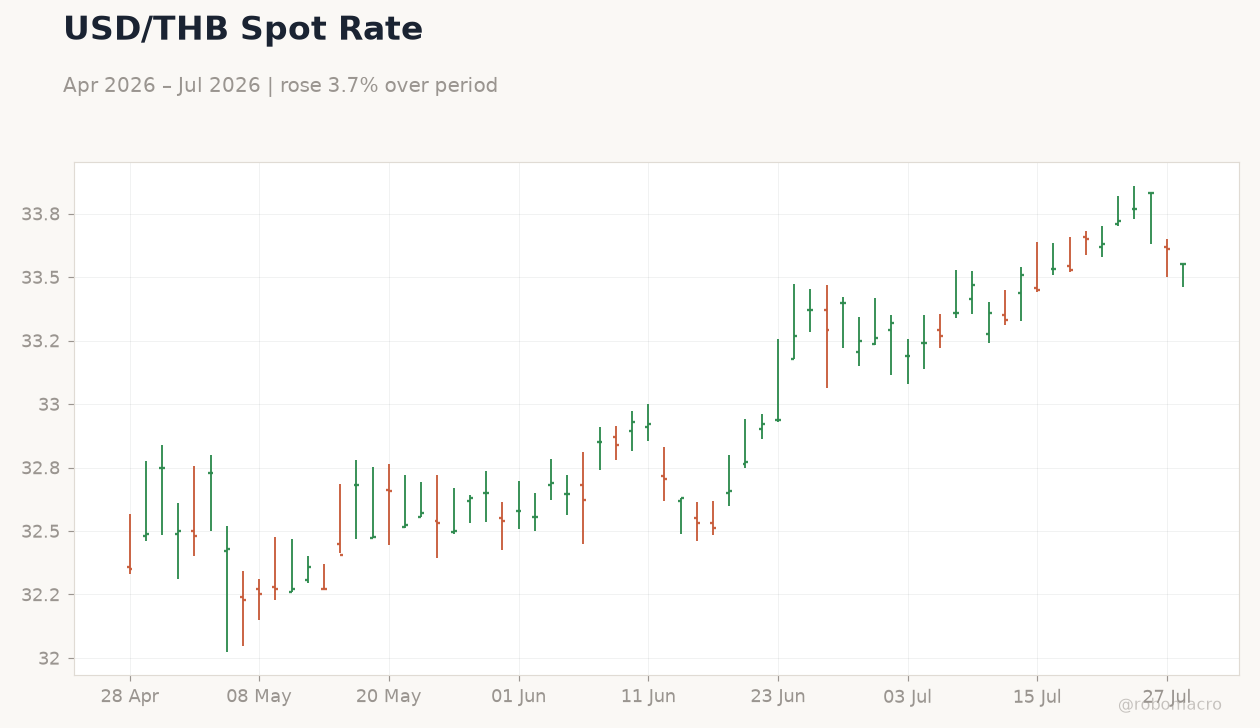
| USD/THB | 33.55 | -0.18% |
| USD/MYR | 4.09 | +0.00% |
| USD/PHP | 61.52 | -0.28% |
| USD/SGD | 1.29 | +0.25% |
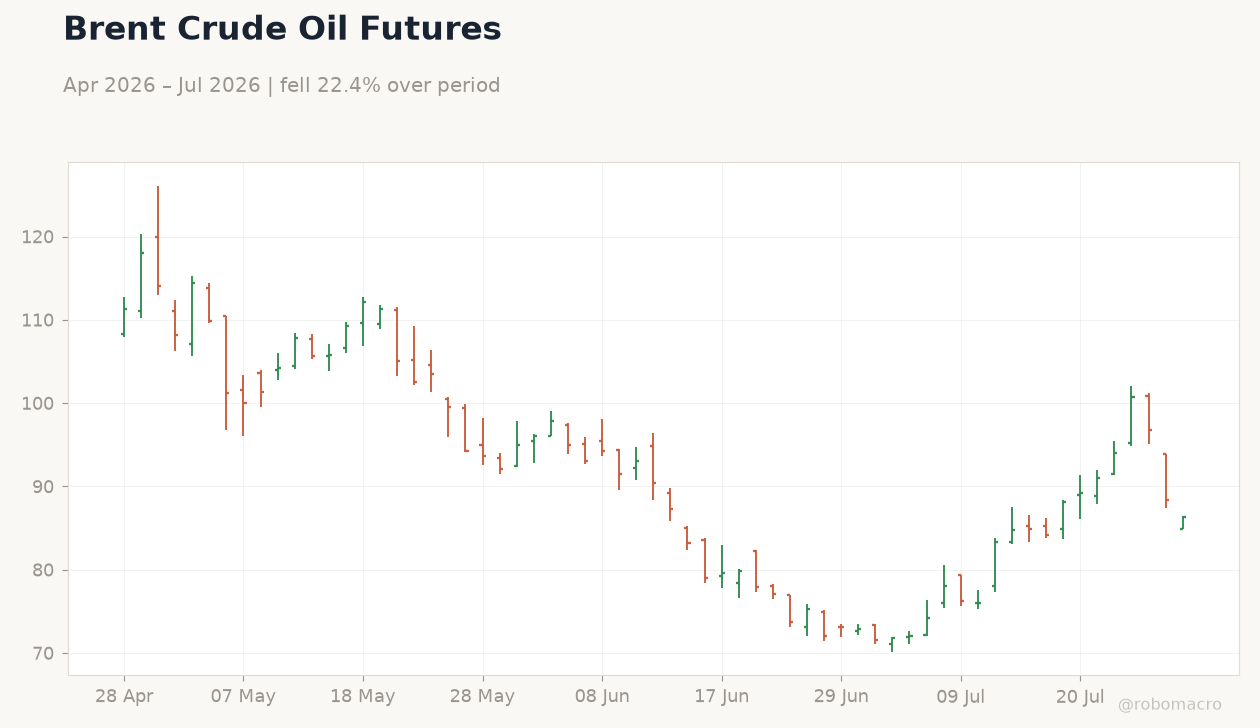
| Brent Crude | 86.47 | -2.14% |
| Gold | 4,020.00 | -1.34% |
| Bitcoin | 63,802.24 | +0.12% |
| Indonesia 10Y Govt Yield | - | - |
| Thailand 10Y Govt Yield | - | - |
Prior Economic Events
| Data | Prior | Cons | Actual |
|---|---|---|---|
| No events available | |||
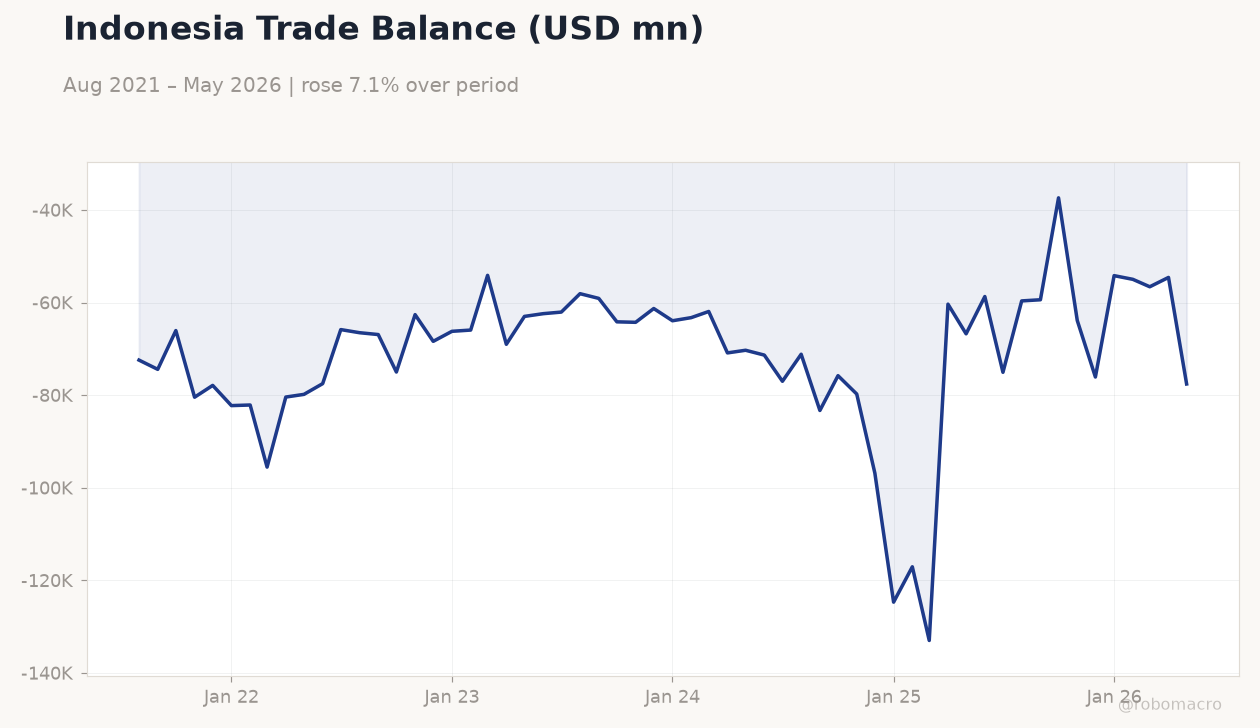 Indonesia Trade Balance (USD mn) | Type: macro_line | USD million: -7.758e+04 (2026-05-01) | Range: -1.33e+05–-3.738e+04 | Trend(6pt): -7.242e+04,-7.5e+04,-6.128e+04,-1.171e+05,-5.457e+04,-7.758e+04
Today's Economic Events
| Data | Prior | Cons | Time |
|---|---|---|---|
| Trade Balance | -1,610m | - | 00:00 |
| Inflation Rate Year-over-Year | 3.34 | - | 00:00 |
- Perry Warjiyo resignation sparks BI uncertainty and rupiah weakness
- Regional equities mixed as KLCI and PSEi advance on local support
- Indonesia trade balance and inflation data due early next week
Yesterday's Recap
Indonesia dominated ASEAN headlines after Bank Indonesia Governor Perry Warjiyo resigned unexpectedly, adding policy uncertainty and pushing USD/IDR to 18,083, up 0.70% on the day. The rupiah breach past 18,000 reflected immediate market concerns over central bank independence and future FX intervention capacity. Equity markets closed mixed, with Indonesia’s JCI falling 0.17% to 6,185.78 while Malaysia’s KLCI rose 0.71% to 1,713.09 and the Philippines PSEi gained 1.25% to 6,404.11.
Thailand’s SET edged 0.23% higher and Singapore’s STI added 0.57%, supported by firmer regional sentiment. USD/THB eased 0.18% to 33.55 and USD/PHP fell 0.28% to 61.52, while Brent crude dropped 2.14% to 86.47 amid softer global demand signals. Malaysia’s central bank governor separately noted the economy remains on track for 4-5% growth this year despite energy supply shocks.
Gold fell 1.34% to 4,020 while Bitcoin rose 0.12% to 63,802.24.
The Day Ahead
Indonesia will release its June trade balance and July inflation rate year-over-year on 3 August, both carrying medium market impact. The trade print follows a prior deficit of USD 1.61 billion, while inflation is expected to print near the previous 3.34% reading. No major data releases are scheduled for Thailand, Malaysia, Philippines, Singapore or Vietnam over the next two sessions.
Market participants will also monitor any official statements on the Bank Indonesia leadership transition and potential interim policy guidance. Regional FX desks remain focused on USD/IDR volatility following the governor’s departure.
Other Economic Notes
Malaysia’s central bank continues to highlight strong domestic fundamentals that have kept the ringgit outperforming regional peers, with the currency expected to trade between 3.90-4.20 through the second half of the year. Thailand faces persistent baht weakness driven by external demand softness and tourism recovery that remains uneven across segments. Broader ASEAN growth divergence persists, with Vietnam benefiting from ongoing supply-chain shifts out of China while the Philippines remains more exposed to remittance and external demand cycles.
Commodity price swings, particularly in palm oil and nickel, continue to influence Indonesia’s external accounts and fiscal revenue outlook. USD/MYR held steady at 4.09 and USD/SGD rose 0.25% to 1.29.