ASEAN Macro Daily(Beta Mode)
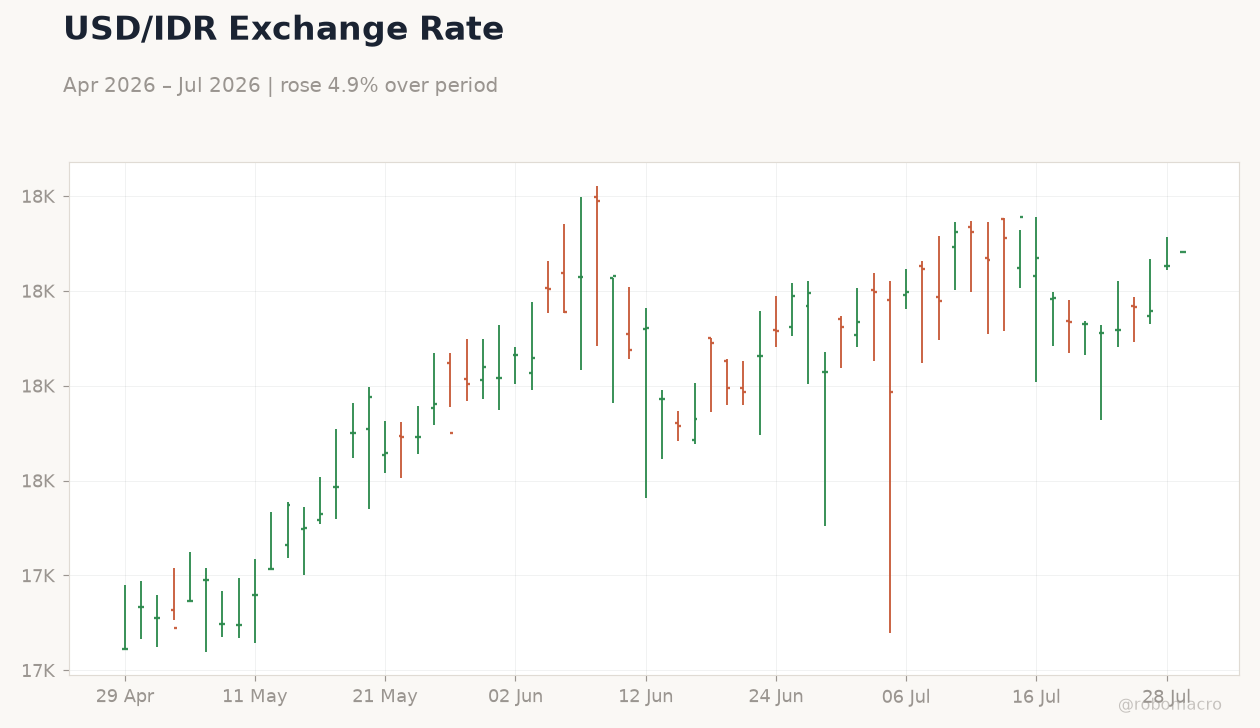
Bank Indonesia Steps Up Rupiah Defense
Market Snapshot
| Asset | Level | Change |
|---|---|---|
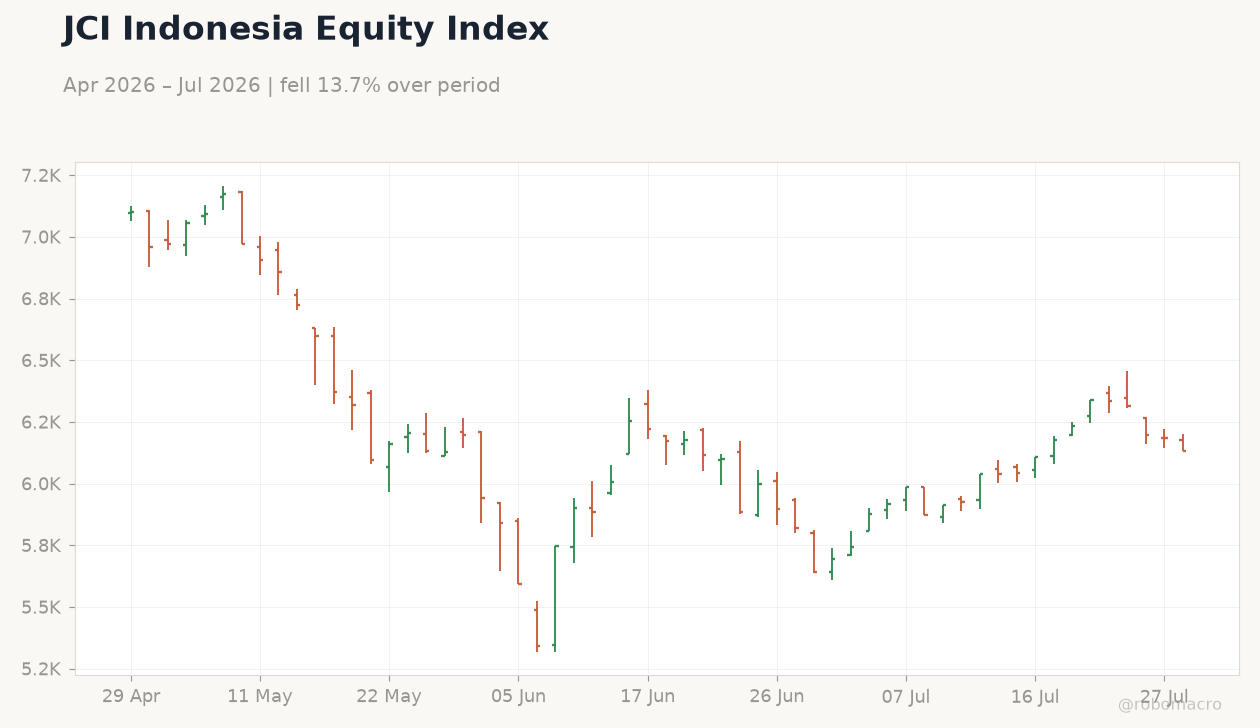
| JCI | 6,130.59 | -0.89% |
| SET | 1,639.04 | +0.23% |
| KLCI | 1,712.48 | -0.04% |
| PSEi | 6,404.11 | +1.25% |
| STI | 5,616.11 | -0.07% |
| USD/IDR | 18,082.00 | +0.16% |
| USD/THB | 33.47 | -0.51% |
| USD/MYR | 4.09 | +0.07% |
| USD/PHP | 61.41 | -0.45% |
| USD/SGD | 1.29 | -0.19% |
| Brent Crude | 90.40 | +7.50% |
| Gold | 4,132.30 | +2.38% |
| Bitcoin | 63,892.40 | +0.03% |
| Indonesia 10Y Govt Yield | - | - |
| Thailand 10Y Govt Yield | - | - |
Prior Economic Events
| Data | Prior | Cons | Actual |
|---|---|---|---|
| No events available | |||
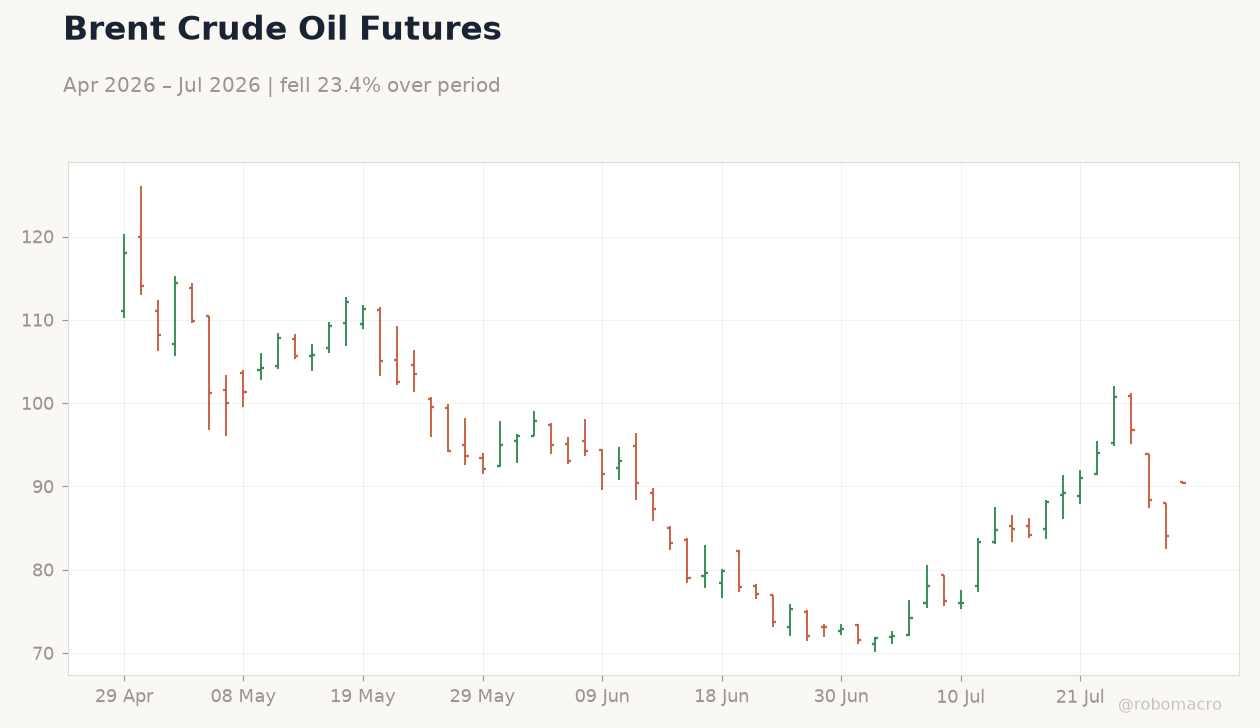 Brent Crude Oil Futures | Type: market_hloc | USD/barrel: 90.4 (2026-07-29) | Range: 71.57–118 | Trend(6pt): 118,105,90.38,71.99,88.36,90.4
Today's Economic Events
| Data | Prior | Cons | Time |
|---|---|---|---|
| Trade Balance | -1,610m | - | 00:00 |
| Inflation Rate Year-over-Year | 3.34 | - | 00:00 |
| GDP Growth Year-over-Year | 5.61 | - | 00:00 |
- Bank Indonesia steps up rupiah defense after governor resignation, with USD/IDR at 18,082.
- Malaysia’s BNM sees 2026 growth near upper end of 4-5% range despite energy shock.
- Regional equities mixed; JCI falls 0.89% while PSEi gains 1.25% on peso strength.
Yesterday's Recap
Indonesia dominated ASEAN headlines as Bank Indonesia reaffirmed aggressive measures to stabilize the rupiah following the governor’s resignation and appointment of interim leader Destry Damayanti. USD/IDR rose 0.16% to 18,082 amid ongoing capital-flow pressure and leadership uncertainty. Malaysia’s central bank governor struck a constructive tone, stating the economy is tracking toward the upper half of the 4-5% growth range for 2026 even after the energy supply shock.
Ringgit opened higher on the positive BNM outlook and supportive global rate expectations. Thailand’s baht remained under pressure, with USD/THB easing 0.51% to 33.47. Equity markets closed mixed: JCI dropped 0.89% to 6,130.59 while PSEi rose 1.25% to 6,404.11.
Brent crude surged 7.50% to 90.40, lifting sentiment for commodity-linked ASEAN assets. SET edged up 0.23% to 1,639.04 and KLCI slipped 0.04% to 1,712.48, while STI fell 0.07% to 5,616.11. Gold climbed 2.38% to 4,132.30 and Bitcoin held steady near 63,892.40.
The Day Ahead
Indonesia’s Trade Balance, Inflation Rate YoY and GDP Growth YoY prints scheduled for 3-5 August will set the tone for BI policy. Markets will watch whether inflation stays near the 3.34% prior print and whether GDP holds above 5.61%. No major data releases are due from Thailand, Malaysia, Philippines, Singapore or Vietnam tomorrow.
MAS will continue monitoring the SGD NEER band for any required adjustments. Regional investors will also track external drivers including US data and oil-price volatility. USD/MYR at 4.09 and USD/PHP at 61.41 remain in focus for any follow-through moves after yesterday’s modest shifts.
Other Economic Notes
Supply-chain relocation continues to favor Vietnam and Malaysia, with electronics exports providing steady FDI inflows. Commodity exporters Indonesia and Malaysia benefit from the sharp rise in Brent, though rupiah weakness offsets some gains. Remittance-dependent Philippines remains resilient, supported by peso strength and solid PSEi performance.
Singapore’s financial-center role keeps STI sensitive to global risk sentiment and USD/SGD movements at 1.29. Thailand’s corporate loan growth picked up in the first half of 2026, driven mainly by larger borrowers, while foreign bank lending in Bangladesh contracted 11% last year.