ASEAN Macro Daily(Beta Mode)
Indonesian GDP Beats, BI Governor Resigns
Market Snapshot
| Asset | Level | Change |
|---|---|---|
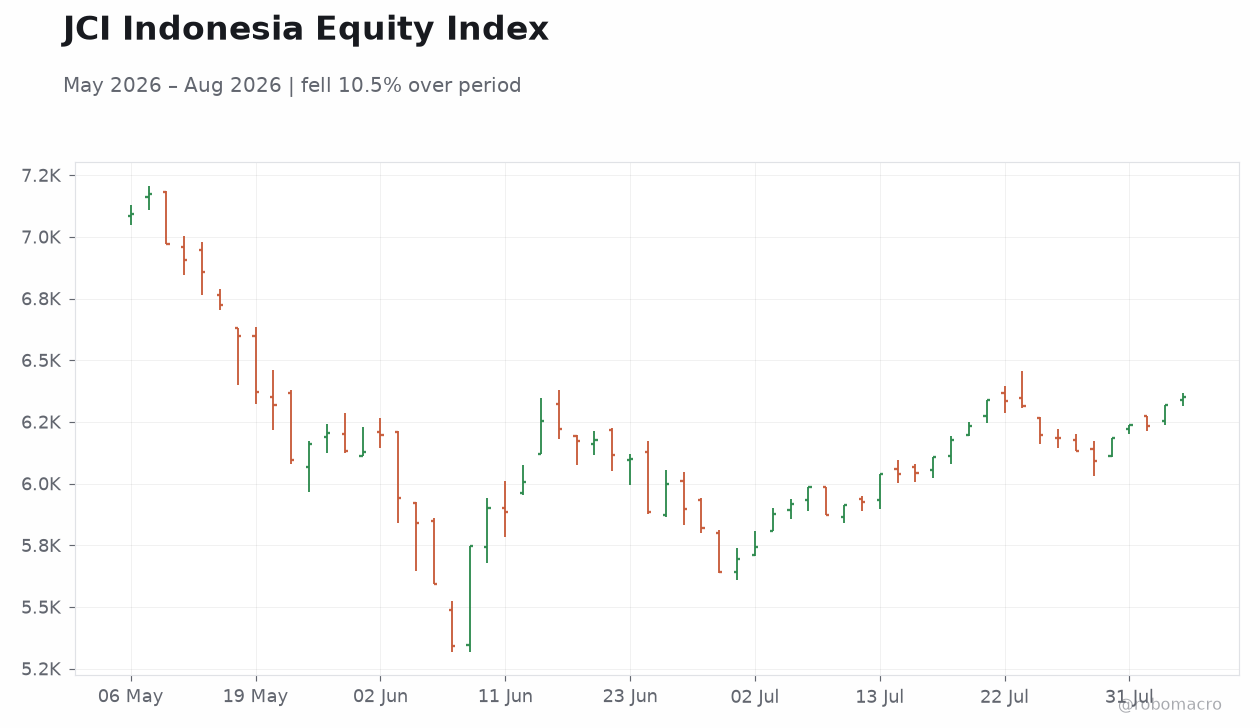
| JCI | 6,351.14 | +0.50% |
| KLCI | 1,748.17 | +0.90% |
| STI | 5,581.37 | -0.55% |
| USD/IDR | 17,914.00 | -0.27% |
| USD/THB | 33.09 | -0.42% |
| USD/MYR | 4.09 | -0.19% |
| USD/PHP | 60.78 | -0.19% |
| USD/SGD | 1.28 | +0.13% |
| Brent Crude | 83.55 | +5.16% |
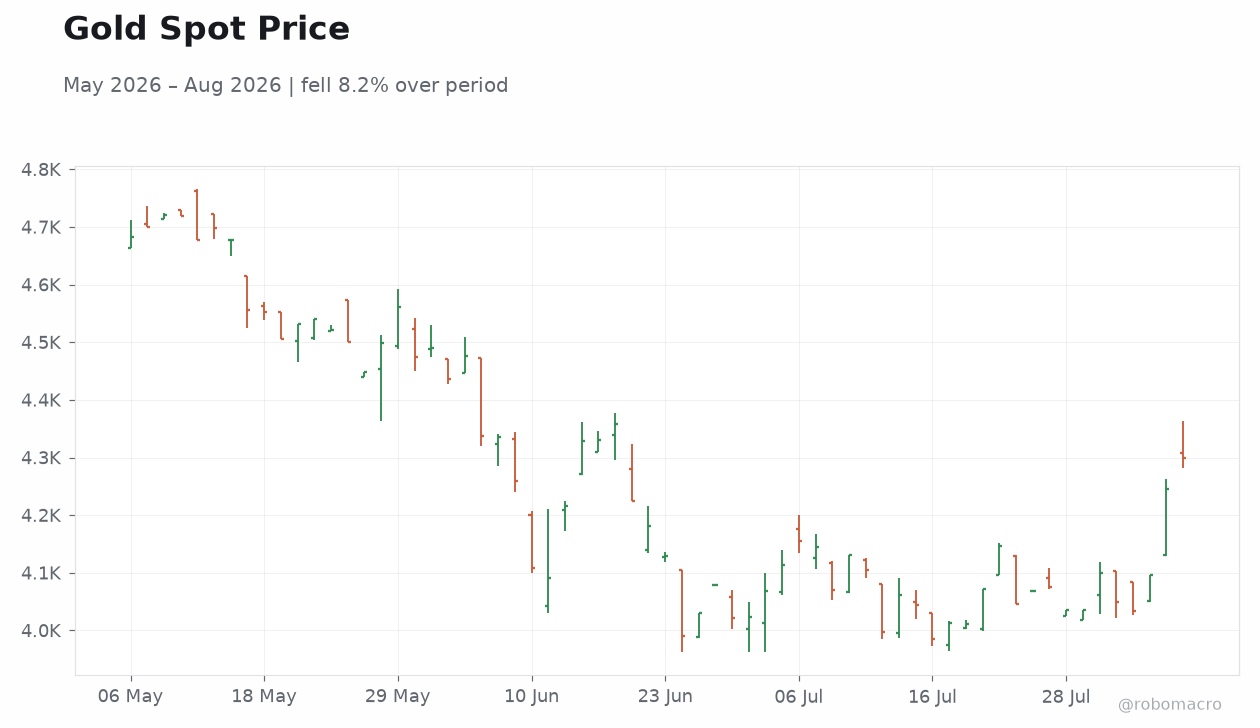
| Gold | 4,298.70 | +1.25% |
| Bitcoin | 64,371.10 | -0.35% |
| Indonesia 10Y Govt Yield | - | - |
| Thailand 10Y Govt Yield | - | - |
Prior Economic Events
| Data | Prior | Cons | Actual |
|---|---|---|---|
| Inflation Rate Year-over-Year | 3.34 | 3.20 | 2.88 |
| Trade Balance | -1,610m | -790m | -450m |
| Inflation Rate Year-over-Year | 6.40 | 6.30 | 6.20 |
| GDP Growth Year-over-Year | 5.61 | 5.10 | 5.29 |
| Unemployment Rate | 4.80 | - | 4.90 |
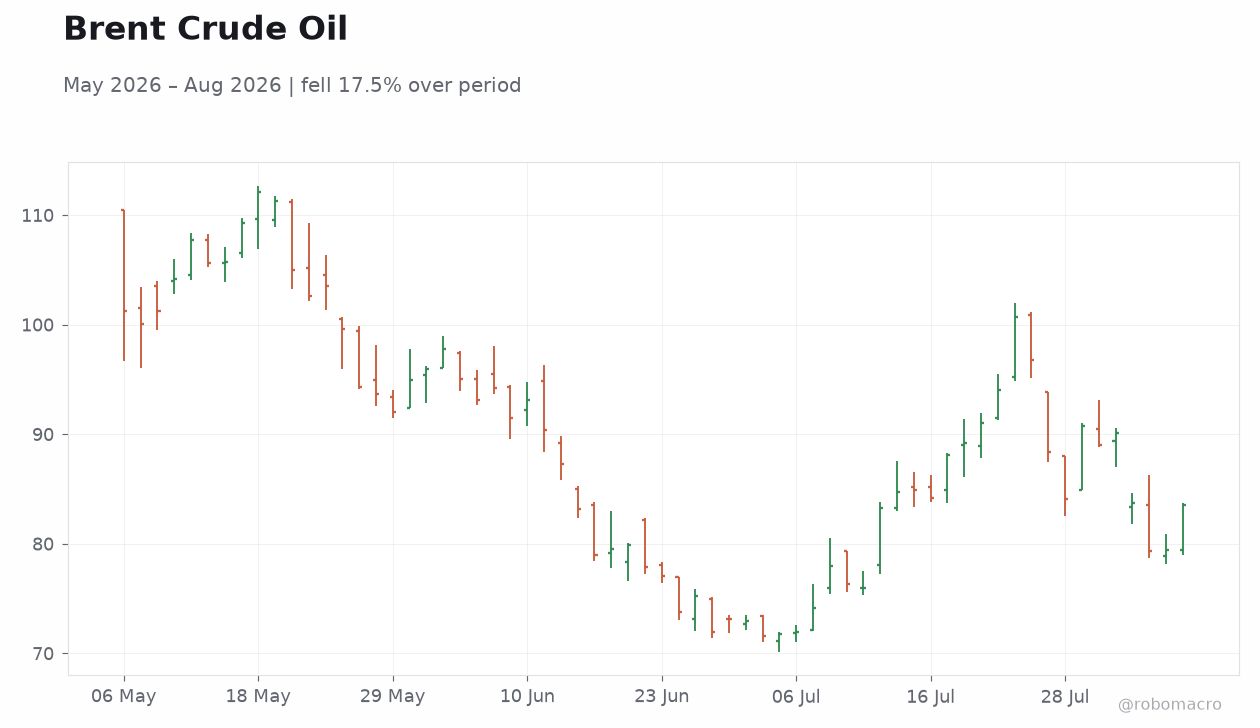 Brent Crude Oil | Type: market_hloc | USD per Barrel: 83.55 (2026-08-06) | Range: 71.57–112.1 | Trend(5pt): 101.3,92.05,77.08,84.23,83.55
Today's Economic Events
| Data | Prior | Cons | Time |
|---|---|---|---|
| GDP Growth Quarter-over-Quarter | 0.90 | 0.90 | 18:00 |
| GDP Growth Year-over-Year | 2.80 | 2.80 | 18:00 |
- Indonesia Q2 GDP rose 5.29% y/y, beating consensus, while July inflation fell to 2.88% y/y.
- Philippine July inflation eased to 6.2% y/y and unemployment ticked up to 4.9%.
- Regional equities mixed as JCI and KLCI gained while STI fell; most ASEAN currencies firmed against the USD.
Yesterday's Recap
Indonesia released softer-than-expected July inflation at 2.88% y/y alongside a narrower trade deficit of USD450 million. Q2 GDP growth printed 5.29% y/y, exceeding the 5.1% consensus and supported by household spending and government outlays. Philippine July inflation moderated to 6.2% y/y while the unemployment rate rose slightly to 4.9%.
Equity markets closed mixed with Jakarta’s JCI advancing 0.50% to 6,351.14 and Kuala Lumpur’s KLCI rising 0.90% to 1,748.17, whereas Singapore’s STI declined 0.55% to 5,581.37. Currencies strengthened broadly against the dollar, with USD/IDR falling 0.27% to 17,914 and USD/THB dropping 0.42% to 33.09. Brent crude surged 5.16% to USD83.55 per barrel while gold climbed 1.25% to USD4,298.70 per ounce.
The resignation of Bank Indonesia Governor Perry Warjiyo added policy uncertainty even as data showed resilience in the largest ASEAN economy.
The Day Ahead
Philippine statisticians will release Q2 GDP figures today, with both quarter-on-quarter and year-on-year growth expected to match the prior prints of 0.9% and 2.8%. Markets will watch for any revision that could alter the growth trajectory after recent inflation moderation. No major data releases are scheduled for Indonesia, Thailand, Malaysia, Singapore or Vietnam.
Traders will monitor USD/PHP and regional bond yields for any reaction to the Philippine numbers. Capital-flow data and comments from remaining central-bank officials may also influence sentiment.
Other Economic Notes
Rising Brent prices bolster commodity exporters Indonesia and Malaysia while adding cost pressure to import-dependent Philippines. Gold’s advance supports reserve valuations across the region, particularly for Indonesia amid rupiah management. Steady FDI interest in Indonesian nickel and battery projects continues to offset softer electronics demand elsewhere.
Thailand’s tourism recovery and Malaysia’s 4-5% growth outlook provide additional buffers against global volatility. Singapore’s reserve managers posted positive returns despite market swings, underscoring the city-state’s role as a financial stabilizer.