ASEAN Macro Daily(Beta Mode)
Indonesian GDP Beats Forecasts as Rupiah Weakens
Market Snapshot
| Asset | Level | Change |
|---|---|---|
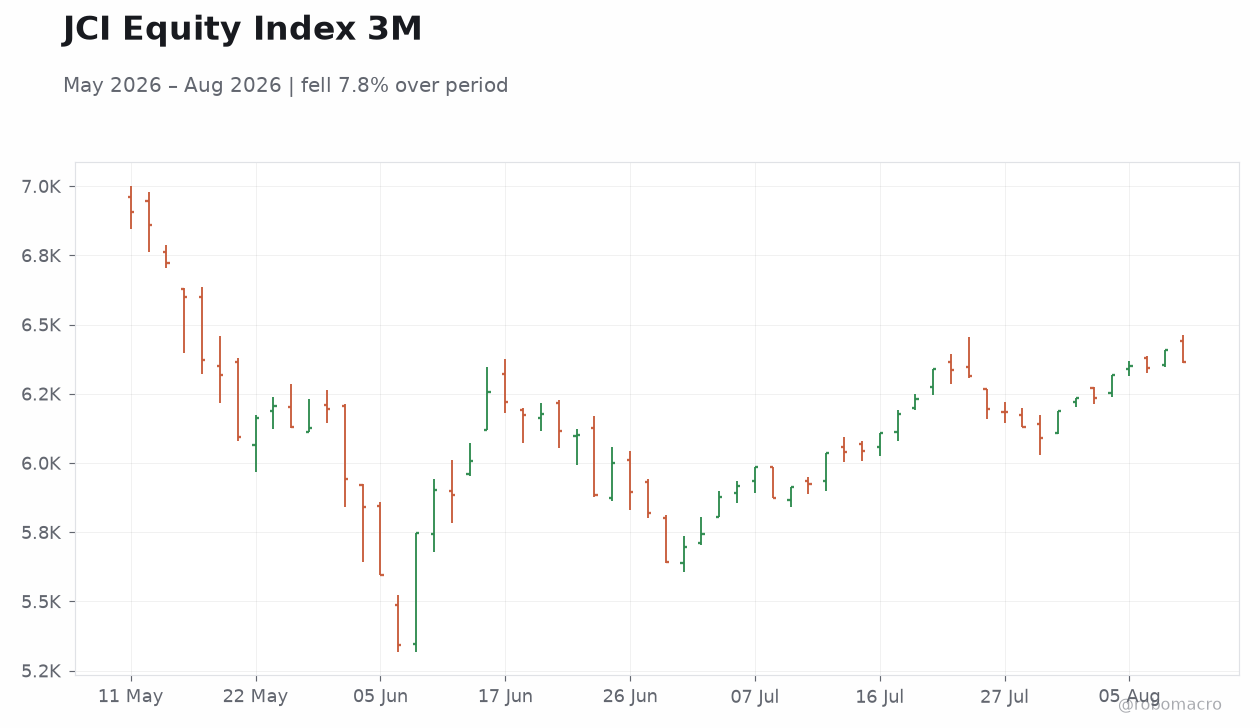
| JCI | 6,365.37 | -0.69% |
| KLCI | 1,735.37 | -0.02% |
| STI | 5,698.43 | +1.05% |
| USD/IDR | 17,830.00 | +0.20% |
| USD/THB | 33.09 | +0.33% |
| USD/MYR | 4.09 | +0.05% |
| USD/PHP | 61.23 | +0.70% |
| USD/SGD | 1.28 | +0.08% |
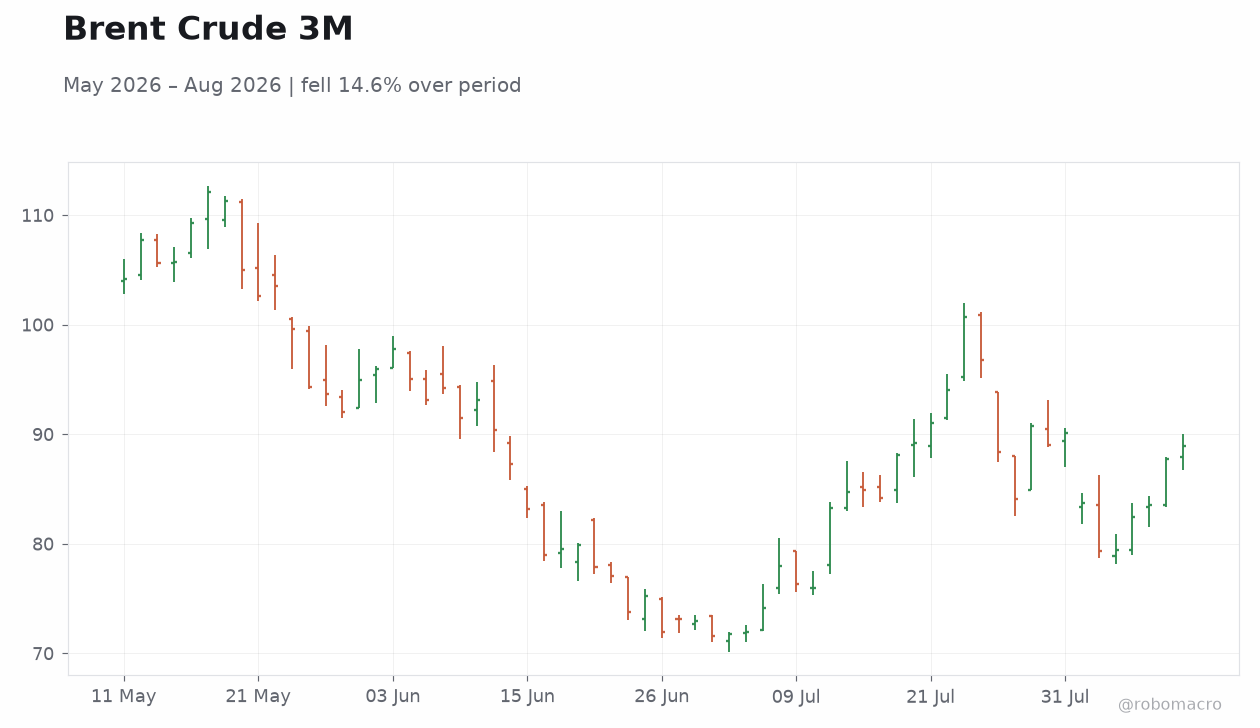
| Brent Crude | 88.95 | +1.40% |
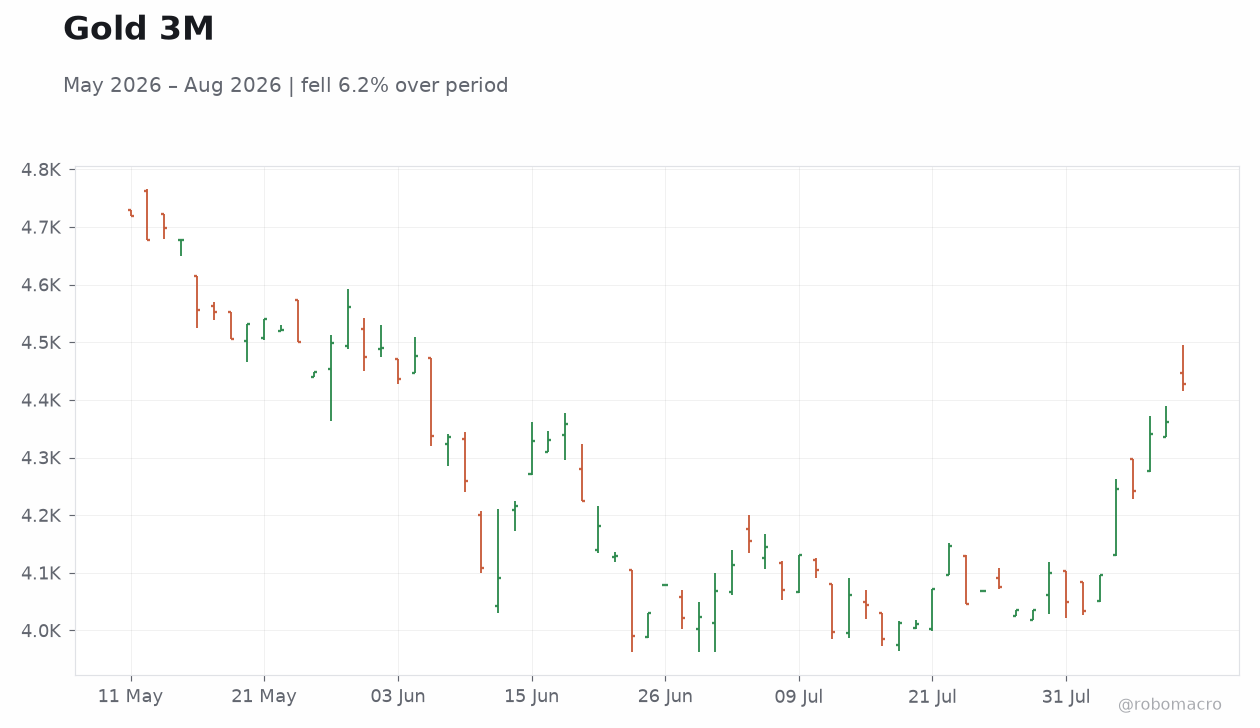
| Gold | 4,427.80 | +1.51% |
| Bitcoin | 63,663.94 | -0.39% |
| Indonesia 10Y Govt Yield | - | - |
| Thailand 10Y Govt Yield | - | - |
Prior Economic Events
| Data | Prior | Cons | Actual |
|---|---|---|---|
| No events available | |||
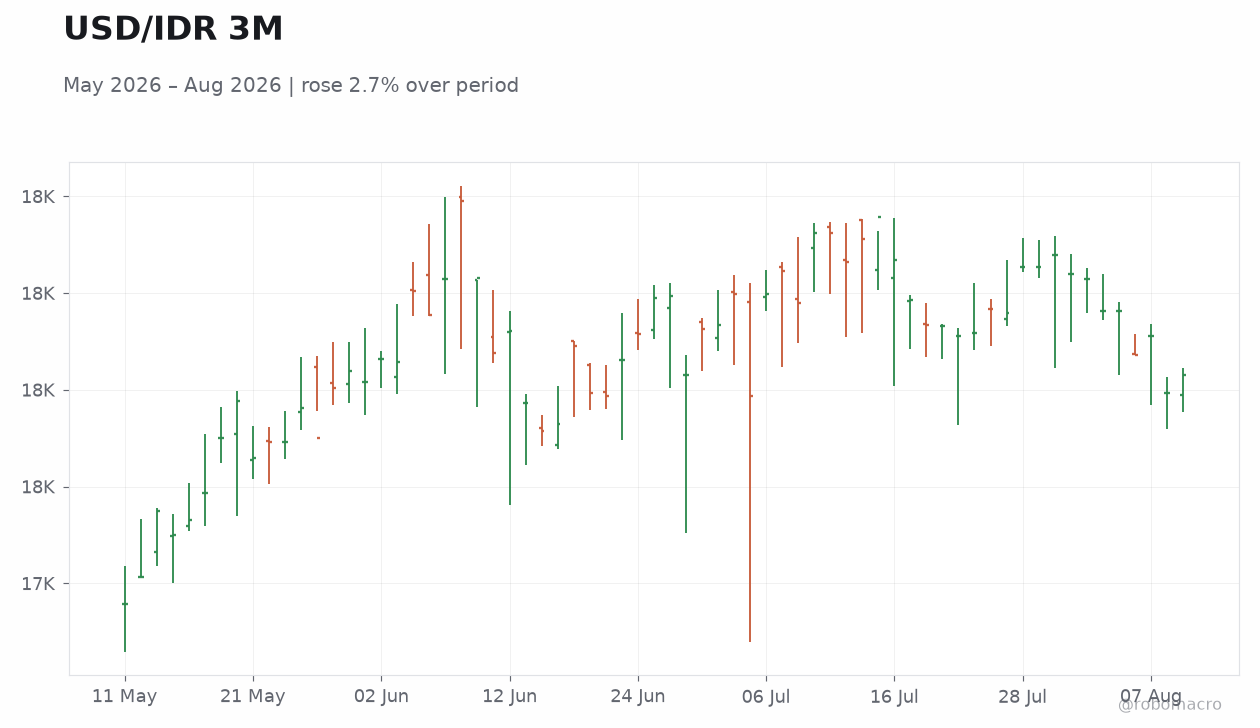 USD/IDR 3M | Type: market_hloc | USD/IDR: 1.783e+04 (2026-08-11) | Range: 1.736e+04–1.819e+04 | Trend(6pt): 1.736e+04,1.786e+04,1.792e+04,1.807e+04,1.791e+04,1.783e+04
Today's Economic Events
| Data | Prior | Cons | Time |
|---|---|---|---|
| No events available | |||
- Indonesia Q2 GDP expands 5.29%, outpacing estimates on household and government spending.
- Rupiah hits fresh lows near 17,830 per dollar, pressuring import costs and debt servicing.
- BI Governor Perry Warjiyo resigns, raising questions over policy independence and FX intervention.
Yesterday's Recap
Indonesia's economy grew 5.29% year-on-year in the second quarter, beating analyst forecasts as household consumption and government outlays, including civil servant pay, provided support. The rupiah weakened further to 17,830 against the dollar, marking historic lows that analysts link to broader emerging-market stress and import bill pressures. Equity markets reflected the mixed backdrop, with the JCI index falling 0.69% to 6,365.37 while the STI advanced 1.05% to 5,698.43 on regional flows.
Regional currencies broadly softened, with the peso rising 0.70% to 61.23 per dollar and the baht climbing 0.33% to 33.09. Malaysia's KLCI held nearly flat at 1,735.37. Thailand and Singapore showed limited data movement, though Singapore reserves posted solid investment gains despite volatility.
No major releases occurred in Malaysia, the Philippines or Vietnam.
The Day Ahead
The calendar remains quiet across ASEAN with no scheduled data prints or policy meetings. Markets will likely focus on follow-through from Indonesia's GDP beat and the central bank leadership change. Thailand's stablecoin scrutiny and Malaysia's 4-5% growth outlook may draw secondary attention.
Investors will monitor USD/IDR moves near 17,830 for signs of further capital-flow pressure. Bond auctions or corporate earnings from Indonesian banks could provide incremental color. Regional FX intervention by BI remains a key watch item given the rupiah's recent trajectory.
Other Economic Notes
Indonesia's commodity-driven growth continues to cushion external shocks, yet the combination of currency depreciation and leadership uncertainty at BI could weigh on investor sentiment. Singapore's financial-center role benefits from positive reserve returns and an AI-supported growth outlook that offsets energy-price volatility. Malaysia's steady 4-5% expansion path highlights resilience in manufacturing and tourism despite global energy strains.
Supply-chain shifts away from China continue to support FDI in Vietnam and downstream sectors in Indonesia, though near-term data releases offer little confirmation.